
Table of Contents
- Is the RISC-V Industrial IoT Ecosystem Finally Ready for Volume Procurement?
- Which RISC-V MCU Suppliers Are Credible for Industrial-Grade IoT Deployments?
- How Do the Leading RISC-V Industrial IoT MCU Options Compare on Procurement-Ready Criteria?
- Is the RISC-V Software Ecosystem Mature Enough for Industrial IoT Workloads?
- Are RISC-V MCUs Available in the Industrial Temperature Grades That Deployed Equipment Requires?
- What Are the Geopolitical and Supply Chain Implications of Choosing RISC-V Over ARM?
- How Should an Industrial Buyer Approach RISC-V Qualification for 50K+ Unit Per Year Deployments?
- What Is the Verdict on RISC-V for Industrial IoT Volume Procurement in 2026?
An industrial sensor manufacturer we work with recently completed a 12-month RISC-V qualification for their next-generation vibration monitoring node. The device—a battery-powered, wireless accelerometer deployed on rotating machinery in paper mills and chemical plants—ships 80,000 units annually. Their existing design used a Cortex-M4 MCU from a major European supplier that had been in allocation three times over the preceding 18 months. The engineering team evaluated five RISC-V alternatives, selected the Espressif ESP32-C6, and qualified it through a full industrial validation cycle: -40 to +85C thermal cycling, 200-hour HALT (Highly Accelerated Life Test), and 90-day field trials across three customer sites. The result: a 22% reduction in MCU cost, integrated Wi-Fi 6 that eliminated a separate connectivity coprocessor, and a supplier that could commit to 8-week lead times versus the 26 weeks they had been enduring. The qualification was not painless—the team spent six weeks adapting their FreeRTOS-based sensor acquisition stack and revalidating BLE commissioning flows—but the outcome was a more resilient, lower-cost BOM with genuine second-source optionality.
This story is not unique. Across the industrial IoT landscape, engineering and procurement teams are asking the same question: is the RISC-V ecosystem mature enough to bet a volume product line on? The answer, as of mid-2026, is a qualified yes—but the qualifiers matter. This article provides a pragmatic, procurement-focused assessment of RISC-V readiness for industrial IoT deployments at 50K+ units per year, covering supplier viability, toolchain maturity, RTOS support, industrial temperature grade availability, and the geopolitical dimensions that make RISC-V strategically compelling beyond pure component cost.
Related Reading: For the broader procurement decision framework covering all RISC-V MCU applications, see our RISC-V Microcontroller Sourcing Decision Guide 2026. For the technology landscape and automotive adoption outlook, see RISC-V Microcontroller: Industrial and Automotive Adoption Outlook 2026. This article focuses specifically on industrial IoT volume procurement readiness—the practical question of whether RISC-V is ready for your 50K+ unit/year sensor, gateway, and edge processing deployments.
Is the RISC-V Industrial IoT Ecosystem Finally Ready for Volume Procurement?
Direct Answer: For non-safety-critical industrial IoT applications—smart sensors, environmental monitors, edge AI inference nodes, predictive maintenance endpoints, and wireless connectivity gateways—RISC-V is ready for volume procurement at 50K+ units per year in mid-2026. The evidence is quantitative, not anecdotal. Espressif's ESP32-C3 and ESP32-C6 have shipped in hundreds of millions of units, displacing the earlier Xtensa-based ESP8266 as Espressif's highest-volume products. GigaDevice's GD32VF103 series has accumulated over 100 million units shipped since 2020, functioning as the established RISC-V alternative to the ubiquitous STM32F103. RISC-V International now counts over 4,000 member organizations and 80+ technical working groups. The software foundation is solid: GCC and LLVM toolchain support has been stable for the RV32IMAC profile since 2023, commercial toolchains from IAR Embedded Workbench and Segger Embedded Studio now support RISC-V targets, and all four major RTOS platforms—FreeRTOS, Zephyr, NuttX, and RT-Thread—offer production-ready RISC-V ports. IoT Analytics' 2026 market assessment confirms RISC-V adoption accelerating across low-power IoT edge devices, edge AI processors, and automotive subsystems. The gap is not in silicon availability or core toolchain maturity—it is in the downstream ecosystem elements: functional safety certification, standardized peripheral abstraction across vendors, and the long-term supplier stability of smaller RISC-V vendors. For industrial IoT teams that can architect around these gaps, RISC-V procurement is a 2026 action item, not a 2028 watch-and-wait.
The question industrial buyers should be asking is not “Is RISC-V real?”—that was settled by the hundred-million-plus unit shipments. The question is: “Is RISC-V ready for my application, with my reliability requirements, my lifecycle expectations, and my supply chain constraints?” Answering that requires looking past the headline adoption numbers and examining the specific dimensions that matter for industrial procurement: supplier maturity, software ecosystem depth, industrial qualification status, and long-term viability.
RISC-V adoption in industrial IoT is not evenly distributed. It clusters in applications where cost sensitivity, wireless integration, and supply diversification are the dominant procurement drivers. Smart sensor nodes that ship in the hundreds of thousands, where saving $0.30 per MCU generates meaningful margin improvement. Wireless connectivity endpoints where Espressif’s integration of Wi-Fi 6 and BLE 5.4 into a single RISC-V die eliminates a separate connectivity co-processor and its associated BOM cost. Predictive maintenance edge nodes where the ability to compile application logic for both ARM and RISC-V targets from a unified codebase provides genuine supply chain optionality. These are the sweet spots—the applications where RISC-V’s advantages align with industrial IoT procurement priorities and its remaining gaps are manageable engineering challenges rather than showstoppers.
Which RISC-V MCU Suppliers Are Credible for Industrial-Grade IoT Deployments?
Direct Answer: Four RISC-V MCU suppliers have achieved sufficient production volume, distribution reach, and industrial qualification to be considered credible for industrial IoT procurement at 50K+ units per year: Espressif Systems, GigaDevice Semiconductor, WCH (Nanjing Qinheng Microelectronics), and Bouffalo Lab. Espressif leads in wireless integration and software ecosystem maturity—their ESP-IDF development framework is the most mature RISC-V software platform available, and the ESP32-C6 with integrated Wi-Fi 6, BLE 5.4, and 802.15.4 (Thread/Zigbee) at industrial temperature range is the most broadly deployed RISC-V wireless MCU for industrial IoT. GigaDevice leads in distribution breadth and field reliability data—the GD32VF103 series is available through Arrow, Avnet, Digi-Key, and Mouser, has been in production for over five years, and benefits from substantial field failure data that supports reliability projections. WCH leads in ultra-low-cost RISC-V—the CH32V003 at approximately $0.10 in volume—but has more limited international distribution and shorter lifecycle commitments than GigaDevice or Espressif. Bouffalo Lab is the most recent entrant with competitive wireless RISC-V MCUs (BL616/BL618) but has the least deployment history in rigorous industrial environments. Beyond these four merchant MCU suppliers, Andes Technology and SiFive are important as the core IP providers behind many RISC-V MCU designs, and Nuclei System Technology supplies RISC-V cores to multiple Chinese MCU vendors. However, for procurement teams evaluating ready-to-buy silicon, the decision set in mid-2026 is effectively Espressif, GigaDevice, WCH, and Bouffalo Lab.
The RISC-V supplier landscape has matured substantially since 2023, but industrial procurement teams need to evaluate each vendor against criteria that go beyond datasheet specifications. Distribution reach, lifecycle commitment, field reliability data, and the quality of the software development ecosystem matter as much as core architecture specifications when qualifying an MCU for a product that will be manufactured for 5-10 years.
Espressif has executed the most impressive RISC-V volume ramp of any supplier. The ESP32-C3 (single-core RISC-V, Wi-Fi 4 + BLE 5.0) and ESP32-C6 (single-core RISC-V, Wi-Fi 6 + BLE 5.4 + 802.15.4) have become Espressif’s flagship products, displacing the earlier ESP8266 and Xtensa-based ESP32 in new designs. The ESP-IDF development framework—built on FreeRTOS with production-quality Wi-Fi, BLE, and Thread protocol stacks—is the most mature software platform in the RISC-V MCU ecosystem. Espressif’s primary limitation for industrial procurement is lifecycle commitment: their product lifecycle policies are less formal than what industrial buyers expect from established MCU suppliers, though the ESP32-C3 and ESP32-C6 have now been in production long enough (4+ and 2+ years respectively) to provide meaningful continuity data.
GigaDevice occupies a unique position in the RISC-V landscape as the supplier of the highest-volume RISC-V MCU—the GD32VF103—and the company with the most established international distribution network for RISC-V products. The GD32VF103 is fabricated on a mature 180nm process at SMIC, providing ample capacity and competitive wafer pricing insulated from leading-edge node allocation dynamics. For industrial buyers accustomed to the STM32F103 (the most widely deployed Cortex-M3 MCU in industrial applications), the GD32VF103 is the closest RISC-V equivalent—comparable performance (108 MHz), comparable package options (LQFP-64/100), comparable peripheral set, and industrial temperature range. The software porting path from STM32F103 to GD32VF103, while not drop-in (different core architecture, different peripheral register maps), is well-documented with substantial community and vendor porting resources.
WCH and Bouffalo Lab represent the cost-optimized and wireless-specialist tiers, respectively. WCH’s CH32V series has shipped an estimated 200M+ units, predominantly in the Chinese domestic market. The parts are aggressively priced—the CH32V003 at sub-$0.10 in high volume is the lowest-cost 32-bit RISC-V MCU available—but international distribution remains more limited than GigaDevice or Espressif, and formal lifecycle commitment documentation is less developed. Bouffalo Lab’s BL616 and BL618 integrate RISC-V cores with Wi-Fi 6, BLE 5.2, and Zigbee/Thread support, competing directly with Espressif in the wireless RISC-V MCU segment, but with a shorter commercial track record and more limited field reliability data for industrial environments.
How Do the Leading RISC-V Industrial IoT MCU Options Compare on Procurement-Ready Criteria?
Direct Answer: The four credible RISC-V MCU suppliers for industrial IoT differentiate along clear procurement-relevant dimensions: wireless integration, distribution reach, lifecycle commitment, and volume pricing. Espressif offers the strongest combination of wireless integration (Wi-Fi 6, BLE 5.4, 802.15.4 on a single die) and software maturity (ESP-IDF framework), making it the default choice for connected industrial sensors and gateways that require wireless connectivity. GigaDevice provides the broadest international distribution, the longest field reliability track record, and the closest functional equivalent to the industry-standard STM32F103, making it the natural choice for wired industrial control and sensing applications where distribution breadth and lifecycle commitment outweigh wireless integration. WCH delivers the lowest unit cost—the CH32V003 at approximately $0.10 in volume enables RISC-V economics in applications where the MCU BOM cost is the dominant procurement criterion—but with more limited international distribution and less formal lifecycle commitments. Bouffalo Lab is a credible wireless alternative to Espressif, competing on integration and price, but with a shorter commercial track record that introduces incremental procurement risk for products with 5-10 year manufacturing lifecycles. Volume pricing varies by supplier, application volume, and negotiated terms, but as a general guide: GigaDevice GD32VF103 series ranges from approximately $0.80 to $2.50 in 50K+ volumes depending on memory configuration; Espressif ESP32-C6 modules range from $1.50 to $3.00; WCH CH32V series ranges from $0.10 to $1.50; and Bouffalo Lab BL616/BL618 modules range from $1.20 to $2.50.
The following table provides a procurement-focused comparison across the criteria that matter for industrial IoT sourcing decisions—not just silicon specifications, but supplier maturity, distribution, and risk factors that determine whether a component is viable for volume deployment in industrial products.
| Criterion | Espressif (ESP32-C3/C6) | GigaDevice (GD32VF103/303) | WCH (CH32V003/V103/V307) | Bouffalo Lab (BL616/BL618) |
|---|---|---|---|---|
| Core Architecture | RV32IMAC, 160 MHz (C6) | Bumblebee RV32IMAC, 108 MHz | Qingke V2/V3/V4 RV32, up to 144 MHz | RV32IMAFDC, up to 320 MHz |
| Process Node | 40nm (TSMC) | 180nm (SMIC) | 180nm / 110nm (various) | 40nm / 28nm |
| Wireless Support | Wi-Fi 6, BLE 5.4, 802.15.4 | None (wired MCU) | None (wired MCU); BLE on select parts | Wi-Fi 6, BLE 5.2, Zigbee/Thread |
| Industrial Temp Range | -40 to +85°C (C6) | -40 to +85°C | -40 to +85°C (selected parts) | -40 to +85°C |
| Toolchain Maturity | ESP-IDF (mature), GCC, LLVM | GCC, LLVM, IAR, Segger | GCC, MounRiver Studio | GCC, Bouffalo Lab SDK |
| RTOS Support | FreeRTOS (native ESP-IDF), Zephyr | FreeRTOS, Zephyr, RT-Thread | FreeRTOS, RT-Thread | FreeRTOS, Zephyr |
| International Distribution | Strong: Digi-Key, Mouser, Arrow, direct | Strong: Arrow, Avnet, Digi-Key, Mouser | Limited: primarily China domestic + select distributors | Developing: expanding through distribution partners |
| Procurement Risk Level | Low: high volume, mature ecosystem, broad distribution | Low: 100M+ shipped, 5+ years production, broadest distribution | Medium: high volume but limited international distribution, shorter lifecycle documentation | Medium-High: competitive silicon but shorter track record, less industrial field data |
| Volume Pricing (50K+ units) | $1.50–$3.00 (modules); $0.80–$1.80 (chips) | $0.80–$2.50 (chips) | $0.10–$1.50 (chips) | $1.20–$2.50 (modules) |
| Lifecycle Commitment | 3–5 years (consumer-oriented); ESP32-C3 in production 4+ years | 5+ years (GD32V in production since 2020) | 3–5 years (less formal than GigaDevice) | 3–5 years (developing, less formal) |
| Best For | Connected industrial sensors, wireless gateways, edge AI with wireless | Wired industrial control, motor control, sensor interface, STM32F103 replacement | Ultra-cost-sensitive sensors, simple monitoring nodes | Wireless IoT where Espressif alternative is desired |
This comparison highlights a structural characteristic of the RISC-V MCU market that procurement teams need to understand: unlike the ARM Cortex-M ecosystem, where multiple suppliers offer functionally interchangeable MCUs (the same Cortex-M4 core, similar peripheral sets, and CMSIS-compatible software across ST, NXP, TI, Renesas, and Microchip), RISC-V MCUs from different suppliers are not interchangeable. Moving a design from an Espressif ESP32-C6 to a Bouffalo Lab BL618 is comparable in effort to porting between two different MCU architectures—the RISC-V cores share the same instruction set at the compiler level, but the peripheral register maps, interrupt controller implementations, power management subsystems, and wireless protocol stacks are entirely vendor-specific. The implication for procurement: qualifying a RISC-V MCU means committing to that specific supplier’s implementation, not to the RISC-V ISA in the abstract. Second-source strategies require maintaining separate Board Support Packages for each supplier, which adds ongoing engineering overhead that must be factored into the total cost of RISC-V adoption.
Is the RISC-V Software Ecosystem Mature Enough for Industrial IoT Workloads?
Direct Answer: For the most common industrial IoT software workloads—sensor data acquisition over I2C/SPI, basic digital signal processing, wireless protocol stack operation (Wi-Fi, BLE, Thread), MQTT-based cloud telemetry, and OTA firmware update management—the RISC-V software ecosystem is production-ready in mid-2026. This assessment is backed by concrete toolchain and RTOS maturity. The GCC RISC-V backend has been stable and upstream since GCC 12 (2022), and LLVM/Clang RISC-V support has been production-quality since LLVM 15. Commercial compiler support now exists: IAR Embedded Workbench for RISC-V and Segger Embedded Studio for RISC-V both offer production-quality RISC-V toolchains with commercial support, addressing an important gap that previously limited RISC-V adoption in industrial settings where commercially supported toolchains are a compliance requirement. On the RTOS side, FreeRTOS—the most broadly deployed RTOS in embedded systems—has a mature, upstream-maintained RISC-V port used in production by Espressif's ESP-IDF and supported independently for bare-metal RISC-V MCUs. The Zephyr Project, which has emerged as the leading open-source RTOS for industrial and IoT applications, supports multiple RISC-V platforms including GigaDevice GD32V, Espressif ESP32-C3/C6, and SiFive HiFive boards, with an active upstream maintenance community. NuttX and RT-Thread also offer production-grade RISC-V ports with active maintainers. The remaining software gaps are not in core RTOS or compiler functionality—they are in the downstream ecosystem: industrial protocol stacks (PROFINET, EtherCAT, CANopen) that have been optimized and validated primarily on ARM Cortex-M, middleware libraries with ARM-optimized assembly routines that need RISC-V equivalents, and the sheer volume of application notes, reference designs, and community troubleshooting resources that exist for ARM but are still accumulating for RISC-V.
The toolchain question is the single most common concern we hear from industrial engineering teams evaluating RISC-V. Three years ago, it was a legitimate barrier—GCC RISC-V support was functional but had code-generation quality gaps versus mature ARM backends, LLVM support was nascent, and commercial toolchain options barely existed. That picture has transformed. The GCC and LLVM RISC-V backends now generate code quality that is competitive with ARM Cortex-M targets for the RV32IMAC profile used by all current RISC-V MCUs. Benchmarks comparing identical C code compiled for ARM Cortex-M4 (arm-none-eabi-gcc) and RISC-V RV32IMAC (riscv32-unknown-elf-gcc) show instruction count parity within 5-10%, with neither ISA holding a systematic advantage—performance-per-megahertz is roughly equivalent, and code density with the RISC-V compressed instruction extension (“C” extension) is comparable to ARM Thumb-2.
The commercial toolchain availability is particularly significant for industrial procurement. Many industrial organizations require commercially supported compilers with documented qualification paths for regulatory compliance. IAR Systems and Segger—the two dominant commercial embedded toolchain vendors alongside ARM’s Keil MDK—both now offer RISC-V versions of their flagship products. This means that an industrial team evaluating RISC-V can use the same debug probe (J-Link, I-jet), the same IDE, and the same commercial support infrastructure they use for ARM development. The availability of commercial RISC-V toolchains removes a procurement objection that was valid in 2023 but is no longer valid in 2026.
On the RTOS front, the story is similarly mature. The RTOS that an industrial IoT application needs depends on its specific requirements, but across the spectrum of use cases, RISC-V RTOS support is now production-grade:
-
FreeRTOS: The most broadly deployed choice for industrial IoT endpoints. Espressif’s ESP-IDF uses FreeRTOS as its native RTOS, meaning every ESP32-C3 and ESP32-C6 in the field runs FreeRTOS on RISC-V. For non-Espressif RISC-V MCUs, the upstream FreeRTOS kernel includes a maintained RISC-V port supporting both CLIC and PLIC interrupt controller modes.
-
Zephyr RTOS: The emerging standard for industrial and IoT applications requiring a more full-featured RTOS with built-in networking, filesystem, and security subsystems. Zephyr’s RISC-V support is actively maintained by multiple contributors including Intel, GigaDevice, and the Zephyr Project’s RISC-V working group. Platform support includes GigaDevice GD32VF103, Espressif ESP32-C3/C6, SiFive HiFive, and the BeagleV development board.
-
RT-Thread: Dominant in the Chinese embedded market and increasingly used internationally, RT-Thread has comprehensive RISC-V support across GigaDevice, WCH, Bouffalo Lab, and Nuclei-based MCUs. For industrial IoT designs manufactured in China or targeting the Chinese domestic market, RT-Thread on RISC-V is a mature, well-documented path.
-
NuttX: The Apache-licensed RTOS preferred in applications requiring POSIX-like APIs and Linux-compatible driver models. NuttX RISC-V support covers multiple platforms and is used in production by several industrial IoT gateway designs.
The practical implication: an industrial IoT engineering team that selects a RISC-V MCU in 2026 can choose the same RTOS they would use on an ARM Cortex-M design, with the same API, and with production-quality RISC-V support. The RTOS question is no longer a RISC-V adoption barrier.
Are RISC-V MCUs Available in the Industrial Temperature Grades That Deployed Equipment Requires?
Direct Answer: Yes—for standard industrial temperature range (-40 to +85C). Espressif's ESP32-C6, GigaDevice's GD32VF103/303 series, WCH's CH32V series (selected parts), and Bouffalo Lab's BL616/BL618 all carry -40 to +85C ratings, which covers the overwhelming majority of industrial IoT deployments in factory environments, building automation, process monitoring, and outdoor enclosures with environmental protection. For extended industrial temperature (-40 to +105C)—required for equipment installed near heat sources such as motor drives, furnace monitoring, or unventilated outdoor enclosures in high-ambient regions—the RISC-V MCU ecosystem is more limited. GigaDevice and WCH have announced extended-temperature variants in development, but availability as of mid-2026 is limited to specific part numbers and often requires direct engagement with the supplier to confirm qualification status. For automotive-grade temperature ranges (AEC-Q100 Grade 2: -40 to +105C; Grade 1: -40 to +125C), the RISC-V ecosystem is not yet production-ready—Renesas's automotive RISC-V program targeting ASIL-B with AEC-Q100 qualification is the most advanced program, with general availability expected no earlier than 2027-2028. Industrial buyers deploying in thermally demanding environments should verify temperature qualification on the specific RISC-V part number with the supplier, as blanket "-40 to +85C" datasheet ratings may not apply to every part in a family, and extended qualification data (HTOL, temperature cycling beyond datasheet limits) is less available for RISC-V MCUs than for established ARM Cortex-M parts with decades of reliability documentation.
Industrial temperature qualification is not a binary yes/no question—it is a spectrum that extends from consumer-grade (0 to +70C) through standard industrial (-40 to +85C), extended industrial (-40 to +105C), and automotive Grade 2 (-40 to +105C with AEC-Q100 qualification rigor). For the standard industrial range that covers most IoT sensor and gateway deployments, RISC-V MCU availability is solid. Espressif has invested significantly in industrial qualification for the ESP32-C6, and GigaDevice’s GD32VF103 has accumulated five-plus years of field reliability data in industrial applications, providing the statistical basis that reliability engineers rely on for lifetime predictions.
The gap is in the qualification documentation and rigor that industrial procurement teams expect from established MCU suppliers. ARM Cortex-M MCUs from STMicroelectronics, NXP, TI, and Renesas come with detailed reliability reports, qualification summary documents, and failure rate predictions (FIT rates based on extensive accelerated life testing) that procurement teams can incorporate into their supplier qualification packages. RISC-V MCU suppliers—particularly the smaller vendors—do not yet provide documentation at the same depth. This is not a reflection of silicon quality; it is a reflection of organizational maturity and the time required to accumulate statistically meaningful reliability data on new product families.
For industrial buyers, the practical steps are:
- Request reliability qualification data (HTOL, HAST, temperature cycling results) directly from the RISC-V MCU supplier as part of the sourcing evaluation. The larger suppliers (Espressif, GigaDevice) can provide this; smaller suppliers may have limited data.
- Run application-specific qualification testing—thermal cycling across the expected operating range, accelerated life testing at elevated temperature, and extended burn-in—rather than relying solely on supplier qualification data. The industrial sensor manufacturer described at the beginning of this article conducted 200 hours of HALT on their ESP32-C6 design before approving it for production.
- For extended-temperature applications (-40 to +105C and beyond), verify qualification status on the specific part number and package variant. A part that is industrial-rated in QFN may not carry the same rating in WLCSP, and vice versa.
What Are the Geopolitical and Supply Chain Implications of Choosing RISC-V Over ARM?
Direct Answer: One of the most strategically significant—and frequently underappreciated—advantages of RISC-V for industrial IoT procurement is that the RISC-V ISA, as an open standard developed and maintained by RISC-V International (a Swiss non-profit foundation), is not subject to ARM architecture license restrictions or to U.S. export control regulations that govern proprietary processor IP. This has concrete supply chain implications. First, RISC-V MCUs can be designed, manufactured, and sold by Chinese, European, and U.S. companies without requiring a license from a single IP holder—the ISA is free and open, and RISC-V International's Switzerland domicile provides a degree of insulation from unilateral trade restrictions. Second, RISC-V MCU supply chains can be entirely domestic to a given region: a Chinese industrial IoT manufacturer can source RISC-V MCUs designed in China (GigaDevice, WCH), using RISC-V cores designed in China (Nuclei System Technology), fabricated at Chinese foundries (SMIC, Hua Hong), without any dependency on foreign-controlled IP. Third, for Western industrial buyers, RISC-V provides architectural diversification away from the ARM ISA monoculture that dominates the embedded MCU market—a single ISA dependency that represents a structural supply chain risk if ARM's licensing terms, ownership structure, or technology transfer restrictions change in ways that affect availability or cost. The geopolitical dimension does not replace conventional procurement considerations (cost, quality, delivery reliability, lifecycle commitment), but it adds a strategic overlay that is increasingly relevant for industrial procurement teams managing multi-region manufacturing footprints and navigating evolving trade policy landscapes.
The ARM ISA monoculture in embedded microcontrollers is a remarkable, historically unprecedented situation: roughly 70% of all 32-bit MCUs sold globally use ARM Cortex-M cores. This concentration has delivered enormous benefits—standardized tools, cross-vendor software portability, a massive ecosystem of middleware and application libraries—but it also creates a structural dependency. Every ARM-based MCU, regardless of whether it is manufactured by ST, NXP, TI, Renesas, or Microchip, requires an architecture license from Arm Holdings. Changes in ARM’s licensing model, pricing, export compliance requirements, or corporate ownership can affect every ARM MCU user simultaneously.
RISC-V does not eliminate supplier dependency—you still depend on the specific RISC-V MCU vendor for silicon supply, reliability, and lifecycle continuity. But it eliminates the ISA licensor dependency, which is the single point of control above all ARM MCU suppliers. For industrial IoT products with 10-15 year lifecycles—and industrial equipment lifecycles routinely extend to 15-20 years—the strategic value of ISA independence compounds over time. A RISC-V design that will be manufactured in 2035 is not exposed to the risk that ARM’s licensing or export compliance framework will change in ways that affect the cost or availability of ARM-based MCUs in that timeframe.
The practical procurement implication: RISC-V adoption should be evaluated not just on near-term component cost savings, but on the supply chain resilience and strategic optionality it provides over the full product lifecycle. For industrial IoT products that will be manufactured across multiple geopolitical regions and that have 10+ year sustainment requirements, the architectural diversification that RISC-V enables may be more valuable than the per-unit MCU cost reduction.
How Should an Industrial Buyer Approach RISC-V Qualification for 50K+ Unit Per Year Deployments?
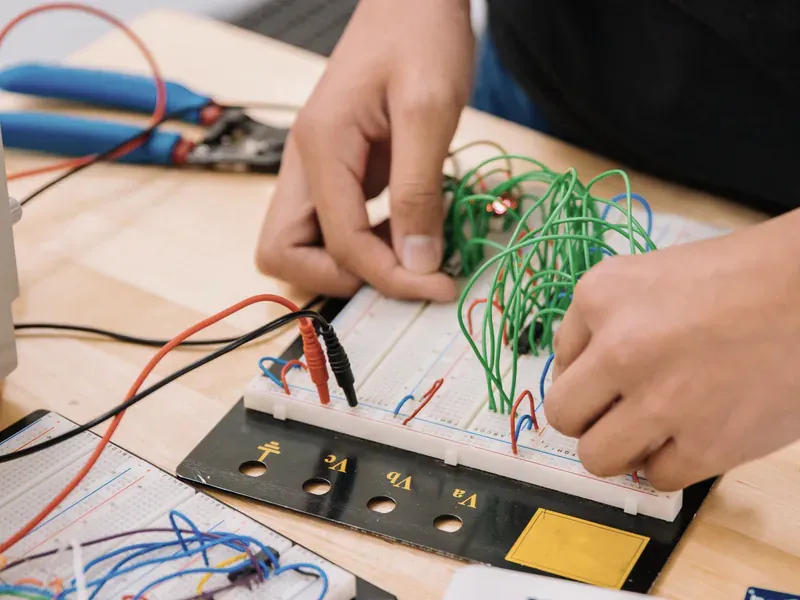
Direct Answer: Industrial buyers deploying 50K+ units per year should pursue a phased, qualification-driven RISC-V adoption strategy that reduces risk at each stage before committing to volume production. The approach has four phases. Phase 1—Supplier and Architecture Selection (Weeks 1-4): Evaluate the two Tier 1 suppliers (Espressif, GigaDevice) against the specific requirements of the target application—wireless integration needs, processing performance, industrial temperature range, distribution availability in the manufacturing region, and lifecycle commitment documentation. Obtain evaluation boards, install toolchains, and compile existing application code for the RISC-V target to assess porting effort. Phase 2—Software Port and Bench Validation (Weeks 5-12): Port the application firmware to the selected RISC-V MCU using the target RTOS and toolchain. Validate core functionality on the bench—sensor acquisition accuracy, wireless connectivity reliability, power consumption against the existing ARM design, and OTA update reliability. Phase 3—Industrial Qualification (Weeks 13-30): Execute application-specific reliability testing: thermal cycling across the expected operating range (-40 to +85C), extended burn-in at elevated temperature, EMC pre-compliance testing, and vibration/shock testing if the deployment environment requires it. Run at least 90 days of field trials at customer or internal test sites. Phase 4—Volume Ramp (Weeks 31-52): Begin with a pilot production run (1,000-5,000 units) to validate manufacturing yield, programming/test throughput, and field early-life reliability. If pilot results meet acceptance criteria, transition to volume production with dual-qualified firmware that can compile for both the existing ARM MCU and the new RISC-V MCU, maintaining supply flexibility during the transition. This 12-month qualification timeline is consistent with what we have observed across multiple industrial customers who have successfully transitioned sensor and gateway products to RISC-V MCUs.
The 12-month qualification timeline is not theoretical—it is the actual schedule that the vibration monitoring sensor manufacturer described at the beginning of this article followed, and it is representative of what other industrial IoT teams have reported. The single largest schedule variable is software porting effort, which is determined by how tightly the existing codebase is coupled to ARM-specific abstractions. Codebases developed using portable RTOS APIs (FreeRTOS, Zephyr) with a clean Hardware Abstraction Layer typically port in 4-8 engineering weeks. Codebases with significant ARM assembly, compiler intrinsics tied to ARM architecture features, or tightly integrated vendor HAL code (STM32 HAL, NXP SDK) require longer—8-16 weeks is typical, with outliers extending to 20+ weeks for complex applications with custom DSP routines or safety-certified code.
The most important architectural decision an industrial IoT team can make to facilitate RISC-V adoption is not which RISC-V MCU to select—it is investing in a clean HAL abstraction that isolates MCU-specific code from application logic. A well-designed HAL means that porting to a new MCU architecture requires rewriting only the HAL implementation layer (typically 5-15% of the total codebase), not the application logic. This is the same software architecture discipline that enables second-sourcing within the ARM ecosystem, and it pays for itself whether or not the team ultimately transitions to RISC-V. Teams that have already invested in a clean HAL for ARM portability will find the RISC-V transition surprisingly tractable. Teams with application logic tightly coupled to vendor-specific SDKs will find it substantially harder—but that tight coupling is a maintenance liability regardless of RISC-V adoption plans.
At SupplyICs, we have observed that industrial customers who approach RISC-V qualification as an incremental capability investment rather than a binary architecture switch achieve the best outcomes. The pattern we recommend: qualify one RISC-V MCU as a second architecture, maintain dual-architecture firmware (ARM and RISC-V) from a unified codebase, use RISC-V for a percentage of production volume initially (20-40% is common in year one), and flex the mix based on availability and cost. This approach captures RISC-V’s cost and supply diversification benefits without betting the product line on a single architecture transition, and it positions the team to increase RISC-V allocation as the ecosystem continues to mature.
What Is the Verdict on RISC-V for Industrial IoT Volume Procurement in 2026?
Direct Answer: RISC-V is ready for volume procurement in non-safety-critical industrial IoT applications at 50K+ units per year—but "ready" does not mean "risk-free," and the procurement decision requires evaluating specific suppliers and specific applications against the maturity gaps that remain. The silicon is shipping in volume (hundreds of millions of units from Espressif and GigaDevice alone), the toolchains are stable (GCC, LLVM, IAR, Segger), the RTOS support is production-grade (FreeRTOS, Zephyr, NuttX, RT-Thread), and industrial temperature range parts are available from multiple suppliers. The cost advantage—15-30% versus equivalent ARM Cortex-M MCUs—is real and material at 50K+ annual volumes, with the porting investment typically amortizing within 12-18 months. The strategic advantages—ISA independence, immunity from ARM licensing changes and export control restrictions, and genuine architectural diversification of the MCU supply base—compound over time and are especially valuable for industrial products with 10+ year lifecycles. The remaining gaps—functional safety certification (IEC 61508 SIL 2/3), cross-vendor RISC-V peripheral standardization, extended industrial/automotive temperature grade availability, and the long-term viability of smaller RISC-V suppliers—are real but manageable for industrial IoT teams that architect around them. The industrial buyers who start RISC-V qualification now, on non-safety-critical subsystems, building organizational knowledge and dual-architecture firmware capabilities, will be positioned to capture RISC-V's full advantages when safety certification and extended-temperature parts reach production maturity in 2028-2029. The buyers who wait for RISC-V to be "completely ready" across every dimension will be 12-18 months behind—and will have missed the window when RISC-V adoption transitions from early-adopter advantage to competitive necessity.
The question that industrial procurement teams need to answer is not “Is RISC-V better than ARM?”—that is the wrong framing. The right question is: “Does RISC-V meet the specific requirements of my industrial IoT application, at acceptable risk, with a positive total cost of ownership over the product lifecycle?” For an increasing number of applications and volumes, the answer in 2026 is yes.
The RISC-V trajectory is clear, and it is accelerating. RISC-V International’s membership has grown past 4,000 organizations. The number of commercially available RISC-V MCU designs has roughly tripled since 2023. Every major embedded toolchain vendor now supports RISC-V. Every major RTOS now runs on RISC-V. The open-source software foundation that took ARM two decades to build is being assembled for RISC-V in a fraction of that time, because the embedded software ecosystem has already learned the value of portable abstractions, open-source RTOS platforms, and vendor-neutral toolchains.
For industrial IoT procurement teams, the actionable steps are: evaluate Espressif and GigaDevice RISC-V MCUs for your next non-safety-critical design, start building dual-architecture firmware capabilities, qualify at least one RISC-V supplier for pilot production, and plan the volume transition on a timeline that matches your product’s specific requirements and risk tolerance. The ecosystem is ready. The question is whether your organization is.
SupplyICs tracks RISC-V MCU availability, pricing, and lead times across Espressif, GigaDevice, WCH, Bouffalo Lab, and the broader RISC-V supplier ecosystem. Our procurement team can provide current pricing, availability, and cross-reference guidance for specific RISC-V MCU requirements, and our engineering team can assist with supplier qualification and software porting assessments. Contact SupplyICs to discuss RISC-V sourcing for your industrial IoT product line, upload your BOM for a comprehensive MCU architecture and availability evaluation, or explore our industrial solutions and IoT consumer solutions pages for application-specific sourcing guidance.
Frequently Asked Questions (FAQ)
Are RISC-V microcontrollers ready for industrial IoT volume procurement in 2026?
Yes, with clear guardrails. RISC-V MCUs from Espressif (ESP32-C3/C6, shipping in hundreds of millions of units), GigaDevice (GD32VF103, 100M+ units shipped since 2020), and WCH (CH32V series, 200M+ units estimated) are in volume production and qualified for industrial temperature ranges (-40 to +85C). GCC and LLVM toolchain support is stable, and commercial toolchains from IAR and Segger now offer RISC-V support. FreeRTOS, Zephyr, NuttX, and RT-Thread all have production-ready RISC-V ports. However, procurement teams should assess three specific risks: second-source availability across different RISC-V vendors requires separate BSP maintenance due to non-standardized peripherals; functional safety certification (IEC 61508 SIL 2/3) is still maturing; and long-term supplier viability varies significantly between established players like GigaDevice and Espressif versus smaller vendors such as Bouffalo Lab.
How do RISC-V MCU costs compare to ARM Cortex-M for industrial IoT volumes of 50K+ units per year?
At 50K+ annual volumes, RISC-V MCUs typically deliver 15-30% per-unit cost savings versus feature-equivalent ARM Cortex-M alternatives, driven by the elimination of ARM architecture licensing fees and royalties. For a 50K-unit/year industrial sensor deployment, this translates to approximately $25,000-75,000 in annual savings on component cost alone. However, industrial buyers should factor in one-time porting costs ($30,000-80,000 for a typical industrial IoT application written in C with RTOS abstraction), the ongoing cost of maintaining a separate toolchain, and the engineering overhead of qualifying a second MCU architecture. For volumes above 100K units/year, the ROI typically materializes within 12-18 months. Below 50K units/year, ARM Cortex-M often remains the lower-total-cost option when engineering effort is fully accounted for.
Which RISC-V MCU suppliers offer industrial temperature grade components?
Multiple RISC-V MCU suppliers now offer industrial temperature range (-40 to +85C) components. Espressif's ESP32-C6 carries industrial temperature rating and is the most broadly available RISC-V wireless MCU. GigaDevice's GD32VF103 and GD32VF303 series are qualified for -40 to +85C operation and have accumulated 5+ years of field reliability data. WCH offers industrial-grade RISC-V MCUs in their CH32V series, though international distribution remains more limited than GigaDevice or Espressif. Bouffalo Lab's BL616/BL618 series supports industrial temperature but has less deployment history in rigorous industrial environments. For extended industrial temperature (-40 to +105C) or automotive AEC-Q100 Grade 2 (-40 to +105C), the RISC-V ecosystem is still developing—Renesas's automotive RISC-V program (R9A02G020) targets 2027-2028 production.