
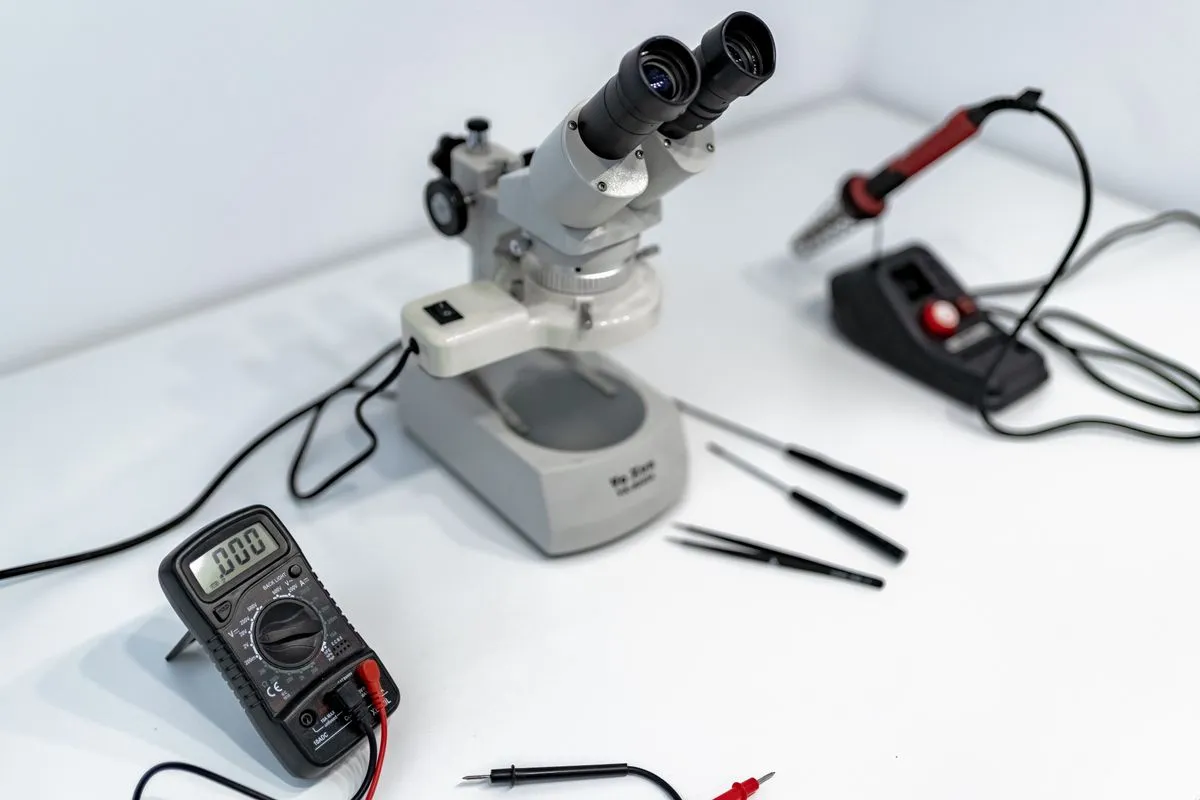
Quality assurance and inspection planning
Electronic Component Quality, Built Around Evidence
A credible quality plan connects the exact part, source route, lot condition, inspection method, acceptance criteria, and report. It does not promise that one certificate, photograph, or test can remove every sourcing risk.
Inspection strategy
Risk determines the evidence plan
Electronic component quality control should begin before material reaches a microscope. The commercial requirement, source evidence, package, lot history, and consequence of failure establish which checks are relevant and how findings will be accepted.
This makes the plan auditable: each method has a reason, every sampled device is identifiable, and unresolved limits remain visible to the buyer.
Source route
Authorized-channel traceability, independent-market supply, customer-owned stock, or legacy inventory each requires a different evidence plan.
Part and package
Commodity discretes, fine-pitch ICs, power modules, programmed devices, ceramic packages, and moisture-sensitive parts do not share one test recipe.
Lot condition
Date and lot codes, packing, storage history, seal condition, oxidation, mixed markings, and previous handling determine what must be escalated.
Application consequence
Unit value, scarcity, line-down exposure, safety relevance, repair context, and customer acceptance criteria set the appropriate depth.
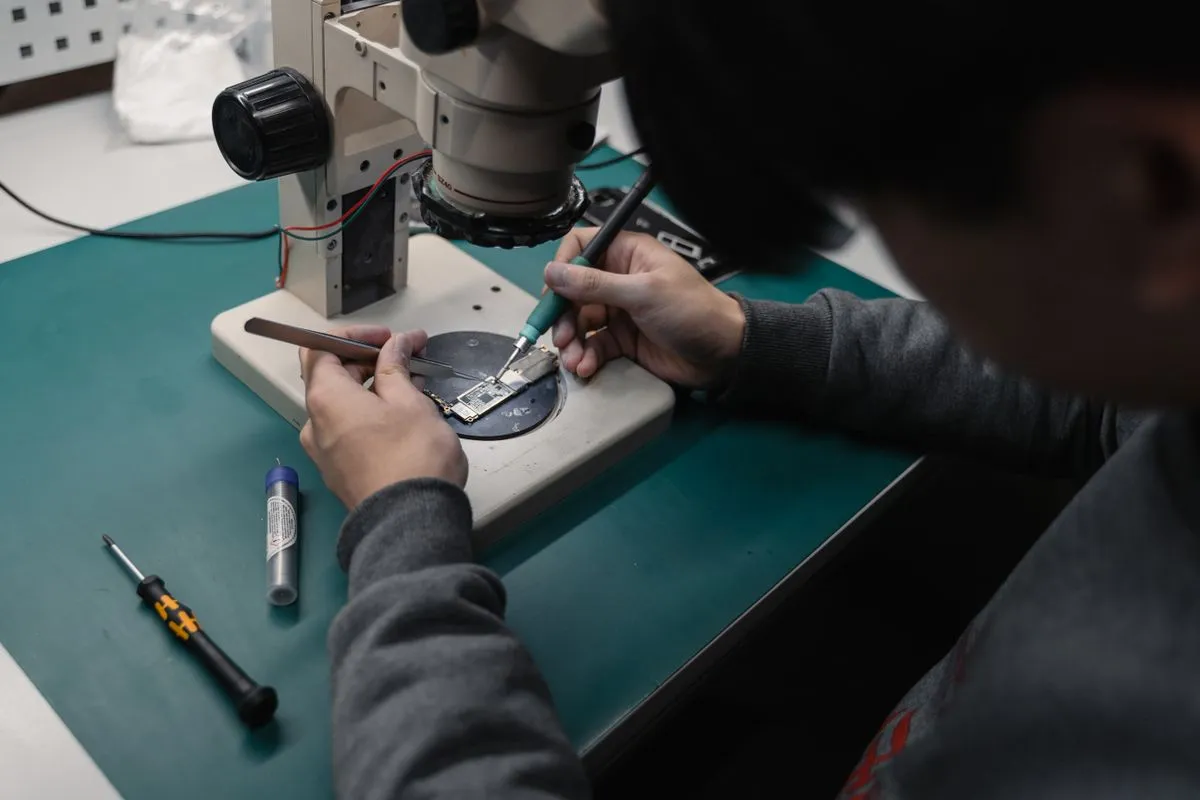
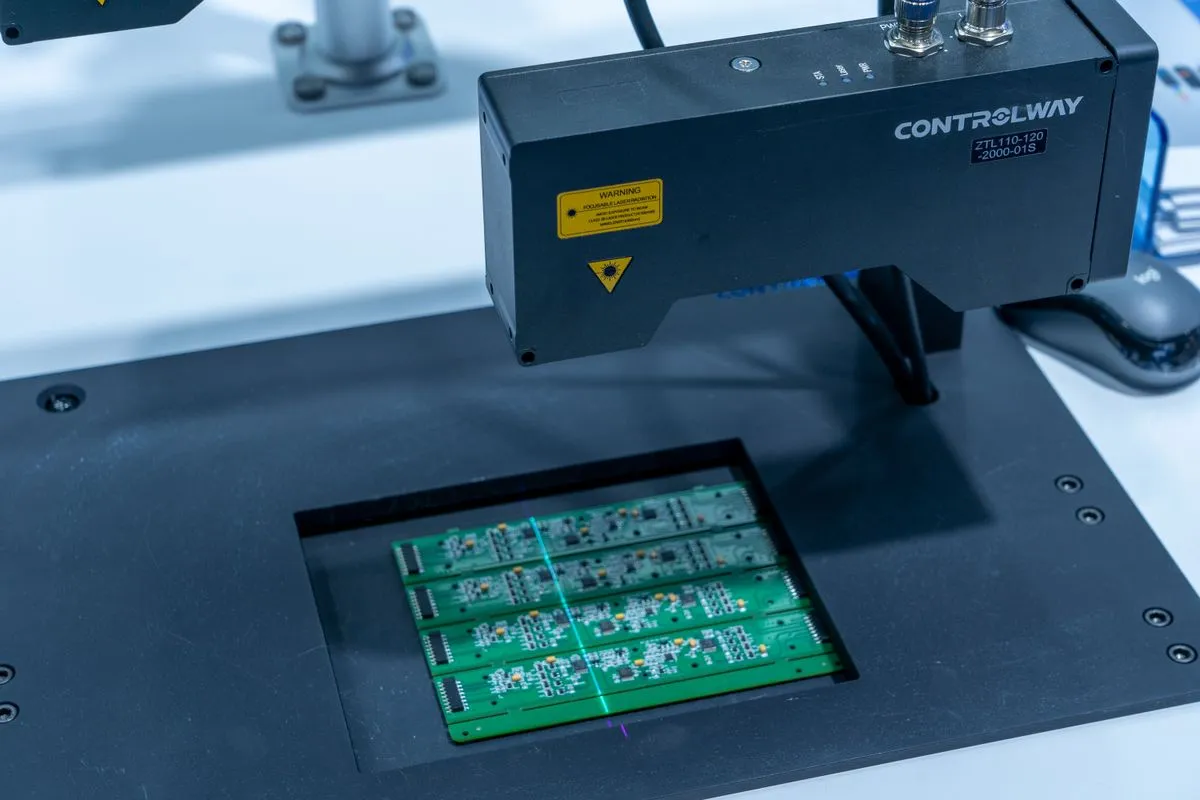

Controlled workflow
From purchase requirement to released lot
The inspection plan remains connected to the commercial lot throughout the order. That connection matters as much as the equipment used.
- 01
Define the purchase requirement
Confirm the complete orderable part, manufacturer, package, grade, quantity, date-code limits, documentation, end use, and any approved-source restrictions.
- 02
Review source and lot evidence
Connect supplier records, available traceability, lot photographs, packaging, labels, quantities, and known lifecycle information before selecting tests.
- 03
Perform incoming inspection
Check quantity, packaging condition, moisture controls, leads or terminations, body condition, markings, dimensions, and consistency within the lot.
- 04
Escalate by risk
Use X-ray, XRF, solderability, electrical characterization, decapsulation, or other external laboratory work only where the component, source, and application justify it.
- 05
Record results and exceptions
Keep inspection images, sample identity, method, acceptance criteria, observed results, deviations, and disposition linked to the actual lot.
- 06
Release, pack, and preserve
Release only against the agreed requirement, then apply suitable ESD and moisture handling, label the shipment, and retain the order evidence package.
Method selection
What each inspection method can—and cannot—establish
Professional electronic component testing services state their boundaries. Combining methods can increase confidence, but no short test program proves every datasheet parameter, lifetime expectation, or production-use condition.
| Method | Best fit | Useful evidence | Important boundary |
|---|---|---|---|
| Documentation and lot review | Every order; especially scarce, obsolete, or open-market material | Source path, lot and date-code consistency, package history, declared status, and missing evidence. | Documents can be incomplete or false; paperwork alone does not authenticate a device. |
| External visual and marking review | ICs, modules, discretes, and packed components | Remarking indicators, resurfacing, damage, oxidation, lead condition, package anomalies, and within-lot inconsistency. | A normal exterior cannot prove die identity or electrical performance. |
| Dimensional and package checks | Fine-pitch, BGA/LGA, power packages, and footprint-sensitive parts | Body and lead dimensions, coplanarity concerns, package mismatch, and assembly risk. | Mechanical agreement does not establish functional equivalence. |
| X-ray inspection | High-value ICs, BGAs, modules, and suspect lot comparisons | Die outline, bond-wire pattern, internal construction, voids, and inconsistent devices within a sample. | Interpretation needs reference evidence; X-ray does not confirm every die function or material property. |
| XRF material screening | Lead finish, plating, and elemental-composition questions | Elemental composition at the measured surface and potential finish or material discrepancies. | XRF is not a direct electrical or die-authentication test and cannot determine all substances or exemptions. |
| Electrical testing | Parts with defined test conditions and sufficient sample or fixture support | Continuity, leakage, static parameters, curves, or functional behavior within an agreed test scope. | Limited tests do not prove the complete datasheet, reliability, lifetime, or system suitability. |
| Solderability or destructive analysis | Aged material, high-risk lots, or critical authenticity questions | Termination wetting performance or die-level construction and marking evidence. | Testing consumes samples and requires a defined sampling plan, acceptance criteria, and qualified laboratory method. |
Advanced or destructive methods may be arranged through an appropriate external laboratory. Scope, accreditation needs, sample size, acceptance criteria, cost, and lead time should be agreed before testing.
Standards and claims
Reference the right document—and verify the claim
Standards address different layers of quality. A quality-management certificate is not a test report; an ESD program is not counterfeit authentication; and a visual-inspection reference is not proof of complete electrical performance.
Where a certificate or accreditation is required by contract, request the current document and verify its issuer, validity dates, certified entity, address, scope, standard edition, and any exclusions during quotation.
ISO 9001:2015
Quality-management system
Process control, records, corrective action, supplier control, and continual improvement.
Application: Confirm current certificate, issuing body, validity, and scope when certification is a contractual requirement.
ANSI/ESD S20.20
Electrostatic-discharge control program
Administrative and technical controls for handling ESD-sensitive items.
Application: Translate the program into order-specific handling, workstation, personnel, packaging, and verification records.
JEDEC J-STD-033
Moisture/reflow-sensitive surface-mount devices
Floor life, baking, dry pack, moisture-barrier packaging, desiccant, and humidity indication.
Application: Apply according to the actual MSL, exposure history, package condition, and customer packing requirement.
SAE AS6081
Counterfeit avoidance for independent distribution
Risk assessment, supplier controls, inspection and test planning, reporting, and disposition.
Application: Use as a planning reference; do not infer certification or full test coverage from an isolated phrase.
IDEA-STD-1010
Electronic component inspection acceptance
Terminology, visual examination, indicators, and accept/reject guidance for electronic parts.
Application: Define the edition, sampling, equipment, acceptance criteria, and reporting scope on the purchase requirement.
J-STD-002
Component lead and termination solderability
Methods and acceptance criteria for solderability testing.
Application: Specify the applicable method, conditioning, sample count, and destructive-test authorization before work begins.
Release evidence
What a useful quality report should contain
A report earns trust when another reviewer can identify what was inspected, how it was assessed, which lot it represents, what the result means, and what remains unknown.
- 01Purchase requirement and complete orderable part number
- 02Supplier, source-route, and traceability evidence available for review
- 03Lot/date codes, quantity, sample identity, and packaging condition
- 04Inspection or test method, equipment, date, operator or laboratory, and sample size
- 05Reference document, revision, limits, and agreed acceptance criteria
- 06Images or measurement records tied to the inspected samples
- 07Exceptions, unresolved questions, disposition, and customer authorization where required
- 08Packing, ESD, moisture-control, labeling, and shipment records
Buyer checklist
Put acceptance criteria into the RFQ—not after material arrives
State the complete MPN, intended use, approved source boundaries, lot and date-code rules, packing, traceability, inspection and testing scope, sample size, report contents, destructive-test permission, and reject or escalation process. For an alternative component, add the comparison baseline and customer validation gates.
FAQ
Electronic component quality questions
Does a visual inspection prove that an electronic component is authentic?
No. External visual inspection can reveal suspect markings, resurfacing, damage, oxidation, package anomalies, and lot inconsistency. Authentication confidence comes from combining appropriate source evidence, comparison references, inspection, and—when risk justifies it—additional laboratory or electrical work.
Is X-ray inspection required for every electronic component order?
No. X-ray is selected when internal construction evidence is useful and proportionate to the part, source, lot, value, and application risk. It may add little value to some low-risk orders and may be essential for selected high-value or suspect lots.
What should be included in an electronic component inspection report?
The report should identify the orderable part, lot and samples, method, equipment or laboratory, date, reference and acceptance criteria, results, images or measurements, deviations, disposition, and any remaining limitations. Evidence must be tied to the delivered lot rather than shown as a generic capability sample.
Can SupplyICs approve an alternative component for production?
SupplyICs can organize candidate comparison, sourcing evidence, samples, inspection options, and test inputs. The customer’s authorized engineering and quality functions remain responsible for production approval, qualification, safety, regulatory, and change-control decisions.
How should quality requirements be included in an RFQ?
Provide the complete part number, quantity, end use, required date, approved sources, date-code and packaging limits, traceability needs, inspection or test requirements, report format, sampling and acceptance criteria, and whether destructive work is authorized.
Define the evidence before we quote the inspection
Send the complete part number, quantity, source restrictions, end use, documentation needs, inspection methods, sampling, acceptance criteria, and required report format.
Start a Quality-Controlled RFQ