Table of Contents
- What Is Driving MCM Adoption Across End Markets?
- 1. The Reticle Limit: Why Monolithic Dies Are Hitting a Wall
- 2. Heterogeneous Integration: Mixing Process Nodes for Optimal Cost
- 3. Time-to-Market Compression
- MCM vs. Discrete Procurement: The Decision Matrix
- When Should You Choose MCM Procurement?
- Scenario A: AI Accelerator for Data Center Deployment
- Scenario B: Automotive ADAS Central Compute Module
- Scenario C: Industrial IoT Gateway Processor
- Scenario D: 5G Small Cell RF Front-End
- What Are the Hidden Costs of MCM Procurement?
- Known-Good-Die (KGD) Testing Overhead
- Interposer Yield Loss
- Inventory Obsolescence Risk
- Procurement Playbook for MCM-Based BOMs
- 1. Map Every Constituent Die’s Supply Chain
- 2. Maintain the Discrete Fallback Design
- 3. Diversify OSAT Relationships
When AMD announced its MI300X AI accelerator—a 13-die multi-chip module combining 12 chiplets with HBM3 memory on a single interposer—it marked a turning point in semiconductor procurement. The chiplet era had moved from R&D to volume production, and with it came a fundamental shift in how procurement teams must evaluate component sourcing strategies.
The traditional procurement model is straightforward: identify each discrete IC on the BOM, qualify suppliers, negotiate pricing, and manage inventory. The multi-chip module model is different: you are buying a pre-integrated system of dies from a single supplier (the MCM integrator), and your supply chain leverage shifts from component-level to module-level.
This guide walks through the practical procurement implications of that shift.
What Is Driving MCM Adoption Across End Markets?
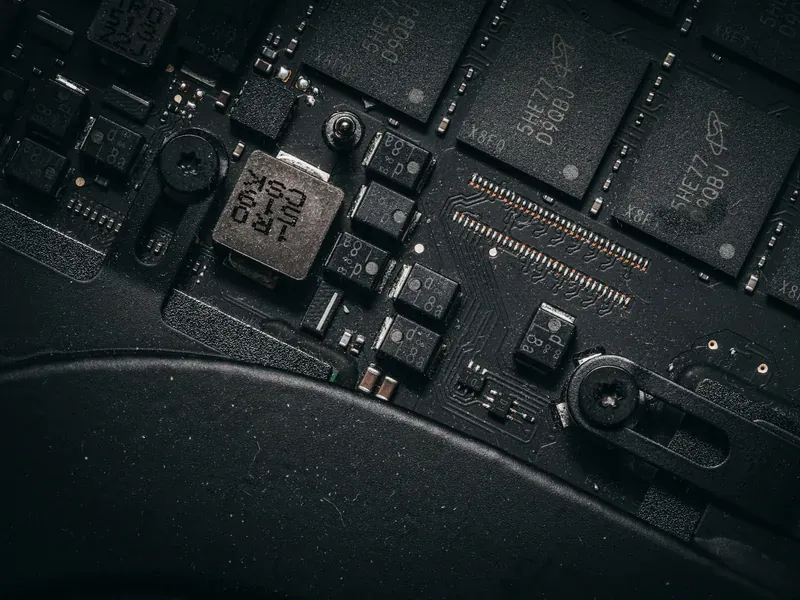
Three market forces are accelerating MCM adoption in 2026:
1. The Reticle Limit: Why Monolithic Dies Are Hitting a Wall
Semiconductor lithography tools have a maximum reticle size of approximately 858 mm². A single monolithic die cannot exceed this limit—and at advanced nodes (3nm, 2nm), yield economics push practical die sizes far below it. The solution: break the design into smaller chiplets that each fit comfortably within the reticle limit, then reassemble them on a silicon interposer or organic substrate.
This is not a temporary workaround. It is the new normal for high-performance computing. Every AI accelerator shipping in volume in 2026—NVIDIA H200/B100, AMD MI300X, Intel Gaudi 3, Google TPU v5p—uses multi-chip module packaging. The procurement implication: if your product requires leading-edge AI compute, you are buying MCMs by default, not by choice.
2. Heterogeneous Integration: Mixing Process Nodes for Optimal Cost
An MCM allows the system architect to place the logic die on an expensive advanced node (3nm) while placing the I/O die and memory PHYs on cheaper mature nodes (7nm, 12nm). This is impossible with a monolithic die. The cost savings from mixing process nodes can offset the added packaging cost, making the MCM cheaper than the hypothetical monolithic equivalent—even before accounting for yield improvement from smaller individual die sizes.
3. Time-to-Market Compression
Designing and validating a 600 mm² monolithic die on a new process node takes 24–36 months. Designing and validating a set of 150 mm² chiplets on proven nodes takes 12–18 months—and subsequent designs can reuse validated chiplets without re-spinning every block. For procurement, this means MCM-based product roadmaps iterate faster, compressing the sourcing window and requiring more agile supplier qualification processes.
MCM vs. Discrete Procurement: The Decision Matrix

| Decision Factor | Multi-Chip Module | Discrete Components |
|---|---|---|
| Unit Cost (Component) | Higher (1.8–2.5x sum of constituent dies) | Lower (commodity IC pricing) |
| System Cost (PCB + Assembly) | Lower (simpler PCB, fewer layers, reduced assembly steps) | Higher (complex high-speed routing, more PCB layers) |
| Supply Risk | Concentrated (single MCM integrator) | Distributed (multiple discrete suppliers) |
| Lead Time | Longer (26–52 weeks for CoWoS-based MCMs) | Variable (8–40 weeks depending on component) |
| Second-Source Feasibility | Difficult (requires alternative OSAT + re-qualification) | Easier (pin-compatible alternatives exist for most discretes) |
| Design Flexibility | Low (locked to MCM integrator’s roadmap) | High (swap individual components as needed) |
| Qualification Cycle | Long (12–18 months for automotive/industrial) | Variable (3–12 months depending on component criticality) |
| EOL Risk | High (entire MCM becomes obsolete if one constituent die goes EOL) | Manageable (only the EOL component needs replacement) |
| Performance Density | Highest (μm-scale die-to-die interconnect) | Limited by PCB trace bandwidth |
| Inventory Carrying Cost | High (expensive integrated module) | Lower (buffer stock only critical discretes) |
When Should You Choose MCM Procurement?
Scenario A: AI Accelerator for Data Center Deployment
Recommendation: MCM procurement is the default. The performance requirements (HBM bandwidth, inter-die interconnect density) cannot be met with discrete components on a PCB. Your procurement focus should be on MCM supply chain resilience—qualifying an alternative packaging partner (ASE FoCoS or Intel EMIB as backup to TSMC CoWoS) and building lead time buffers.
Scenario B: Automotive ADAS Central Compute Module
Recommendation: Hybrid approach. Use an MCM for the AI accelerator and HBM interface (where discrete integration is infeasible), but maintain discrete sourcing for surrounding components (power management, communication PHYs, sensor interfaces). This limits MCM dependency to the truly performance-critical section of the BOM while preserving supply flexibility for the rest.
Scenario C: Industrial IoT Gateway Processor
Recommendation: Discrete procurement preferred. Industrial IoT volumes typically fall below MCM minimum order quantities, and the performance requirements can be met with a discrete application processor + DRAM + flash configuration. The lower unit cost and multi-source flexibility of discrete components outweigh the integration benefits of an MCM.
Scenario D: 5G Small Cell RF Front-End
Recommendation: Module procurement (if available as COTS). RF front-end modules integrating PA, LNA, filter, and switch functions are increasingly available as commercial off-the-shelf (COTS) multi-chip modules from Qorvo, Skyworks, and Broadcom. These are not custom MCMs—they are standard products with multi-source availability—offering the integration benefits of MCM without the single-source risk.
What Are the Hidden Costs of MCM Procurement?
Known-Good-Die (KGD) Testing Overhead
In a discrete component BOM, each IC is tested at wafer probe and final test before it reaches your assembly line. In an MCM, the constituent dies must additionally pass KGD testing—a higher-coverage test that ensures each die is fully functional before it is committed to the expensive MCM assembly process. KGD testing adds 8–15% to the die cost and is non-negotiable: placing a defective die into an MCM wastes the entire module.
Interposer Yield Loss
The silicon interposer is itself a large, expensive die fabricated on a mature node. Interposer yield is typically 90–95%, meaning 5–10% of assembled MCMs fail at interposer test. This yield loss is absorbed into the MCM unit price.
Inventory Obsolescence Risk
If any constituent die in the MCM goes end-of-life, the entire MCM SKU becomes obsolete—even if the other dies are still in production. Procurement teams managing MCM-based BOMs must track the lifecycle status of every constituent die, not just the MCM as a whole.
Procurement Playbook for MCM-Based BOMs
1. Map Every Constituent Die’s Supply Chain
Request from your MCM supplier a constituent die bill of materials that identifies:
- Die manufacturer and fab location
- Process node
- Lifecycle status (active, not-recommended-for-new-design, EOL announced)
- Single-source or multi-source status
This is the MCM equivalent of a traditional BOM, and it is essential for supply risk assessment. If the MCM supplier will not provide this information, mark the MCM as high supply risk.
2. Maintain the Discrete Fallback Design
Even if your primary production path uses an MCM, invest the engineering effort to maintain a discrete-component version of the design. This does not need to be fully production-qualified—it needs to be a documented, simulation-verified reference design that can be rapidly prototyped if the MCM supply chain fails. The cost of maintaining the fallback design is small relative to the cost of being unable to ship product for 6 months while you scramble for alternatives.
3. Diversify OSAT Relationships
TSMC’s CoWoS is the market leader, but alternatives are maturing:
- ASE FoCoS (Fan-out Chip-on-Substrate): Viable for simpler chiplet designs, available now
- Intel EMIB (Embedded Multi-die Interconnect Bridge): Shipping in volume for AWS, Cisco, SpaceX
- Samsung I-Cube 2.5D: Growing traction, particularly for Samsung Foundry customers
Establishing a relationship with a second OSAT before you need it reduces the qualification timeline from 12+ months to 3–6 months when the need arises.
For MCM-dependent designs, maintaining a second supply source for the discrete components that surround the module—power management ICs from TI or Infineon, communication PHYs from Broadcom or Marvell, and passive components from multiple qualified suppliers—provides a layer of resilience even when the MCM itself is single-sourced.
Evaluating MCM vs. discrete procurement for your next design? SupplyICs sources both integrated modules and discrete components across the full semiconductor supply chain. Upload your BOM for a comprehensive supply risk assessment or request a quote.
Frequently Asked Questions (FAQ)
When does it make sense to buy a multi-chip module instead of sourcing discrete components?
Multi-chip modules become the better procurement decision when three conditions align: (1) your design requires high-bandwidth die-to-die interconnects that cannot be achieved with PCB traces (e.g., HBM-to-logic interfaces exceeding 1 TB/s bandwidth); (2) the MCM integrates specialized dies that are individually difficult to source (e.g., a stacked memory-on-logic module that combines a custom ASIC with HBM stacks); and (3) your annual volume exceeds the MCM supplier's minimum order quantity (typically 10,000–50,000 units/year for custom MCMs). For volumes below this threshold, sourcing discrete components and integrating them on the PCB is usually more cost-effective—even accounting for the additional PCB area and assembly complexity.
How do I qualify a second source for a multi-chip module?
Qualifying a second source for an MCM is fundamentally different from qualifying a second source for a discrete IC. An MCM integrates multiple dies from potentially different foundries and suppliers into a single packaged product—changing any constituent die changes the entire MCM. True second-sourcing requires either: (a) an identical MCM from a different OSAT (e.g., ASE FoCoS as an alternative to TSMC InFO); (b) a functionally equivalent MCM using different constituent dies (complex, 12–18 month qualification); or (c) a discrete-component fallback design that provides the same system function without MCM integration (less performant but more supply-resilient). Best practice: maintain the discrete-component fallback design as a documented contingency, even if your primary production path uses the MCM.
What is the cost difference between MCM and discrete procurement for a typical AI accelerator BOM?
For a mid-range AI inference accelerator with one logic die and four HBM stacks: the integrated MCM (e.g., TSMC CoWoS-S) costs roughly 1.8–2.5x the sum of the constituent dies at wafer level, reflecting the interposer fabrication, die-to-die bonding, and known-good-die (KGD) testing overhead. However, the MCM typically reduces PCB area by 40–60%, eliminates complex high-speed PCB routing (saving 4–6 PCB layers), and simplifies system-level validation. The total system cost (MCM + simpler PCB + reduced assembly + faster time-to-market) is often comparable to or lower than the discrete equivalent. The procurement decision should be made on total system cost, not component unit price.