
Table of Contents
- Freeze the Buyer’s Requirement Before Comparing Quotes
- Separate MOQ, MPQ, and Package Quantity
- Treat NCNR as a Contract Condition, Not a Quote Footnote
- Normalize Availability and Lead-Time Language
- Compare Traceability and Quality Scope on the Same Line
- Calculate Extended Landed Cost
- Control Quote Validity and Supplier Clarifications
- Convert the Selected Quote Into an Executable Purchase Order
A distributor quote can show the lowest unit price and still be the most expensive offer to execute. A minimum order that creates surplus, a factory lead time presented as available stock, or an NCNR acknowledgment accepted after the purchase order can move far more cost than a small difference in price per component.
The practical purpose of an electronic component sourcing RFQ is to create offers that can be compared without guessing. Procurement should give each supplier the same technical identity, quantity schedule, delivery point, documentation requirements, and commercial assumptions. The returned quotes then need to be normalized again, because suppliers use terms such as MOQ, MPQ, stock, lead time, and traceability in different ways.
This guide addresses that comparison step. It does not rank distribution channels or replace a supplier audit. For that broader decision, use a separate semiconductor vendor comparison framework.
Freeze the Buyer’s Requirement Before Comparing Quotes
Every comparison starts with one controlled demand line. The line should name the complete manufacturer part number, original component manufacturer, required quantity, acceptable delivery schedule, ship-to location, currency, packaging form, and any approved alternatives. If the suffix is missing, two suppliers can quote different temperature grades, reel sizes, finishes, or qualification levels while appearing to answer the same request.
The requested quantity also needs context. State whether it is a one-time buy, a prototype quantity followed by production, a scheduled release, or a forecast that has not been authorized. A supplier may price a 50,000-piece annual forecast on the assumption of a binding release, while another prices only the first 5,000 pieces. Those prices answer different questions.
A controlled BOM upload can reduce transcription errors, but a clean spreadsheet is not enough by itself. Add the conditions that determine whether delivered parts are usable:
- exact manufacturer part number and approved manufacturer list status;
- required quantity and acceptable overage or shortage;
- need-by dates and whether partial shipments are allowed;
- standard packing quantity, moisture barrier packaging, and reel or tray requirements;
- date-code, lot-code, country-of-origin, and traceability requirements;
- inspection, test report, certificate, and warranty expectations;
- delivery location, currency, Incoterm, and payment terms.
Do not invite a supplier to substitute material silently. Ask it to mark every deviation from the RFQ, including a different suffix, mixed lots, alternate packaging, partial quantity, or non-authorized source.
Separate MOQ, MPQ, and Package Quantity
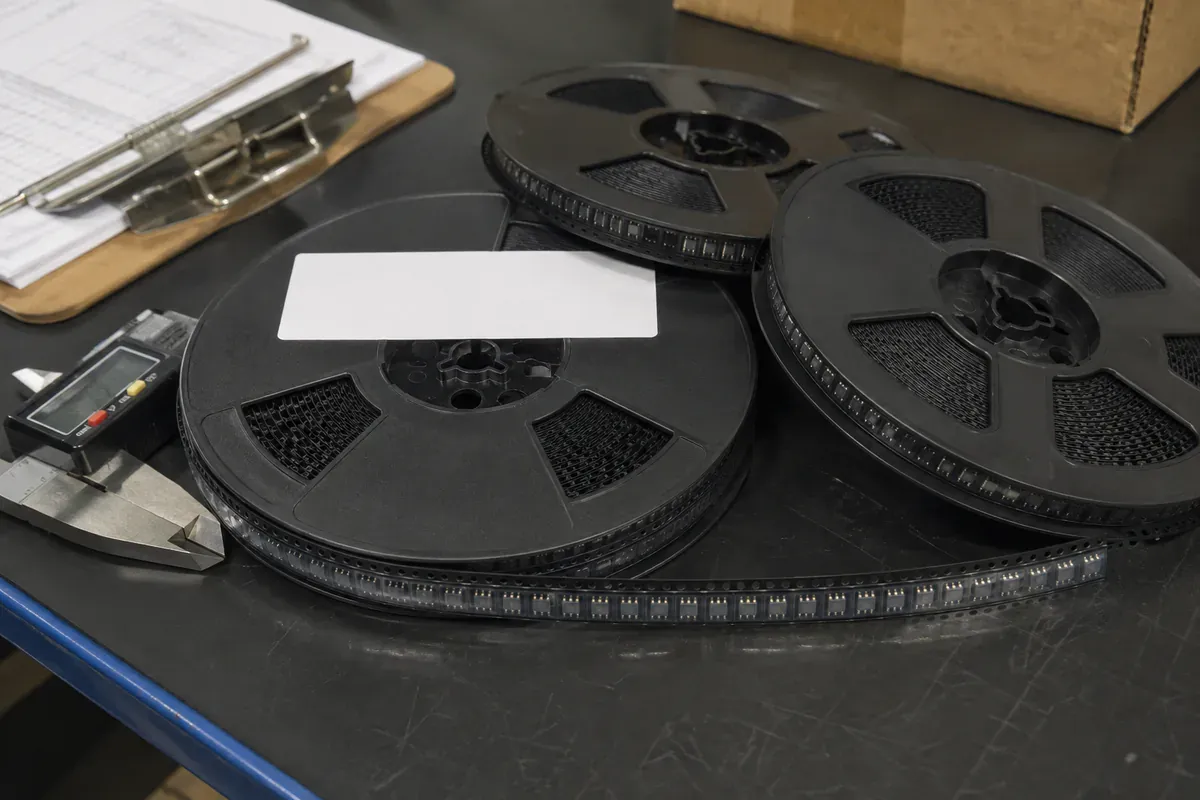
Quantity fields are a frequent source of false savings. Minimum order quantity (MOQ) is the smallest commercial order a seller will accept. Minimum package quantity or multiple purchase quantity (MPQ) generally controls the increment in which an order can be placed. Standard package quantity (SPQ) describes the number of parts in a factory pack, reel, tray stack, tube box, or other standard container.
The labels are not used consistently across every manufacturer and distributor. The quote must therefore state the actual permitted order quantity and what physical packaging will arrive. If demand is 6,200 pieces, an offer with an MOQ of 5,000 and an MPQ of 1,000 may require 7,000 pieces. Another quote may allow 6,200 but charge for breaking a reel. Compare the cost of the quantity that must be purchased, not the unit price multiplied by the original demand.
| Quote field | Question procurement should answer | Cost or risk if unclear |
|---|---|---|
| MOQ | What is the smallest accepted line quantity? | Unplanned inventory or an unusable offer |
| MPQ/order multiple | In what increments can quantity change? | Forced overbuy or split-reel fees |
| SPQ | How many parts are in each standard pack? | Packaging changes and receiving effort |
| Overage tolerance | Can shipped quantity exceed the PO? | Invoice and inventory variance |
| Split quantity | Are partial deliveries or partial reels allowed? | Extra freight, handling, and lot mixing |
A lower price at 10,000 pieces is not a saving when 4,000 pieces are likely to become excess. Use the expected usable quantity and carrying period in the comparison model.
Treat NCNR as a Contract Condition, Not a Quote Footnote

Non-cancelable, non-returnable (NCNR) status transfers a material commitment to the buyer. The ECIA NCNR industry guideline describes NCNR as a written-contract classification that prevents cancellations or reductions and generally prevents returns except for applicable warranty issues. It also recommends that the status be communicated during quotation and that customer acknowledgment be obtained with the order.
Actual seller terms control the transaction. For example, Avnet’s Americas terms identify products marked non-standard or NCNR as non-cancelable, non-returnable, and non-reschedulable. The same terms distinguish product price from taxes, freight, duties, tariffs, and other charges. A buyer should not assume that an internal PO statement overrides the supplier’s acknowledgment or posted terms.
Before accepting NCNR, procurement should confirm:
- the exact part number, committed quantity, unit price, and delivery schedule;
- the event that makes the commitment binding;
- whether cancellation, push-out, pull-in, or quantity reduction is ever allowed;
- how manufacturer discontinuance, allocation, or price changes are handled;
- which warranty, nonconformance, and counterfeit remedies remain;
- whether the commitment passes through from the manufacturer or is a seller policy.
Engineering approval is especially important for a custom, programmed, end-of-life, or not-recommended-for-new-design part. NCNR should not be accepted before the design identity and demand are stable.
Normalize Availability and Lead-Time Language
“Available” can mean seller-owned inventory, inventory at another branch, stock visible through a third party, material expected from the factory, or a supplier’s unconfirmed indication. Put each quote into one of four evidence states: on-hand and allocated; on-hand but not allocated; inbound against a confirmed order; or factory lead time without a reserved position.
Ask for the inventory location, ownership, allocatable quantity, lot count, packing condition, and date when availability was checked. For factory supply, ask whether the lead time begins at quote acceptance, distributor order placement, manufacturer acknowledgment, or production release. Record both the quoted lead time and the promised ship date.
Partial deliveries may improve the first production date while increasing freight and lot variability. If the buyer needs one homogeneous lot, a quick first shipment from several branches may be worse than a later single-lot delivery. Make this tradeoff visible instead of hiding it in a notes column.
Compare Traceability and Quality Scope on the Same Line
A quote that includes original manufacturer packaging and authorized-channel traceability is not equivalent to a quote that includes only seller photos and a seller-issued certificate. State the required evidence before price comparison so that suppliers do not price different quality scopes.
For commercial parts, useful quote fields include source category, original packaging status, manufacturer label availability, date and lot codes, chain-of-custody records, certificate type, sample availability, inspection plan, and the party responsible for destructive testing. High-risk purchases may require a separate date-code and traceability protocol and a risk-based test plan.
A certificate of conformance is a record, not proof by itself. The buyer should know who issued it, what it certifies, and which underlying records can be produced. The quote should also say whether lots may be mixed and whether delivered labels and packaging must match the pre-award photos.
Calculate Extended Landed Cost

Unit price is only one component of commercial value. Calculate the extended price on the quantity that must actually be purchased, then add costs that change between offers.
A useful internal model is:
Extended landed cost = purchased quantity × unit price + freight + duty/tariff + brokerage + test/inspection + payment/financing cost + handling + expected excess exposure
Do not double count costs already included under the quoted Incoterm. Record who is the importer of record, the origin used for customs purposes, the destination, and whether duty changes can be passed through before shipment. Currency exposure matters when the quote validity is shorter than the production release cycle.
Testing also changes the usable unit cost. A 1,000-piece independent-market lot may require samples for destructive analysis. Divide the total acquisition and test cost by the expected releasable quantity, not by the quantity on the invoice.
| Comparison item | Quote A | Quote B | Normalized basis |
|---|---|---|---|
| Ordered quantity | 10,000 | 8,000 | Actual purchasable quantity |
| Extended component price | — | — | Price × ordered quantity |
| Freight and duty | — | — | Same ship-to and Incoterm |
| Inspection/testing | — | — | Same risk-based scope |
| Payment timing | — | — | Same cash-cost assumption |
| Expected usable quantity | — | — | After samples and allowed loss |
| Cost per usable piece | — | — | Total divided by usable quantity |
The model should not pretend to predict every disruption. Its value is showing which assumptions make one offer appear cheaper.
Control Quote Validity and Supplier Clarifications

A quote is a time-stamped commercial proposal. Record its issue date, expiration, inventory reservation period, exchange-rate basis, and any statement that price can change before shipment. If the supplier changes a material field, preserve the revised quote instead of overwriting the original.
Send clarifications as a numbered list and require written answers. “Please confirm traceability” is too vague. Ask whether the material is in original manufacturer-sealed packaging, whether the supplier owns it, whether the quantity is allocated to the buyer, and which documents will ship with it.
Keep technical deviations and commercial deviations separate. Engineering should approve a different part identity; quality should approve a different evidence or inspection scope; procurement should approve price, schedule, payment, and liability. A single email saying “approved” can hide who accepted which risk.
Convert the Selected Quote Into an Executable Purchase Order
The final purchase order should carry forward the winning quote’s exact assumptions. Reference the supplier quote number and revision, but repeat the fields that control acceptance. Include the complete manufacturer part number, quantity, price, delivery dates, allowed lots, packing, traceability documents, inspection or test requirements, and handling of nonconforming material.
If NCNR applies, identify the lines, quantities, schedule, and governing acknowledgment. If the supplier may ship early or partially, state whether that is permitted. If price excludes tariffs or extraordinary freight, define the evidence and approval needed before a surcharge can be invoiced.
A clean quote comparison ends with a PO that receiving and quality teams can inspect. Once requirements have been normalized and approved, the buyer can submit the controlled line through the RFQ channel without asking the next supplier to reconstruct the decision.
Frequently Asked Questions (FAQ)
What information should an electronic component RFQ include?
Include the complete manufacturer part number, approved manufacturer, quantity, target delivery schedule, ship-to location, packaging, date-code or lot requirements, traceability documents, inspection scope, and commercial terms. A distributor cannot quote comparable material if the technical and documentary requirements remain implicit.
What is the difference between MOQ, MPQ, and SPQ?
MOQ is the minimum order quantity a seller will accept, MPQ is the increment in which quantity can be ordered, and SPQ is the quantity in a standard package. Suppliers use these labels inconsistently, so the quote should state the allowed order quantity and the packaging delivered.
Does NCNR remove warranty rights?
Not automatically. NCNR normally restricts cancellation, rescheduling, and convenience returns, while applicable warranty remedies may remain. The controlling quote, acknowledgment, purchase order, and seller terms should state the exact treatment.
How should buyers compare electronic component prices?
Normalize each offer to the same manufacturer part number, usable quantity, delivery location, currency, Incoterm, packaging, documentation, test scope, and payment timing. Then compare extended landed cost and operational exposure instead of unit price alone.