
Table of Contents
A product change notification is only useful when it reaches the people who can decide what the change means for a specific design. An email filed under a manufacturer name does not tell receiving which reels to release, engineering which tests to repeat, or an EMS partner which production order may use changed material.
For semiconductor buyers, the practical output of PCN review is a controlled decision: affected ordering codes, evidence reviewed, application-specific acceptance conditions, and a way to distinguish material during the transition. This article covers changes to continuing products. Discontinuation, last-time buys, and replacement roadmaps belong in a separate obsolescence management process.
Separate Market News from a Product Change Notice

Corporate announcements can justify asking questions, but they cannot identify affected production lots. On August 24, 2026, Infineon announced an agreement to acquire C2i Semiconductors and said closing was expected in the third quarter of 2026. That acquisition announcement is not evidence that an existing part has changed fabrication site, qualification status, or ordering code.
Treat such news as a monitoring trigger. Ask whether there is a formal notice relevant to the purchased products, and record the answer. Do not open a substitution program merely because ownership is changing, or assume that an announced transaction has already closed.
A useful starting point is the manufacturer’s own notification process. Texas Instruments describes its PCN contents, including affected products, the reason for the change, anticipated impact, qualification information, sample availability, and projected shipment timing. Those fields help define the intake record; they do not replace a customer’s acceptance criteria.
Match the Notice to the BOM and the Material Already in Motion

Start with the full manufacturer ordering code. A family name alone may omit the package, temperature grade, packing option, or variant that determines applicability. Preserve the original affected-part attachment, then compare it with the approved vendor list, open purchase orders, inventory, subcontractor stock, and service BOMs.
Keep an explicit result for every potentially affected line: matched, excluded with evidence, or unresolved. A failed spreadsheet match is not an exclusion if supplier descriptions have removed punctuation or truncated a suffix.
| Intake field | What the reviewer needs to establish |
|---|---|
| Notice identity | Manufacturer, notice number, revision, issue date, and source document |
| Exact product scope | Full ordering codes and any exclusions stated in the notice |
| Manufacturing scope | Relevant site, process, material, assembly, or test change |
| Material already committed | Stock, work in progress, open orders, and subcontractor exposure |
| Transition identification | Lot, label, trace code, or other manufacturer-supported distinction |
| Decision dates | Sample timing, expected changed shipments, and any required customer response |
Manufacturer filters in the TI catalog or Microchip catalog can help organize an internal search, but a catalog listing is not a manufacturer’s PCN register or an authorization record. Retain the actual notice beside the BOM line.
If the same component supports several programs, create a shared technical review and separate application dispositions. A change may be acceptable in a consumer accessory while still awaiting evidence for a long-life industrial controller.
Turn the Change Description into an Evidence Request
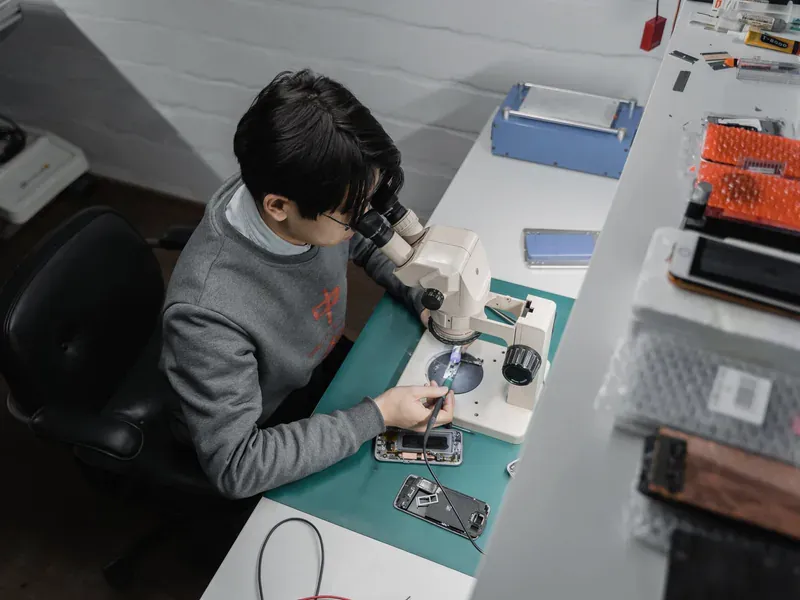
Ask engineering what could be affected before requesting a large, undirected document package. A changed molding compound raises different questions from a test-program revision. A second assembly site may require a different comparison from a datasheet correction that leaves shipped hardware unchanged.
The following is a review aid, not a statement that any listed change automatically causes a failure:
| Change described | Application questions to resolve | Evidence to request where relevant |
|---|---|---|
| Wafer process or fabrication site | Could electrical distributions or application margins change? | Qualification scope, characterization comparisons, and sample identification |
| Assembly material or package process | Could board assembly, moisture handling, or mechanical reliability be affected? | Package qualification, handling changes, and relevant reliability results |
| Test coverage or limits | Does the change alter screening or a parameter used in acceptance? | Explanation of old and new coverage and applicable limits |
| Marking or packing | Can receiving and production still identify and process the material correctly? | Label examples, packing specification, and traceability mapping |
| Datasheet revision | Is this clarification, a changed guarantee, or a new operating restriction? | Revision comparison and engineering assessment of the design margin |
Record missing evidence as an open question. “No form, fit, or function change” may be the manufacturer’s conclusion, but the reviewer still needs to understand its stated scope. Do not rewrite it as a guarantee that no customer validation is necessary.
Assign Decisions Before the First Changed Shipment

One person should coordinate the review, but responsibility should follow the work. Procurement manages notice receipt and supplier follow-up. Engineering assesses design impact. Quality defines acceptance evidence and material disposition. Manufacturing or the EMS partner confirms process readiness. The program owner resolves schedule and customer-approval dependencies.
Use decision states that distinguish acknowledgment from approval. For example: received, applicability confirmed, evidence incomplete, evaluation in progress, accepted with conditions, or rejected for the application. Each unresolved item needs an owner and a date tied to the planned material transition.
As an illustrative case, a PCN may name a future shipment date while qualification samples arrive only shortly before a production build. The appropriate response is not automatically a large last-time buy. First establish whether unchanged lots are still available, whether mixed shipments can occur, what evaluation is necessary, and whether an authorized temporary deviation is possible. Any commercial arrangement should preserve lot identification and avoid promising material that the supplier has not confirmed.
Close the Review at Receiving and in the Next Build
Approval in a document system does not complete the transition. Receiving instructions must explain which evidence accompanies changed material and what happens when the distinction is missing. The EMS partner needs the same instructions, especially when the manufacturer part number remains unchanged.
A practical closure record contains the approved PCN revision, accepted ordering codes, evaluation references, lot restrictions, approval authority, and the first production receipt checked against those conditions. If only one customer program has approved the change, that limitation must survive stock transfers and order consolidation.
For a BOM review, include the notice number and unresolved applicability fields rather than simply flagging the line “PCN.” This makes the commercial discussion actionable without asking a sourcing team to make an engineering decision. The review is complete when the approved change can be recognized and controlled in actual material flow—not when the notification inbox is empty.
Frequently Asked Questions (FAQ)
Does a product change notification mean a semiconductor is being discontinued?
No. A PCN can describe a manufacturing, material, assembly, test, or other change to a continuing product. Read its scope and dates. A discontinuation notice requires a separate lifecycle and last-time-buy review.
Can procurement approve a PCN without engineering review?
Procurement can acknowledge receipt and coordinate evidence. Acceptance should follow the organization's delegated authority, with engineering and quality reviewing any effect on the approved design or production process.
What if a supplier cannot identify whether shipped lots are affected?
Keep the affected status unresolved and apply the receiving or deviation process agreed with quality. Do not infer an unchanged manufacturing route from a recent date code or the absence of a new ordering code.