Table of Contents
- What a Microchip Distributor Actually Is: Franchise, Independent, and the Gray Space Between
- How Microchip Sells Today: The Direct-Versus-Distribution Split Behind the Number
- Authorized vs. Independent: When Each Channel Is the Right Call
- One Brand, Many Product Lines: MCU, Analog, FPGA, and Memory Route Differently
- How to Verify a Distributor: Franchise Authorization, Traceability, and Counterfeit Controls
- Pricing, MOQ, Lead Times, and Credit Terms Across Channels
- Lead Times and the Supply Signals to Watch Before You Place the Order
- Long-Lifecycle and EOL Strategy: Keeping Microchip Parts Supplied After the Catalog Moves On
- A Repeatable Decision Process for Choosing a Microchip Supplier
Microchip Technology now routes a meaningful share of its revenue through distribution rather than direct sales. In fiscal 2026, distribution represented 47% of net sales against 53% direct, and a single distributor, Arrow Electronics, accounted for 12% of the company’s total net sales. That concentration means the “which Microchip distributor” question is not an administrative footnote. It determines where allocation, price protection, and quoted lead time actually come from, and how much verification responsibility lands on your receiving dock.
This guide is written for OEM, EMS, engineering, and procurement readers deciding between Microchip’s authorized franchise network and the independent channel for PIC and AVR microcontrollers, analog and mixed-signal ICs, FPGAs, and legacy parts. It covers how to verify authorization, how to read the current supply signals, how commercial terms differ across channel types, and how to keep a long-lifecycle or end-of-life design supplied without introducing counterfeit risk.
The market is tightening as you make this decision. Distributor inventory fell to 26 days in the March 2026 quarter, near the low end of its historical range. Distribution sell-through rose 17% sequentially in the June 2026 quarter with a book-to-bill described as “well above 1,” and Microchip began a broad price increase from mid-August through early September 2026. The channel decision in 2026 has to be made against a firming, not a loose, market.
What a Microchip Distributor Actually Is: Franchise, Independent, and the Gray Space Between

Three channel types carry the “distributor” label, and they are not interchangeable. An authorized distributor, also called a franchise distributor, holds a current contract with Microchip to sell specified product lines in specified regions through the manufacturer’s recognized commercial path. A catalog or broadline distributor such as Arrow, Avnet, Digi-Key, or Mouser is authorized for the lines it lists. An independent distributor holds no current manufacturer authorization for the transaction; it sources parts from other channels, excess inventory, or the open market and resells them, which shifts the burden of verifying identity and pedigree onto the buyer.
The gray space sits between these clean categories. A company that is authorized for one region or product family may be sourcing a different line through the open market in another. A franchise distributor may also operate a separate independent or excess-inventory business. The authorization belongs to a specific legal entity, location, and product category, not to a brand name. When a quote arrives, the relevant question is whether this transaction is authorized, not whether the seller’s logo appears somewhere on a manufacturer page.
That distinction is the foundation of everything that follows, because it decides whether you can lean on the manufacturer’s pedigree or whether you must build your own evidence package.
How Microchip Sells Today: The Direct-Versus-Distribution Split Behind the Number
Microchip’s fiscal 2026 Form 10-K, filed in May 2026, reports distribution at 47% of net sales and direct sales at 53%, a shift from 45% and 55% in fiscal 2025. The same filing identifies Arrow Electronics as Microchip’s largest distributor at 12% of net sales, up from 10% in the prior year. That 12% concentration is a purchasing signal worth holding onto: one partner carries an outsize share of Microchip’s flow, which matters when allocation is allocated and when a broadline competitor’s availability differs from Arrow’s.
The quarterly picture sharpens the split. In the quarter ended June 30, 2026, Microchip’s 10-Q reports distribution net sales of $772.8 million against direct net sales of $669.3 million plus $42.6 million of licensing, for a total of $1,484.7 million. On that basis, distribution overtook direct sales in the quarter even though direct still leads for the full year. The practical takeaway is not that one channel is winning; it is that both channels are live and large, so a sourcing strategy that ignores either leaves real supply on the table.
Authorized vs. Independent: When Each Channel Is the Right Call
The two channels solve different problems, and forcing one to do the other’s job is where cost and risk concentrate. An authorized distributor is the default for planned production on active parts: it carries manufacturer-recognized supply, change and PCN notification, and a defined warranty and return path. An independent distributor is the tool for the exceptions — a discontinued part, an allocated or constrained line, or a shortage on an original approved component where redesign would be slower and more expensive than buying the genuine part.
A few scenarios make the boundary concrete. For a forecasted PIC32 or SAM microcontroller build, start with the authorized path and confirm the factory acknowledgement behind the date. For engineering samples and low quantities, a catalog distributor such as Digi-Key or Mouser is the efficient route. For a legacy part that Microchip has moved toward end of life, authorized residual stock comes first, then a qualified independent source with lot-level evidence. For an unplanned shortage, authorized recovery precedes any approved independent buy.
The comparison that matters is not “authorized is safer, independent is cheaper.” It is which channel can produce the part with a documented pedigree and an acceptance decision your quality system can stand behind. Our authorized-versus-independent comparison for onsemi walks through the same logic for a different product mix, and the verification discipline carries over.
One Brand, Many Product Lines: MCU, Analog, FPGA, and Memory Route Differently
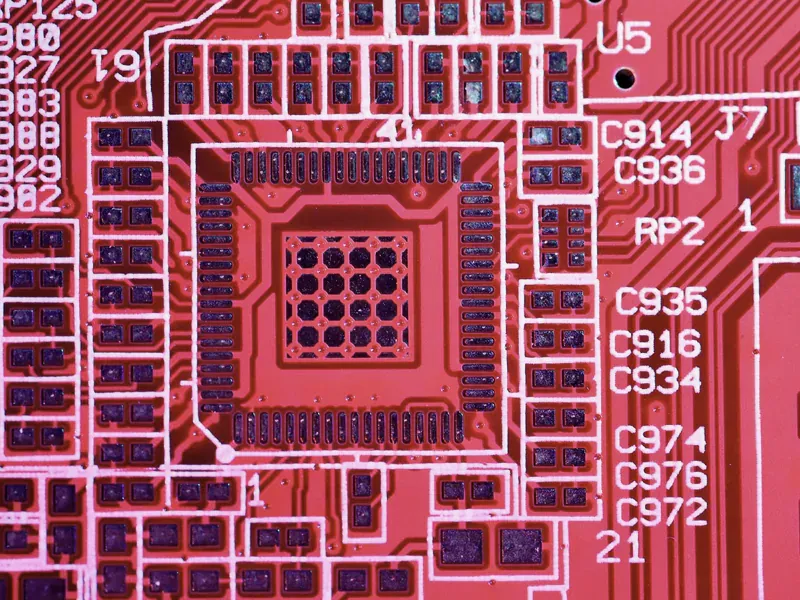
“Microchip” is not one product with one channel. The catalog spans PIC and AVR 8-bit microcontrollers, PIC24 and dsPIC digital signal controllers, 32-bit SAM and PIC32 MCUs, analog and mixed-signal parts, PolarFire FPGAs, serial EEPROM and SuperFlash memory, plus timing, connectivity, and power-management devices. Each line routes through distribution differently.
Microcontrollers and analog parts move heavily through the franchise and catalog channels because design-in happens at scale and support needs are broad. FPGAs lean toward design-in engagement with field support and are more likely to involve direct or nominated-channel contact early. Commodity memory such as serial EEPROM is a catalog item where price and availability dominate. Before you frame a “Microchip distributor” question, record which product family the BOM actually needs; the answer often changes the preferred starting channel.
For MCU selection and pin-to-pin alternatives across vendors, our automotive MCU cross-reference guide details the qualification steps, and our embedded processor market update puts the wider availability picture in context. For component-level detail and available Microchip inventory, see our Microchip brand page.
How to Verify a Distributor: Franchise Authorization, Traceability, and Counterfeit Controls
The authoritative check is Microchip’s own global sales and distribution directory, which lists authorized partners by region and product line. Directory presence is the first check, not the last. Confirm that the legal entity on the quote and invoice matches the listed entity or its corporate relationship, that the selling location and ship-from region fall within the relationship’s scope, and that the quoted product category is covered. A distributor authorized for MCUs is not automatically authorized for the FPGA or memory line you are quoting.
Cross-check against TrustedParts.com’s Microchip authorized-distributor search, an ECIA-supported aggregation of authorized inventory, to see whether the part is being offered through an authorized path. Then ask for the pedigree behind the material: factory seal status, date and lot codes, country of origin, and shipping documents. For independent stock, chain-of-custody and upstream invoice evidence, where available, sit alongside label and lot photos.
None of the counterfeit-avoidance standards by itself proves a lot is authentic. AS6081 addresses a distributor’s counterfeit-avoidance system; IDEA-STD-1010 describes inspection practice. Authorization supports pedigree, and inspection supports authenticity, but conformance still rests on the specific lot’s evidence and your acceptance criteria.
Pricing, MOQ, Lead Times, and Credit Terms Across Channels
Commercial terms differ by channel type and by volume, and unit price hides most of the real cost. Broadline distributors such as Arrow and Avnet serve forecasted production with contract pricing, credit terms, demand-management programs, and negotiated MOQs. Catalog distributors such as Digi-Key and Mouser offer low-MOQ availability at published pricing, which is efficient for prototypes and small runs but not usually a contract anchor for volume. Independent distributors price against scarcity and evidence quality, and their terms are seller-specific rather than manufacturer-backed.
The price environment is also moving. On its August 2026 earnings call, Microchip described a broad price increase implemented from mid-August through early September 2026 and guided to non-GAAP gross margin of 66% to 67%. That means quoting against last quarter’s contract price without re-confirming will understate the landed cost. For end-of-life buys, expect non-cancelable, non-returnable terms regardless of channel, so commit only after the product-status and qualification checks are closed.
Lead Times and the Supply Signals to Watch Before You Place the Order
Microchip’s standard product lead times have historically run 4 to 8 weeks. On its August 13, 2026 earnings call, the company said those standard times are now generally extended, driven by substrate constraints and OSAT assembly and test capacity. The direction, not a single number, is the actionable signal: a part that quoted inside 8 weeks earlier this year may now sit outside that range, and the extension is not uniform across packages or product families.
The upstream signals point the same direction. Distributor inventory dropped to 26 days in the March 2026 quarter, as reported in Microchip’s fourth-quarter fiscal 2026 results. Distribution sell-through rose 17% sequentially in the June 2026 quarter, and management described book-to-bill as “well above 1” on the Q1 fiscal 2027 earnings call. A book-to-bill well above one, combined with distributor inventory near the low end of its range, is the profile of a market that tightens before it loosens.
The monitoring discipline that follows: watch book-to-bill, distributor inventory days, and OSAT capacity commentary each quarter, and confirm the factory acknowledgement behind any quoted date rather than trusting a catalog’s “in stock” label at face value.
Long-Lifecycle and EOL Strategy: Keeping Microchip Parts Supplied After the Catalog Moves On
Microchip’s industrial and mixed-signal lines are built for long product life, which is precisely why their eventual end-of-life events hit production programs that were never expected to change. The EOL risk is not that a part disappears overnight; it is that the last-time-buy window opens while a multi-year industrial design is still shipping, and the part number was never flagged in a continuity plan.
Start by monitoring product status and PCN history for every Microchip line in production, not just the high-value ones. When a part moves toward discontinuance, sequence the options in order of pedigree: authorized residual stock, a licensed aftermarket or continuation source such as Rochester Electronics where the part is covered, then a qualified independent distributor with lot-level inspection. For a licensed continuation source, confirm that the exact part number and package are covered by the agreement before treating it as equivalent to a factory path.
For parts with no licensed aftermarket option, the independent channel is the remaining supply, and the verification burden rises accordingly. Reconcile labels, inspect for remarking and mixed lots, and specify electrical testing against the current datasheet where visual evidence is insufficient. The objective is to hold the line open for the lifetime of the end product, not to win a one-time price negotiation.
A Repeatable Decision Process for Choosing a Microchip Supplier
A defensible supplier decision is a sequence, not a one-shot comparison. Start by recording the product family, the exact part number, and its product status. Then verify the channel for this transaction against Microchip’s directory and cross-reference the authorized inventory. Normalize the full ordering code so temperature grade, package, and speed are captured, because a shortened base number can hide a difference that breaks qualification. Compare offers on total evidence — pedigree, factory acknowledgement, terms, and landed cost — rather than unit price alone. Finally, document who can approve each channel exception and which lots or builds it covers.
The same framework extends across vendors. Our NXP distributor sourcing guide applies the verification and evidence discipline to a different manufacturer, and the multi-vendor habit is what keeps a sourcing team from treating one supplier relationship as a substitute for process.
The channel you choose in 2026 should be a documented, verifiable decision made against a firming market. Lead with the authorized path for active production, reserve the independent channel for the exceptions that justify the extra verification, and let the part’s product status — not a seller’s catalog listing — determine which evidence you require before the order is placed.
Frequently Asked Questions (FAQ)
How do I verify that a company is an authorized (franchise) Microchip distributor rather than an independent broker?
Check the company against Microchip's global sales and distribution directory, then confirm that the quoting legal entity, selling region, product category, and part number all fall within that relationship. Save a dated screenshot or link with the sourcing record, because manufacturer networks and legal entities change.
What are current Microchip PIC/AVR microcontroller and analog lead times, and how far ahead should I place backlog?
Microchip's standard product lead times have historically run 4 to 8 weeks, but the company said on its August 13, 2026 earnings call that they are now generally extended by substrate and OSAT assembly and test constraints. Confirm the exact part and package with your authorized source, and place backlog far enough ahead to cover the quoted date plus receiving and inspection.
For a discontinued (EOL) Microchip MCU in a long-lifecycle industrial design, should I buy from Rochester Electronics or an independent distributor?
Check first whether the part has a licensed aftermarket or continuation path, because a licensed source such as Rochester Electronics carries manufacturer-sanctioned pedigree where coverage exists. If no licensed path covers the exact part, a qualified independent distributor under lot-level inspection is the fallback, with more verification responsibility on the buyer.
How do pricing, MOQ, and warranty differ between Digi-Key/Mouser and a broadline distributor like Arrow or Avnet for Microchip parts?
Catalog distributors offer low-MOQ availability at published pricing, while broadline distributors such as Arrow and Avnet serve forecasted production with contract pricing, credit terms, and demand-management programs. Warranty flows through the manufacturer or distributor program in both, so confirm the specific terms, return policy, and PCN path in writing rather than assuming they are identical.
How do I build a dual-sourcing strategy that mixes authorized and independent Microchip channels without introducing counterfeit or traceability risk?
Keep the authorized distributor as the primary source for planned production, restrict the independent channel to approved exceptions with defined parts and lots, and require chain-of-custody, lot reconciliation, inspection, and test evidence for every independent purchase. Document who can approve each exception and which builds it covers.