

Table of Contents
- STM32H743VIT6 vs STM32H750IBK6 at a Glance
- Why Flash Architecture Changes the Whole BOM
- Why the Packages Are a Hard Boundary
- What Current Manufacturer Status Does and Does Not Prove
- Build an RFQ That Produces Comparable Answers
- A 2026–2027 STM32H7 Demand Outlook
- Qualify an Alternate Without Calling It Drop-In
STM32H743VIT6 and STM32H750IBK6 share a 480 MHz Arm Cortex-M7 platform, but they solve different board and memory problems. The H743 orderable part combines substantial embedded Flash with an LQFP100 package. The H750 part is a value-line device with 128 KB of embedded Flash in a much denser UFBGA package, so production code normally depends more heavily on external memory. A buyer should source the part already qualified for the released design unless engineering has budgeted a board, firmware, boot-flow and manufacturing requalification.
Both parts were shown as active by ST on September 9, 2026. That supports continuity planning; it does not prove that a requested quantity, date code or delivery month is available. Treat lifecycle, stock and factory lead time as three separate checks.
STM32H743VIT6 vs STM32H750IBK6 at a Glance
The comparison begins with the full orderable part number rather than the shared STM32H7 label.
| Procurement field | STM32H743VIT6 | STM32H750IBK6 | Buyer consequence |
|---|---|---|---|
| Manufacturer status checked 2026-09-09 | Active, volume production | Active, volume production | Recheck at PO release; status is not stock |
| CPU | Arm Cortex-M7, up to 480 MHz | Arm Cortex-M7, up to 480 MHz | Similar core performance does not establish interchangeability |
| Embedded Flash | Up to 2 MB for the H743xI configuration | 128 KB | H750 designs usually need a deliberate external-memory and boot plan |
| RAM | Up to 1 MB | Up to 1 MB | Memory mapping and enabled features still need firmware review |
| Package | LQFP100, 14 × 14 mm | UFBGA176+25, 10 × 10 mm | Different footprint, assembly process, inspection and repairability |
| Grade shown by ST | Industrial | Industrial | Confirm temperature suffix and project requirement on the exact OPN |
| Internal catalog route | Brand inquiry | STM32H750IBK6 product record | Catalog presence is an inquiry route, not a real-time stock promise |
ST’s current STM32H743VI page identifies STM32H743VIT6 as an active industrial-grade LQFP100 part. Its STM32H750IB page identifies STM32H750IBK6 as an active industrial-grade UFBGA device. These manufacturer records are the right starting point for status and package control.
Why Flash Architecture Changes the Whole BOM
The headline processor speed can make the H750 look like a lower-cost route to H7 performance. The system architecture decides whether that is true.
With STM32H743VIT6, a design may keep boot code, the application and recovery image inside the MCU’s embedded Flash. With STM32H750IBK6, 128 KB of internal Flash can hold a boot stage and selected time-critical code, but a substantial application commonly adds external NOR Flash or another memory device. That adds an approved manufacturer list entry, routing and signal-integrity work, programming flow, security configuration, inventory exposure and another failure mode.
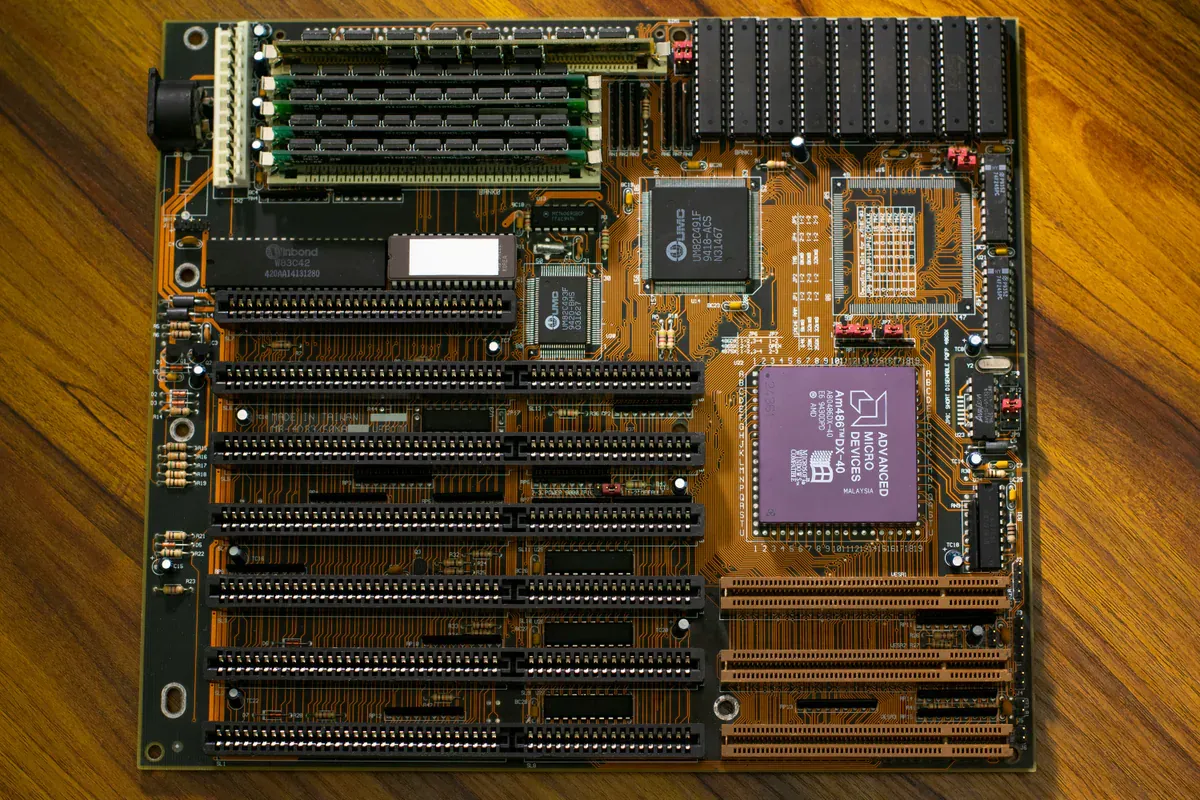
Before comparing unit price, calculate the cost of the complete execution path:
- MCU and external memory component cost.
- PCB area, layers, decoupling and routing constraints.
- Bootloader, secure-boot and field-recovery development.
- Programming time at the contract manufacturer.
- Qualification of both devices and their interface across voltage and temperature.
- Inventory coverage for two constrained line items instead of one.
An H750 design can be excellent when external memory is already part of the platform or when field-upgradable storage is a requirement. It is a poor emergency substitution when the existing H743 design expects the application to execute from internal Flash.
Why the Packages Are a Hard Boundary
STM32H743VIT6 uses a 100-lead LQFP. Leads are visible, solder joints can be inspected optically and many EMS lines have mature rework processes for the format. STM32H750IBK6 uses a 176+25-ball UFBGA with more I/O in a smaller footprint, but its joints sit under the device.
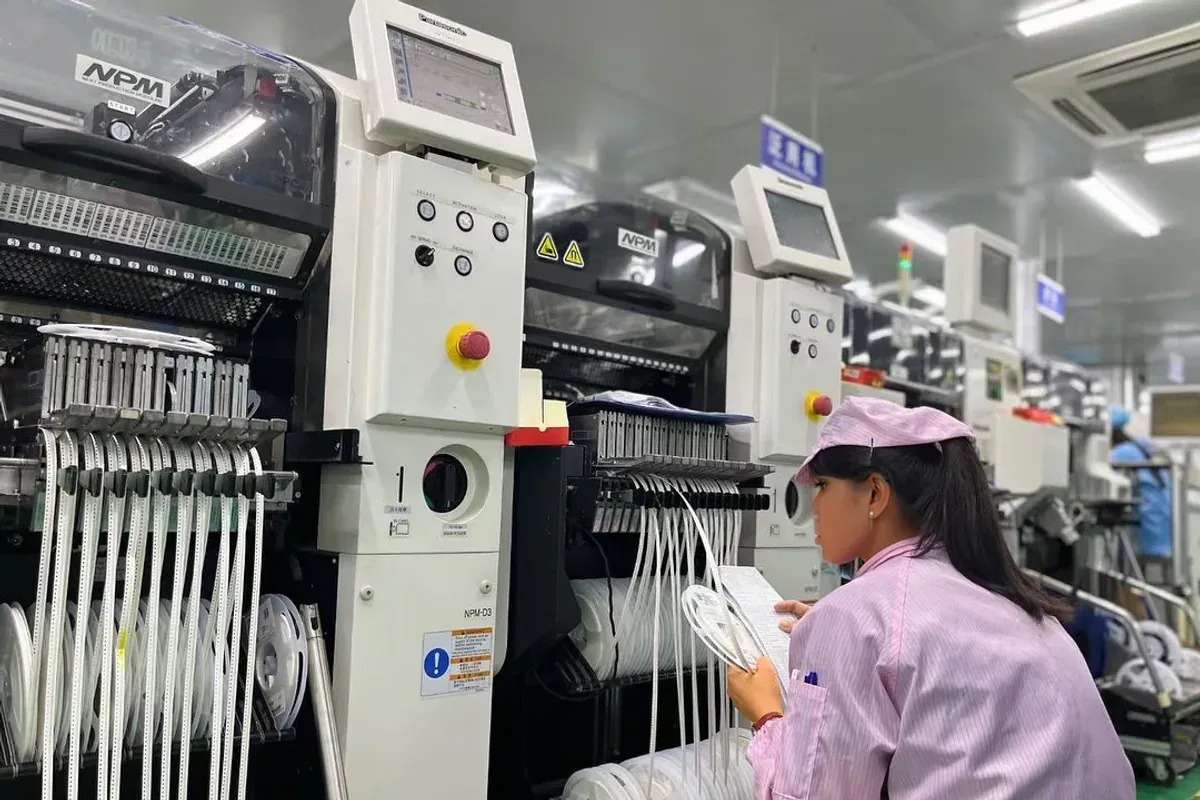
Changing between them means a new footprint and routing plan. The BGA option can also change stencil design, placement accuracy, reflow profile, X-ray inspection, moisture controls and rework yield. Those are production inputs, not details to leave until purchasing finds stock.
Pin count also changes the available peripheral breakout. Engineers must map every used GPIO, power pin, clock, debug interface, high-speed signal and boot strap. A shared peripheral name on two datasheets does not prove that the same instance appears on a convenient pin or supports the same alternate function.
What Current Manufacturer Status Does and Does Not Prove
ST’s active status means both exact parts remain within the production portfolio at the time of checking. It does not mean:
- The same quantities are available in every region.
- Tray and tape-and-reel variants have equal availability.
- A distributor estimate is a factory-confirmed date.
- Every silicon revision can be mixed without a validation review.
- An old date-code lot was stored correctly.
The market backdrop deserves attention. In its July 23, 2026 financial release, ST reported stronger bookings in all end markets, signs of tight supply in several product categories and distribution inventory below its standard target. That is a reason to watch exact-part quotations more frequently. It is not evidence for assigning a universal number of weeks to STM32H7.
The site’s broader Q3 MCU lead-time outlook explains how to keep company signals separate from orderable-part evidence.
Build an RFQ That Produces Comparable Answers
Do not ask suppliers for “STM32H7 stock.” Send a line-specific RFQ that includes:
| RFQ field | Required decision |
|---|---|
| Exact OPN | STM32H743VIT6, STM32H743VIT6TR or STM32H750IBK6; no silent suffix changes |
| Quantity and schedule | Total demand, releases, ship-to country and required-on-dock dates |
| Packing | Tray or reel, full factory packing or approved partial quantity |
| Date and lot policy | Maximum age, mixed-lot acceptance and disclosure before shipment |
| Source evidence | Authorized route or documented independent chain of custody |
| Commercial terms | Quote validity, cancellation, reschedule, warranty and inspection rights |
| Technical records | Current datasheet, errata, PCNs and silicon revision disclosure |
Use the STMicroelectronics brand catalog to identify listed parts, then verify the exact status on ST’s site. For a time-sensitive requirement, submit the fixed OPN and evidence fields through the RFQ page so offers can be compared on the same basis.
A 2026–2027 STM32H7 Demand Outlook
A forecast is useful only when it changes an action. Use three observable scenarios.
Base case: bookings remain healthy, channel buffers stay lean and most demand can be scheduled through normal authorized orders. Buyers keep a rolling exact-part quote history and place orders against the approved production plan.
Tighter case: one package, packing type or high-demand memory configuration develops a longer confirmation cycle. The trigger is repeated factory-date slippage or a rising share of quotes without confirmed dates. Buyers reserve coverage for released programs and accelerate engineering work on board-level alternatives.
Softer case: channel stock rebuilds and confirmed dates stabilize. Buyers shorten speculative coverage, keep cancellation exposure visible and avoid converting temporary availability into excess inventory.
These scenarios are an editorial inference from ST’s company-level signal and the architecture of the two parts. They are not manufacturer forecasts for STM32H743VIT6 or STM32H750IBK6. Update the scenario with actual quotes, backlog and consumption every week for a line-stopping part.
Qualify an Alternate Without Calling It Drop-In
If availability or cost pushes engineering toward another H7, compare the complete device and system:
- Package, footprint, pinout and assembly capability.
- Embedded Flash, RAM map, external-memory interface and boot configuration.
- Peripheral instances, DMA requests, timers, ADCs, communication interfaces and clocks.
- Security features, option bytes, debug policy and firmware-update flow.
- Silicon errata, HAL or low-level driver behavior and compiler output.
- Power tree, current transients, thermal behavior and EMC.
- Product grade, lifecycle status and customer qualification obligations.
The component-alternatives workflow provides the correct path when a shortage requires engineering participation. The BOM risk assessment framework can then rank the MCU alongside its external memory and other single-source dependencies.
For an industrial production line, the strongest decision is rarely “which MCU is faster?” It is “which already-qualified architecture can be supplied with controlled evidence, and what would it cost to qualify the other one?” That question connects engineering, manufacturing and procurement before a seemingly similar part becomes an uncontrolled redesign.
Frequently Asked Questions (FAQ)
Is STM32H750IBK6 a drop-in replacement for STM32H743VIT6?
No. STM32H743VIT6 is a 100-lead LQFP device, while STM32H750IBK6 uses a 176+25-ball UFBGA. They also have different embedded-Flash capacities and pin resources. Moving between them requires a board, memory architecture, firmware, boot, manufacturing, and validation review.
Are STM32H743VIT6 and STM32H750IBK6 still active?
ST's product pages showed both exact orderable parts as Active and in volume production on September 9, 2026. Product status can change, so buyers should save a dated status check and review PCNs before each production commitment.
What is the main sourcing difference between the two STM32H7 parts?
STM32H743VIT6 provides a large embedded-Flash implementation in an LQFP100 package. STM32H750IBK6 has only 128 KB of embedded Flash and commonly depends on external program memory, while its UFBGA package demands a different PCB and assembly process. The cheaper component quote can therefore create a larger system BOM and qualification task.
What should an STM32H7 RFQ include?
Use the full manufacturer part number, quantity, delivery location, requested schedule, acceptable packing, temperature grade, date-code policy, factory-seal requirement, lifecycle check date, traceability requirements, and whether split lots are allowed. Do not accept a family-level STM32H7 quote.
How should buyers forecast STM32H7 availability for 2027?
Use three scenarios and update them with exact-part quotes: a base case with stable confirmed dates, a tighter case with lower channel buffers or package constraints, and a softer case with replenished inventory. ST's company-level bookings are an alert, not a lead-time promise for either part.