

Table of Contents
- What Should a Repair Buyer Confirm First?
- NCP81215 and NCP81305 Are Different Controllers
- Generic Marking vs Full Orderable Part Number
- Why This SERP Has High Condition Risk
- Confirm Lifecycle and PCN Evidence at Quote Time
- Request Photos and Lot Evidence Before Payment
- Can Another Controller Replace NCP81305?
- Incoming Inspection for QFN Power Controllers
- 2026–2027 Repair-Demand Outlook
NCP81215 and NCP81305 searches often begin after a laptop, desktop or graphics-related power rail stops working. That makes speed important, but it also creates a market full of loose QFN devices, shortened markings and listings that say “new original” without showing a manufacturer label. The safe buying rule is simple: identify the controller from the board schematic or an authenticated known-good device, convert that identity into a complete orderable part number, and qualify the offered lot before installation.
The two numbers should not be treated as substitutes. Archived manufacturer documentation describes different controller architectures. A repair buyer must also distinguish NCP81215 from NCP81215P and each full packing suffix rather than assuming the extra character is cosmetic.
What Should a Repair Buyer Confirm First?
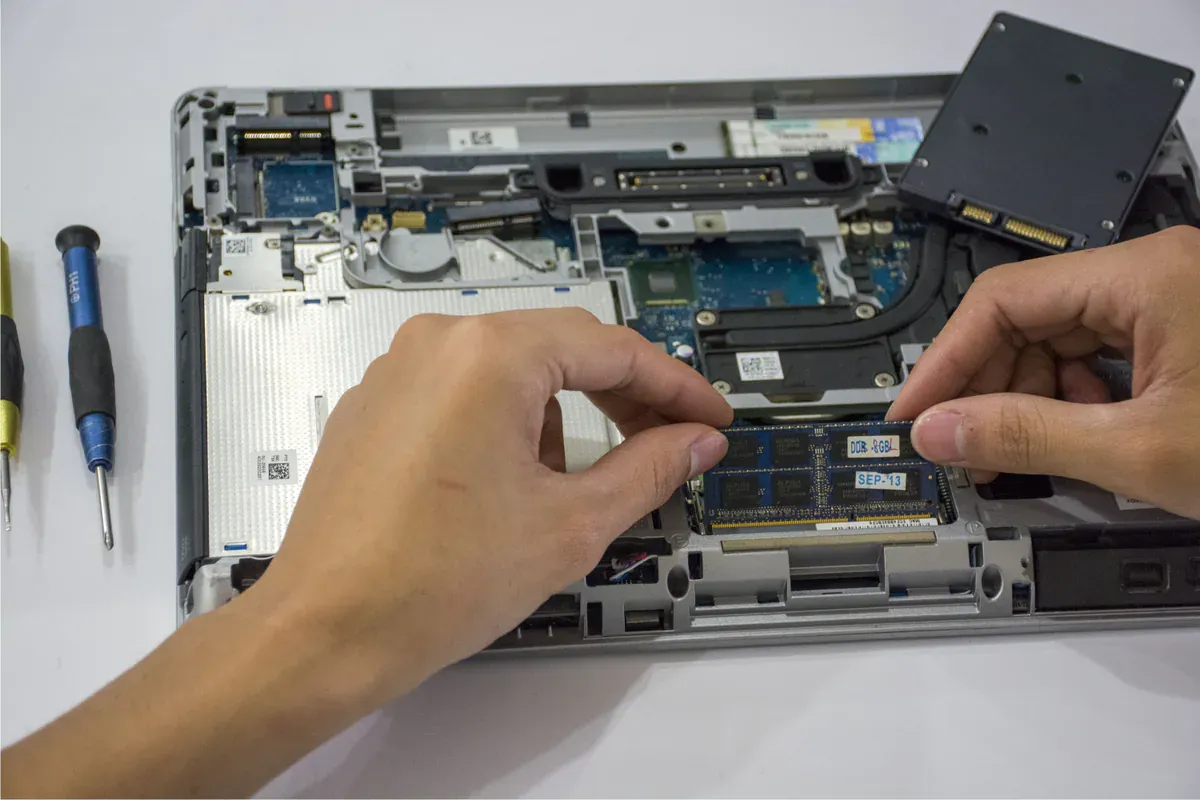
Begin with the failed board, not an online marketplace title. Record:
- Board manufacturer, exact board revision and system model.
- Reference designator and every readable line of the device marking.
- Package dimensions, pin-one orientation and number of pads.
- Rail controlled, nearby phases, drivers or power stages and enable sequence.
- Schematic part number when authorized repair documentation is available.
- A known-good board comparison from the same revision.
A top mark is often abbreviated. It may omit the full manufacturer prefix, packing suffix or environmental designator. Search it to generate candidates, but do not turn it directly into a PO line.
SupplyICs has separate inquiry records for NCP81215 and NCP81305. Those pages help route a request; their catalog status is not a manufacturer lifecycle decision or a guarantee that a quoted lot is suitable for the board.
NCP81215 and NCP81305 Are Different Controllers
onsemi’s published NCP81215P datasheet describes a three-output controller with a single SVID interface for desktop and notebook CPU applications. It shows separate four-phase, two-phase and single-phase control resources in a 52-pin QFN configuration.
Archived NCP81305 documentation describes a single-output SVID controller for desktop and notebook CPU applications in a 40-pin QFN configuration. Even before checking register behavior or compensation, the output and package descriptions show why the two names cannot be swapped.
| Check | NCP81215 family evidence | NCP81305 family evidence | Repair decision |
|---|---|---|---|
| Published role | Multi-rail CPU power control variants | Single-output CPU power control | Confirm which rail architecture the board implements |
| Package evidence | NCP81215P literature uses QFN52 | NCP81305 literature uses QFN40 | Count pads and verify land pattern |
| Interface | SVID | SVID | Same interface label does not mean same generation or command behavior |
| Commercial identity | Generic name plus full OPN variants | Generic name plus full OPN variants | Require the suffix shown on approved documentation |
| Replacement path | Datasheet and schematic comparison | Datasheet and schematic comparison | No cross-use without engineering validation |
The table is an identification screen, not a replacement table. Board vendors can also use programmed or customer-specific variants. When the schematic does not disclose the full code, confirm with the OEM or an authorized repair source.
Generic Marking vs Full Orderable Part Number
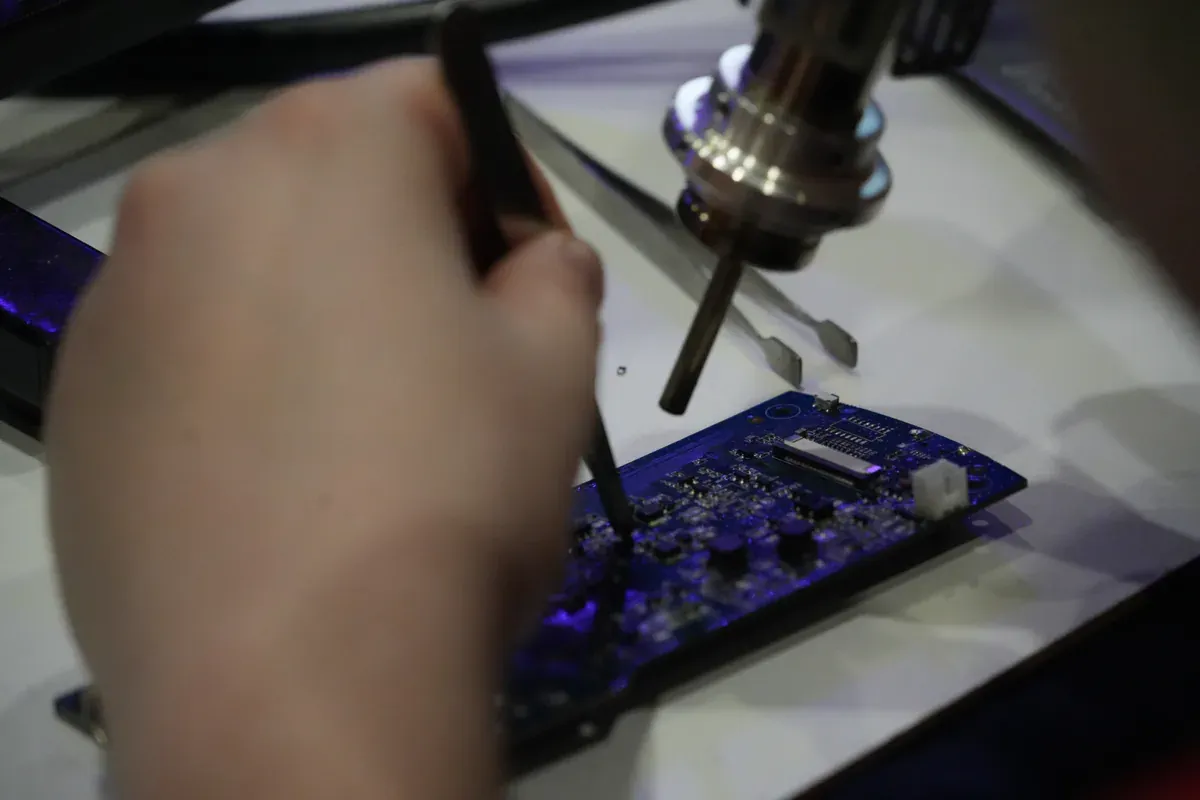
An orderable code such as NCP81215MNTXG carries information beyond the family name. onsemi suffix conventions identify package and packing details, and the complete data-sheet ordering table is the control reference. The marked body may show only a compressed code because the package has limited space.
Use four-way reconciliation:
- Board requirement: schematic, AVL, repair manual or known-good unit.
- Quote: full manufacturer OPN and stated condition.
- Physical evidence: outer label, inner label and device top/bottom photos.
- Receiving result: measured package, marking consistency, lot identity and inspection report.
If the supplier cannot state the full OPN, ask for photographs before paying. If the OPN and body mark relationship cannot be supported by manufacturer marking guidance or a known-good sample, quarantine the offer rather than accepting a plausible explanation.
Why This SERP Has High Condition Risk
The September 9 U.S. search results for NCP81215 NCP81305 supplier were dominated by marketplace listings, small-quantity repair sellers and pages using variations of the word “original.” That is commercially useful evidence that replacement demand exists. It is not evidence that the lots are factory-new.
Loose QFN devices can come from factory excess, long-stored inventory, repacking, returns or board harvesting. Each condition has a different risk. Harvesting can expose the package to uncontrolled heat and mechanical stress. Resurfacing can hide prior solder. Remarking can turn a related controller into the searched number. Mixed trays can combine different revisions or sources.
Do not reject all independent inventory automatically. Define the acceptable condition, source path and test plan before requesting offers. The obsolete-component quote verification guide provides a transaction framework for exactly this type of material.
Confirm Lifecycle and PCN Evidence at Quote Time

Product status must be checked on the complete orderable code. A distributor page can say end of life, obsolete or limited availability long after the manufacturer has removed a public product page. Another seller can call the same generic number active because it still has stock. Neither statement should control the BOM.
Use onsemi’s current product services to search product change notifications, obsolete/EOL information, material composition and distribution inventory for the full OPN. Save a dated copy or case response. For a repair program, also retain the last available datasheet revision and any discontinuance notice that names the orderable code.
Lifecycle status answers whether the manufacturer intends to supply the part. It does not establish the condition of stock already in the market. Conversely, an obsolete code can still be a legitimate repair requirement when redesign is uneconomic or prohibited.
Request Photos and Lot Evidence Before Payment
For physical stock, the pre-shipment evidence pack should include:
- Timestamped photos of all outer and inner labels.
- High-resolution top and bottom images from the actual offered quantity.
- Quantity, date code, lot code, country or assembly code and packing condition.
- Explanation of any shortened marking and its relationship to the full OPN.
- Source path and original purchase evidence where available.
- Written disclosure of whether parts were removed from boards, reworked, reterminated or repacked.
- Proposed inspection and electrical-test method.
- Warranty, return window and nonconformance process.
Ask whether the photographs cover the entire lot or one sample. A clean sample does not establish that the rest of a mixed tray has the same origin.
Can Another Controller Replace NCP81305?
Search results often suggest newer single-output SVID controllers as replacements for NCP81305. A similar application description can create a candidate list, but it is not permission to install a different controller on an existing motherboard.
Engineering must compare the manufacturer datasheets for pinout, package, SVID protocol and generation, number of phases, PWM and driver interface, current sensing, telemetry, protection thresholds, compensation network, strap configuration and firmware dependencies. Then validate power-up sequencing, transient response, thermal behavior and fault protection on the exact board revision.
A repair environment may have no way to change embedded controller firmware or CPU power tables. In that case the exact approved controller can be the only practical route. Use the component-alternatives process when a true redesign is possible; do not use a marketplace cross-reference as engineering approval.
Incoming Inspection for QFN Power Controllers
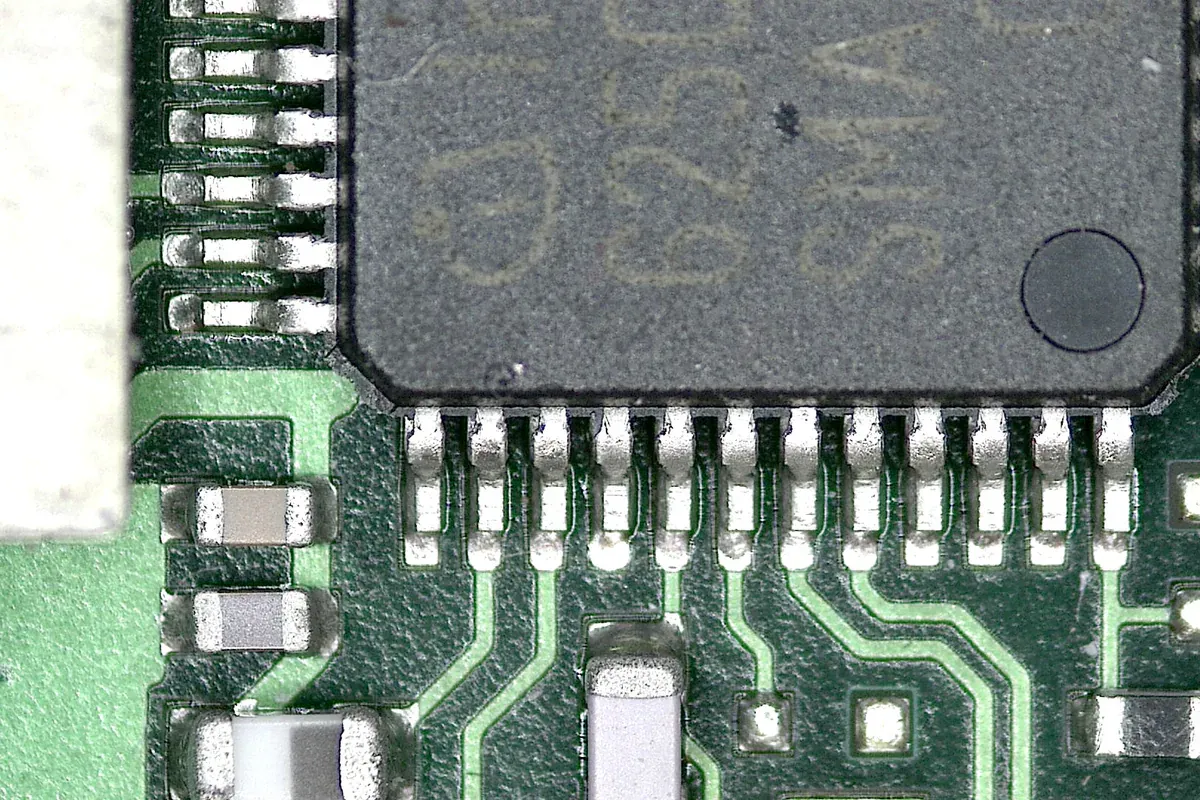
Inspection should match the value and consequence of the repair. Start with documentation and external visual comparison. Measure package dimensions, inspect edges and exposed pad, compare laser marking characteristics, and look for residual solder, sanding, coating or inconsistent surface texture.
X-ray can compare die size, bond-wire pattern and lead-frame construction with a known-good reference. Electrical testing is more difficult because these controllers require a configured application environment, but identity, supply-current and key functional checks can still be defined by a competent laboratory. A successful installation on one board is not adequate lot qualification.
Maintain ESD and moisture controls. If the lot is old or its dry-pack history is missing, engineering and quality should decide bake and solderability actions from the package requirements; an improvised bake can damage labels, oxidation state or device integrity.
2026–2027 Repair-Demand Outlook
Demand for these exact controllers is likely to remain small but urgent. That conclusion is an inference from three observable facts: existing boards continue to fail, new production designs have moved to newer power platforms, and exact-device search results are weighted toward repair channels rather than mainstream design-in support.
In a base scenario, repair demand persists in irregular small batches, with price determined more by lot evidence and condition than factory economics. In a tight scenario, clean traceable lots become harder to find and harvested devices make up more listings; inspection cost rises. In a redesign scenario, professional repair operations qualify donor-board rules or board-level replacements and reduce dependence on loose chips.
This is not a forecast of onsemi factory allocation. It is a continuity forecast for installed equipment. The appropriate response is to record consumption by board revision, buy only validated coverage and preserve failed and known-good samples for comparison.
The onsemi brand catalog and authorized-versus-independent channel guide help separate planned production procurement from independent repair sourcing. When the need is exact, include both NCP81215 or NCP81305 product records in a single RFQ so the supplier must respond to the right device rather than a similar search term.
Frequently Asked Questions (FAQ)
Are NCP81215 and NCP81305 interchangeable?
No. Published documentation describes different output architectures and packages or configurations. A shared SVID purpose or similar top marking does not establish the same pinout, rail count, configuration, firmware behavior or board compensation. Use the schematic and complete orderable code before choosing a controller.
Why is the full NCP81215 or NCP81305 orderable code important?
The short number may be a controller family or a device marking. The purchasable code adds package, packing and environmental suffix information. The PO, supplier label, device marking and board requirement must be reconciled; a quote for a generic NCP81215 is not sufficient acceptance evidence.
Can a harvested NCP81215 or NCP81305 be used for repair?
Only under an approved repair policy that explicitly permits salvaged material and defines removal, reballing or retermination, cleaning, inspection, electrical verification and disclosure. A seller's claim that a loose device is new cannot replace chain-of-custody and condition evidence.
Can another SVID controller replace NCP81305?
Only as a redesign candidate, not as a drop-in part inferred from a catalog description. Engineering must compare the complete datasheets, pinout, SVID generation, phase control, compensation, telemetry, package, firmware and board qualification.
What should a repair-shop RFQ request?
Request the exact full OPN, quantity, condition, original packing status, top and bottom device photos, label photos, date and lot codes, source history, lifecycle evidence, test method, warranty and permission rules for harvested or reworked parts.