
Table of Contents
- What Is AS6081, and What Does It Actually Cover?
- 1. Counterfeit Mitigation Policy and Control Plan
- 2. Supplier Qualification and Purchasing Controls
- 3. Incoming Inspection and Testing
- 4. Reporting and Disposition
- AS6081 vs. AS6171: The Critical Distinction for 2026
- How Does the Counterfeit Problem Actually Manifest in 2026?
- 1. EOL Parts: The Growing Vulnerability
- 2. Allocated Parts: Counterfeiters Follow Demand
- 3. Supply Chain Diversion: The Gray Market
- A Procurement Professional’s AS6081 Verification Checklist
- Document Review
- Process Verification
- Physical Verification (On-Site Audit)
The open market is not a secondary sourcing channel in 2026—it is a parallel supply chain that every major electronics manufacturer uses when franchise allocation runs dry. But the open market carries a risk that the franchise channel does not: the possibility that a component is not what it claims to be.
Counterfeit electronic components are not limited to completely non-functional scrap parts. The more dangerous category is sophisticated counterfeits—used parts resurfaced and re-marked as new, lower-grade parts re-marked as higher-grade, or genuine parts that failed OEM testing and were diverted into the gray market. These parts may pass basic electrical testing at room temperature but fail under temperature cycling, vibration, or extended operation.
AS6081 exists to create a barrier against these risks. Here is what procurement teams need to know.
What Is AS6081, and What Does It Actually Cover?
AS6081 (SAE International, originally published 2012, revised 2023) is formally titled “Fraudulent/Counterfeit Electronic Parts: Avoidance, Detection, Mitigation, and Disposition — Distributors.” It was developed by SAE’s G-19 Counterfeit Electronic Parts Committee in response to a documented increase in counterfeit parts entering the aerospace supply chain—but its framework applies to any industry requiring high-reliability components.
AS6081’s four pillars of counterfeit risk management are:
1. Counterfeit Mitigation Policy and Control Plan
The distributor must have a documented policy that defines the organization’s commitment to counterfeit risk mitigation, assigns responsibility at the executive level, and establishes a control plan that is reviewed and updated at defined intervals. This is the governance backbone—without it, inspection procedures are ad hoc and unaccountable.
2. Supplier Qualification and Purchasing Controls
This is where AS6081 has the greatest practical impact on procurement outcomes. The standard requires the distributor to:
- Verify whether each supplier is an OCM, OCM-authorized distributor, or independent source
- Categorize suppliers by risk tier based on sourcing history and verification status
- Maintain documented procurement controls that restrict purchasing to pre-qualified suppliers
- Conduct ongoing supplier performance monitoring with defined escalation triggers
Practical approach: Create a brand-specific counterfeit risk matrix. ADI high-speed ADCs, Xilinx FPGAs, and Infineon automotive MCUs are among the most frequently targeted components in 2026. Prioritize AS6171 Level 3 testing for these high-risk categories.
3. Incoming Inspection and Testing
Incoming inspection under AS6081 is risk-based: higher-risk parts (high-value, high-demand, known counterfeiting targets) receive deeper inspection. The minimum inspection levels are defined by IDEA-STD-1010 (visual inspection criteria), and the testing methodology is now specified by AS6171 (see below). Key inspection steps include:
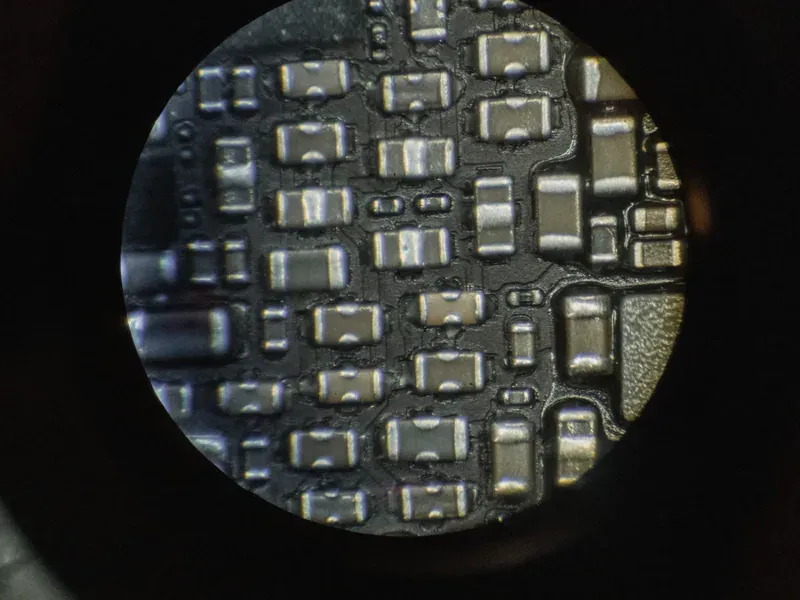
- External visual inspection: Package marking verification, date code consistency, lead condition, workmanship indicators (sanding marks, blacktopping, inconsistent texture)
- X-Ray inspection: Lead frame integrity, wire bond consistency, die size and orientation verification against known-good reference
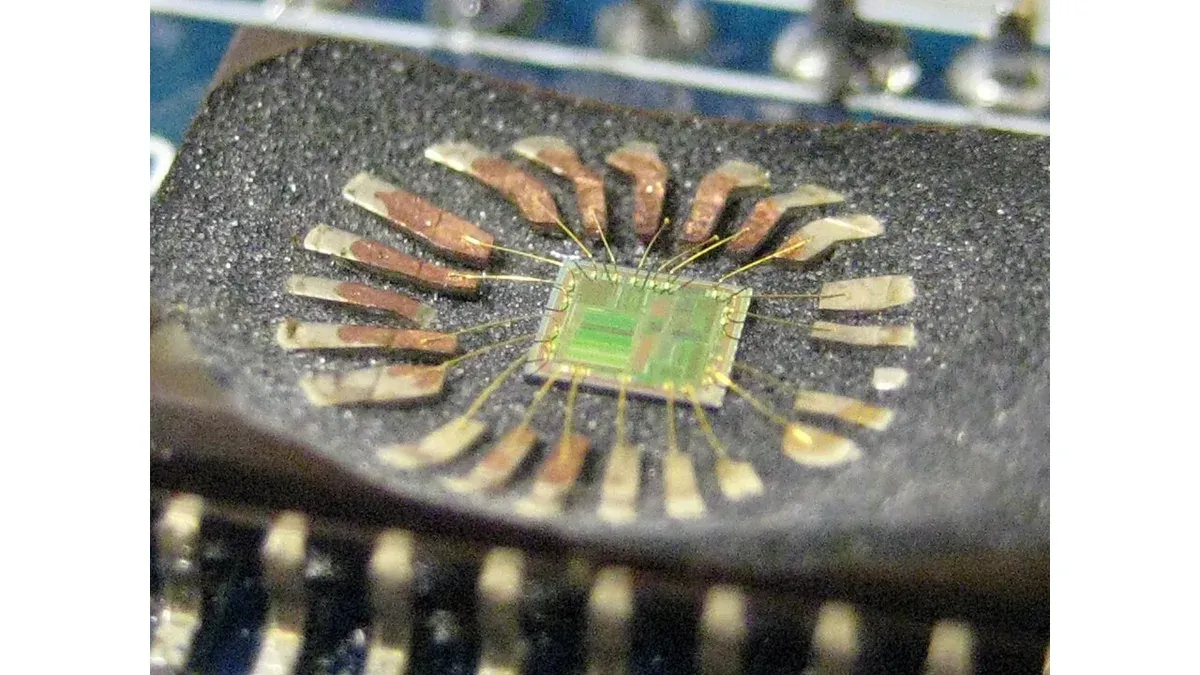
- Decapsulation and die inspection: Die marking verification, die layout comparison to manufacturer documentation
- Electrical testing: Parametric testing at room temperature and across specified temperature range
4. Reporting and Disposition
When a suspect or confirmed counterfeit part is identified, AS6081 requires the distributor to:
- Quarantine the affected parts
- Report to GIDEP (Government-Industry Data Exchange Program) and ERAI
- Notify customers who may have received parts from the same suspect lot
- Conduct root cause analysis and corrective action
This reporting requirement is what makes AS6081 a systemic defense, not just a supplier-level defense. Every counterfeit part reported to GIDEP and ERAI becomes a data point that helps the entire industry identify and avoid fraudulent supply sources.
AS6081 vs. AS6171: The Critical Distinction for 2026
As of mid-2026, the testing methodology content that was previously part of AS6081 is migrating to AS6171 (Test Methods Standard; General Requirements, Suspect/Counterfeit, Electrical, Electronic, and Electromechanical Parts). This is a structural change in the standards landscape that procurement teams need to understand:
| Standard | Scope | Current Status (Jul 2026) |
|---|---|---|
| AS6081 | Distributor process, governance, supplier management, documentation | Active; testing methodology migrated to AS6171 |
| AS6171 | Test methods: X-Ray (/1), XRF (/2), decapsulation (/3), electrical (/7), Raman spectroscopy (/8), FTIR (/9), TGA (/10) | Published; slash sheets in final balloting |
| AS5553 | OEM/military counterfeit avoidance, detection, mitigation, disposition | Active Revision B in ballot |
The practical implication: when a distributor claims AS6081 compliance, the right follow-up question is: “Are you also testing to AS6171 methods, and at what risk level?” AS6171 defines three risk levels (1 = lowest, 3 = highest), with increasing test depth at each level. A distributor should be able to specify which AS6171 risk level corresponds to the parts they are supplying you.
How Does the Counterfeit Problem Actually Manifest in 2026?
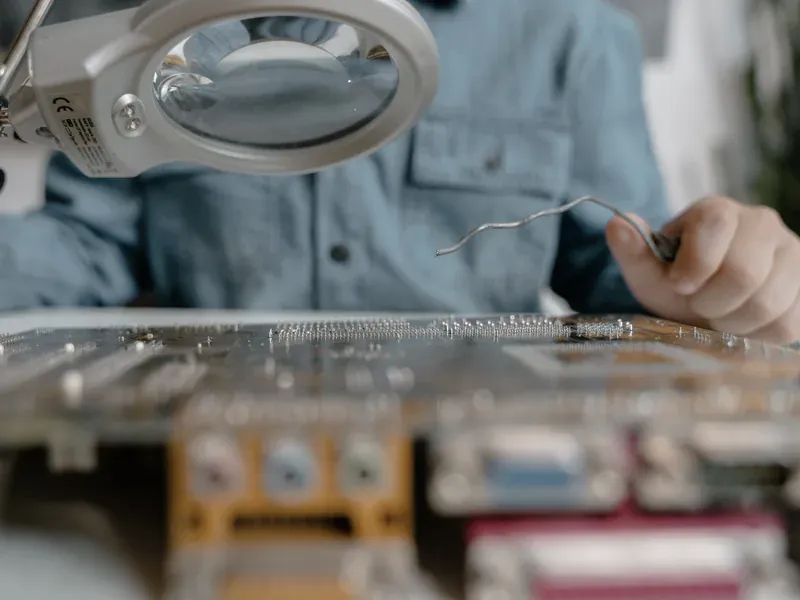
The counterfeit threat landscape has evolved. The most common counterfeit categories in 2026 are:
1. EOL Parts: The Growing Vulnerability
When a semiconductor manufacturer issues an End-of-Life Notice and the Last-Time-Buy window closes, demand for that part does not disappear—it migrates entirely to the open market. This is when counterfeiters are most active. Obsolete microcontrollers with 10+ year industrial equipment lifecycles are the single most frequently counterfeited component category. Proactive EOL management is the strongest defense: if you identify an EOL risk 12–18 months before the LTB deadline, you can place a legitimate LTB order and avoid the open market entirely.
2. Allocated Parts: Counterfeiters Follow Demand
When a part goes on allocation—as many automotive MCUs and high-speed converters have in 2026—spot prices spike to 3–10x book price. Counterfeiters target these parts because the profit margin justifies sophisticated counterfeiting techniques: sanding and re-marking used parts, re-packaging lower-grade parts, and manufacturing non-functional lookalikes.
3. Supply Chain Diversion: The Gray Market
Genuine parts that fail OEM incoming inspection, are scrapped, and are then diverted into the gray market represent a growing threat. These parts are physically genuine—the die is authentic, the marking is original—but they have been rejected for parametric, visual, or reliability reasons and should have been destroyed. No amount of visual inspection will detect this category; only full traceability back to an OCM-authorized source can provide assurance.
A Procurement Professional’s AS6081 Verification Checklist
When evaluating an independent distributor, systematically verify these claims:
Document Review
- AS6081 audit report from an accredited certification body (NQA is the only global provider as of 2026)
- Scope of certification includes the distributor’s physical location(s) and product categories
- AS6171 test capability declaration with specified risk level(s)
- ERAI membership confirmation and GIDEP reporting history
Process Verification
- Written counterfeit mitigation policy signed by executive management
- Supplier qualification matrix with risk tiers, last audit dates, and approval status
- Incoming inspection procedures aligned with IDEA-STD-1010 visual criteria and AS6171 test methods
- Suspect part quarantine and reporting process with demonstrated GIDEP/ERAI reporting history
- Personnel training records for counterfeit detection (minimum annual refresher)
Physical Verification (On-Site Audit)
- ESD-protected inspection area with calibrated microscopes, X-Ray, and electrical test equipment
- Secure storage for quarantined suspect parts, segregated from active inventory
- Clean, organized inventory with environmental controls appropriate to moisture sensitivity levels
Sourcing components from the open market? SupplyICs operates AS6081-aligned quality controls with AS6171 testing capability. Every order includes full lot traceability documentation. Submit an RFQ or upload your BOM for qualified sourcing support.
Frequently Asked Questions (FAQ)
What does AS6081 certification actually require from an independent distributor?
AS6081 (SAE International standard) requires independent distributors to implement four pillars of counterfeit risk management: (1) a documented Counterfeit Mitigation Policy and Control Plan that covers the full procurement-to-shipment lifecycle; (2) supplier qualification procedures including verification of OCM/authorized distributor status, risk-based supplier tiering, and ongoing performance monitoring; (3) incoming inspection and testing procedures aligned with IDEA-STD-1010 for visual inspection and AS6171 for test methodology; and (4) a reporting mechanism for suspect and confirmed counterfeit parts to GIDEP (Government-Industry Data Exchange Program) and ERAI. Certification is achieved through a third-party audit—currently only NQA provides accredited AS6081 certification globally, integrated with AS9100 or AS9120 quality management system audits.
What is the difference between AS6081, AS5553, and AS6171?
AS5553 is the standard for OEMs and manufacturers—it covers counterfeit avoidance, detection, mitigation, and disposition from the perspective of an organization that designs and builds products. AS6081 is the companion standard for independent distributors—it specifies the documentation, inspection, testing, and reporting requirements that a distributor must meet. AS6171 is the testing methodology standard—it defines the specific test methods (X-Ray, decapsulation, electrical testing, XRF, etc.) used to verify component authenticity. As of 2026, the testing-method content is migrating from AS6081 to AS6171: AS6081 now governs how a distributor runs (process, governance, supplier management, paperwork), while AS6171 owns the technical testing requirements. A competent distributor should be audited to AS6081 for process and AS6171 for testing methodology.
How can I verify that a supplier's AS6081 certification is legitimate?
Request the certification body's audit report, not just the certificate. The audit report should be issued by an accredited certification body (e.g., NQA) and should reference AS6081 explicitly. Verify the certification scope includes the distributor's physical location and the product categories you are buying. Check the certification status on the certification body's online directory. Be alert to 'self-declared AS6081 compliance'—without a third-party audit, this carries no assurance value. Also verify the distributor's ERAI membership status and whether they report suspect parts to GIDEP—these are indicators of genuine engagement with the counterfeit prevention ecosystem, not just a certificate on the wall.