Table of Contents
An order for “decap and verify authenticity” leaves the laboratory with an ambiguous task. Opening a package can reveal a die and interconnects, but the resulting photographs do not answer every question about origin, electrical grade or shipment history.
A useful request for IC decapsulation services names the feature to inspect and the decision the evidence will support. It also identifies the sample, reference material and destructive-work boundary before preparation begins. This is a laboratory procurement guide, not a procedure for opening packages outside a qualified facility.
What can IC decapsulation establish about a component?
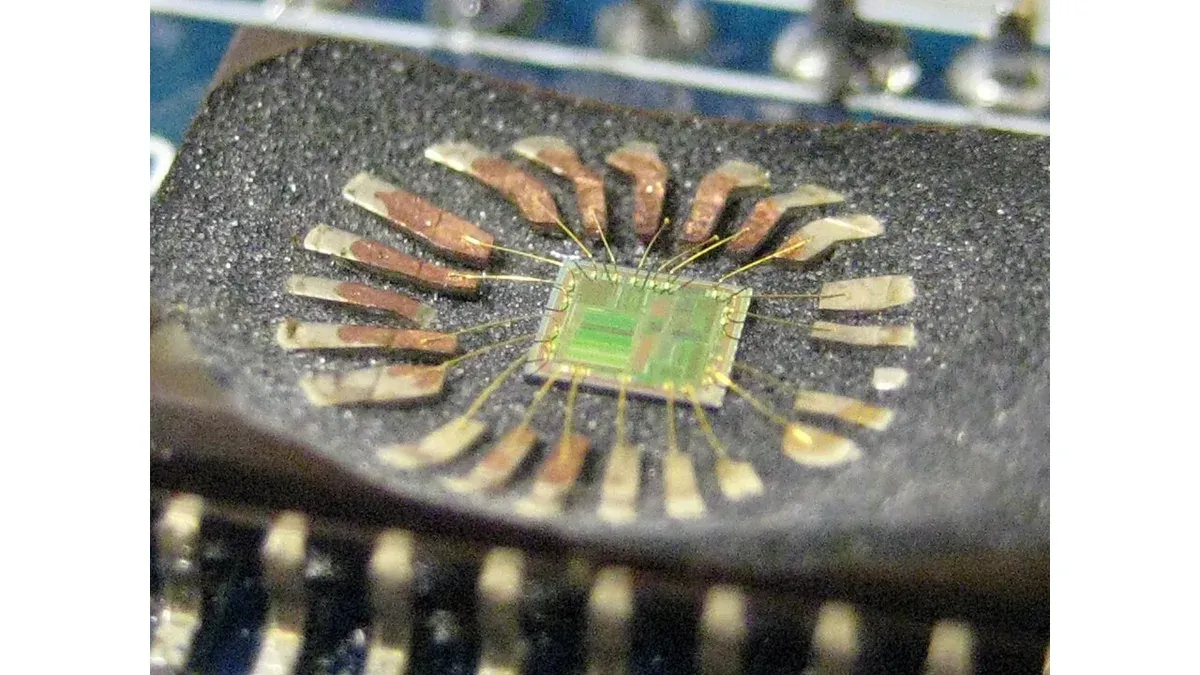
Decapsulation can make internal features accessible for a defined examination, such as die markings, layout, bond wires or package construction. The conclusion is limited to what the preparation preserved, what the inspection resolved and which sample was examined.
EAG’s laser decapsulation application note illustrates how package access supports internal analysis. It does not make a visible die marking proof of every external ordering-code attribute.
For example, a matching die layout may be consistent with a known design but does not by itself establish speed grade, screening history or the provenance of the shipment. Conversely, an apparent difference may reflect a legitimate die revision or assembly change. The inspection report needs an interpretation supported by reference evidence rather than a binary label derived from one image.
| Inspection question | Potential evidence | Limit to record |
|---|---|---|
| Is the internal construction consistent? | Overview images and feature comparison | Reference must be relevant to the revision |
| Is a die marking visible? | Legible image with location and scale | Marking may not encode all ordering attributes |
| Are selected interconnect features present? | Images at suitable resolution | Preparation can disturb fragile features |
| Does an anomaly need further analysis? | Documented location and follow-up recommendation | Optical appearance may not identify composition or cause |
Which preparation method should a laboratory quote?
Ask the laboratory to choose a method suited to the package and the feature that must remain intact. The quotation should explain the intended access, preservation limits, deliverables and whether the procedure consumes or permanently alters the sample.
Do not prescribe a preparation method merely because it is the cheapest line item. Accessing a plastic package for die identification and preserving a suspected bond-wire failure may require different sequences. The investigator needs to know the suspected failure mechanism before irreversible work begins.
EAG’s destructive physical analysis overview describes a broader analytical scope than opening a package alone. Specify which examinations are included in the quote and which would require additional authorization under the laboratory agreement.
A useful deliverable list includes sample identifiers, package photographs before opening, preparation method, overview and detail images, scale information, observed anomalies and stated limitations. Separate observations from interpretations so another reviewer can follow how the conclusion was reached.
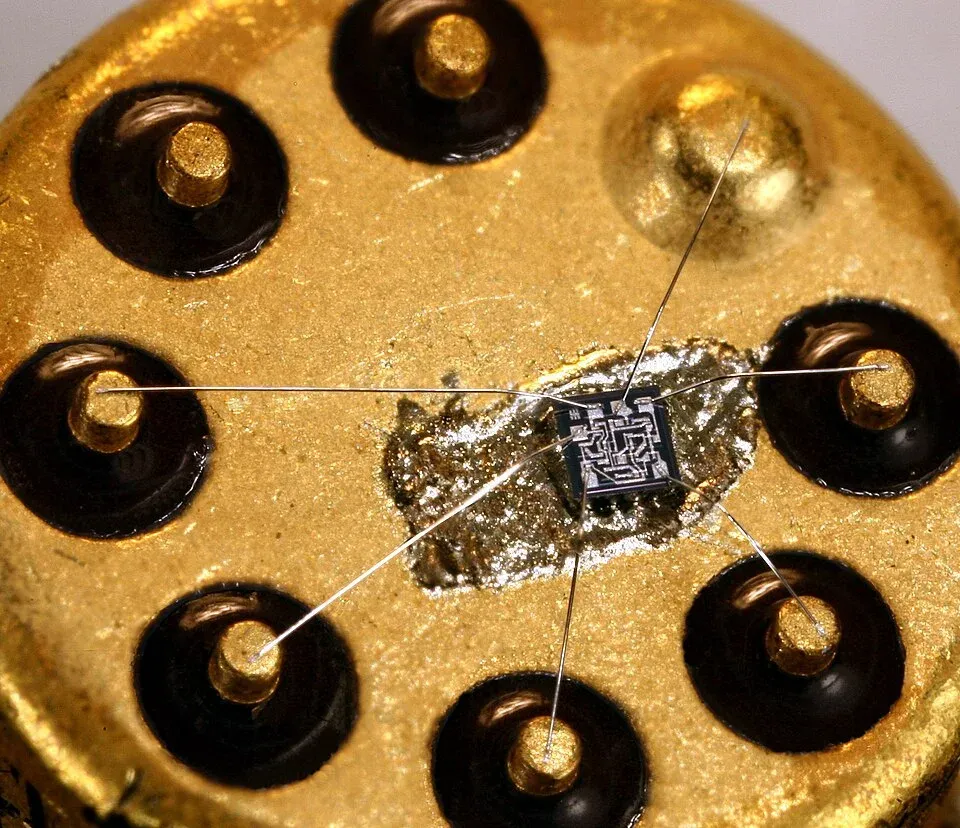
How should a die photograph be compared with a reference?
Compare it with a reference whose identity, revision context and provenance are understood. Check whether orientation, magnification and preparation differences could explain the apparent mismatch before concluding that construction is inconsistent.
A reference image found online can provide a lead, but it may lack the exact ordering code, date range or revision information. Label that limitation. Manufacturer documentation or a known-provenance sample can support a stronger comparison, while still requiring attention to legitimate manufacturing changes.
Record each compared feature explicitly: die outline, pad arrangement, visible marks or interconnect pattern. “Looks the same” is difficult to review and impossible to reproduce reliably. Where the evidence remains ambiguous, report the ambiguity and define the next useful examination rather than forcing a pass/fail conclusion.
Preserve the sample trail through destructive work
Assign an identifier before shipping the sample and maintain the link between that identifier, the source lot, external markings and laboratory files. Define how many units may be consumed and what happens to the remaining units.
Keep destructively opened samples segregated from production material. The investigation record should state whether remnants are returned, retained by the laboratory or disposed of under the agreed instruction. No opened sample should accidentally return to usable inventory.
For an actual failure investigation, connect this request to the RMA evidence package: operating conditions, symptom history and earlier observations may determine the best analysis sequence. Decapsulation is valuable when it answers a specific unresolved question; it is not a substitute for the rest of the evidence trail.
Frequently Asked Questions (FAQ)
Does every component in a suspect lot need destructive decapsulation?
No universal sample count applies. Define the investigation objective, lot structure and risk, then agree a defensible sampling plan. Results from selected units must retain their sampling limits.
Can an electrically failed device be tested before decapsulation?
Often that is useful, but the sequence depends on the failure and laboratory plan. Preserve the relevant symptom and evidence before a destructive preparation step changes the sample.
Does a laboratory die photograph certify an entire shipment as authentic?
No. A photograph records particular visible features on a particular sample. Shipment disposition requires the agreed scope of evidence, including provenance and any other specified examinations or tests.