
Table of Contents
- What assembly conditions should an aged-component solderability test reproduce?
- Use visual inspection as screening, not the verdict
- How do you choose between dip-and-look, wetting balance, and reflow simulation?
- How should aged-stock solderability samples be selected and conditioned?
- Release a conclusion bounded to the lot and method
Older date code is not itself a solderability result. Storage atmosphere, finish, packaging, contamination, intermetallic growth, and handling determine whether terminations wet in the intended assembly process. Testing should answer a specific risk question with a method that resembles the real termination and solder system.
Begin with traceability and storage evidence, then choose representative destructive samples. A passing test does not repair uncertain identity or make untested mixed lots homogeneous.
What assembly conditions should an aged-component solderability test reproduce?
A solderability test should represent the termination finish and geometry, solder alloy, flux, thermal profile, atmosphere, and cleaning process used in assembly. Record the PCB finish, preheat, peak temperature, and dwell as applicable; a test suitable for a through-hole lead may not answer the risk for a BGA sphere or bottom termination.
The acceptance question may be basic wetting of leads, wetting speed for a short reflow window, resistance to dewetting, ball or bump integrity, or performance in the actual stencil and profile. Select the method after naming that question.
Use visual inspection as screening, not the verdict
Inspect packaging, desiccant and HIC where applicable, lead or ball condition, corrosion, discoloration, contamination, bent leads, exposed base metal, and plating damage. Compare samples from different reels, trays, bags, date codes, and positions.
Texas Instruments’ solderability evaluation report, accessed September 24, 2026, discusses component lead-finish evaluation and solderability considerations. Use the component manufacturer’s finish information because storage reactions and test preparation differ between tin, nickel-palladium-gold, tin-lead, and other systems.
Do not mechanically scrape, erase, or aggressively clean the sample unless the approved method calls for it. Preparation that removes the suspect surface can create a passing result unrelated to production.
How do you choose between dip-and-look, wetting balance, and reflow simulation?
Use dip-and-look when the decision is solder coverage on accessible terminations, wetting balance when wetting speed and force matter, and a package-specific reflow simulation when board assembly is the relevant risk. Each method needs defined specimen preparation and acceptance criteria; their results answer different questions.
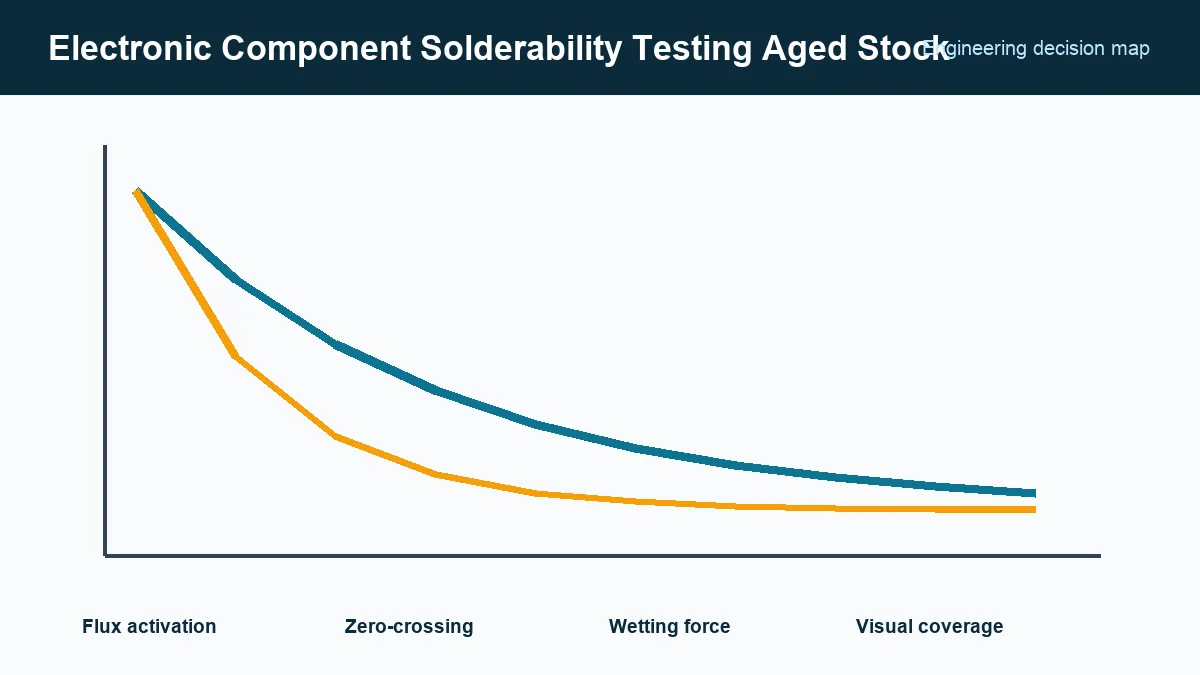
Dip-and-look provides a visual endpoint for coverage, nonwetting, and dewetting after a controlled dip. A wetting balance instead records force versus time. It can distinguish delayed wetting from a strong final wetting force, provided specimen geometry and immersion depth are controlled. Small or irregular terminations may need specialized fixtures and interpretation.
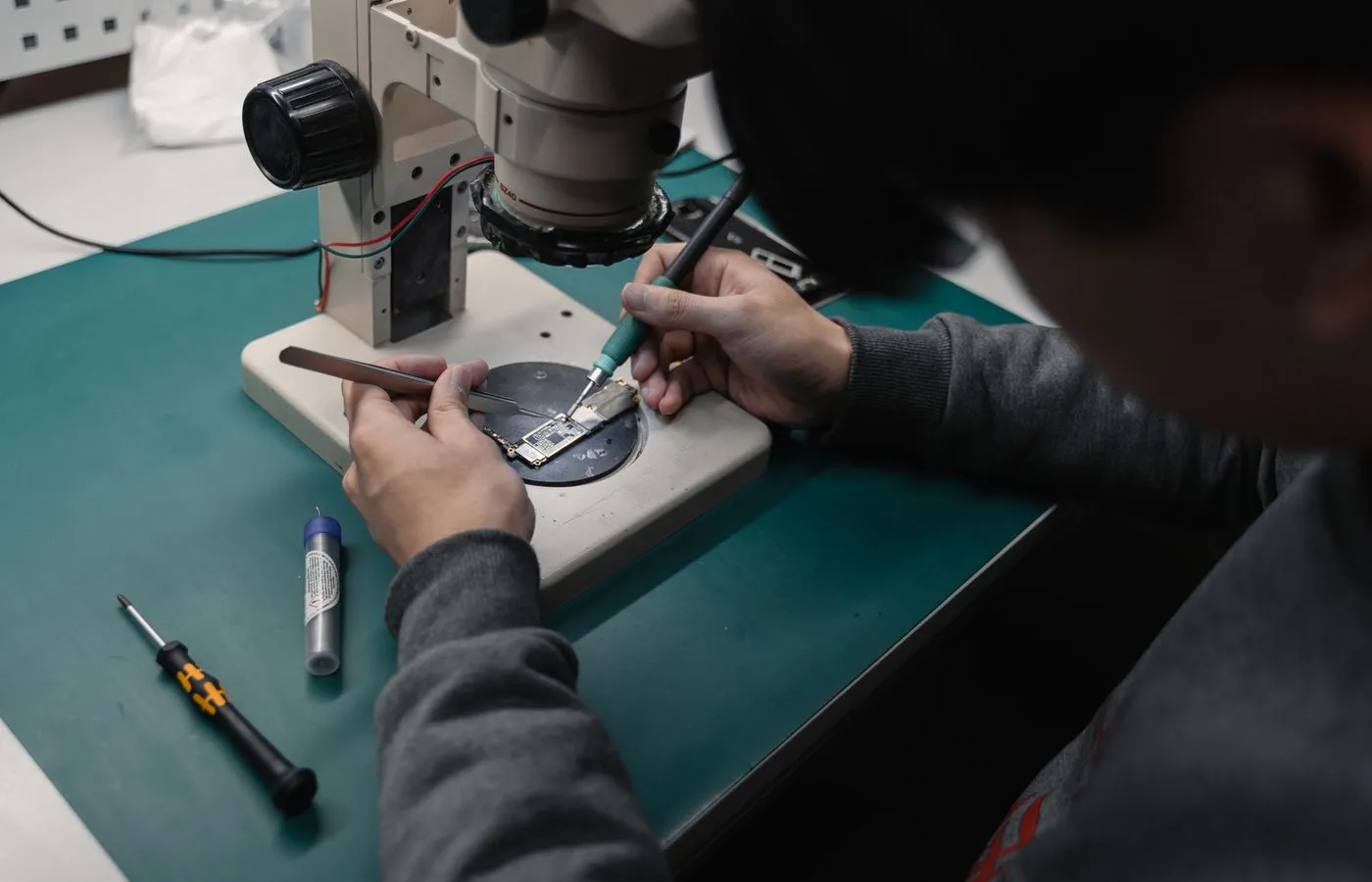
For surface-mount packages whose assembly risk is not represented by dipping individual leads, a board-level or package-specific simulation can be more informative. Use production paste, stencil, placement, atmosphere, and reflow profile, then inspect joint formation with optical, X-ray, cross-section, or electrical methods as applicable.
An independent laboratory’s overview of solderability methods, accessed September 24, 2026, summarizes dip-and-look and wetting-balance approaches. The contract should still name the governing standard, revision, conditioning, and acceptance criteria rather than relying on a laboratory service name.
How should aged-stock solderability samples be selected and conditioned?
Select destructive samples across a lot with a common part number, finish, date or trace code, packaging, and storage history. Specify whether testing is as received or after defined conditioning. Steam aging or another accelerated stress addresses a stated qualification question; it does not reconstruct the lot’s actual storage history.
Form the test lot by manufacturer, exact part, finish, date/lot code, packaging, and storage history. Draw samples across containers. Record sample count and acceptance number, and segregate every tested or prepared unit from usable stock.
If a lot fails, do not keep drawing fresh samples until one set passes. Follow the predetermined rejection, resample, rework, retinning, or engineering-review rule. Any restoration process requires its own qualification and marking controls.
Release a conclusion bounded to the lot and method
The report should include lot identity, traceability, storage evidence, sample selection, images before and after, method and standard revision, equipment, solder and flux batches, temperatures and times, conditioning, raw wetting curves where used, anomalies, acceptance criteria, and disposition.
State what the result supports: for example, acceptable wetting under a named lead test or successful assembly in a defined reflow simulation. It should not claim universal shelf life or all-process compatibility. That bounded conclusion lets procurement use older stock when evidence supports the actual assembly risk.
Frequently Asked Questions (FAQ)
Does a clean visual appearance prove that aged leads are solderable?
No. Visual inspection can find corrosion, contamination, or damage, but it does not measure wetting behavior under flux and solder conditions.
What does a wetting-balance test add beyond dip-and-look?
It records wetting force over time, which can quantify time to cross zero force and final wetting behavior. The result depends on specimen geometry, flux, solder alloy, temperature, and immersion settings.
Can destructive solderability samples be returned to production?
Normally no. Tested terminations have been exposed to flux, heat, and solder and should be segregated. The sampling plan must account for consumed parts and lot representativeness.