
Table of Contents
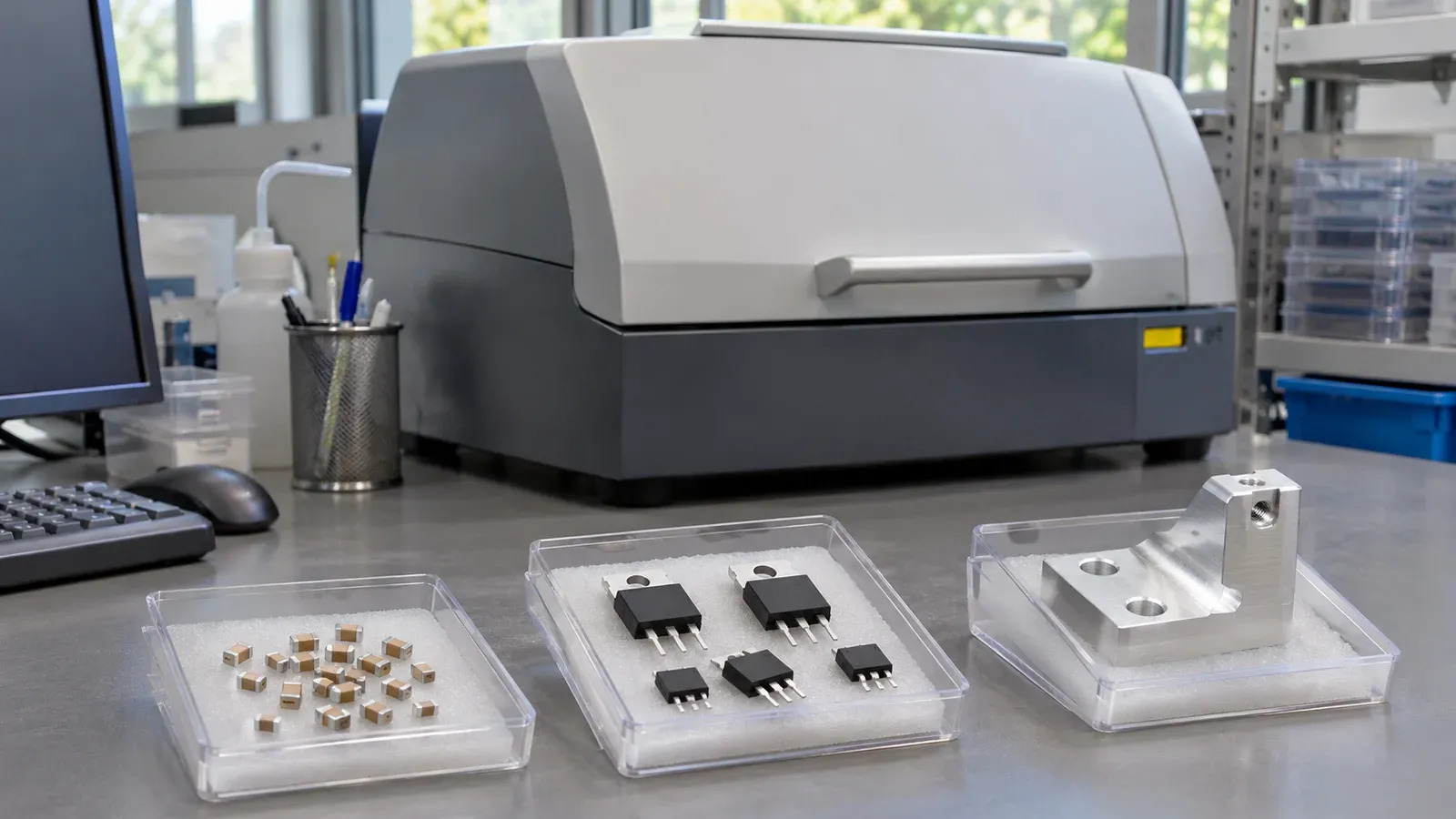
With December 11, 2026 less than three weeks away and June 2027 just 28 to 31 weeks out from November 24, 2026, EU RoHS Pack 22 lead-exemption expirations have moved from regulatory tracking into urgent BOM execution. Following publication of the three Pack 22 Delegated Directives in the Official Journal of the European Union (OJEU) on November 21, 2025 (entering into force December 11, 2025), mandatory non-renewable phase-outs hit machined steel (6(a)), leaded aluminum (6(b)), high-melting-temperature solder (7(a) under Commission Delegated Directive (EU) 2025/1802), and lead-in-glass/ceramic components (7(c)-I under (EU) 2025/2363).
Because industrial power semiconductors, thick-film resistors, and machined aluminum heatsinks currently carry 20 to 40+ week lead times—plus 12 to 24 weeks for reliability qualification—any EU-bound OEM waiting until Q1 2027 to audit Pack 22 exposure risks missing the June 2027 placement-on-market cutoff. General declaration collection processes are covered in our RoHS exemption declarations guide, while PDN deadline mechanics belong to our JEDEC J-STD-048 PDN order-vs-ship workflow.
What are the exact 2026–2027 expiry dates for EU RoHS 6(a), 6(b), 7(a), and 7(c)-I?
As codified in the November 21, 2025 OJEU Delegated Directives and cross-checked against Texas Instruments’ EU RoHS Statement Rev. N (SZZQ119) (December 19, 2025), Pack 22 replaces broad legacy lead exemptions with hard expiry dates and narrower technical sub-entries.
| Exemption entry | Material / component scope | Binding EU expiry date | Weeks left from Nov 24, 2026 | Renewability & split structure |
|---|---|---|---|---|
6(a) |
Lead as an alloying element in steel (≤0.35%) |
December 11, 2026 | 2.4 weeks |
Non-renewable; narrow replacements 6(a)-I (machined steel) & 6(a)-II (hot-dip galvanized ≤0.2%) run to June 30, 2027 |
6(b) / 6(b)-I |
Lead in aluminum (≤0.4%), e.g., heatsinks, brackets, housings |
Dec 11, 2026 (6(b)-I cat 1–7, 10); Jun 11, 2027 (6(b) / 6(b)-I cat 9 ind & 11) |
2.4 / 28.4 weeks |
Non-renewable; 6(b)-II (cat 1–7, 10) ends Jun 11, 2027 (Jun 30, 2027 cat 9 ind & 11); new 6(b)-III ends Jun 30, 2027 |
6(c) |
Copper alloy containing up to 4% lead (connector contacts, standoffs) |
June 30, 2027 | 31.1 weeks |
Renewal decision window closed Dec 31, 2025; verify connector supplier sub-declarations |
7(a) ((EU) 2025/1802) |
High-melting-temperature lead solder (≥85% Pb by weight) in power ICs, MOSFETs, diodes |
June 30, 2027 | 31.1 weeks |
Broad 7(a) splits into seven narrow sub-entries 7(a)-I to 7(a)-VII expiring December 31, 2027 |
7(a)-I to 7(a)-VII (New) |
Specific internal die-attach (≥0.1 A, >10 V, or die >0.3 × 0.3 mm under 7(a)-I) & defined power assemblies |
December 31, 2027 | 57.4 weeks |
Narrower eligibility criteria; renewal applications required 18 months prior (by June 30, 2026) |
7(c)-I ((EU) 2025/2363) |
Lead in glass or ceramic (thick-film resistors, glass-passivated diodes, NTCs, piezo) | June 30, 2027 | 31.1 weeks |
Broad 7(c)-I ends Jun 30, 2027; 7(c)-II and new 7(c)-V extend to December 31, 2027 |
15(a) |
Flip-chip lead solder between semiconductor die and carrier | Pending official decision | Ongoing | Remains active until European Commission publishes a formal decision and transition period |
Two hidden traps catch industrial automation and automotive teams off guard:
- Broad
7(a)and7(c)-Icertificates expire on June 30, 2027 even when a part qualifies for a sub-entry: A legacy IPC-1752A XML declaration citing only generic7(a)or7(c)-Ibecomes non-compliant for newly shipped EU products on July 1, 2027 unless the component manufacturer re-issues the declaration mapped specifically to7(a)-I..VIIor7(c)-V—or converts the part to a Pb-free construction. - Mechanical and passive BOM lines fail before ICs: Most active silicon from major vendors such as Texas Instruments and Infineon already ships exemption-free or with published sub-entry roadmaps, whereas low-cost thick-film chip resistors (
7(c)-I), glass-passivated rectifiers (7(c)-I), copper-alloy connector pins (6(c)), and extruded aluminum heatsinks (6(b)) frequently carry unmonitored legacy declarations that halt EU customs or CE technical-file audits.
How should procurement work backward from the June 30, 2027 cutoff?
Working backward from June 30, 2027 (31 weeks remaining as of November 24, 2026) exposes why requalification cannot run sequentially with component procurement:
- Weeks 1–4 (Nov–Dec 2026) — Full BOM scrub & declaration refresh: Extract every BOM line (including mechanical heatsinks, fasteners, and connectors, not just silicon) declaring
6(a),6(b),6(c),7(a), or7(c)-Ivia a structured BOM compliance review. Immediately quarantine6(a)and Category 1–7/106(b)-Ilines facing the December 11, 2026 deadline. - Weeks 5–10 (Jan–Feb 2027) — Split into three engineering buckets:
- Documentation-only update: Supplier confirms part qualifies under
7(a)-I..VIIor7(c)-Vthrough December 31, 2027 (obtain updated IPC-1752A / Full Material Disclosure). - Drop-in Pb-free replacement: Swap thick-film
7(c)-Iresistors to lead-free resistive paste series (0603/0805/1206) or transition6(b)aluminum brackets to≤0.1% Pballoys (6061/6063standard tempers). - Requalification required: Power MOSFETs, IGBTs, and high-voltage diodes migrating from
≥85% Pbdie attach to sintered silver or SnAgSb alloys require thermal-cycling and solder-reflow validation (12–16 weeks).
- Documentation-only update: Supplier confirms part qualifies under
- Weeks 11–24 (Feb–May 2027) — Qualification, PCN cut-in, and EU shipment cutover: Lock approved lead-free replacement MPNs onto purchase orders at least
16–20 weeksahead of final EU factory build—leaving a4–6 weekcustoms and transit buffer before June 30, 2027 so finished goods placed on the EU market carry clean CE technical documentation.
Purchase-order and RFQ clauses for 2027 RoHS transitions
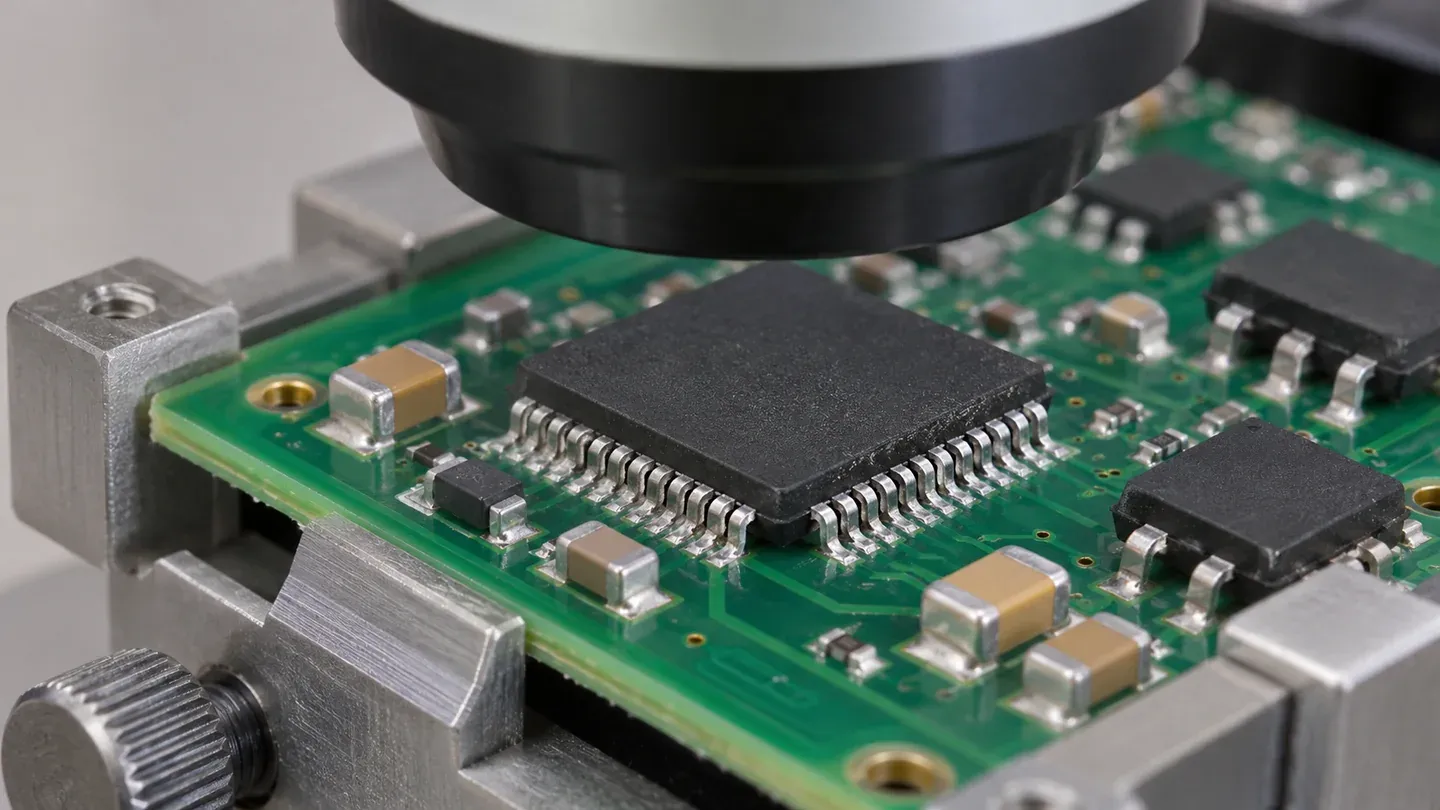
When issuing RFQs for replacement passives, power devices, or connectors through an electronic component RFQ, specify three compliance fields on every line: exact manufacturer part number (since some vendors assign a new suffix for Pb-free glass/die-attach revisions), mandatory IPC-1752A or manufacturer RoHS certificate explicitly naming either “Exemption-Free” or the exact Pack 22 sub-entry (7(a)-I through 7(a)-VII, 7(c)-V) with validity date, and strict segregation of legacy 7(a)/7(c)-I stock from post-transition production lots so warehouse mixing never contaminates EU-destined assemblies.
Frequently Asked Questions (FAQ)
Does the June 30, 2027 expiry of EU RoHS exemption 7(a) ban all high-melting-temperature lead solder immediately?
Not across every narrow use case. Commission Delegated Directive (EU) 2025/1802 expires the broad 7(a) entry on June 30, 2027, while splitting specific technical applications into seven narrower sub-entries (7(a)-I through 7(a)-VII) that run through December 31, 2027. However, buyers must obtain updated supplier declarations confirming whether each affected MPN qualifies under a specific sub-entry or requires an alternative.
Are components already placed on the EU market before an exemption expires still legal to use for repair?
Under EU RoHS Directive 2011/65/EU, spare parts for the repair, reuse, or upgrading of electrical and electronic equipment placed on the market before the applicable compliance date have specific repair-as-produced provisions—but new equipment placed on the EU market after the expiry date cannot rely on an expired exemption. Confirm product category and legal scope with your compliance officer.
Which common electronic components typically rely on exemptions 7(a) and 7(c)-I?
Exemption 7(a) (solder with ≥85% lead by weight) appears primarily in internal die-attach joints of high-power MOSFETs, IGBTs, diodes, voltage regulators, and power modules. Exemption 7(c)-I (lead in glass or ceramic outside capacitor dielectrics) is ubiquitous in thick-film chip resistors, glass-passivated diodes, thermistors, and piezoelectric devices.
What is the current EU RoHS status of flip-chip die-attach exemption 15(a) as of November 2026?
Per Texas Instruments' EU RoHS Exemption Statement (SZZQ119 Rev. N) and European Commission Pack 22 records, renewal requests for exemption 15(a) remain pending an official published decision—meaning 15(a) remains valid until the Commission publishes a formal decision and transition period.