Table of Contents
The global memory market in 2026 is experiencing intense structural shifts. While headlines are dominated by High Bandwidth Memory (HBM) shortages driven by AI data centers, the mobile and embedded memory sectors—specifically eMCPs and discrete LPDDR4—are facing their own unique supply chain pressures. Relevant package and test standards are published by JEDEC. Foundries have reallocated wafer starts toward high-margin AI chips, leaving IoT, automotive, and consumer electronics manufacturers fighting for the remaining NAND and DRAM capacity.
Two specific memory part numbers frequently appear in urgent requests: the Kingston 16EMCP08-EL3BT527 and the Samsung K4E2E304EE.
Analyzing the Components
Understanding the technical specifications of these components is critical for effective sourcing and potential cross-referencing.
Kingston 16EMCP08-EL3BT527
This component is an eMCP (Embedded Multi-Chip Package). eMCPs combine eMMC (embedded multimedia card for storage) and low-power DRAM (LPDDR) into a single BGA package.
- Application: Widely used in mid-tier smartphones, industrial IoT gateways, and automotive infotainment systems where PCB space is at a premium.
- The Shortage Driver: As memory manufacturers aggressively transition to UFS-based multi-chip packages (uMCP) to support 5G speeds, legacy eMCP production is being wound down, leading to sudden End-of-Life (EOL) notices and restricted allocation.
Samsung K4E2E304EE
This part is a discrete LPDDR4 DRAM chip.
- Application: Found in a vast array of embedded systems requiring high bandwidth at low power consumption.
- The Shortage Driver: Samsung has heavily pivoted its DRAM fabrication toward DDR5 and HBM3e. The resulting reduction in LPDDR4 output has extended lead times, catching many OEMs off-guard who rely on these mature nodes for multi-year product lifecycles.
Sourcing Strategies for Constrained Memory
When a production line is halted due to missing memory modules, OEM procurement teams must move beyond authorized distribution channels.
1. Validating Pin-to-Pin Replacements
Memory is highly standardized by JEDEC. If the Kingston 16EMCP08 is unavailable, engineering can evaluate eMCP alternatives from Kioxia, Micron or Samsung. Match the density (for example, 16 GB eMMC plus 8 Gb LPDDR3/4), the BGA footprint (typically 162-ball or 221-ball) and the voltage rails. A drop-in candidate may still require a bootloader change, so the alternate remains an engineering item until the board and firmware are validated.
2. Procuring from the Open Market Safely
If cross-referencing is rejected by the end client’s engineering board, the exact Kingston or Samsung part numbers may be sourced through the open market. This introduces risk, because memory chips are frequently targets for blacktopping, remarking and reclaimed material.
A memory-lot verification scope can include:
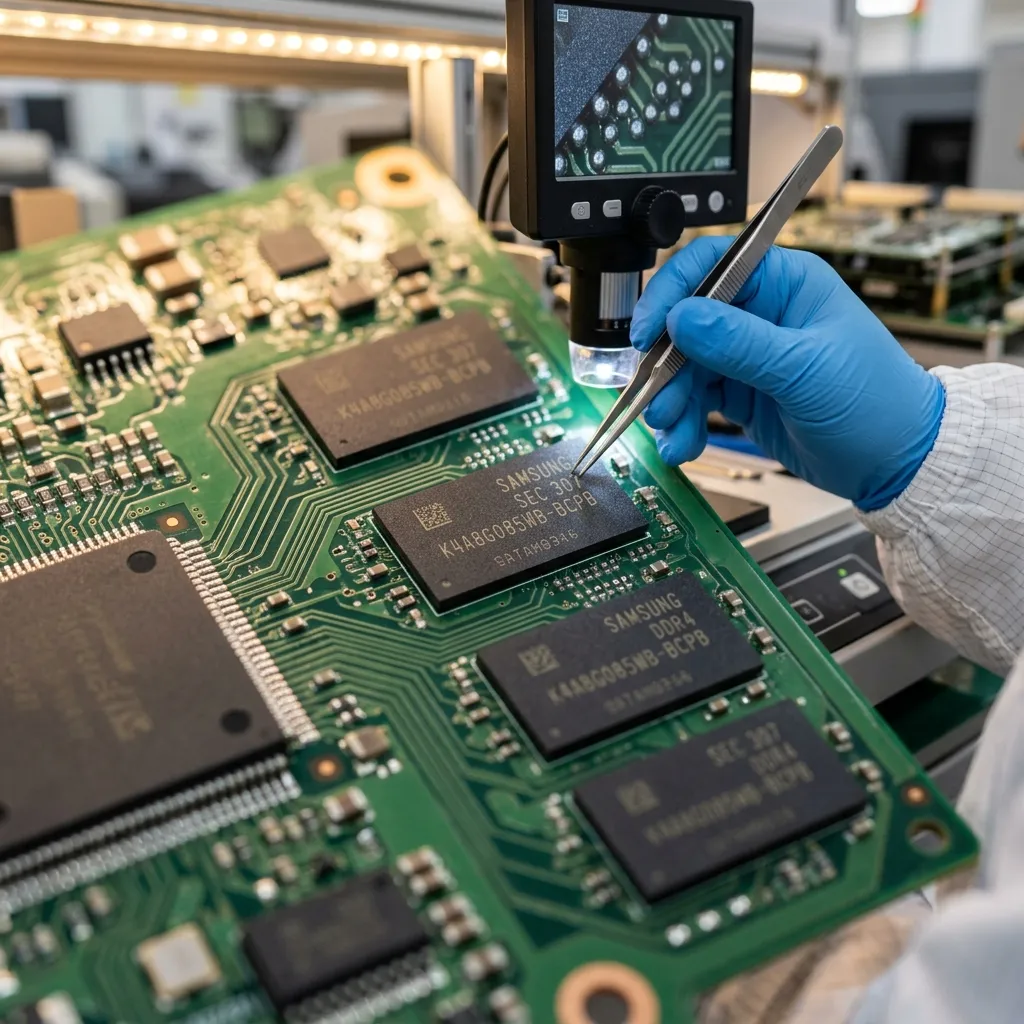
- Visual and solvent examination: Check that laser etching and surface condition are consistent with the expected device.
- Read-write and density tests: Use an appropriate BGA test socket to check NAND sector health and confirm that the reported density matches the expected configuration.
These checks cover different failure modes. A clean marking does not prove endurance or full electrical compliance; a read-write pass does not prove lot identity. Keep the test scope and limits in the release record.
A Controlled Legacy Memory Decision
Procuring embedded memory in 2026 requires planning for formats that manufacturers are actively obsoleting. The reliable path is to define the last-time-buy quantity, qualify an alternate on the actual board and keep lot-level evidence with the released material. The legacy eMCP/eMMC sourcing guide covers the lifecycle and coverage side of that decision.
For an eMCP, eMMC or LPDDR4 requirement, submit the exact part number and quantity through the BOM submission page or use the contact page to confirm the offered lot and documentation.
Frequently Asked Questions (FAQ)
What are the main sourcing challenges for legacy mobile memory in 2026?
Legacy eMCP and eMMC formats are entering a rapid end-of-life phase as manufacturers reallocate capacity to newer memory. Rugged telemetry and industrial handheld programs need a last-time-buy or approved alternate before the remaining supply is exhausted.
Can a different eMCP density or BGA footprint be used as a drop-in replacement?
Not automatically. Density, rank organization, voltage rails, ball map and boot behavior must match the host design, and the bootloader may need a change. Treat the candidate as an engineering alternate until the board and firmware are validated.
What evidence should accompany an open-market memory lot?
Request the exact part number, lot and date-code identity, carrier condition, chain-of-custody records and the test scope agreed in the purchase order. Visual marking and a read-write check cover different failure modes and do not establish every electrical or endurance parameter.