
Table of Contents
- The Bottleneck Has Moved Beyond the Accelerator
- Map the Power Chain From Grid to Processor Rail
- Put Early Capacity Checks on the Right BOM Groups
- Treat 800 VDC as a Roadmap and Qualification Question
- Separate Silicon Availability From Qualified Power Assemblies
- Build Alternate Paths Without Mixing Architectures
- Apply Quote and Inventory Controls in Late 2026
- A 90-Day Buyer Action Plan
In late 2026, an AI data center procurement plan that follows only GPUs and HBM misses the power chain that makes compute usable. Utility interconnection, transformers, switchgear, UPS and storage, busways, power shelves, converters, cooling equipment, controllers, magnetics, connectors, and power semiconductors can each control the commissioning date.
The correct sourcing unit is therefore not “the power chip.” It is the approved grid-to-rail architecture and its interfaces. Buyers should map which equipment is custom, which semiconductor is design-locked, where supplier capacity is reserved, and which candidate alternate would require a system requalification.
The Bottleneck Has Moved Beyond the Accelerator
The International Energy Agency’s April 2026 update reported that data-center electricity consumption grew 17% in 2025. Its central projection has data-center electricity use roughly doubling from 485 TWh in 2025 to 950 TWh in 2030, while AI-focused data-center consumption triples over the period.
Those are energy-demand projections, not component forecasts. They still matter to procurement because the same update says rising rack power density will test supply chains for power electronics and transformers. The IEA also warns that bottlenecks across the value chain are limiting more aggressive near-term data-center growth scenarios.
A Reuters report dated September 1, 2026 described how data-center investment is spreading demand to power and cooling companies. Treat this as a project-level capacity signal. It does not prove a specific MOSFET, UPS frame, or transformer is unavailable; only an approved supplier quote and capacity confirmation can answer that.
Map the Power Chain From Grid to Processor Rail

Create one dependency map from utility connection to the load. A simplified chain may include:
- grid connection, substation equipment, transformers, and protection;
- medium- and low-voltage switchgear and distribution;
- UPS, batteries or other energy storage, backup generation, and transfer systems;
- busway, power distribution units, cabling, connectors, and monitoring;
- rack or row power shelves and AC/DC or DC/DC conversion;
- board-level intermediate bus converters, voltage regulators, and point-of-load stages;
- pumps, fans, compressors, and controls for cooling.
For every block, capture rated power, voltage, fault and protection interfaces, efficiency, cooling, redundancy, mechanical envelope, certifications, firmware, telemetry, qualified suppliers, service requirements, and latest order date. Connect the block to construction, energization, rack installation, and compute-acceptance milestones.
The industrial electronics sourcing solution provides a useful framework for long-life power, control, sensing, and connectivity components. Data centers operate at a different scale, but they share the need to keep the exact electrical and control baseline tied to procurement.
Put Early Capacity Checks on the Right BOM Groups

Start capacity checks with items that combine long qualification, custom configuration, limited production, difficult transport, and project-sequence dependency. Large transformers and switchgear may control site energization. UPS, power shelves, busway, and liquid-cooling power/control assemblies may control white-space readiness. At board level, a design-locked controller, driver, magnetic component, or power module can hold a higher-value assembly.
Do not infer component scarcity from the value of the finished system. Map lower-cost enabling parts that lack released alternates: auxiliary power ICs, current sensors, isolated communication, digital isolators, protection devices, connectors, and control MCUs. A missing monitor or gate-driver device can delay the same power shelf as a headline switch.
Track supply at three levels:
- equipment: configured transformer, UPS, CDU, PDU, or power shelf;
- assembly: rectifier, converter, controller, battery, fan, or power module;
- component: semiconductor, magnetics, sensor, connector, capacitor, and protection.
An alternate at component level is useful only if the assembly supplier can validate it and keep the configured equipment schedule.
Treat 800 VDC as a Roadmap and Qualification Question
NVIDIA’s 800 VDC architecture announcement describes a transition intended to support 1 MW-class IT racks starting in 2027. It proposes moving high-voltage DC distribution closer to the rack and names a broad ecosystem of silicon, power-component, and data-center power-system partners.
In September 2026, procurement should not translate that roadmap into a universal BOM. Ask:
- Is this project using a current AC architecture, a 48/54 V rack system, a future 800 VDC design, or a transition platform?
- Which voltage boundaries and connectors are frozen?
- Which protection, isolation, grounding, fault, and service requirements apply?
- Which equipment is production-qualified versus in engineering validation?
- Are suppliers reserving capacity for the exact configuration or only discussing roadmap participation?
- What remains interchangeable without changing control, cooling, safety, or certification?
A future architecture can strand early inventory if interfaces change. Use scenario quantities until the design and deployment date are firm, and separate development samples from production authorization.
Separate Silicon Availability From Qualified Power Assemblies
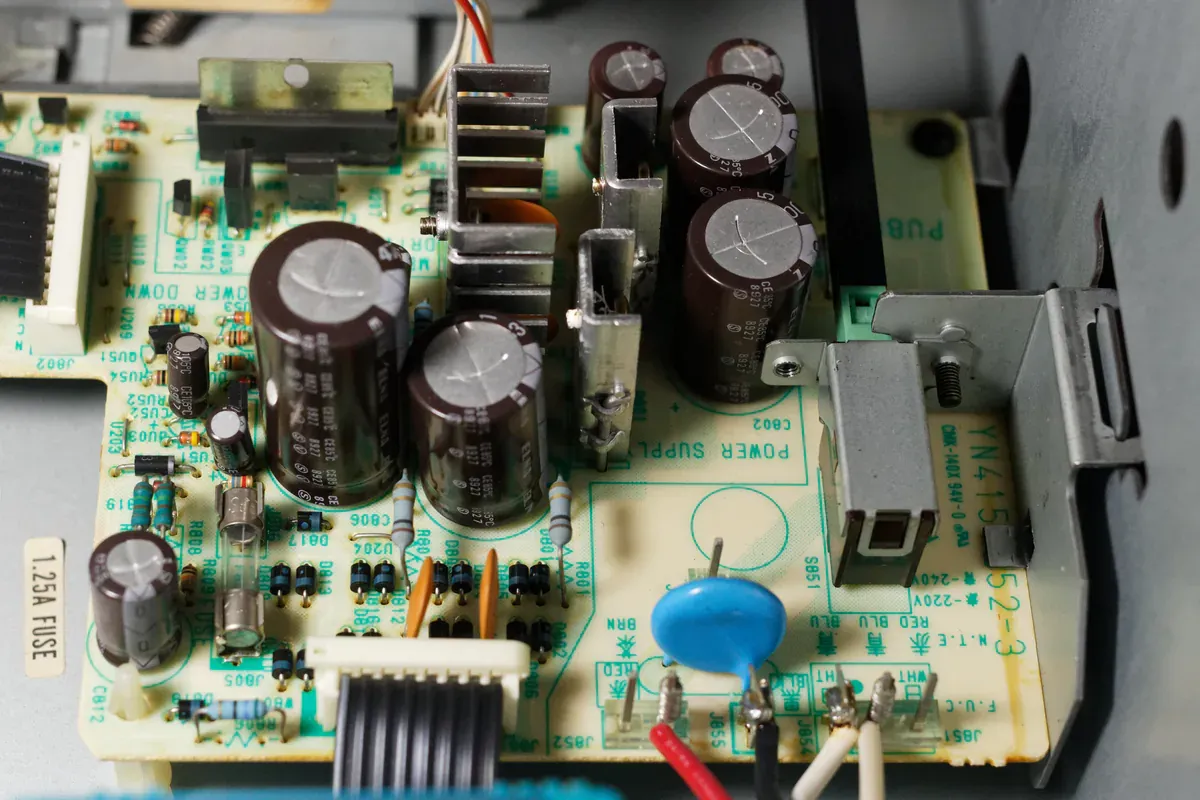
SiC, GaN, silicon MOSFETs, IGBTs, controllers, gate drivers, current sensors, and isolation devices each serve different portions of the conversion chain. Availability of a transistor with similar voltage and current ratings does not make an alternate converter.
Qualification must consider switching behavior, gate charge and drive, short-circuit response, reverse conduction, package parasitics, creepage/clearance, thermal path, magnetics, EMI, protection thresholds, firmware, control-loop behavior, efficiency, reliability, and manufacturing process. The SiC and GaN procurement guide covers device-level differences; this article keeps the system schedule in view.
Ask assembly suppliers for the released component baseline, approved alternates, PCN process, qualification status, capacity assumptions, and consequences of a source change. If the buyer purchases a component directly, define who owns assembly validation and warranty.
Build Alternate Paths Without Mixing Architectures
Use an alternate hierarchy:
- identical configured equipment from another approved source;
- same equipment family with a released component change;
- interface-compatible equipment requiring site or firmware validation;
- alternate power stage within the same architecture;
- a different voltage or cooling architecture requiring system redesign.
The component alternatives solution can help screen model-to-model candidates. It cannot turn a different architecture into a drop-in replacement. Preserve test reports, samples, interface documents, firmware versions, and approvals at the level where the change occurs.
Redundancy also should be mapped across upstream dependencies. Two power-shelf brands may use the same controller, module, connector, contract manufacturer, or production region. Ask enough questions to discover common-mode risk without demanding supplier-confidential design data that is unnecessary for the decision.
Apply Quote and Inventory Controls in Late 2026
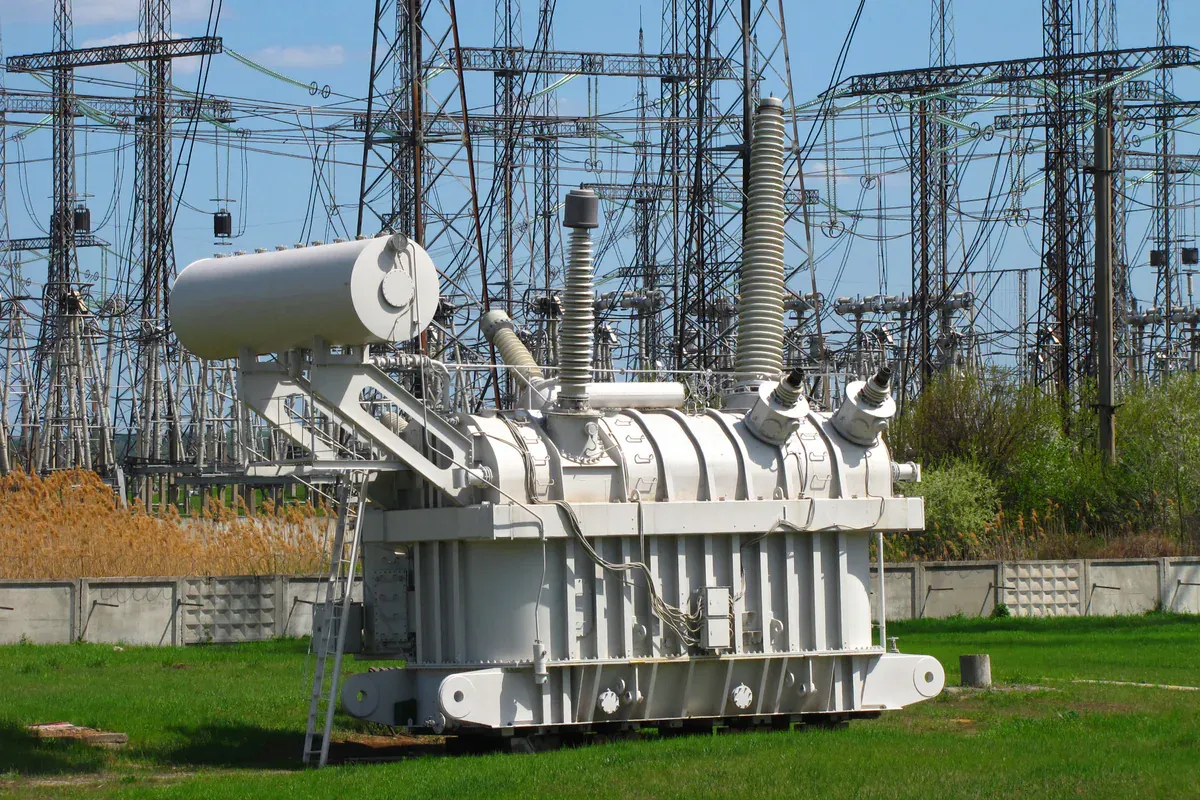
For long-lead configured equipment, the quote should state configuration, interfaces, included accessories, factory-acceptance scope, capacity reservation, milestone payments, cancellation, escalation, transport, site acceptance, spares, warranty, and service. Clarify which date is engineering release, factory ship, site arrival, energization, and acceptance.
For electronic components, state the complete MPN, manufacturer, packing, quantity, production need date, approved alternatives, lifecycle, traceability, inspection, and storage requirements. Avoid buying unqualified “future standard” parts solely because a roadmap mentions their category.
Inventory policies should follow validation state:
- development samples for architecture learning;
- controlled pilot quantities for assembly qualification;
- committed production supply after design release;
- service spares tied to the deployed configuration;
- no speculative overbuy without an owner and disposition path.
Memory and networking remain connected risks. Use the DRAM spot-versus-contract guide and co-packaged optics supply-chain guide for those separate demand streams rather than blending every AI component into one market forecast.
A 90-Day Buyer Action Plan
In the next 30 days, freeze the architecture map, interfaces, project milestones, owners, and long-lead register. Obtain supplier evidence for capacity, configuration, and latest order dates. Mark every single-source assembly and design-locked semiconductor.
By day 60, complete scenario quotes, test the first backup supply paths, align qualification samples with engineering resources, and reconcile construction, equipment, and component schedules. Review whether two named suppliers share an upstream dependency.
By day 90, convert approved scenarios into controlled commitments, establish PCN and status reporting, define service spares, and escalate unresolved architecture decisions before they create non-cancelable inventory.
The late-2026 signal is not that every power component is scarce. It is that AI density is changing the dependency map faster than many procurement systems represent it. Buyers who connect grid equipment, power assemblies, and exact electronic parts can see the next constraint before it reaches the commissioning path.
Frequently Asked Questions (FAQ)
Which components create AI data center power supply-chain risk?
Risk can appear from utility interconnection and transformers through switchgear, UPS and energy storage, busways, power shelves, rectifiers, converters, cooling power, connectors, magnetics, controllers, gate drivers, and power semiconductors. The critical item depends on the approved architecture and project schedule.
Are 800 VDC AI data centers already the standard in 2026?
No. NVIDIA has described an 800 VDC architecture intended to support megawatt-scale racks starting in 2027. In late 2026, buyers should treat it as a roadmap, interface, qualification, and supplier-capacity question rather than assume universal deployment.
Can an AI data center substitute a SiC or GaN device from another supplier?
A data-sheet similarity is not enough. The power stage, gate drive, protection, magnetics, control, thermal system, EMI, reliability, qualification, package, and manufacturing process must be validated within the actual converter or power assembly.
How should buyers manage long-lead data center power equipment?
Freeze architecture and interfaces, map dependencies by project milestone, obtain supplier capacity and configuration evidence, separate firm demand from scenarios, qualify alternates at the assembly and component levels, and track the latest decision date for each long-lead item.