Table of Contents
- What Is CPO, and What Does It Change?
- Which CPO Platforms Have Public 2026 Evidence?
- What Must Procurement Source Around a CPO Platform?
- What Are the Real CPO Supply-Chain Constraints?
- How Should Serviceability Affect the Buy?
- Which Standards Matter for CPO Procurement?
- How Should a Buyer Build a CPO Sourcing Plan?
Co-packaged optics changes the purchasing unit. With pluggable optics, a buyer can often source the switch and transceiver as separate qualified items. In a CPO platform, optical engines are integrated beside the switch or compute ASIC, so the central optical assembly is tied to the platform’s package, thermal design, firmware and manufacturing test flow.
The result is not simply a new category of optical component. It is a shift from catalog component sourcing toward platform allocation, design-in evidence and lifecycle commitments. Procurement still has meaningful leverage, but much of it moves to the surrounding bill of materials and the terms negotiated before the architecture is frozen.
What Is CPO, and What Does It Change?
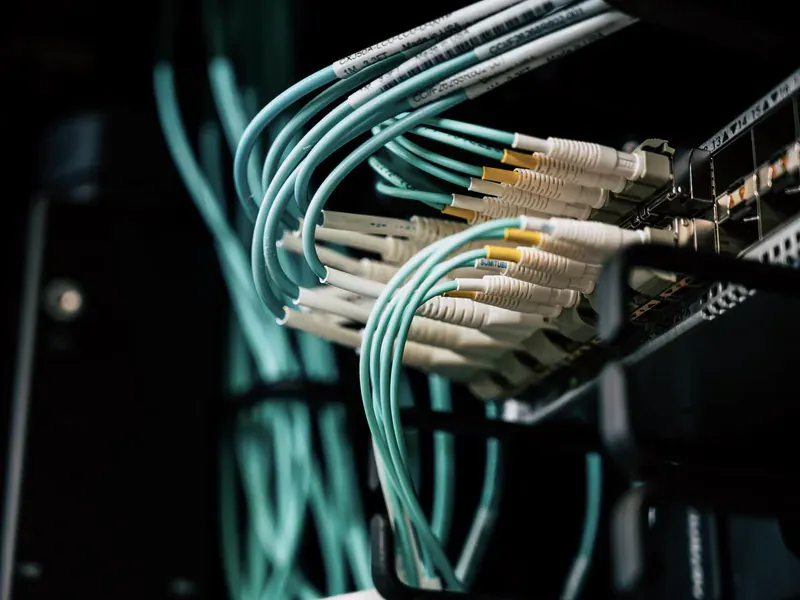
CPO shortens the high-speed electrical path by placing optical engines on the same packaged substrate as the switching or compute silicon. External fibers carry traffic from the package, while laser sources may be integrated or located in a serviceable external module, depending on the design.
Broadcom describes CPO as heterogeneous integration of optics and silicon on a single packaged substrate. Its 51.2-Tb/s Bailly platform integrates eight 6.4-Tb/s silicon-photonics optical engines with a Tomahawk 5 switch chip. Broadcom’s published comparison attributes a 70 percent optical-interconnect power reduction to that specific platform versus pluggable solutions. That metric should not be generalized to every CPO architecture.
| Sourcing dimension | Pluggable architecture | CPO architecture |
|---|---|---|
| Switching silicon and optics | Usually separate qualified items | Co-designed platform assembly |
| Optical replacement | Faceplate module can often be replaced | Service model depends on engine, fiber and external-laser design |
| Second source | Possible at a defined module interface | Limited inside the package; more practical at external interfaces |
| Qualification focus | Module and host interoperability | Package, thermal, fiber, laser, firmware and system reliability |
| Commercial engagement | Catalog and distribution can play a large role | Platform-vendor and system-OEM engagement is central |
CoWoS and CPO should not be used as synonyms. CoWoS is an advanced packaging platform; CPO is an optical integration architecture. Advanced packaging can be part of a CPO manufacturing flow, but a CoWoS capacity claim does not by itself prove availability or delay for a particular CPO switch.
Which CPO Platforms Have Public 2026 Evidence?
Use explicit status labels: announced, sampling, qualified, in production and generally orderable are not interchangeable.
As of August 15, 2026, two public examples illustrate the market:
| Vendor | Public evidence | Sourcing interpretation |
|---|---|---|
| NVIDIA | NVIDIA stated in June that Spectrum-X Ethernet Photonics switches are in production as part of the Vera Rubin platform | Production status is established, but configuration, customer qualification, volume and delivery still require a direct program quote |
| Broadcom | Broadcom publishes current CPO switch and pluggable-laser product pages, including the Bailly 51.2-Tb/s platform | A commercial product exists; buyers should confirm system-OEM availability, software, fiber and laser configuration, service terms and committed schedule |
Avoid adding roadmap entries for Cisco, Intel, Marvell, foundries or hyperscalers unless the claim is tied to a dated primary source and an exact product state. A demonstration or technology announcement can be relevant to architecture planning without representing production supply.
The same discipline applies to output forecasts. An analyst’s shipment estimate may inform market sizing, but it is not evidence that a specific buyer can receive a configured switch on a particular date.
What Must Procurement Source Around a CPO Platform?

The integrated engine is only one part of the deployed system. Build a supply map across five layers:
| Layer | Typical scope | Primary owner |
|---|---|---|
| CPO package | Switch or compute ASIC, optical engines, substrate and package test | Platform vendor |
| Optical power and fiber | External laser source where used, fiber assembly, connectors and routing | Platform vendor plus system OEM |
| Board electronics | Power conversion, sequencing, clocking, memory, management controller and protection | System OEM or ODM |
| Mechanical and thermal | Heat sink or cold plate, airflow or liquid loop, retention and fiber strain relief | System OEM |
| Software and operations | Firmware, management interface, telemetry, diagnostics and field-repair procedure | Platform vendor plus operator |
For each line, identify the approved manufacturer part number, configuration owner, qualification evidence, change-notice path and service replacement. Do not assume the optical package can be bought independently merely because an internal engine has a component name.
The surrounding board BOM is where conventional procurement controls remain powerful. Power devices, controllers, clocking, memory and connectors may have alternate paths if engineering qualifies them early. Use the BOM risk assessment framework to score those parts by recovery time and system impact.
What Are the Real CPO Supply-Chain Constraints?
The principal constraint is coordination across photonics, advanced packaging, fiber attach, thermal design and test. A CPO package can contain working switch silicon and still fail yield or reliability targets because of an optical, mechanical or assembly issue.
Qualify risks as evidence-based questions:
- Is the offered configuration in production, sampling or customer qualification?
- Which elements are manufactured and tested by the platform vendor, and which come from the system OEM?
- Is the laser integrated, remotely packaged or externally pluggable?
- What happens when one optical lane, engine or laser source fails in the field?
- Which firmware and diagnostic tools are required to isolate the fault?
- What change notices cover the switch silicon, optical engine, package, fiber assembly and laser source?
- Which component or process has the longest demonstrated recovery time?
Do not publish a generic 26-to-52-week CPO lead time. This is a negotiated system market, and a useful commitment must identify the platform, port configuration, software, required optics or laser modules, quantity, delivery site and acceptance criteria.
How Should Serviceability Affect the Buy?
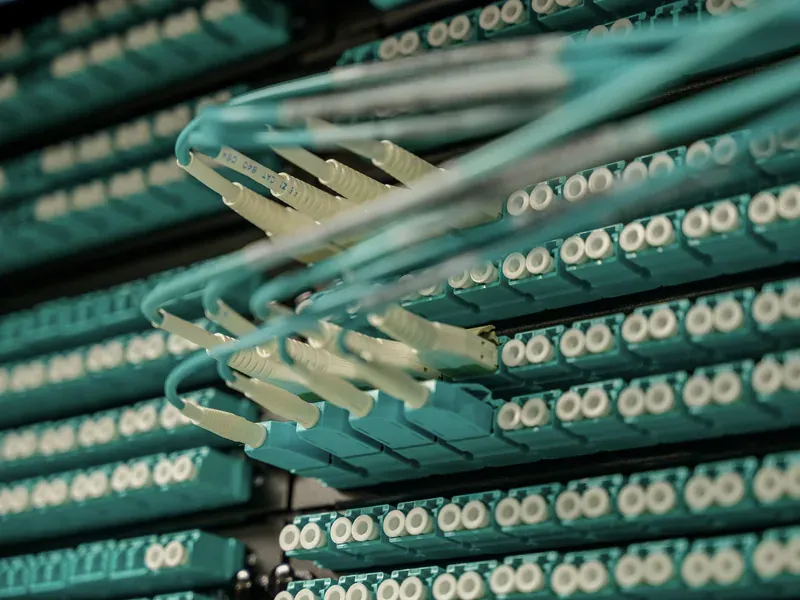
Moving optics into the package changes the field-repair boundary. Procurement should price the failure unit defined by the actual platform: a laser module, fiber assembly, line card, switch tray or complete system. A lower-power optical link may carry a higher replacement cost if the service design requires swapping a larger assembly.
Ask suppliers for:
- Field-replaceable-unit definitions and spare ratios.
- Diagnostic coverage for optical engines, fibers and lasers.
- Repair location, turnaround target and advanced-replacement terms.
- Handling, cleaning and connector-inspection requirements.
- Firmware support and compatibility policy for replacement assemblies.
- Reliability evidence at the offered configuration and environmental conditions.
Remote or pluggable laser designs can isolate a wear-sensitive element from the hot switch package, but they also add laser modules, connectors, fiber routing and management interfaces to the service plan. The commercial model should include those items from the beginning.
Which Standards Matter for CPO Procurement?
There is no single standard that makes complete CPO switch packages interchangeable. OIF publishes several relevant documents with defined scopes. Its current Implementation Agreements library includes the 3.2-Tb/s co-packaged optical module agreement, the External Laser Small Form Factor Pluggable agreement and related CMIS work. The library also distinguishes implementation agreements from informative framework documents.
That distinction should appear in a supply agreement. Instead of requiring vague “OIF compliance,” name the exact document, revision, interface and test evidence. For example, an external laser module claim should identify whether the optical, electrical and management interfaces conform to the applicable ELSFP and CMIS documents.
IEEE 802.3 standards govern relevant Ethernet physical-layer behavior, but they are not a universal CPO-package specification. Ethernet link compliance does not establish that an optical engine, laser or package can be substituted inside another vendor’s platform.
Standards preserve leverage at defined boundaries. They do not erase thermal, mechanical, firmware, reliability or vendor-specific management dependencies.
How Should a Buyer Build a CPO Sourcing Plan?
Use a stage-gated plan tied to the product’s evidence state.
| Stage | Required sourcing output |
|---|---|
| Architecture | Compare CPO and pluggable paths on power, density, serviceability, software and supply concentration |
| Vendor selection | Obtain configuration, product status, manufacturing ownership, lifecycle terms and preliminary schedule |
| Qualification | Freeze interfaces, firmware, fibers, lasers, thermal design and acceptance tests |
| Production award | Negotiate committed dates, change control, yield responsibility, repair and spares |
| Operations | Monitor field failures, revision compatibility, spare coverage and surrounding-BOM lifecycle |
Maintain a qualified pluggable path only if the system architecture can genuinely support it. Calling pluggables a fallback is misleading when the board, chassis, power budget and firmware would require a redesign.
For the surrounding semiconductors, continue ordinary authorized sourcing and approved-alternate work. When a delivery gap appears, independent channels may help with traceable power, timing, memory or interface devices. They are not a substitute for platform-vendor control of the integrated CPO package. Optical assemblies also require appropriate cleanliness, handling and logistics controls, discussed in the semiconductor logistics provider guide.
The practical CPO sourcing question is therefore not “Who has CPO stock?” It is “Which platform configuration is qualified, what is the committed system schedule, and which external interfaces and surrounding parts still give the program a recovery path?”
Frequently Asked Questions (FAQ)
What is the difference between CoWoS and CPO?
CoWoS is an advanced semiconductor packaging platform, while CPO is a system architecture that places optical engines beside a switch or compute ASIC. They solve different integration problems, and a product roadmap may involve both advanced packaging and optical co-packaging.
Are CPO switches in production in 2026?
Yes, specific vendor platforms have reached production. NVIDIA states that Spectrum-X Ethernet Photonics switches are in production, and Broadcom offers CPO switch products. That does not create broad, interchangeable distributor inventory; availability remains platform and customer specific.
Can a buyer multi-source the optical engine in a CPO switch?
Usually not as a catalog substitution. The optical engine, switch ASIC, package, thermal design, firmware and test flow are co-designed. Multi-sourcing is more practical in the surrounding BOM and at standardized external interfaces such as laser and fiber connections.
Can independent distributors source CPO components?
They may support the surrounding BOM, such as power, clocking, memory, connectors or approved optical parts. An integrated CPO engine or switch package normally requires direct platform-vendor engagement, configuration control and system qualification.