Table of Contents
- What Is a Sensor Signal Conditioner IC — and Where It Sits in the Signal Chain
- Why Market-Size Estimates Span $136M to $5.1B: A Field Guide to Scope
- Demand Drivers: Automotive Electrification, Industrial Automation, and IoT Sensing
- Analog vs. Digital vs. Mixed-Signal: Choosing the Right Conditioner Architecture
- The Supplier Landscape: ADI, TI, Renesas, and the Specialized Tier
- Automotive, Industrial, or Consumer: How the Application Mix Shapes Sourcing
- What the Market Means for Procurement: Pricing, Lead Times, and Alternate Sources
- Sourcing SSC ICs Through Distribution: Verification, Traceability, and Second Sources
- Monitoring Signals: Launches, M&A, and Regional Capacity to Track
The sensor signal conditioner (SSC) IC market resists a single headline number. Depending on how an analyst defines the category — signal conditioning only, or conditioning plus integrated analog front-ends — a 2025 estimate can land anywhere from about $137 million to more than $5 billion. The spread is a scoping problem first and a market problem second, and it changes what a buyer should actually do with the figure.
For OEM and EMS design and procurement teams, the usable question is narrower than “how big is the market.” It is which architecture fits a given bridge, thermocouple, or Hall-effect sensor; which suppliers actually ship the part in the required grade and package; and how to keep a calibrated signal-chain device available across a product lifetime that can outlast the supplier’s catalog. Those are sourcing decisions, not analyst abstractions.
This article reads the published estimates as a field guide rather than a verdict, maps the supplier tiers, and turns the market data into procurement actions: architecture selection, lead-time and second-source planning, and verification when a legacy conditioner must be recovered through distribution.
What Is a Sensor Signal Conditioner IC — and Where It Sits in the Signal Chain
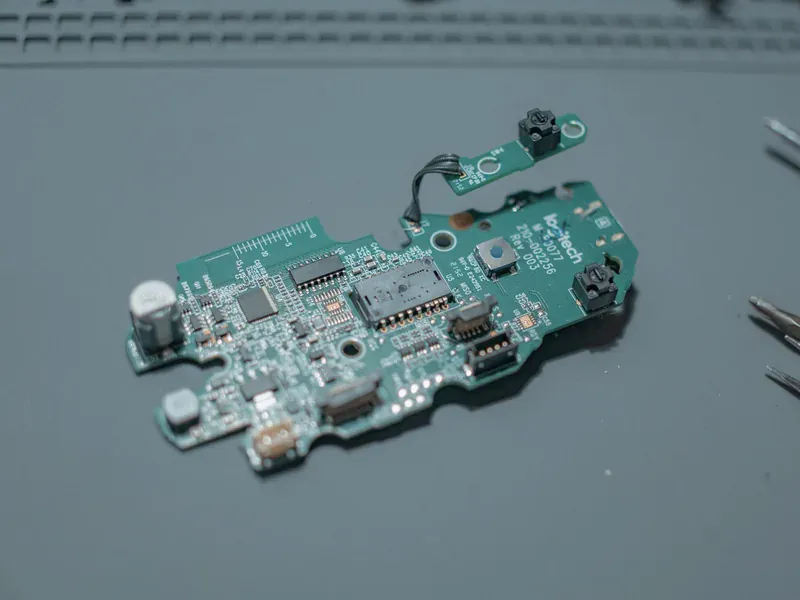
A sensor signal conditioner is the analog or mixed-signal device that converts a sensor element’s weak, nonlinear, and temperature-dependent output into a clean, scaled, and often standardized signal a downstream ADC or microcontroller can consume. It sits between the sensing element and the digitizer, and it does more work than a simple amplifier.
The typical functions include sensor excitation, gain, offset and zero correction, linearization, temperature compensation, and calibration storage, followed by an output stage that standardizes the result as a ratiometric voltage, a 4–20 mA current loop, or a digital interface. Analog Devices frames the category in a design note on new ICs that “revolutionize” the sensor interface, and Texas Instruments maintains a dedicated 4–20 mA signal conditioner product selection that shows how the output format shapes the part family.
The application set is broad and concrete: pressure and load cells use resistive bridges; temperature sensing uses RTDs and thermocouples; motor control uses shunt current sensing; position and speed sensing use Hall-effect elements. For a discrete bridge or other high-impedance differential front end, the instrumentation-amplifier selection workflow covers common-mode headroom, gain and input-referred error. For magnetic current measurement, the Hall-effect current sensor selection guide separates isolation, conductor range, bandwidth, offset, and thermal drift. In each case the conditioner holds sensor-specific calibration, which is why it is often the least drop-in-replaceable device in the chain — a fact that governs second-sourcing later. The signal chain continues downstream into the processor that reads the conditioned result, a path covered in our embedded processor market outlook.
Why Market-Size Estimates Span $136M to $5.1B: A Field Guide to Scope
The single most useful number in this category is not any one forecast but the distance between the highest and the lowest. The 2025 estimate from Data Bridge Market Research is $136.74 million, while Market Research Future sizes the “widest scope” version at $5.10 billion for 2024 and $5.43 billion for 2025. That is a spread of more than 30 times for what is nominally the same product category.
| Estimate (source, base year) | Base value | Forecast value | CAGR | Scope note |
|---|---|---|---|---|
| Data Bridge (2025) | $136.74M | $251.23M by 2033 | 7.90% | Narrowest definition |
| QY Research (2024) | $888M | $1,250M by 2031 | 5.0% | Renesas, ADI, TI lead |
| Transparency Market Research (2025) | $1.0B | $2.4B by 2036 | 8.52% | North America 38%, automotive 42% |
| Dataintelo (2024) | $2.94B | $5.73B by 2033 | 6.8% | 12 suppliers named |
| Market Research Future (2024) | $5.10B | $10.05B by 2035 | 6.36% | Widest definition |
The gap is definitional, not a disagreement about a shared object. The Transparency Market Research outlook to 2036 puts the 2025 figure at $1.0 billion growing to $2.4 billion, while Dataintelo’s sensor signal conditioning IC report reaches $2.94 billion for 2024 by folding in adjacent analog front-end content. The scoping problem becomes visible even within one vendor: Dataintelo’s automotive-only SSC IC report values that single segment at $3.22 billion for 2025 — larger than two of the “global total” figures above.
For procurement, the actionable reading is the shared direction, not the absolute dollar. Every estimate points the same way: mid-single to high-single-digit annual growth through the early 2030s, with automotive and industrial as the leading end uses. Treat the market size as a signal about which segments are growing and which suppliers are consolidating, and discard the precision implied by a single headline number.
Demand Drivers: Automotive Electrification, Industrial Automation, and IoT Sensing
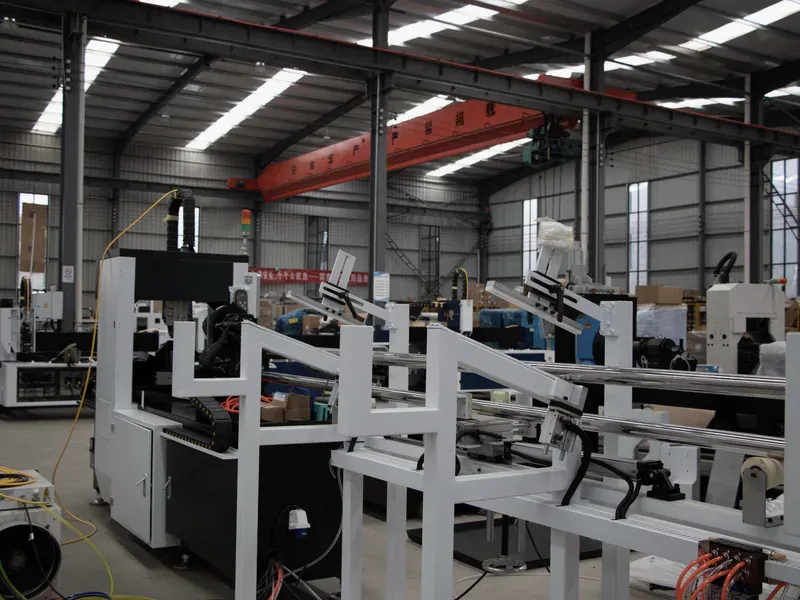
Automotive is the largest and fastest-moving driver. Transparency Market Research assigns automotive the largest end-use share at 42%, and Dataintelo projects the automotive SSC IC segment growing from $3.22 billion in 2025 to $6.75 billion by 2034 at an 8.7% CAGR, with analog conditioning ICs holding 42.3% of that segment and Asia-Pacific contributing 38.2% of demand. Electrification is the mechanism: battery management and onboard charging add shunt-based current sensing, while pressure and position sensors multiply across thermal, braking, and powertrain systems.
Industrial automation sustains the other durable half of the category. Process control and factory equipment still depend on 4–20 mA transmitters and RTD and bridge signal chains, many of them built on legacy parts that OEMs must keep sourcing for a decade or more. That longevity is precisely where an industrial semiconductor sourcing strategy earns its keep, because EOL risk on a fifteen-year-old conditioner is a redesign risk, not just a purchase-order problem.
IoT and consumer sensing add volume but different economics. MEMS pressure, gas, and environmental sensors demand low-power, low-cost conditioning, often integrated into the sensor package or the application processor. The result is a category pulled in two directions at once: high-value, long-lifecycle industrial and automotive devices on one side, and high-volume, cost-driven consumer parts on the other.
Analog vs. Digital vs. Mixed-Signal: Choosing the Right Conditioner Architecture
If the digital interface must cross a galvanic barrier, evaluate the isolator separately from the conditioning function. The digital-isolator selection guide covers working voltage, CMTI, signal direction, and timing without treating a component withstand rating as system certification.
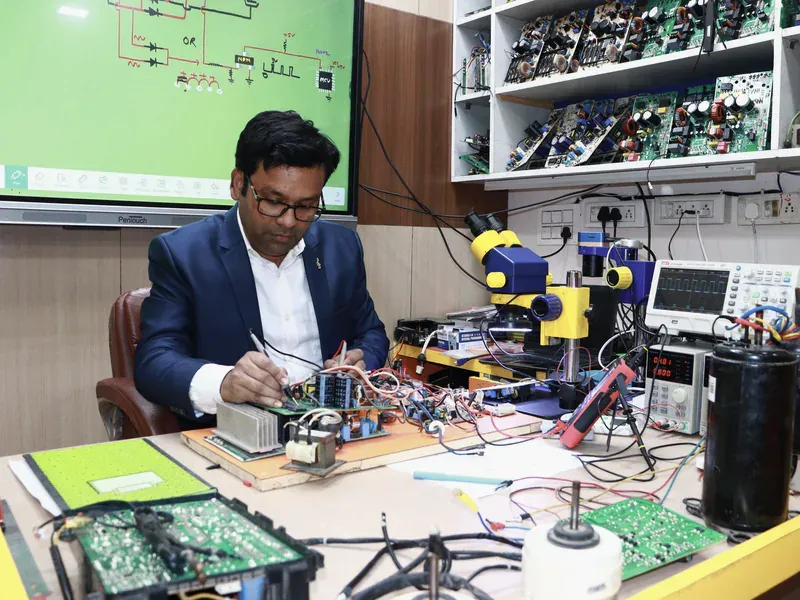
The architecture decision comes before the supplier decision, and it usually follows the sensor type and the temperature error budget. A fixed-gain analog conditioner is the lowest-cost option for high-volume, tightly characterized sensors where resistor trims or production calibration can hold the error in bounds. It does one thing well and nothing flexibly.
A digital or programmable conditioner stores calibration and compensation coefficients in memory, correcting nonlinearity and temperature drift in software rather than in the analog domain. TI’s PGA309 and the MAX1457 described in the Analog Devices sensor-interface design note both follow this model, allowing a single device to serve multiple sensor ranges and shortening the design cycle relative to a trimmed discrete solution or a custom ASIC.
When a discrete circuit needs a programmable divider or resistance rather than a full coefficient engine, the digital-potentiometer selection guide explains terminal, wiper, NVM, and power-up constraints. That device class is not a universal replacement for an integrated signal conditioner.
A mixed-signal analog front-end goes further by integrating the amplifier, compensation, and an ADC into one device for precision measurement paths. The choice, in practice, is a trade between unit cost, calibration effort, and temperature-range accuracy. Programmable parts cost more per unit but reduce design time and re-qualification burden across a product family; fixed-gain parts win when the sensor is well understood and the volume is large enough to absorb the trim and test cost.
The Supplier Landscape: ADI, TI, Renesas, and the Specialized Tier
The leader board depends on which scope you accept. In the adjacent analog front-end segment, Global Market Insights’ share data shows Analog Devices holding 18.9% or more in 2024, with the top five — ADI, TI, ST, Infineon, and NXP — together at 53.2%. In the signal conditioning slice specifically, QY Research’s share and ranking places Renesas, Analog Devices, and Texas Instruments at the front.
The broadline tier extends beyond those three. Market Research Future and Dataintelo both list TI, ADI, Maxim (now part of ADI), NXP, ST, Infineon, Microchip, and onsemi, with the wider lists adding Renesas, Melexis, ams-OSRAM, and ROHM. Two of the broadliners anchor our catalog as Analog Devices and Texas Instruments component suppliers.
A second, specialized tier matters for sourcing even though it rarely leads the dollar tables. Allegro and Melexis concentrate on automotive magnetic current and position sensing; iC-Haus focuses on encoder and position-interface conditioners; NOVOSENSE has built a China-based portfolio in industrial and automotive analog, including signal conditioning. The procurement distinction is practical: broadliners offer portfolio breadth and long product lifecycles, while specialists offer deeper application-specific calibration and tighter automotive qualification. A rising domestic option like NOVOSENSE can be a useful regional second source, but its datasheet parity and grade against the incumbent must be verified rather than assumed.
Automotive, Industrial, or Consumer: How the Application Mix Shapes Sourcing
The end use, not the part number, often determines the channel and the controls. Automotive devices carry AEC-Q100 qualification, PPAP documentation, and functional-safety traceability, and they represent the largest share of demand at 42%. Qualification windows are long and second sources are few, so an automotive conditioner tends to lock into a single approved supplier for the life of the program.
Industrial parts trade automotive grade for longevity. A 4–20 mA transmitter or RTD conditioner may stay in production for fifteen to twenty years, but it is also more likely to go EOL and force a last-time-buy or an independent-distribution recovery. Consumer and IoT parts invert the priorities again: cost and footprint dominate, lifecycles are short, and re-qualification is routine rather than exceptional.
The sourcing implication is to store grade and lifecycle expectations alongside the part number. An AEC-Q100 automotive conditioner and a functionally similar industrial part are not interchangeable just because they condition the same sensor type, and treating them as such is how a BOM picks up an unexpected qualification or EOL event later.
What the Market Means for Procurement: Pricing, Lead Times, and Alternate Sources

Pricing follows grade, channel, and volume more than it follows a single market index. Precision and automotive-grade conditioners carry a premium over consumer equivalents, and the catalog-versus-negotiated spread is wide at production volume. There is no published price curve worth quoting; the defensible approach is to normalize the full ordering code and compare grade-matched quotes, because a shortened base number hides the temperature grade or package that drives the cost.
Lead times are similarly resistant to a class-wide answer. Delivery for a given conditioner depends on the part, package, supplier, and order date, and a market-wide lead-time claim is usually a lagging average rather than a commitment. Budget around a factory acknowledgement behind any authorized date, and treat an independent seller’s “in stock” label as a different level of certainty than an authorized delivery promise. The discipline is identical whether the part is a memory module or a calibrated analog device.
Alternate sourcing is where the signal chain bites. Pin-compatible second sources are rare for calibrated conditioners, because the part is tuned to a specific sensor and application. The practical hedges are threefold: design with a programmable part so one device serves multiple sensor ranges; keep a qualified fallback in the BOM from the start rather than discovering the gap at EOL; and when a second source is a different supplier’s part, budget the re-calibration and re-qualification work explicitly rather than treating the alternate as a drop-in.
Sourcing SSC ICs Through Distribution: Verification, Traceability, and Second Sources
Legacy industrial conditioners — older 4–20 mA transmitters and bridge amplifiers from ADI and TI — are the classic candidates for independent-distribution recovery. Counterfeit risk on these parts is lower than on high-value MCUs or FPGAs, but it is not zero, and the stakes are in the field: a remarked or reworked conditioner can produce an out-of-spec reading that only appears under temperature or load.
Verification starts with the seller and source evidence before any test. Reconcile the manufacturer label, part number, quantity, date and lot codes, and shipping documents; inspect packaging and devices for remarking or resurfacing; and specify electrical test against the current datasheet when visual evidence is insufficient. AS6081 concerns a distributor’s counterfeit-avoidance system, IDEA-STD-1010 describes inspection practice, and ISO/IEC 17025 concerns laboratory competence — none of these, alone, proves a lot is authentic and conforming. Retain the photographs, raw data, and disposition records for the required product lifetime, the same control a buyer applies to any recovered original part.
Second sources through distribution work best when the recovery is planned ahead of the EOL notice. Identify the approved primary source and any qualified alternative, set a product-status monitor on the specific conditioner, and define the escalation threshold before the remaining inventory falls below the redesign duration.
Monitoring Signals: Launches, M&A, and Regional Capacity to Track
Three signals are worth watching on a quarterly cadence rather than reacting to at EOL. First, new product launches that integrate the ADC and calibration into the conditioner, or fold the conditioner into the sensor package, which can obsolete a discrete part without a formal EOL notice. Second, consolidation in analog — the Maxim-to-ADI combination has already reshaped the leader board, and further analog M&A or the scaling of China domestic suppliers such as NOVOSENSE will shift second-source options. Third, regional capacity allocation in analog and mixed-signal foundries, which moves lead times on conditioners more directly than headline semiconductor spending does.
The condition that matters most, however, is the specific part on the BOM. Track product-change notices and end-of-life notices for the exact conditioner in each design, and re-run the architecture-versus-cost trade when a new programmable option appears. Market size tells you which segments are growing; the part-level monitor tells you whether your own design is about to be interrupted.
Frequently Asked Questions (FAQ)
What is the difference between an analog and a digital sensor signal conditioner IC, and which do I need for a bridge or strain-gauge sensor?
An analog conditioner applies fixed gain and offset with discrete or on-chip trimming, while a digital or programmable conditioner stores calibration coefficients in memory to compensate nonlinearity and temperature drift in software. For a bridge or strain-gauge sensor, a programmable part such as TI's PGA309 is usually the better choice when accuracy over a wide temperature range matters and volumes are low to mid; a fixed-gain analog amplifier is cheaper for high-volume, tightly characterized sensors.
Which supplier is best for an AEC-Q100 automotive-grade sensor signal conditioner?
There is no single best supplier. Analog Devices and Texas Instruments lead the broader analog front-end segment, which Global Market Insights puts at a combined top-five share of 53.2%, while QY Research ranks Renesas alongside ADI and TI among sensor signal conditioning leaders. Allegro and Melexis are strong automotive specialists in magnetic current and position sensing. Selection should follow the required grade, package, calibration approach, and current availability rather than a brand default.
What lead times and minimum order quantities should I budget for sensor signal conditioner ICs in 2026?
No reliable class-wide figure exists; lead times and minimum order quantities vary by part, package, temperature or automotive grade, supplier, and order date. Budget by normalizing the full ordering code, requesting a factory acknowledgement behind any lead-time estimate, and treating an independent seller's 'in stock' label as a different level of certainty than an authorized delivery date.
Can a programmable signal conditioner such as TI's PGA309 replace a custom ASIC to shorten design time?
Yes, for many bridge-sensor designs a programmable conditioner replaces a custom ASIC by moving calibration and compensation into on-chip memory, which shortens development time and allows one device to serve multiple sensor ranges. The trade-off is a higher per-unit cost than a trimmed discrete solution, plus its own supply and packaging constraints, so confirm the sensor's range and temperature error budget before committing.
How do I verify part authenticity and traceability when buying sensor signal conditioner ICs through an independent distributor?
Require lot-level chain-of-custody records, reconciliation of date and lot codes against labels and shipping documents, packaging inspection, and electrical test against the current datasheet where visual evidence is insufficient. AS6081 describes a distributor's counterfeit-avoidance system and IDEA-STD-1010 describes inspection practice; neither, by itself, proves that a specific lot is authentic and conforming.