Table of Contents
- What an Embedded Processor Actually Is: MPU vs. MCU vs. Application Processor
- Embedded Processor Market Size and Growth Through 2034
- What Is Driving MPU Demand in 2026: Edge AI, Automotive, and Industrial
- The 2026 Supplier Landscape for Embedded Processors
- Comparing the Big Four MPU Families: NXP i.MX, TI Sitara, ST STM32MP, and Renesas RZ
- Lead Times and Pricing in 2026: What the Indexes Actually Show
- How to Qualify an Authorized MPU Channel
- A Practical MPU Selection and Sourcing Checklist
- Signals to Watch Before You Commit
Embedded processors are the least visible but most consequential devices on a production BOM. They carry the Linux image, the graphics stack, the secure-boot chain, and increasingly the on-device neural network — and in mid-2026 they are also the tightest slice of the embedded silicon basket. The indexes have stopped disagreeing about direction: Supplyframe’s Commodity IQ MCU/MPU lead-time index climbed 6.3% quarter-over-quarter to 130.5 in Q2 2026, and the same data provider’s price index is projected to rise another 4.6% in Q3 after a 10.7% jump in Q2.
What that means depends on your seat. An engineer choosing between an NXP i.MX, a TI Sitara, an ST STM32MP, and a Renesas RZ is deciding how much software runway a design can carry and how long a family will stay current. A procurement team is deciding whether a 30-week direct lead time or a 52-week distributor lead time on an i.MX 8M Mini is the number a build plan can actually be scheduled against, and which channel can stand behind the material.
This article lays out the 2026 size, supplier, and lead-time outlook, keeps application processors cleanly separated from the MCUs they are routinely confused with, and closes with the documentation and market signals to insist on before committing. Every figure carries its date and source so it can be re-checked at quote time.
What an Embedded Processor Actually Is: MPU vs. MCU vs. Application Processor
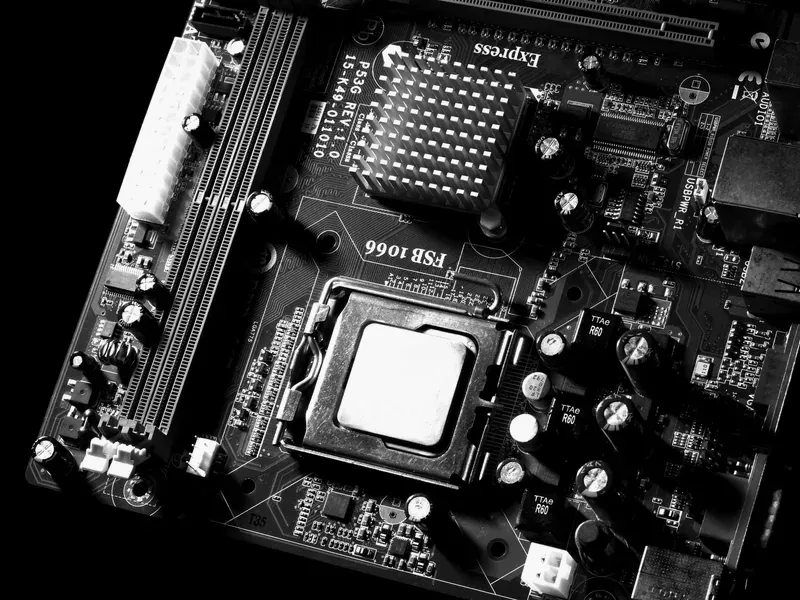
An embedded processor, in the sense procurement teams mean it, is a microprocessor unit (MPU) built on an Arm Cortex-A class core with a memory management unit, which lets it run a full operating system such as Linux from external DRAM. A microcontroller (MCU) is the other branch of the same tree: a Cortex-M core with flash and RAM integrated on-die, running bare-metal code or a real-time operating system. “Application processor” is a label the mobile and consumer industries attach to the same MPU category, so the three terms are not synonyms but point at one device class and one boundary question.
The practical test is whether the design needs Linux. If it needs a real OS, a graphics or browser stack, gigabytes of memory, or a containerized application layer, it needs an MPU. If it needs deterministic interrupt latency, a tight power envelope, and integrated memory at a dollar-level cost, an MCU is the right device. The distinction carries straight into sourcing: the Cortex-M MCU side of that decision has its own channel and price dynamics, and mixing the two in a market analysis produces lead-time numbers that mean very little to either buyer.
NXP’s i.MX RT line is the deliberate exception that proves the rule — a crossover family on Cortex-M7 cores that pairs MCU determinism with MPU-class clock rates and peripherals. It is worth knowing because it sits in the middle of the index data quoted later in this article, which groups MCUs and MPUs together as a single category.
Embedded Processor Market Size and Growth Through 2034
The market-size picture is a range, not a single number, because the vendors that publish these reports define the category differently. Straits Research, in an update dated August 18, 2026, sizes the global embedded processor market at $24.83 billion for 2025, $26.34 billion for 2026, and $42.31 billion by 2034. A second research house, IMARC Group, comes in lower: $22.4 billion in 2025 rising to $37.6 billion by 2034 at a 5.74% compound annual growth rate.
Both are third-party forecasts, not audited results, and the spread between them reflects different scope decisions about which devices count as “embedded processors.” Treat the pair as a band — mid-$20-billion today growing toward the high-$30-billion to low-$40-billion range by 2034 — and use it for direction rather than as a line item in a financial model.
The macro backdrop explains why even a forecast band this wide still points up. The World Semiconductor Trade Statistics Spring 2026 forecast projects total semiconductor revenue of $1.51 trillion for the year, and SIA reported April 2026 sales of $110.5 billion, up 11% month-over-month and 93.9% year-over-year. That expansion is concentrated in AI silicon, but it competes for the same foundry, advanced-packaging, and test capacity that embedded processors depend on — a connection that shows up directly in the lead-time data later in this article.
What Is Driving MPU Demand in 2026: Edge AI, Automotive, and Industrial
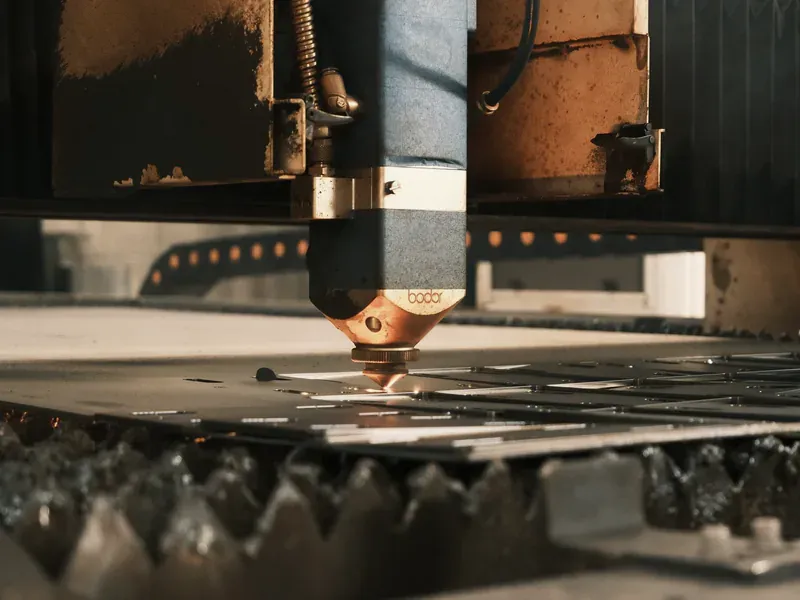
Three forces are pushing MPUs specifically, and none of them is served by a bare-metal Cortex-M part.
Edge AI is the newest and most structural. Running inference at the device, rather than in a data center, requires the memory capacity, operating system, and neural-processing accelerator that only an MPU-class device provides. NXP’s i.MX 8M Plus and i.MX 93, TI’s Sitara AM62A, ST’s STM32MP2, and Renesas’s RZ/V line each pair Cortex-A cores with a machine-learning accelerator. This is the growth segment that most cleanly separates the MPU story from the older IoT-MCU story.
Automotive electronics is the second driver, and it is a quantity story as much as a capability one. A modern vehicle contains on the order of 70 to 100 embedded processors, according to IMARC Group, and the shift toward zonal and central-compute architectures keeps raising the Linux-grade share of that count. Every domain controller that consolidates a handful of legacy ECUs is an MPU socket.
Industrial IoT rounds out the picture. IMARC’s report pegs connected IoT devices growing from more than 18 billion in 2024 to over 40 billion by 2030, and the gateways, human-machine interfaces, and edge controllers that tie those devices together are MPU sockets, not MCU sockets. The pattern is consistent across all three drivers: richer software and more connectivity pull designs up the Cortex-M-to-Cortex-A boundary.
The 2026 Supplier Landscape for Embedded Processors
Four suppliers define the Linux-class industrial MPU space that procurement teams actually quote: NXP, Texas Instruments, STMicroelectronics, and Renesas. They are not interchangeable, and their supply elasticity differs because they sit on different manufacturing models — a mix of foundry and internal fabrication capacity — which is one reason lead-time behavior varies by family even when demand looks similar.
NXP’s strength is breadth and longevity across the i.MX applications processor portfolio, spanning the i.MX 6, 7, 8, and 9 families plus the i.MX RT crossover line. TI’s Sitara line is the industrial-automation workhorse, favored where deterministic real-time peripherals and a long production lifecycle matter. ST’s STM32MP families pull designs toward a Linux-capable part at a cost and ecosystem position that leverages the enormous STM32 toolchain familiarity. Renesas’s RZ families — RZ/G, RZ/A, RZ/V, and RZ/N — dominate industrial HMI and vision use cases, with RZ/V’s DRP-AI accelerator aimed squarely at Edge AI.
Beyond the big four, Qualcomm, MediaTek, Rockchip, and Allwinner occupy the higher-end and cost-sensitive fringes, but the industrial Linux designs that generate repeat purchase orders remain concentrated in the four families above. That concentration is exactly why a lead-time move in any one family propagates quickly through the others.
Comparing the Big Four MPU Families: NXP i.MX, TI Sitara, ST STM32MP, and Renesas RZ
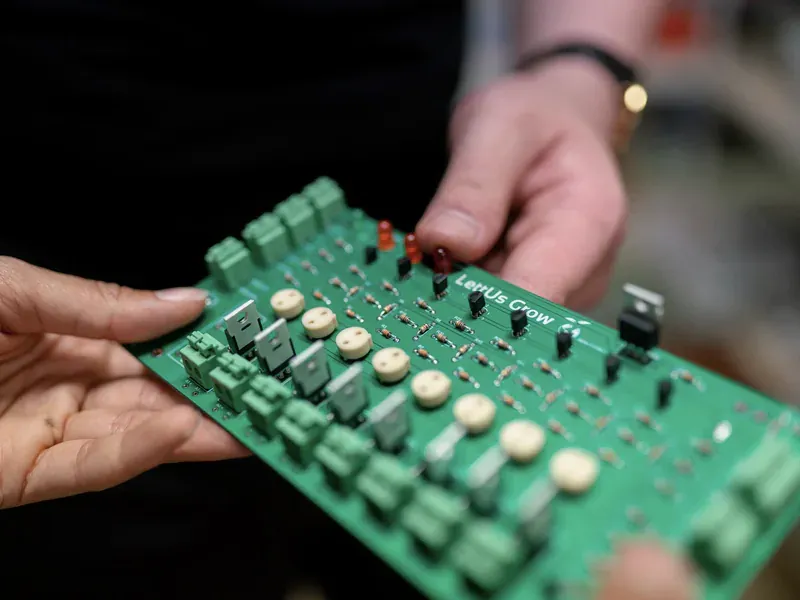
The table is a positioning aid, not a spec sheet — pin-level electrical parameters, memory interfaces, and thermal envelopes belong in the datasheet, not a market outlook.
| Supplier | Representative families | Typical application |
|---|---|---|
| NXP | i.MX 6/7/8/9; i.MX RT crossover | Industrial HMI, medical, gateways, Edge AI (i.MX 8M Plus, i.MX 93) |
| TI | Sitara AM3x/AM4x/AM5x/AM6x (AM62, AM64, AM62A, AM67A, AM69A) | Industrial automation, HMI, motor-control gateways, Edge AI |
| ST | STM32MP1, STM32MP2 | Industrial and consumer Linux, secure gateways, cost-sensitive Linux |
| Renesas | RZ/G, RZ/A, RZ/V, RZ/N | Industrial Linux HMI, vision AI (RZ/V with DRP-AI), networking |
The selection logic should run in this order: operating-system and software requirements first, then memory and interface needs, then the supplier’s product-status roadmap, and only then unit price. A design that commits to an i.MX 8M Mini because of a single quote can find itself re-qualifying when that same part’s distributor lead time has stretched past the production window.
Lead Times and Pricing in 2026: What the Indexes Actually Show
The most useful, current signal is Supplyframe’s Commodity IQ data for the MCU/MPU category, published June 24, 2026. It reports three things worth separating from each other.
The lead-time index rose 6.3% quarter-over-quarter to 130.5 in Q2 2026, meaning delivery for the combined MCU/MPU basket is lengthening, not easing. The price index rose 10.7% in Q2 to 215.2 — more than double its 2020 baseline — and is projected to add another 4.6% in Q3, reaching 225.0. On top of the index moves, STMicroelectronics implemented a 5% price increase on its MCU line effective April 26, 2026.
The part-level data is where the market stops being abstract. The Findchips live search data quoted the NXP i.MX 8M Mini at roughly 30 weeks direct from NXP versus 52–54 weeks through DigiKey, Avnet, and EBV — a spread that reflects allocation and distributor inventory more than raw fabrication time. A broadly used Cortex-M3 part, the STM32F103C8T6, sat at 30–31 weeks, confirming that the tightness reaches down into the MCU tier as well.
Read these as a dated snapshot, not a promise. A single part’s lead time moves with order quantity, ship-from location, and whether the factory has acknowledged the date. The defensible use of this data is as a basket-level direction check, re-confirmed against a live quote for the exact ordering code before any commitment.
How to Qualify an Authorized MPU Channel
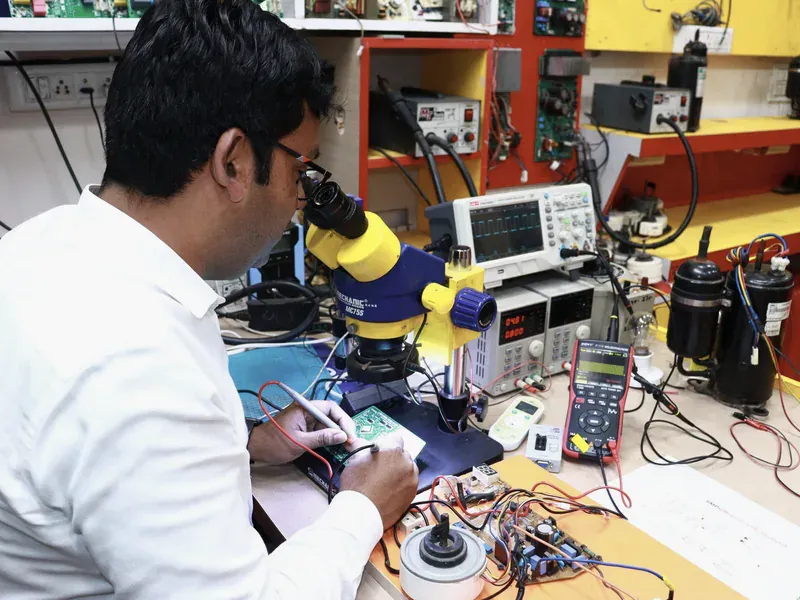
The channel question for an MPU is the same discipline as any high-mix component, with one addition: because these parts sit in the middle of a software stack, a substitute that passes an electrical test can still fail the integration budget. That raises the value of getting the channel right the first time.
Start with the manufacturer’s authorized-distributor directory for the region and confirm four things: the quoting legal entity matches the directory, the ship-from region falls within the distributor’s scope, the product family and ordering code are covered by the relationship, and the material will actually be supplied through the authorized path rather than sourced onward by the same distributor from a third party. Save a dated screenshot with the sourcing record.
Independent distribution is not automatically the gray market — it is a channel without current manufacturer authorization for that transaction, and the seller’s identity, chain of custody, and quality system vary widely. When an independent source is the only route to an allocated or discontinued MPU, the buyer takes on the verification burden: ordering-code reconciliation, date and lot code checks, factory-seal status, and inspection against a current datasheet. The NXP-specific channel breakdown walks through that supplier’s authorized-versus-independent decision in more detail.
A Practical MPU Selection and Sourcing Checklist
Run the selection and the sourcing as one continuous decision, not two handoffs.
- Confirm the software requirement: full Linux, a lighter embedded Linux, or a real-time operating system.
- Fix the memory and interface needs — DRAM type and size, display, camera, and networking — before comparing parts.
- Shortlist families across at least two suppliers to preserve a second source, then check each part’s product-status and PCN history.
- Normalize every quote to the full ordering code, and record quantity, ship date, Incoterm, and whether the delivery is factory acknowledged.
- Capture the lead time as a range with the quote date, not a single headline number.
- Verify the channel against the manufacturer’s directory for the transaction’s region and legal entity.
- For any independent or excess lot, define inspection and acceptance criteria before the material ships.
Step three is the one most often skipped, and it is the most expensive to skip after a family goes end-of-life mid-design.
Signals to Watch Before You Commit
The lead-time and price indexes are lagging indicators of the decisions you need to make now, so monitor the inputs that move them.
Track the next Commodity IQ MCU/MPU reading to see whether the Q2 price trajectory of +10.7% holds or accelerates. Watch the monthly SIA and WSTS sales figures for the foundry and packaging capacity competition that drives MPU allocation. Re-quote one representative part per family each quarter — an i.MX 8M Mini, a Sitara AM62x, an STM32MP1, and an RZ/G2 — to catch lead-time drift before it becomes a line-down event. Finally, follow each supplier’s earnings commentary for allocation and capacity language, which usually precedes formal price actions by a quarter.
The embedded processor market in 2026 is not broadly short the way 2021 was, but it is tightening in the specific, Linux-class families that industrial and Edge AI designs depend on. Buyers who separate MPUs from MCUs, treat the market-size figures as a band, and re-check lead times at the ordering-code level will be planning against the real market rather than a headline.
Installed equipment can present the opposite problem: a long-lived DSP may still be in production while its software and BGA package make redesign expensive. The ADSP-BF533SBBCZ500 lifecycle and continuity guide covers that exact-part decision without treating a mature Blackfin device as a Linux-class MPU.
Frequently Asked Questions (FAQ)
What is the difference between an MPU and an MCU, and how do I know which one my design needs?
An MPU has a memory management unit and runs a full operating system such as Linux from external DRAM, typically on Arm Cortex-A cores; an MCU integrates flash and RAM on a Cortex-M core and runs bare-metal code or a real-time operating system. Choose an MPU when the design needs Linux, a rich graphics stack, or gigabytes of memory, and an MCU when it needs deterministic real-time response, low power, and integrated memory at low cost.
How long are NXP i.MX and TI Sitara lead times right now, and which families are most constrained?
As of the Q2 2026 Supplyframe Commodity IQ reading, the NXP i.MX 8M Mini was quoted around 30 weeks direct from NXP versus 52-54 weeks through DigiKey, Avnet, or EBV, and the broader MCU/MPU lead-time index rose 6.3% quarter-over-quarter to 130.5. Treat any single figure as a dated snapshot and re-quote the exact ordering code before committing.
How do I verify a distributor is authorized for NXP, TI, ST, or Renesas embedded processors?
Check the distributor against the manufacturer's current authorized-distributor directory for your region, then confirm that the quoting legal entity, ship-from region, product family, and ordering code all fall within that relationship. Save the directory check and a dated screenshot with the sourcing record, because networks change and the same company name can represent different legal entities.
What documentation should I require for traceability and anti-counterfeit assurance on embedded processors?
Require the full manufacturer ordering code, date and lot codes, country of origin, product-status and PCN history, factory-seal status, and label photographs for physical stock. For independent or excess material, add chain-of-custody evidence, visual inspection, and electrical or X-ray comparison where the application risk justifies it.
How should I hedge against MPU price increases — last-time-buy, second sourcing, or qualifying alternates?
Treat them as parallel options rather than a sequence. Lock authorized coverage on the forecasted volume, qualify a pin- and software-compatible alternate family before you need it, and use last-time-buy only when a part has a confirmed end-of-life date. The Q2 2026 price index rose 10.7% and Q3 is forecast to add 4.6%, so hedging belongs in the plan before allocation tightens further.