Table of Contents
- How Big Is the MEMS Oscillator Market, and Why Do Estimates Differ So Widely?
- MEMS vs. Quartz in 2026: What Actually Separates the Two Timing Technologies
- The Demand Drivers: AI Data Centers, 5G, and Automotive Electrification
- MEMS Oscillator Market Players: SiTime, Microchip, Epson, Kyocera, and a Consolidating Supplier Base
- The SiTime–Renesas Deal and What It Signals for Timing-Component Sourcing
- Where Quartz Still Holds the Edge: Ultra-Low Jitter, High-Volume Cost, and Legacy Designs
- What MEMS Adoption Means for Your BOM: Pricing, Lead Time, and SKU Strategy
- Signals to Watch Before Your Next Timing-Device Purchase
The MEMS oscillator market is growing, but its exact size depends on which products an analyst decides to count. Headline estimates for 2025 land anywhere from roughly $600 million to about $1 billion — close to a two-times spread — not because the industry is opaque, but because “MEMS oscillator” is not a standardized product category. The more useful signal for procurement is not the absolute dollar figure. It is the direction of travel: MEMS timing is taking share from quartz, and the supplier base is consolidating around a shrinking number of names.
For OEM, EMS, engineering, and procurement readers, timing devices sit on nearly every bill of materials — clock oscillators for processors, reference clocks for high-speed networking, and frequency-control parts across RF and industrial systems. Understanding where MEMS is winning, where quartz still holds, and who will supply those parts through 2026 and beyond directly shapes second-source and SKU-rationalization decisions.
This article maps the market’s size and growth, the MEMS-versus-quartz technical split, the demand drivers, and the supplier consolidation — including SiTime’s completed acquisition of Renesas’ timing business. It is market intelligence, not a part-level sourcing guide; the cross-reference, qualification, and traceability detail is covered in a companion piece linked later.
How Big Is the MEMS Oscillator Market, and Why Do Estimates Differ So Widely?
Three recent forecasts, all published within the last several months, land on materially different numbers. MarketsandMarkets projects the MEMS oscillator market at roughly USD 1 billion in 2025, reaching nearly USD 3 billion by 2035. Future Market Insights, by contrast, sizes 2025 at $627.8 million and projects $1.8 billion by 2036 at a 10.1% compound annual growth rate, with $690.0 million expected in 2026. A third source, QYResearch, scopes Si-MEMS oscillators alone at $765 million in 2025, growing to $2,156 million by 2032 at a 16.2% CAGR.
The spread is not error; it is definition. Some reports count only basic XO devices, others add temperature-compensated, voltage-controlled, and clock-generator products. Some isolate silicon-MEMS resonators while others bundle MEMS timing with adjacent frequency-control parts, and base years and geographic coverage differ. The cleanest illustration is that QYResearch’s Si-MEMS-only figure for 2025 — $765 million — already exceeds Future Market Insights’ total MEMS oscillator figure for the same year. Both numbers are defensible; they measure different things.
| Source (publication date) | 2025 estimate | Projection | Implied CAGR |
|---|---|---|---|
| MarketsandMarkets (2026-09) | ~$1.0 billion | ~$3.0 billion by 2035 | — |
| Future Market Insights (2026-06-09) | $627.8 million | $1.8 billion by 2036 | 10.1% |
| QYResearch — Si-MEMS only (2026) | $765 million | $2,156 million by 2032 | 16.2% |
For a buyer the practical lesson is to anchor on the segment that actually appears on the BOM — programmable XO, temperature-compensated, voltage-controlled, or precision TCXO/OCXO — rather than on any single headline. Treat the wide forecast range as evidence that the category is still being defined, not as a sign the market is soft.
MEMS vs. Quartz in 2026: What Actually Separates the Two Timing Technologies
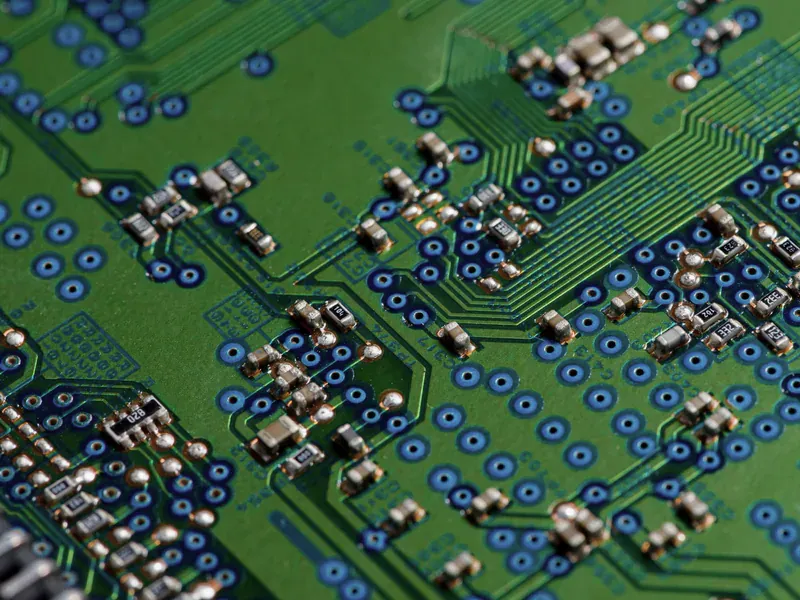
Quartz has dominated electronic timing for decades because a piezoelectric quartz crystal produces an exceptionally clean mechanical resonance that translates into low phase noise and low jitter. A quartz oscillator pairs that crystal with an amplifier circuit inside a hermetically sealed metal or ceramic package. A MEMS oscillator replaces the crystal blank with a micromachined silicon resonator integrated with a CMOS ASIC that drives and temperature-compensates it.
The practical differences follow from that construction. Silicon resonators are programmable: one part can be configured to output many frequencies and formats, which collapses SKU counts and shortens the path from order to a configured device. MEMS parts also tolerate shock and vibration better and fit standard surface-mount footprints. Temperature compensation differs as well — MEMS resonators are calibrated on-chip during final test, while quartz stability is set primarily by the crystal cut, with higher-grade parts adding separate temperature compensation. Quartz still holds an edge at the extreme end of the jitter and phase-noise spectrum, and in entrenched high-volume cost positions. SiTime’s own MEMS-versus-quartz comparison makes the vendor case for MEMS reliability and programmability; it is worth reading, but it is a vendor argument, so weigh it against your application’s measured jitter budget rather than a marketing table.
The installed base still favors quartz. QYResearch estimates that crystal oscillators accounted for 78.67% and MEMS oscillators for 21.33% of the combined 2024 market, with MEMS share expected to expand. That roughly 79-to-21 split is the honest picture: MEMS is the growth story, quartz is still the incumbent.
The Demand Drivers: AI Data Centers, 5G, and Automotive Electrification

The growth embedded in those forecasts comes from three places where the number of timing devices per system is rising. AI data centers are the most visible: every high-speed interface — PCIe Gen5 and Gen6, 800G Ethernet, coherent optical links — needs a low-jitter reference clock, and a single accelerated server now carries far more of them than the commodity servers it replaces. The stakes are concrete: excess clock jitter consumes the signal-integrity margin that high-speed serial links depend on, so each added link raises the requirement on its reference, not just the part count. 5G infrastructure spreads synchronization across more radio units, small cells, and distribution points than previous generations. Automotive electrification and ADAS add timing nodes for sensors, zonal controllers, and powertrain electronics, where shock and vibration tolerance and AEC-Q100 qualification make MEMS a natural fit.
These are qualitative drivers, not sourced unit counts. The research firms cited earlier embed them in their growth assumptions, but the mechanism matters more than the precise attribution: as systems multiply their high-speed links, they multiply the clock sources that keep those links synchronized. MEMS benefits because programmability and standard footprints make it the lower-friction way to add those clock sources in a new design.
MEMS Oscillator Market Players: SiTime, Microchip, Epson, Kyocera, and a Consolidating Supplier Base
The supplier map is asymmetric. Mordor Intelligence puts the top five timing-device suppliers — Murata, Kyocera, Seiko Epson, SiTime, and Microchip — at roughly 48% of 2025 sales, with Seiko Epson at $179 million. Of those five, SiTime is the only pure-play MEMS specialist; the others are broad-line or quartz-dominant incumbents where timing is one line among many.
SiTime’s scale shows both the opportunity and the ceiling of the category. The company reported fiscal 2024 net revenue of $202.7 million, up 41% from $144.0 million in fiscal 2023 — strong growth, but a reminder that even the largest MEMS timing specialist remains small relative to the broader frequency-control market. SiTime operates as a fabless design house that owns the MEMS architecture and sells design and intellectual property rather than running wafer fabs, which is part of why the Renesas acquisition covered next changed its product mix so quickly. Microchip carries MEMS oscillators inside a much broader microcontroller, memory, and analog portfolio, while Epson (Seiko Epson) and Kyocera remain quartz-dominant volume suppliers. Kyocera and Murata, both ceramics- and quartz-oriented, compete on volume and legacy lines rather than on programmable-MEMS differentiation. Texas Instruments rounds out the adjacency with clock generators, synthesizers, and jitter cleaners that sit beside discrete oscillators on the same board.
The strategic point is not which vendor wins a quarter. A handful of suppliers control nearly half of timing sales, and the pure-play MEMS vendor just grew larger by acquiring a quartz-precision line. That concentration, more than the market-size debate, is what procurement should track.
The SiTime–Renesas Deal and What It Signals for Timing-Component Sourcing
On 2026-07-01, SiTime completed its acquisition of Renesas’ timing business for roughly $1.5 billion in cash plus approximately 4.13 million SiTime shares, according to the official announcement and the related SEC 8-K filing. It is the largest consolidation event in the timing-device market in years, and it changes the sourcing picture more than any single forecast revision.
The deal does two things. It folds Renesas’ precision timing — the temperature-compensated and oven-controlled quartz lines that serve networking and telecom reference clocks — into SiTime’s MEMS portfolio, producing a combined catalog that spans both silicon and precision quartz timing. It also removes one independent supplier from a category that was already concentrated around five names. For buyers, the immediate action is mapping rather than panic: confirm which Renesas-timing part numbers on the approved vendor list now sit under SiTime, verify continued availability and any part-number or datasheet changes, and re-check second sources on the precision timing parts where one vendor now owns more of the roadmap.
That is the first-order effect of consolidation: a second source that looked independent may now be the same company under a different banner.
Where Quartz Still Holds the Edge: Ultra-Low Jitter, High-Volume Cost, and Legacy Designs
The shift toward MEMS is selective, and it will stay that way. Quartz remains the right answer where phase noise and jitter are the whole requirement — high-end RF, precision measurement, and the tightest reference-clock grades still favor a well-characterized crystal. Quartz also keeps its edge in mature, high-volume cost positions, where the amortized cost of a decades-old crystal process is hard to beat on price alone. Oven-controlled quartz remains the entrenched choice for holdover and synchronization, where a system must keep accurate time through a loss of its primary reference.
Then there is the installed base. The 2024 split of 78.67% quartz to 21.33% MEMS means most production designs still carry crystal oscillators, and switching the resonator technology on a shipping product is usually not worth the re-qualification, reliability testing, and documentation burden. MEMS wins the new-design decision where programmability, robustness, size, or lead-time flexibility tip the balance. On a legacy board that is already qualified and shipping, quartz generally stays, because ripping it out costs more than it saves.
What MEMS Adoption Means for Your BOM: Pricing, Lead Time, and SKU Strategy
The most concrete procurement effect of MEMS adoption is SKU consolidation. Because a programmable MEMS oscillator can be configured to many frequencies and output formats from a single blank, one approved part can replace a family of fixed-frequency quartz parts, shrinking the number of line items, the safety stock per line, and the requalification surface. This is the strongest operational argument for MEMS in a new design, and it is why the technology spreads fastest in multi-protocol, multi-frequency platforms.
Lead time and price follow from that programmability but resist a fixed number. A programmable part can often be programmed and shipped faster than a custom-frequency quartz crystal, because the supplier is configuring an existing blank rather than growing and finishing a new crystal — but actual delivery depends on supplier, configuration, and order volume, so confirm it per part rather than assuming a class-wide figure. Price comparisons are similarly grade-dependent: MEMS competes head-to-head with quartz in mainstream stability grades, while the extreme-performance quartz grades remain premium. The right comparison is total cost — including second-source options, requalification, and the risk of single-sourcing a precision part — not the unit price of one oscillator. For the part-level detail on TCXO, OCXO, and Si-MEMS selection, cross-reference, and qualification, see the oscillator sourcing guide.
Signals to Watch Before Your Next Timing-Device Purchase
Five signals deserve a place on the timing-device watch list. First, further consolidation: the SiTime–Renesas combination may not be the last, and each deal shrinks the pool of independent second sources. Second, forecast convergence — if the analyst estimates begin to narrow around a shared definition of “MEMS oscillator,” the category will have matured, and a closing of that two-times spread is a better maturity signal than any single number. Third, MEMS share of new designs versus the 21.33% installed base, since the gap between the two is where the near-term demand actually lives. Fourth, lead-time and SKU rationalization from programmable parts, which shows up as fewer line items rather than a headline price change. Fifth, qualification breadth — whether automotive and industrial MEMS lines keep expanding AEC-Q100 and higher-temperature coverage, which determines how far the shift travels beyond consumer and datacom.
None of these requires a new data feed; they are checkpoints to revisit before a timing-device reorder or a new-design clock decision. The market is growing, the technology is shifting, and the supplier base is consolidating — any one of those, on its own, justifies a fresh look at the timing line on the BOM.
Frequently Asked Questions (FAQ)
How much bigger will the MEMS oscillator market get?
Forecasts disagree substantially by product scope. MarketsandMarkets sees roughly USD 1 billion in 2025 reaching near USD 3 billion by 2035, while Future Market Insights projects $627.8 million in 2025 growing to $1.8 billion by 2036 at a 10.1% CAGR. The spread reflects different definitions of what counts as a MEMS oscillator, not a contradiction in the underlying trend.
What actually separates a MEMS oscillator from a quartz crystal oscillator?
A MEMS oscillator uses a micromachined silicon resonator driven by a CMOS circuit, while a quartz oscillator uses a piezoelectric quartz crystal. MEMS parts are programmable, more shock-tolerant, and come in standard footprints; quartz still leads at the extreme low-jitter end and in entrenched high-volume cost positions.
Is a MEMS oscillator a drop-in replacement for a quartz oscillator on an existing board?
Often yes mechanically, since both use standard surface-mount packages and pinouts, but not automatically electrically. Validate output format, jitter and phase noise, supply, start-up behavior, and any loop-filter specifics before substituting one for the other.
Which suppliers offer automotive-qualified MEMS oscillators?
SiTime and Microchip both market automotive-qualified MEMS oscillator lines for ADAS and EV applications. Confirm the exact ordering code's AEC-Q100 qualification and temperature grade rather than assuming a family-level qualification applies to every part number.
Why did SiTime acquire Renesas' timing business, and what does it mean for buyers?
Completed on 2026-07-01, the roughly $1.5 billion cash-plus-stock deal folds Renesas' precision TCXO and OCXO lines into SiTime's MEMS portfolio and removes one independent supplier from an already concentrated category. Buyers should re-map approved vendor lists and re-check second sources on precision timing parts.