Table of Contents
- Choose the Oscillator Class from the Timing Function
- Build a Complete Frequency-Accuracy Budget
- Treat Phase Noise and Jitter as Application-Specific Limits
- Verify the Exact Electrical and Mechanical Interface
- Source Against Product Status, Not a Generic Lead-Time Table
- Qualify Alternatives Before the Allocation Event
Precision oscillator sourcing begins with the system timing budget, not with a preference for quartz or MEMS. A buyer needs the exact frequency, total stability contributors, phase-noise or jitter limits, aging, holdover, output interface, environmental requirements, qualification, and product-lifecycle evidence before comparing availability.
The most expensive errors occur when a nominally pin-compatible oscillator is approved from frequency and package alone. That shortcut can introduce excess jitter, an incompatible clipped-sine output, a startup failure, higher holdover drift, or a requalification burden that costs more than the supply problem it was meant to solve.
Choose the Oscillator Class from the Timing Function
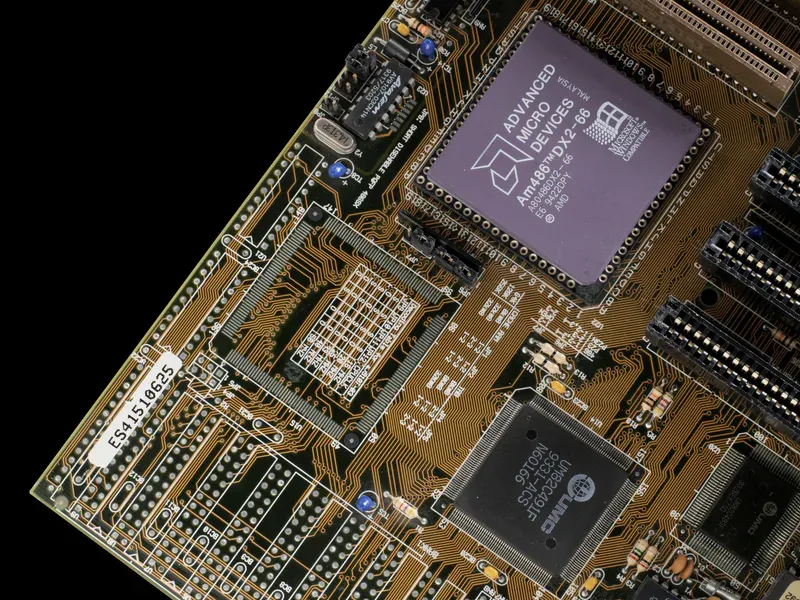
TCXO, OCXO, VCXO, XO, and MEMS describe different control methods or resonator technologies. They are not performance grades that can be ranked on one axis.
| Device class | Primary function | Design strengths | Parameters that often prevent substitution |
|---|---|---|---|
| XO | Fixed-frequency clock | Low complexity, broad package and output choice | Initial tolerance, temperature stability, jitter, startup |
| TCXO | Temperature-compensated reference | Improved frequency-versus-temperature behavior in compact packages | Compensation curve, aging, clipped-sine versus CMOS output |
| OCXO | Oven-controlled reference | Tight stability and close-in phase-noise options | Warm-up, power, size, aging, retrace, oven temperature range |
| VCXO | Voltage-controlled oscillator | Pull range for PLL, synchronization, and clock recovery | Tuning slope, linearity, control voltage, modulation bandwidth |
| MEMS oscillator | Silicon resonator with electronic compensation | Programmability, shock resistance, integration, broad output options | Phase-noise profile, jitter band, power, qualification and configuration code |
“Quartz versus MEMS” is therefore too broad for an approved alternate. A MEMS TCXO and a quartz TCXO may target the same socket, while an OCXO and a programmable XO may solve entirely different system problems.
Epson’s TG1210SRN and TG1210STN announcement is a useful example of a compact quartz TCXO: 10 MHz to 80 MHz, a 1.2 x 1.0 mm package, and maximum frequency-temperature characteristics of +/-0.5 ppm from -40 C to +105 C. The announcement schedules samples for the second and fourth quarters of 2026 respectively, so “announced,” “sampling,” and “volume available” must remain separate procurement states.
Build a Complete Frequency-Accuracy Budget
Do not compare a datasheet’s best headline value with another vendor’s total stability limit. Normalize the conditions and add every term that matters to the system.
The budget may include:
- Initial frequency tolerance at the manufacturer’s reference condition.
- Frequency change across the full operating temperature range.
- Aging over the equipment’s service interval, including first-year and long-term behavior.
- Supply-voltage and load sensitivity.
- Reflow shift, retrace, hysteresis, and frequency change after mechanical stress.
- Calibration error and digital-control resolution where a tunable device is used.
- GNSS or network-reference loss duration and the allowed holdover error.
Some datasheets combine several terms into “total frequency stability”; others list them separately. Record the definition, test conditions, and arithmetic used for the system limit. If a telecommunications or navigation standard governs the equipment, derive the oscillator allocation from that standard and the complete clock architecture instead of assigning a generic “5G ppm” value.
For holdover, frequency error accumulates into time error. Initial accuracy may dominate a short outage, while temperature response and aging dominate longer intervals. An OCXO with excellent nominal stability can still miss the target if warm-up, airflow, retrace, or calibration interval is ignored.
Treat Phase Noise and Jitter as Application-Specific Limits
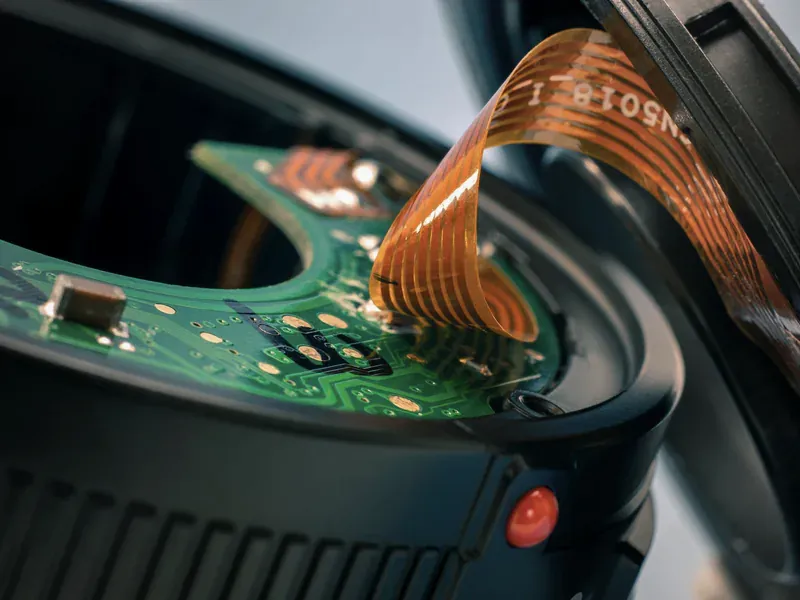
Frequency stability describes how far the carrier moves. Phase noise and jitter describe short-term fluctuations around it. Two oscillators with the same ppm rating can produce very different results in an RF local oscillator, high-speed converter, Ethernet PHY, FPGA transceiver, or clock-cleaning loop.
Specify the measurement that maps to the design:
| Application concern | Evidence to compare | Common mismatch |
|---|---|---|
| RF synthesizer or receiver | Phase noise at defined offset frequencies; integrated phase noise | Comparing only RMS jitter over an unrelated band |
| ADC or DAC sampling | Integrated clock jitter over the converter’s relevant bandwidth | Ignoring aperture-jitter impact at the highest input frequency |
| SerDes or network clock | RMS phase jitter with stated integration band and output format | Mixing differential and single-ended results |
| Holdover reference | Frequency-versus-temperature, aging, retrace, warm-up | Selecting from close-in phase noise alone |
| Rugged control system | Shock, vibration, g-sensitivity, startup and recovery | Assuming MEMS or quartz is always superior as a category |
Compare plots as well as summary values. A device can be better close to the carrier and worse farther away, or vice versa. When a PLL follows the oscillator, evaluate the oscillator spectrum through the loop transfer function rather than treating every offset equally.
Verify the Exact Electrical and Mechanical Interface
Footprint compatibility is only the first gate. An engineering cross-reference should cover:
- Package dimensions, pad layout, keep-out area, and pin-one orientation.
- Supply range, absolute maximum ratings, current, and startup transient.
- CMOS, clipped-sine, LVDS, LVPECL, HCSL, or other output format and termination.
- Logic thresholds and polarity for output enable, standby, and control pins.
- Frequency, tolerance, temperature range, aging, and calibration method.
- Phase noise, jitter integration band, duty cycle, rise/fall time, and output load.
- Pull range and control-voltage behavior for VCXO or digitally controlled devices.
- Reflow profile, moisture sensitivity, package height, shock, vibration, and qualification.
A clipped-sine TCXO often expects a high-impedance, AC-coupled load; a CMOS oscillator drives logic levels and creates different edge energy and emissions. Substituting one for the other may require biasing or layout changes even when the frequency and land pattern match.
Programmable oscillators add another control: record whether the ordering code is factory programmed, field programmable, or one-time programmable. The label, programming record, and measured output frequency must agree before release to production.
Source Against Product Status, Not a Generic Lead-Time Table
Oscillator lead time is configuration-dependent. A standard catalog frequency in an established package may be available through distribution, while an unusual frequency, screened package, OCXO option, or custom control range may require a factory build and qualification.
For each quote, record:
- Full manufacturer ordering code and configured frequency.
- Quantity, price break, minimum order increment, and non-cancellable terms.
- Quote date, requested date, promised ship date, and whether the commitment comes from the factory.
- Stock location, ownership, date code, packaging, and authorized or independent channel status.
- Sample, pre-production, or production status and the applicable revision.
- Product-change-notification contact and minimum notice obligations.
Do not turn one distributor’s quoted date into a market-wide statement such as “all OCXOs are 18 weeks.” OCXO production can include calibration, aging, screening, and option-specific testing, but the actual queue is a supplier and ordering-code fact.
The same discipline applies to corporate transitions. Renesas announced in February 2026 that SiTime would acquire its timing business for $1.5 billion in cash plus approximately 4.13 million SiTime shares. Renesas confirmed completion on July 1, 2026. As of August 2026, buyers should update supplier-master records and verify the current seller, support contact, PCN channel, warranties, and order acknowledgements for affected timing products. Microchip was not the acquirer.
Qualify Alternatives Before the Allocation Event
An oscillator alternate is most valuable when its limits have already been measured in the target board. Build the test plan while the primary part is available.
Recommended validation includes:
- Frequency and output verification across supply and temperature corners.
- Startup, enable, standby, and brownout recovery in the actual clock circuit.
- Phase-noise or jitter measurement using the system-relevant bandwidth.
- PLL lock, converter performance, RF error-vector magnitude, or interface compliance as applicable.
- Conducted and radiated emissions checks after changing output technology or edge rate.
- Shock, vibration, thermal cycling, and aging evidence appropriate to the end market.
- Firmware, calibration, manufacturing-test, and programming updates for configurable parts.
Use an application-specific disposition instead of declaring a part universally pin-to-pin compatible. One alternate may be approved for an industrial controller and rejected for an RF synthesizer using the same nominal frequency.
For open-market material, verify the legal seller, chain of custody, label and configuration-code consistency, package condition, and electrical output. Inspection should follow the lot and application risk; laboratory accreditation applies only to the tests within that laboratory’s accredited scope. Our component authentication guide provides the broader incoming-control framework.
The resulting AVL should identify a primary part, validated alternates, approved applications, test evidence, programming requirements, and the conditions that trigger a channel or technology change. That record is more useful than any blanket claim that quartz is precise, MEMS is fast, or OCXO supply always takes a fixed number of weeks.
Frequently Asked Questions (FAQ)
Is a MEMS oscillator a drop-in replacement for a quartz oscillator?
Not automatically. Even when footprint and nominal frequency match, verify supply voltage, output format, load, enable behavior, startup, frequency stability, phase noise or jitter, current, temperature range, and qualification. The system timing budget determines whether the substitution is acceptable.
Should an OCXO be specified only by ppm or ppb stability?
No. An OCXO specification should separate initial accuracy, frequency-versus-temperature, aging, supply and load sensitivity, warm-up, retrace, phase noise, power, and holdover behavior. A single stability number may cover only one test condition.
What is a reliable oscillator lead time in 2026?
There is no reliable class-wide number. Lead time varies by exact ordering code, frequency, package, output, screening, customization, forecast status, region, and quantity. Use a dated manufacturer or authorized-channel quote and confirm whether the date is factory-committed or only estimated.
Who owns the former Renesas timing business in August 2026?
SiTime completed the acquisition of Renesas' timing business on July 1, 2026. Buyers should confirm current ordering entities, product-change contacts, support channels, and approved-manufacturer-list records for affected clock and timing products.