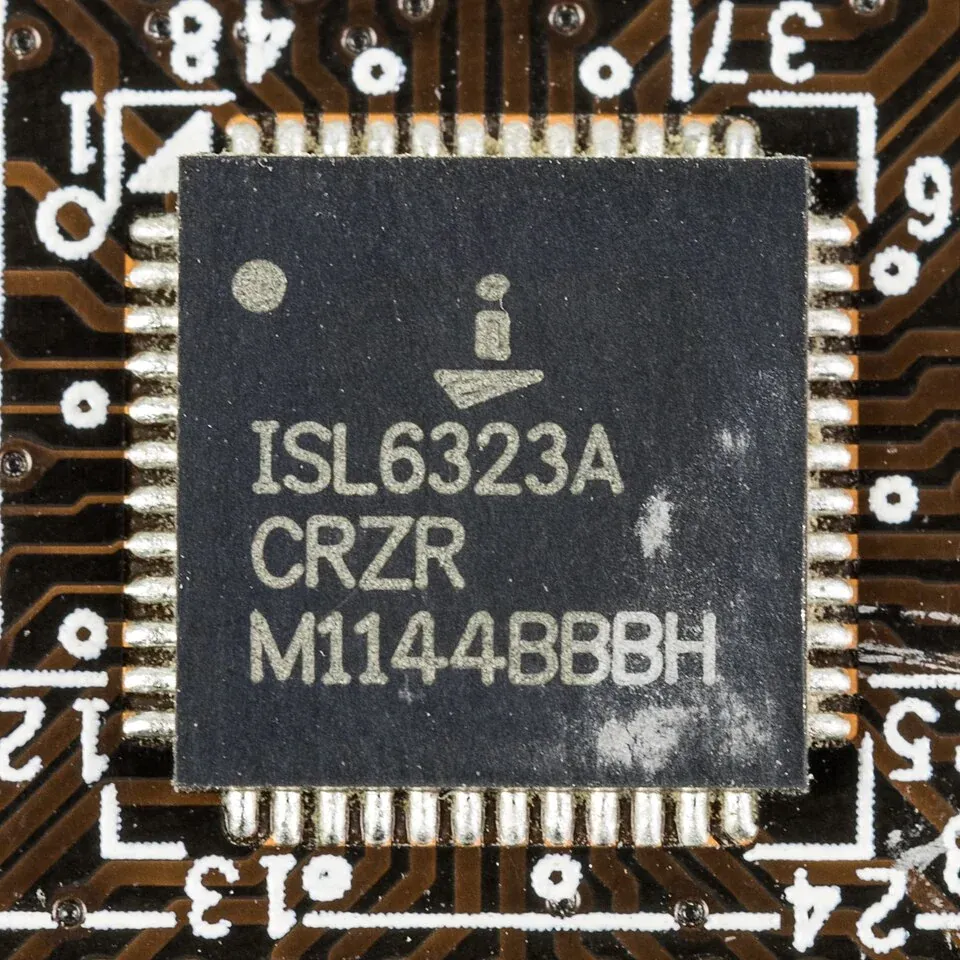

Table of Contents
- Convert “In Stock” Into Verifiable Inventory
- Qualify the Company and the Quoted Lot Separately
- Demand Lot-Specific Evidence Before Price Approval
- Reconstruct Traceability Without Overstating It
- Choose Inspection and Testing From the Risk
- Put Acceptance Rights Into the Purchase Order
- Isolate and Reconcile the Shipment at Receiving
- Reject Quotes With Unresolved Contradictions
- Know When to Leave the Market and Change the Requirement
An obsolete-parts quote is not verified because the supplier has a professional website, a quality certificate, and a photograph of one reel. The company may be legitimate while the quoted inventory is brokered through several layers, split across lots, incorrectly identified, or unavailable by the time the purchase order is placed.
The review therefore has two levels. First, qualify the obsolete electronic components distributor as a counterparty. Second, qualify the exact lot, evidence package, test plan, and commercial terms. Passing one level does not make the other automatic.
This article begins after lifecycle and replacement strategy have already been considered. The broader EOL and obsolescence sourcing guide covers redesign, last-time buy, and lifecycle planning. Here, the immediate task is deciding whether a specific hard-to-find electronic component offer is strong enough to buy.
If production is already at risk, first create the exact requirement and decision cadence in the first 24 hours of a line-down component search, then apply the lot-level checks below to the best available offer.
Convert “In Stock” Into Verifiable Inventory
Ask what the seller means by stock. Seller-owned physical inventory at its inspected facility is different from material visible on a trading network, held by a partner, offered by the original owner, or expected after the seller receives the buyer’s order.
For each quote, record:
- legal owner of the parts;
- physical location and responsible warehouse;
- quantity available and quantity allocated to other customers;
- number of lots and quantity by date/lot code;
- original packaging, seal, and label condition;
- date the seller or its agent physically verified the inventory;
- whether the seller can provide current, lot-specific images and samples;
- whether shipment will originate from the quoted location.
A supplier that will not name an upstream source may still provide enough confidential evidence under a nondisclosure agreement or independent review. A supplier that cannot explain ownership, location, or lot count is asking the buyer to accept availability risk before quality analysis begins.
Do not pay for a generic catalog association. Require the quote and pro forma invoice to identify the full manufacturer part number, original component manufacturer, quantity, condition, packaging, date/lot restrictions, and accepted deviations.
Qualify the Company and the Quoted Lot Separately
Company qualification examines whether the distributor has the processes, people, facilities, records, and financial capacity to perform. Lot qualification examines whether the specific goods conform to the purchase requirement. Use separate approval records so a good history with one supplier does not bypass review of an unusual lot.
Company due diligence should verify the legal registration, tax and banking identity, operating address, domain and email control, quality certifications, accreditation scope, equipment, calibration, employee training, information security, export compliance, complaint history, insurance, and references. Confirm certificates with the issuing certification or accreditation body rather than accepting a PDF attachment.
SAE AS6081A addresses counterfeit avoidance, detection, mitigation, disposition, and reporting for independent distribution. Certification can support process qualification, but the buyer still needs to confirm scope, validity, issuing body, and whether the quoted location operates under that certificate.
Lot review should then test the supplier’s claims: identity, quantity, ownership, provenance, storage, packaging, labels, physical condition, homogeneity, and testability.
Demand Lot-Specific Evidence Before Price Approval
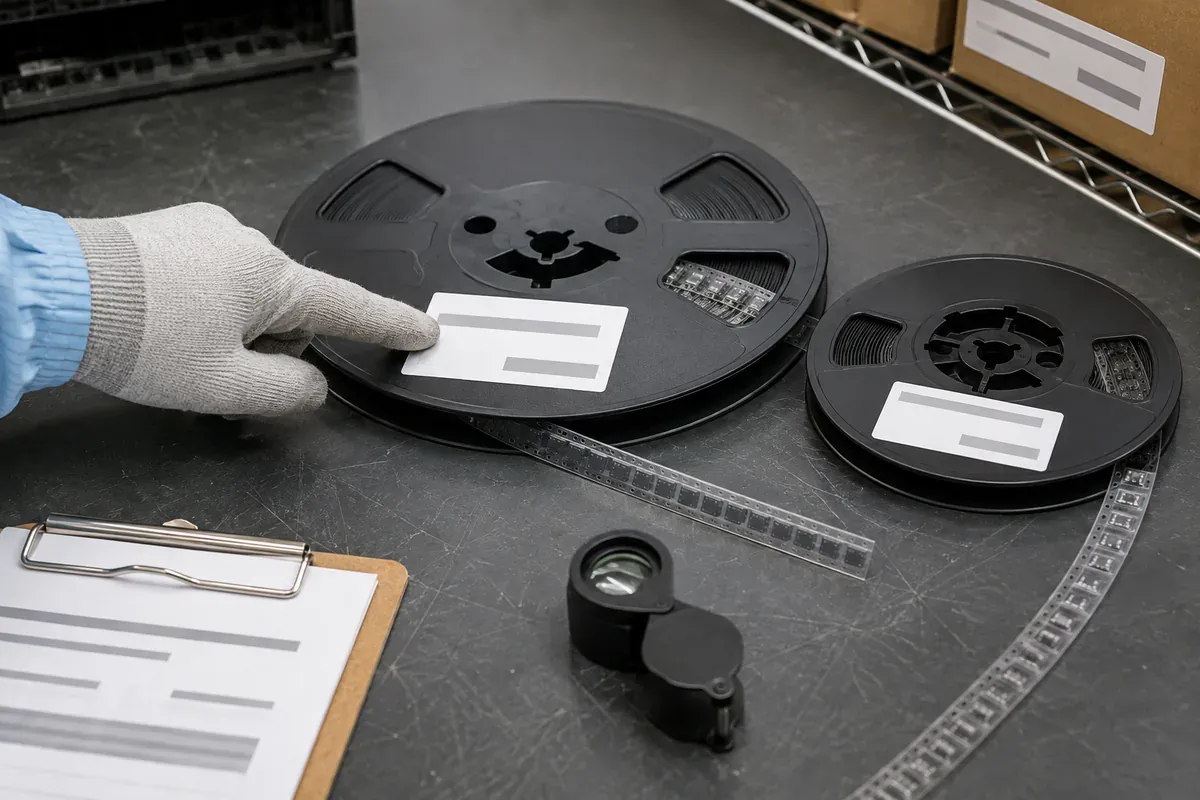
Ask for photographs created for the transaction. A simple request can require the current date or RFQ identifier in the frame without covering labels. Obtain images of outer cartons, all label types, seals, reels or trays, moisture barrier bags, humidity indicators where applicable, component tops and bottoms, and any anomalies.
Compare every identifier across the quote, labels, certificate, packing list, and images. Look for:
- shortened or different manufacturer part numbers;
- quantity totals that do not reconcile;
- date or lot codes that appear only on one document;
- inconsistent label formats, fonts, barcodes, or manufacturer names;
- evidence of relabeling, rebagging, resurfacing, or mixed lots;
- repeated photographs found in unrelated listings;
- a sample that does not map to the offered parent lot.
Original packaging supports the story but does not prove it. Packaging and labels can be reused. Conversely, legitimate material may have been repacked for a documented reason. The supplier should explain the history and preserve both original and replacement identifiers.
Use the site’s counterfeit buyer-verification checklist to assign owners to document, visual, and test review.
Reconstruct Traceability Without Overstating It
Traceability can range from an unbroken chain back to the original component manufacturer, through partial acquisition records, to an unsupported source statement. Describe the actual level rather than converting every document set into “full traceability.”
A useful chain may include original purchase orders, invoices, packing lists, distributor records, certificates, return or transfer documents, and lot identifiers that reconcile at each step. Redacted records should still allow the reviewer to confirm dates, quantities, parties, and identifiers under suitable confidentiality controls.
A seller-issued certificate of conformance describes the seller’s assertion. Ask what underlying records support it and whether they can be reviewed in an audit or quality dispute. If the lot was acquired from OEM or EMS excess, request proof of ownership, original acquisition source, storage history, and the reason for disposition.
SAE AS6171 draws a critical boundary: when parts lack a known chain back to the original or authorized source, risk-based inspection and tests may identify anomalies, but testing cannot prove absolute authenticity. The purchase decision should preserve that residual risk.
Choose Inspection and Testing From the Risk
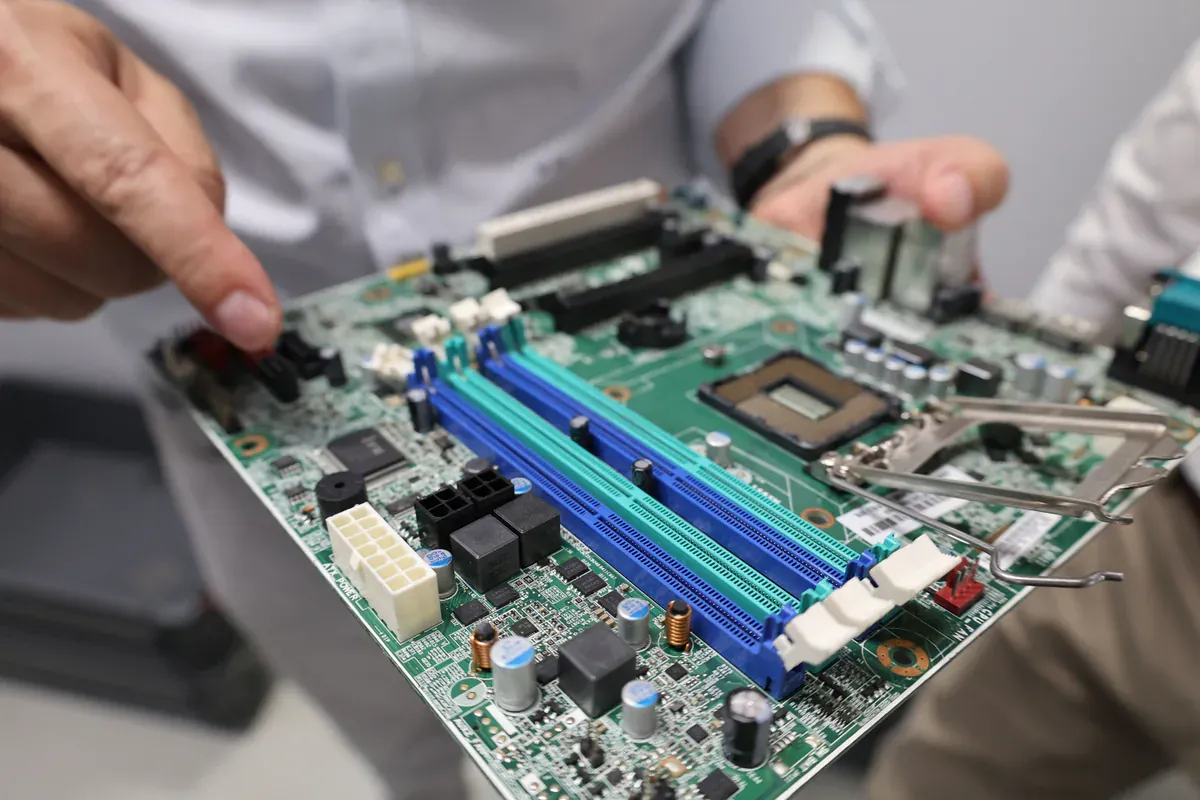
Do not buy a fixed “counterfeit test package” without mapping it to the component and failure modes. The test plan should consider source history, application consequence, package type, known counterfeiting methods, lot size, age, storage, prior anomalies, and whether destructive sampling is allowed.
Potential methods include documentation review, external visual inspection, marking and resurfacing evaluation, dimensions and weight, X-ray, X-ray fluorescence, decapsulation, die inspection, electrical testing, and material analysis. Not every method is appropriate for every component. Sampling also matters: a mixed or substituted lot can pass if the sample does not represent the delivered population.
Specify the applicable AS6171 base and slash-sheet methods, revision, laboratory accreditation and scope, sample plan, acceptance criteria, reference data, reporting, anomaly escalation, and disposition. A laboratory should not be asked to make a legal finding of fraud or guarantee authenticity.
The DLA sourcing and qualification program maintains QSLD and QTSL mechanisms for selected FSC 5961 and 5962 acquisitions. If a contract invokes those programs, verify the current listing and scope; do not assume a supplier or lab is listed because it mentions DLA experience.
Put Acceptance Rights Into the Purchase Order

Quality requirements agreed after payment have little leverage. The purchase order should define the full manufacturer part number, approved manufacturer, condition, quantity, allowed date and lot codes, packaging, source category, traceability documents, photo consistency, sample plan, tests, acceptance criteria, and required report contents.
Commercial terms should state:
- when title and risk of loss transfer;
- whether pre-shipment inspection is permitted;
- who pays for samples and destructive tests;
- whether shipment must be held until written release;
- the inspection period after receipt;
- remedies for quantity, identity, documentation, or test failure;
- RMA, refund, freight, and investigation responsibilities;
- handling and reporting of suspect counterfeit material.
An NCNR statement should not erase remedies for nonconforming goods. Review the seller’s controlling terms and require written resolution of conflicts before the order is accepted. Avoid paying to an unrelated entity or bank account without independently verifying the change.
Isolate and Reconcile the Shipment at Receiving

Receive high-risk obsolete material into quality hold. Do not merge it with approved stock, issue it to production, or discard packaging while inspection is open. Photograph the shipment before opening and record seals, damage, shipping labels, weight, and package count.
Reconcile the carrier document, packing list, purchase order, quote, certificates, label quantities, and physical count. Confirm that delivered photos and identifiers match the pre-award evidence. Record every sample removed and maintain the parent-lot relationship.
If an anomaly appears, stop the inspection sequence long enough to protect evidence. Notify the designated quality and procurement owners, preserve communications, and follow the agreed containment, laboratory, return, and reporting process. Do not send suspected material back into an uncontrolled channel merely to obtain a fast credit.
The AS6081 procurement compliance guide provides more detail for organizations building a recurring counterfeit-avoidance system.
Reject Quotes With Unresolved Contradictions
A high price is not proof of legitimacy, and a low price is not proof of fraud. Focus on contradictions and missing controls. Stop or escalate when:
- the quoted identity changes after technical questions;
- ownership or physical location cannot be established;
- lot-specific photos are refused or do not match the offered quantity;
- documents contain conflicting part, lot, date, or company information;
- the supplier will not allow appropriate samples or third-party inspection;
- certification scope cannot be confirmed;
- payment instructions change without independent verification;
- the seller requires full risk transfer before evidence is available;
- the test report belongs to a different lot or cannot be verified with the laboratory.
Create an exception process for business-critical buys, but do not let urgency become silent approval. Record the operational consequence, remaining evidence gaps, additional tests, authority accepting the risk, and containment plan.
Know When to Leave the Market and Change the Requirement
Open-market sourcing is one option in an obsolescence plan, not an obligation. If credible supply cannot be qualified, compare the risk and timing of an approved later revision, alternate manufacturer, component emulation, board redesign, harvest under a controlled program, or service-level change.
The site’s component alternatives service can support the search task, while engineering retains responsibility for electrical, mechanical, software, safety, regulatory, and reliability validation. A cross-reference database result is a candidate, not a released substitute.
A defensible obsolete-part purchase has a visible decision trail: why the part is still required, why the source was selected, what the evidence proves, what it cannot prove, which tests were performed, and who accepted the residual risk. That record is more valuable than any unsupported claim of “guaranteed authentic.”
Frequently Asked Questions (FAQ)
How do I verify an obsolete electronic components distributor?
Verify the legal entity, physical operations, quality certifications and scope, ownership of the quoted lot, source disclosure, traceability records, inspection capability, warranty, and references relevant to the end market. Then verify the specific lot separately.
What photos should an obsolete-parts supplier provide before purchase?
Request current, lot-specific images of all labels, seals, reels or trays, package tops and bottoms, quantities, date and lot codes, and any damage. Ask the seller to include a transaction identifier so reused catalog images are easier to detect.
Can AS6171 testing prove an electronic component is authentic?
No. SAE AS6171 states that no amount of testing can confirm authenticity in the absence of a known, unbroken chain to the original or authorized source. Risk-based tests can identify anomalies and reduce risk, but they do not recreate provenance.
When should a buyer reject an obsolete-component quote?
Stop when the part identity remains ambiguous, the seller cannot demonstrate ownership or produce promised evidence, photos conflict with documents, lots are mixed without disclosure, test access is refused, or the commercial terms remove meaningful remedies for nonconforming material.