Table of Contents
- Where Are Counterfeit Components Entering Supply Chains in 2026?
- What Are the Most Common Counterfeit Types Encountered Today?
- Why Are Counterfeiters Getting Better, Not Worse?
- What Is the Actual ROI of Component Authentication Investment?
- How Do You Build the Business Case Internally?
- What Should You Look for in an Independent Distributor’s Quality Program?
- What Is the Regulatory Trend for Counterfeit Prevention?
In July 2025, a U.S.-based EMS provider shipped 12,000 industrial motor controller boards to a customer in Germany. Four months later, the customer reported field failures at a rate of roughly 1.2%—not catastrophic, but well above the contractual 0.1% maximum. The root cause investigation took six weeks and cost $87,000. The finding: 185 of the boards contained a counterfeit Analog Devices AD8605 operational amplifier, sourced from an unauthorized broker during a shortage period. The fake parts had been professionally remarked and passed the EMS provider’s visual inspection. They failed only under temperature cycling between -20°C and +60°C—exactly the conditions of the motor controller’s operating environment.
The direct costs were straightforward: $87,000 for the investigation, $142,000 for the field recall and board replacements. The indirect costs were larger: the customer withheld a $2.4 million follow-on order pending “supply chain security review.” No one was fired. But the EMS provider’s quality rating with that customer dropped from “Preferred” to “Probationary”—a status that takes 18-24 months to recover.
Where Are Counterfeit Components Entering Supply Chains in 2026?
The counterfeit threat has evolved substantially since the 2011 Senate Armed Services Committee investigation that first documented over one million suspect parts in Pentagon supply chains. Counterfeiters in 2026 operate with professional-level sophistication, using organized supply chains that mirror legitimate manufacturing and logistics operations.
What Are the Most Common Counterfeit Types Encountered Today?
| Counterfeit Type | Detection Difficulty | Prevalence (2026) | Typical Source |
|---|---|---|---|
| Remarked/relabeled (lower-grade sold as higher-grade) | Medium — requires solvent testing, marking comparison | ~45% | Professional remarking operations; often indistinguishable from genuine without magnification |
| Salvaged/recycled (e-waste components cleaned and resold as new) | Medium-High — lead condition, solder ball integrity | ~25% | E-waste processing facilities, primarily in developing markets |
| Non-functional (blank or defective die in authentic-looking package) | High — requires X-ray or electrical testing | ~15% | Dedicated counterfeit fabrication operations |
| Cloned/overproduced (unauthorized copies using stolen or reverse-engineered masks) | Very High — functionally identical, detectable only through traceability | ~10% | Rogue subcontractors or overproduction at authorized fabs |
| Documentation fraud (genuine parts with falsified certificates) | High — requires supply chain traceability audit | ~5% | Insider threat; grey-market diversion |
Why Are Counterfeiters Getting Better, Not Worse?
Three structural trends are making counterfeiting more sophisticated in 2026:
-
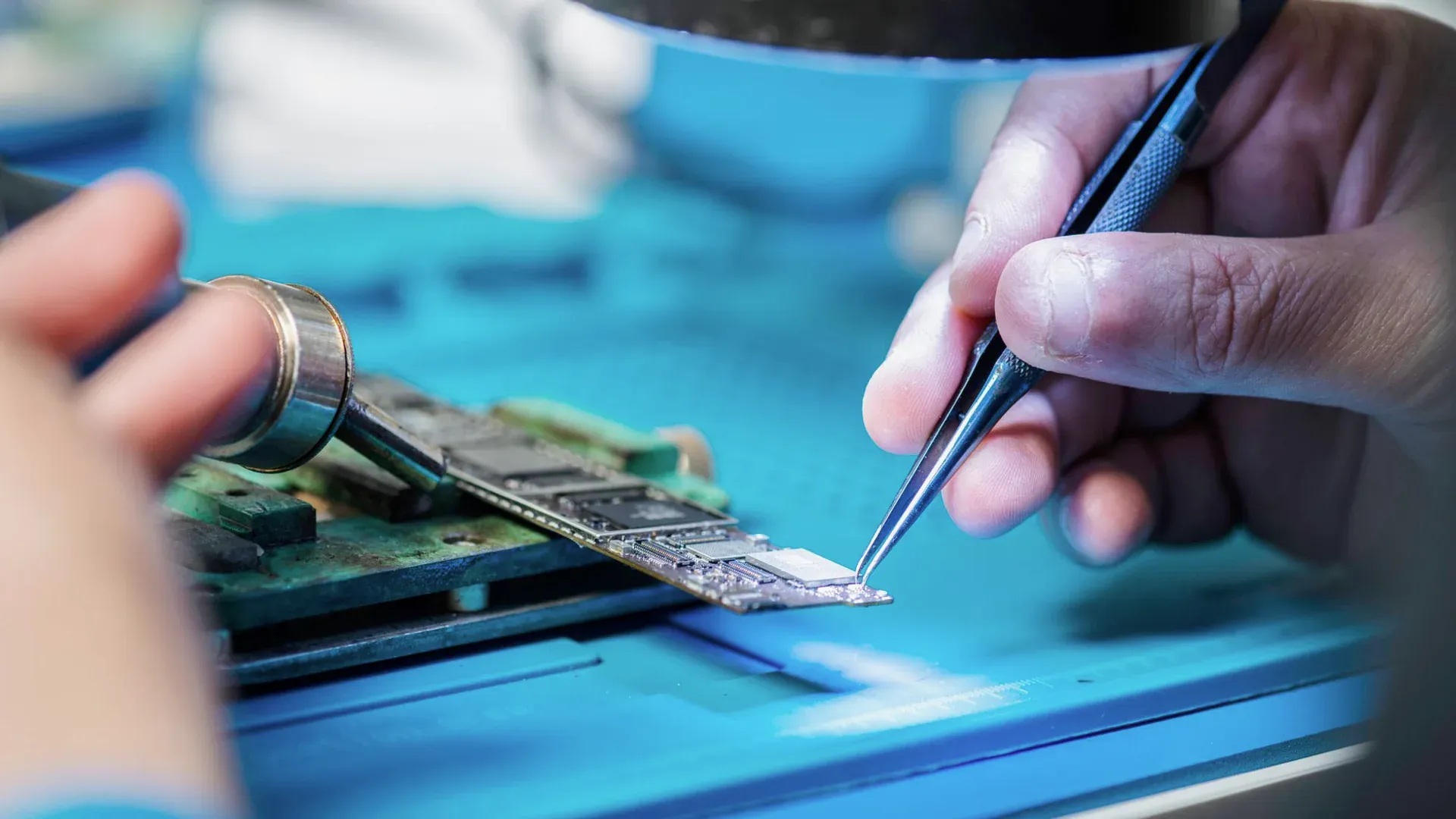
Laser marking technology has become commoditized. A $3,000 laser marking system can produce professional-quality component markings indistinguishable from genuine parts under standard visual inspection. Only comparative analysis against known-genuine reference samples—checking font metrics, laser depth, and chemical composition—reliably detects professionally remarked parts.
-
The authorized channel shortage-to-open-market pipeline creates opportunity. When authorized distributors go to zero stock on a high-demand component (as has happened repeatedly with STM32, Infineon AURIX, and TI isolated gate drivers in 2025-2026), procurement teams under schedule pressure are more likely to accept parts from unverified sources. Counterfeiters specifically target these shortage windows.
-
Cross-border e-commerce and small parcel shipping evade customs scrutiny. The OECD reports that 65% of counterfeit seizures now involve small parcels and mail—a distribution model that allows counterfeiters to ship small quantities to many buyers, staying below customs enforcement thresholds.
What Is the Actual ROI of Component Authentication Investment?
The math of authentication investment is unusually favorable because the cost of a single failure is so high relative to the cost of detection equipment. Here is the ROI framework for three levels of investment:
| Authentication Level | Equipment Investment | Detection Coverage | Annual Cost per 50K Components | Expected Annual Savings |
|---|---|---|---|---|
| Phase 1: Essential Screening | $30,000–$60,000 | ~85% of detectable counterfeits | ~$15,000 (equipment amortization + technician time) | $125,000–$375,000 |
| Phase 2: Enhanced Detection | +$80,000–$150,000 (XRF, curve tracer, SAM access) | ~95% of detectable counterfeits | ~$35,000 | $250,000–$500,000 |
| Phase 3: Comprehensive | +$200,000+ (full ATE, in-house SAM, decap) | >99% of detectable counterfeits | ~$60,000 | $350,000–$750,000 |
How Do You Build the Business Case Internally?
The most effective way to secure budget for authentication investment: present it as insurance, not as a cost center. Express the annual counterfeit exposure as the product of:
× Counterfeit Encounter Rate (0.005–0.03 for unverified parts)
× Average Cost per Counterfeit-Induced Failure ($5,000–$50,000)
For a mid-tier manufacturer sourcing 10,000 open-market components per year:
= 10,000 × 0.01 × $12,000 = $120,000 annual exposure
Phase 1 authentication investment: $30,000–$60,000 (one-time)
Annual operating cost: ~$15,000
Annual prevented losses: ~$102,000 (85% detection × $120,000 exposure)
Year 1 ROI: ($102,000 − $15,000) ÷ $45,000 = 193%
When presented this way, the question shifts from “Can we afford authentication equipment?” to “Can we afford not to have it?”
What Should You Look for in an Independent Distributor’s Quality Program?
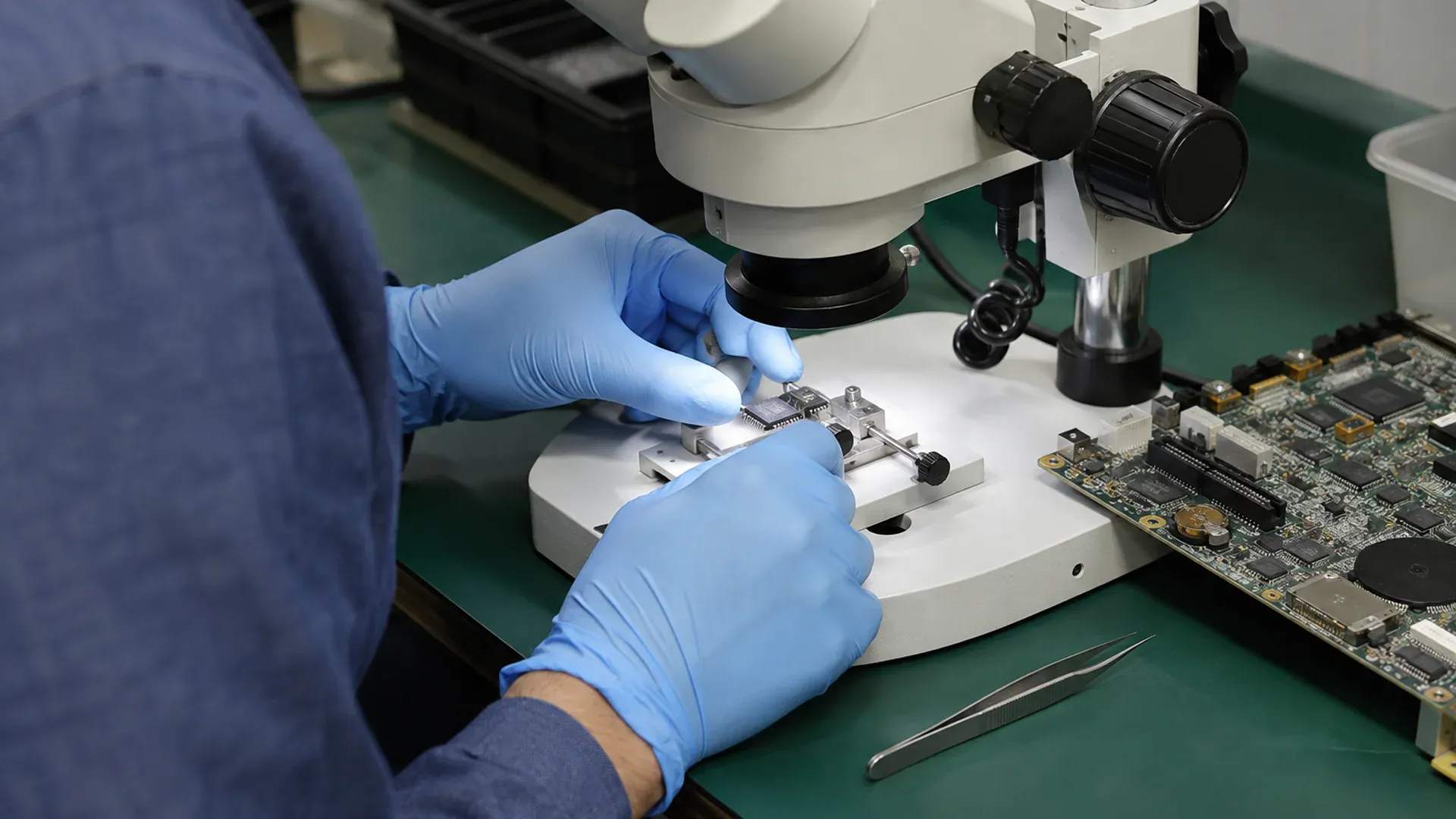
For procurement teams sourcing through independent distribution—whether for EOL parts, shortage-constrained allocations, or cost optimization—the distributor’s quality program is the single most important differentiator. Here is what a credible program looks like in 2026:
| Quality Capability | Why It Matters | Red Flags |
|---|---|---|
| AS6081-compliant inspection protocol | AS6081 is the only standard specifically written for counterfeit avoidance by independent distributors | No documented inspection procedure; “we visually check everything” without specifics |
| In-house X-ray inspection | Non-destructive internal structure verification; catches die absence, wire bond anomalies | Reliance on “supplier certification” without independent verification |
| Digital marking analysis with reference library | Compares marking characteristics against known-genuine samples | No reference library; “we know what looks right” |
| ISO/IEC 17025 partner lab access | For decapsulation and SEM/EDS analysis on high-risk parts | No relationship with accredited lab; claims to “do everything in-house” |
| Full traceability documentation | Supply chain provenance from manufacturer to end customer | “We can’t disclose our sources” — legitimate distributors can provide traceability without revealing specific supplier names |
SupplyICs’ quality assurance framework includes in-house X-ray, digital marking verification, and AS6081-aligned inspection protocols, with ISO/IEC 17025 accredited partner lab access for advanced analysis.
What Is the Regulatory Trend for Counterfeit Prevention?
The regulatory landscape is tightening, and procurement teams should anticipate this affecting their operations:
- DFARS 252.246-7008 (U.S. defense contractors) now mandates specific counterfeit detection procedures and reporting requirements. The FY2012 NDAA Section 818 protections for voluntary counterfeit reporting remain in force, but the compliance burden has increased.
- FDA QMSR 2026 (medical device quality management system regulation) introduces stricter supplier control requirements that effectively mandate component authentication for critical-path parts in medical devices.
- EU Cyber Resilience Act implementation is driving similar requirements for IoT and connected devices, where a counterfeit component can create both a safety and a cybersecurity vulnerability.
The direction is clear: component authentication is transitioning from “best practice” to “regulatory requirement” across multiple industries. Organizations that build authentication capability now will be ahead of the compliance curve. Those that wait will face both higher implementation costs and increased regulatory risk.
Frequently Asked Questions (FAQ)
How big is the counterfeit electronic components problem in 2026?
Counterfeit electronic components cause over $100 billion in annual financial losses across the global electronics industry, according to Dataquest. The U.S. Department of Defense reported counterfeit components detected in 17 separate defense acquisition programs in the 12 months preceding March 2026 — the highest count since the original 2011 Senate Armed Services Committee investigation. The automotive industry alone loses an estimated $3 billion annually to counterfeit parts, while the semiconductor sector loses approximately $75 billion.
What is the ROI of investing in component authentication?
A Phase 1 authentication capability ($30,000-$60,000 investment in digital microscope, UV inspection, and benchtop X-ray) catches approximately 85% of detectable counterfeits through non-destructive methods. For a manufacturer processing 50,000 components annually with a 1% counterfeit encounter rate, this investment prevents approximately 425 field failures per year. At an average cost of $12,000 per failure (rework, warranty, reputation), the annual savings exceed $5 million — an ROI of over 80:1.
Which industries are most targeted by counterfeiters in 2026?
Aerospace and defense remain the most targeted due to the high value of mil-spec components and the documented presence of over 1 million suspect parts in Pentagon supply chains. Automotive electronics is the fastest-growing target sector, driven by the proliferation of electronic control units and the rapid expansion of EV production creating supply-demand gaps. Medical device counterfeiting is emerging as a critical concern due to FDA QMSR 2026 requirements mandating stricter supplier controls.