
Table of Contents
- Why Has Counterfeit Component Risk Intensified in 2026?
- What Are the Five Types of Counterfeit Electronic Components Every Buyer Must Recognize?
- What Documentation Must a Buyer Demand Before Signing Any Purchase Order?
- Certificate of Conformance: What Should a Legitimate CoC Actually Contain?
- Chain of Custody: How Do You Verify That Components Haven’t Passed Through Uncontrolled Intermediaries?
- Date Code and Lot Code Consistency: How Do You Cross-Reference the Paper Trail Against the Physical Parts?
- Supplier Qualification Documentation: What Proof of Legitimacy Should You Require?
- When Should a Buyer Escalate from Documentation Review to Physical Inspection?
- What Can External Visual Inspection Actually Detect — And What Does It Miss?
- How Does X-Ray Inspection Fit into a Buyer’s Verification Workflow?
- What Are the Most Effective Counterfeit Detection Methods and When Should Each Be Used?
- What Are the Emerging Anti-Counterfeit Technologies That Buyers Should Track?
- What Should a Complete Pre-Purchase Order Verification Workflow Look Like?
- Where Does Supplier Qualification Fit into Counterfeit Prevention?
- Conclusion: The Buyer’s 2026 Counterfeit Prevention Standard
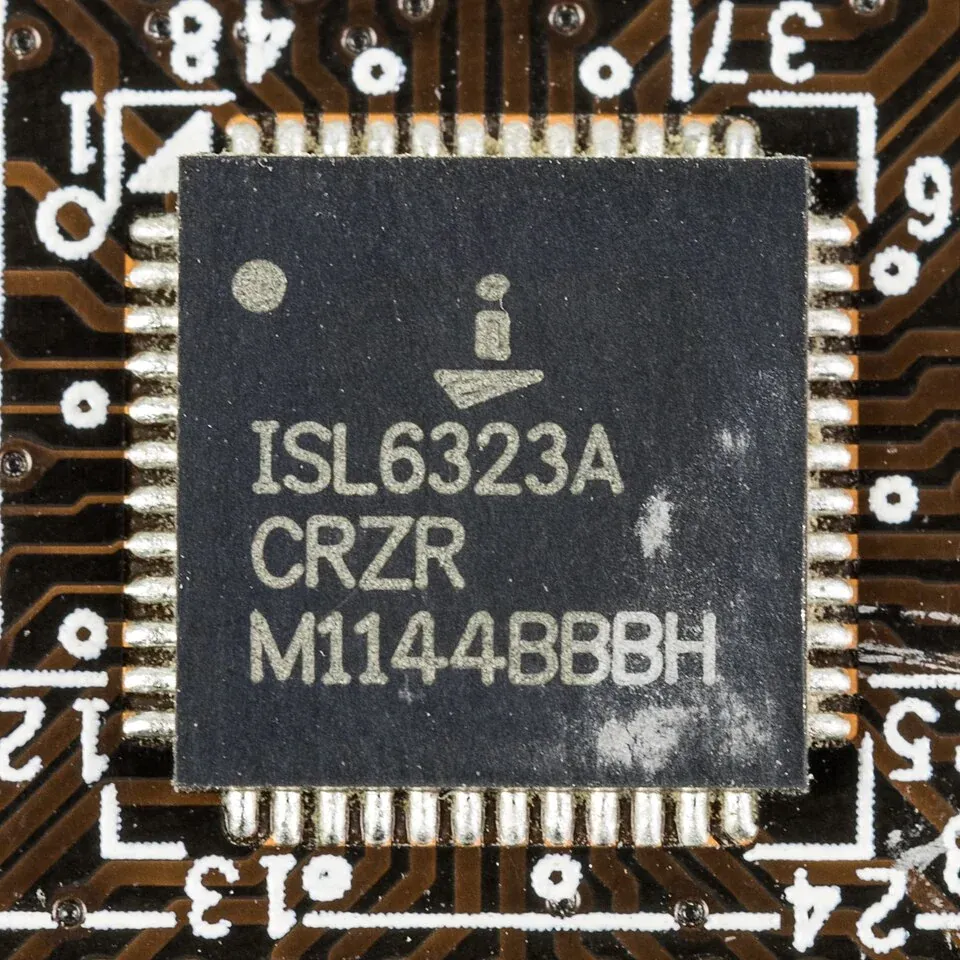
In our quality lab, we recently intercepted a batch of 2,000 “new” STM32F407VGT6 MCUs that were actually refurbished pulls with laser-reamrked date codes. The parts had been professionally blacktopped — a thin epoxy layer applied over the original markings, then laser-etched with a 2025 date code. They passed visual inspection at 10x magnification. Under oblique lighting at 60x, the surface texture mismatch at the blacktopping boundary became visible. Acetone solvent testing lifted the new marking in under 30 seconds, revealing a 2019 date code underneath. The original components had been pulled from decommissioned industrial controllers in Shenzhen, cleaned, re-tinned, re-marked, and re-packaged in factory-sealed trays that looked indistinguishable from originals.
The financial implication was straightforward: if those 2,000 parts had reached the production line, the cost of rework, line stoppage, and delayed customer shipments would have exceeded $400,000. And that is a conservative estimate — it assumes the counterfeit was caught during in-circuit testing rather than in the field, where a latent failure in an automotive ECU or medical infusion pump carries costs measured in liability, not just logistics.
This article is the checklist we wish every buyer would run before signing a purchase order. It is not a technical testing guide — our Advanced Counterfeit Detection and Component Authentication Guide covers X-ray, SAM, XRF, decapsulation, and electrical testing in technical depth. This is the operational frontline: what to demand, what to verify, what to walk away from. If you are a buyer, purchasing manager, or supply chain professional who signs POs for electronic components, the following verification framework is your pre-commitment due diligence standard.
Why Has Counterfeit Component Risk Intensified in 2026?
The counterfeit threat in 2026 is not the same problem it was in 2020. Three structural shifts have raised the stakes for every buyer:
The allocation economy has pushed more procurement into the open market. With TSMC’s advanced nodes sold out into 2027 and lead times on mature-node analog, power management, and MCU products stretching past 40 weeks, franchised distribution stocks are depleted. Buyers who previously sourced 90% of their bill of materials through authorized channels are now engaging independent distributors for 30-40% of their line items. Each engagement is a trust decision with financial consequences.
Counterfeiters have industrialized. The remarking operation that produced those 2,000 STM32F407VGT6 parts had a fiber laser marking system capable of matching OEM marking depth within 5 microns, chemical blacktopping compounds formulated to match the original mold compound’s surface energy and gloss, and vacuum-sealed tray packaging equipment that reproduced the OEM’s moisture-barrier bag sealing pattern. This is not a back-alley operation. It is a sophisticated, technically competent, economically rational business with margins exceeding 500%.
The IPC estimates a counterfeit rate exceeding 5% in certain independent distribution channels, and ERAI — named “Anti-Counterfeit Solutions of the Year 2026” by Semiconductor Review — documented over 1,200 confirmed counterfeit incidents in its 2025 annual report, with 63% involving date code or lot code manipulation. The U.S. Department of Defense reported counterfeit electronic components in the supply chains of 17 separate defense acquisition programs over a 12-month period — the highest annual count since the Senate Armed Services Committee investigation of 2011.
The regulatory environment is responding. In January 2026, NIST convened a workshop on blockchain-based semiconductor traceability, building on the Department of Homeland Security’s ongoing program to develop digital provenance infrastructure for critical electronic components. The SAE AS5553 standard (counterfeit avoidance for OEMs) and AS6081 (counterfeit avoidance for distributors) have become the de facto procurement requirements for aerospace and defense supply chains. Enforcement is tightening. But regulation lags behind the threat. For now — and for the foreseeable future — the burden of verification falls on the buyer.
What Are the Five Types of Counterfeit Electronic Components Every Buyer Must Recognize?
If you cannot name and describe the five common counterfeit categories, you cannot effectively specify verification requirements. Counterfeiters exploit the gaps in what buyers do not know to ask about. Here are the five categories, organized from most common to most dangerous:
| Counterfeit Type | What It Is | Typical Red Flags | Estimated Prevalence |
|---|---|---|---|
| Remarked / Rebraned | Used, lower-grade, or older-date-code parts with surface coating and new laser marking applied to appear as higher-spec or newer production | Inconsistent marking depth under magnification; solvent-soluble markings; date code inconsistent with lot traceability; price 30-50% below market | ~40-50% of reported incidents |
| Refurbished / Recycled | Components pulled from discarded equipment, cleaned, re-tinned, and sold as “new original” | Oxidized or re-tinned leads with non-uniform plating; micro-cracks in leads from straightening; thermal stress indicators (die attach delamination visible on SAM); mixed date codes in single lot | ~25-30% of reported incidents |
| Unauthorized Copies | Components manufactured by an unauthorized third party using reverse-engineered or stolen design data; may be functionally similar but not qualified | Subtle parametric deviations at temperature extremes; different die layout or die markings on decapsulation; mold compound and lead frame composition inconsistent with OCM reference data (XRF) | ~10-15% of reported incidents |
| Defective / Scrapped Reclaims | Genuine parts that failed OCM outgoing quality inspection, scraped from factory waste streams and resold | Higher-than-expected fallout rate in incoming electrical test; parametric drift; visual defects (package cracks, lead damage) that would have triggered OCM rejection | ~5-10% of reported incidents |
| Cloned / Fake Parts | Complete counterfeit — non-functional or functionally different silicon in a package designed to pass superficial inspection | No response on electrical test; wrong die entirely on decapsulation; no die markings; package weight and dimensions differ from OCM specification; absurdly low pricing | ~3-5% of reported incidents |
These categories are not mutually exclusive. A single component might be a refurbished pull (category 2) that has been remarked (category 1) and sold through a supplier presenting it as factory-new production. The detection methods must stack accordingly — you need a defense-in-depth approach, not a single silver-bullet test.
What Documentation Must a Buyer Demand Before Signing Any Purchase Order?
This section is the heart of the buyer’s pre-PO checklist. If you do nothing else before committing funds — if your organization has no X-ray machine, no XRF analyzer, no decapsulation capability — the following documentation verification steps will catch the majority of counterfeit attempts before they reach your receiving dock.
Certificate of Conformance: What Should a Legitimate CoC Actually Contain?
A Certificate of Conformance is not a formality. A properly constructed CoC is a legally significant document that traces a component back to the party that manufactured it. Demand a CoC that meets these specifications:
The CoC must reference the original component manufacturer’s CoC, not just the distributor’s re-certification. A distributor-generated CoC that states “these parts conform to manufacturer specifications” without referencing a specific OCM CoC number, date, and issuing authority is a piece of paper, not a verification document.
The CoC must include the OCM part number, the lot/batch number, the date code, and the quantity — and every one of these fields must match the corresponding information on the physical components, on the packing slip, on the shipping documentation, and on the purchase order. A single mismatch across any document pair is a stop-work event. Do not proceed until the discrepancy is resolved with documented evidence, not verbal explanation.
The CoC must be verifiable with the issuing party. If the CoC claims to represent Texas Instruments material, you should be able to contact TI or TI’s authorized distributor and verify that the lot number and date code on the CoC correspond to a real production shipment. Increasingly, OCMs are deploying database-backed verification portals that make this check straightforward. For OCMs that have not yet deployed such systems, a direct inquiry to the authorized distribution channel should produce confirmation or denial.
The CoC must be dated and signed by an identifiable individual with organizational authority. An unsigned, undated CoC from an unnamed “Quality Department” is not a quality document; it is a template.
Chain of Custody: How Do You Verify That Components Haven’t Passed Through Uncontrolled Intermediaries?
The chain-of-custody requirement is straightforward in principle and frequently evaded in practice. Every transfer of ownership between the OCM and your receiving dock must be documented. For each custody transfer, demand the following:
The identity of the transferring and receiving parties. “Trading company” and “excess inventory consolidator” are not acceptable substitutes for named corporate entities with verifiable physical addresses.
The date of transfer. This enables temporal consistency checking — a component manufactured in week 34 of 2025 cannot have been transferred from the OCM in week 20 of 2025.
The quantity transferred. Quantities should sum consistently across the chain. A chain where 5,000 parts leave the OCM, 3,000 arrive at intermediary A, and 4,500 arrive at intermediary B has a 1,500-part gap that must be explained with documented evidence.
The documentation accompanying the transfer — purchase order, invoice, packing slip, and any quality documentation generated or transferred at each step.
Suppliers who claim “proprietary sourcing” as a reason for withholding chain-of-custody documentation are the single strongest red flag in electronics procurement. No legitimate supplier will withhold traceability under a properly structured Non-Disclosure Agreement. If a supplier refuses to provide chain-of-custody documentation even under NDA, terminate the engagement and report the supplier to ERAI.
Date Code and Lot Code Consistency: How Do You Cross-Reference the Paper Trail Against the Physical Parts?
Date code and lot code verification is covered in detail in our Date Code Verification and Component Traceability guide, but here is the buyer’s operational checklist:
-
Format Verification: Confirm that the date code on the physical component matches the OCM’s documented date code format for that specific part number, package type, and assembly location. STMicroelectronics uses YWW (year + work week); Texas Instruments uses YM or YYWW depending on package; Analog Devices is consistently YYWW. A wrong format is an instant failure.
-
Temporal Consistency: Map the date code against every timestamped document in the chain of custody. A component manufactured in November 2024 cannot have entered distribution in August 2024. A lot of 5,000 components from the same supplier should show date code consistency — a mix of date codes spanning three years suggests aggregation from multiple uncontrolled sources.
-
Cross-Document Consistency: The date code and lot code on the physical component must match the corresponding fields on the CoC, the packing slip, the external packaging label, the inner packaging label, and the supplier’s invoice. Any mismatch is a stop-work event.
-
ERAI Cross-Reference: Check the date code and lot code combination against the ERAI counterfeit incident database. Known counterfeit clusters are often identified by specific date code and lot code combinations. If date code 2245 on an ADUM1401 in an SOIC-16W package has been flagged by ERAI as a known counterfeit cluster, no amount of supplier assurance should override that data point.
Supplier Qualification Documentation: What Proof of Legitimacy Should You Require?
Our Supplier Qualification Audit Framework covers the full supplier vetting process. For the pre-PO buyer’s checklist, the minimum supplier documentation threshold is:
Quality Management System Certification: Require a current ISO 9001:2015 certificate. For aerospace and defense procurement, require AS9120. Verify the certificate directly with the issuing registrar — certificate forgery is trivial with desktop publishing software, and approximately 5% of certificates presented by new supplier applicants have been found to contain fabricated or expired information.
Physical Infrastructure Verification: Require evidence of real, verifiable physical facilities. The supplier’s stated address should be independently verifiable through commercial property records or satellite imagery. Virtual offices, registered agent addresses, and co-working spaces are not acceptable for a supplier handling electronic components. ERAI’s supplier audit data indicates that approximately 15% of independent distributors misrepresent their physical facilities during initial screening.
ERAI Membership and Standing: Require that the supplier maintains current ERAI membership. Verify the membership directly with ERAI. A supplier that is not registered with ERAI is not necessarily fraudulent, but the absence of registration increases the verification burden on the buyer — you are doing the due diligence work that ERAI membership would have partially performed.
Test and Inspection Capability Evidence: For any component destined for high-reliability applications, require the supplier to provide photographic or video evidence of their testing and inspection capability. Ask for sample X-ray images from their inspection system, photographs of their inspection workstation, and their equipment calibration certificates. A supplier that claims to perform incoming inspection but cannot produce an equipment calibration record dated within the past 12 months is not performing meaningful inspection.
When Should a Buyer Escalate from Documentation Review to Physical Inspection?
Documentation review is necessary but not sufficient. A sophisticated counterfeiter can produce convincing paperwork. Physical inspection is the verification that the components described in the documentation are the components sitting in the box. The escalation decision depends on risk level:
| Risk Tier | Component Profile | Documentation Threshold | Physical Inspection Required |
|---|---|---|---|
| Standard | Commercial-grade passives, connectors, LED drivers from established suppliers with verified ERAI standing | Full documentation package: CoC, chain of custody, date/lot code cross-reference | External visual inspection at 20-40x on a per-lot sample basis |
| Elevated | Industrial MCUs, power MOSFETs, precision op-amps from independent distributors without established trust history | Standard requirements plus supplier test capability evidence | X-ray inspection of 3-5 samples per lot; marking permanency testing on 1 sacrificial sample |
| High | AEC-Q100 automotive, FPGA/CPLD, isolated gate drivers, any open-market source | Elevated requirements plus supplier-provided X-ray and electrical test reports | Independent X-ray, XRF material analysis, solderability testing, and electrical verification on statistical sample |
| Critical | MIL-STD, space-grade, medical implant-grade, any safety-critical application from non-authorized source | Full documentation package plus OCM verification of lot provenance | Full authentication protocol: X-ray, SAM, XRF, electrical test across temperature, decapsulation on 1-3 samples |
This escalation framework aligns with the risk-based testing hierarchy defined in SAE AS6081. The core principle: the cost of inspection scales with the consequence of failure. Spending $2,000 on authentication testing for a $50,000 lot of MIL-STD FPGAs is rational risk management. Spending $2,000 authenticating a $200 lot of commodity resistors is not.
What Can External Visual Inspection Actually Detect — And What Does It Miss?
External visual inspection at proper magnification is the buyer’s first physical verification step and should be performed before acceptance of any shipment from the open market. It is also the method most commonly relied upon by organizations that lack a formal authentication program — and therefore the method most commonly bypassed by counterfeiters.
At 20-60x magnification with coaxial and oblique lighting, a trained inspector can detect: blacktopping compound layers (surface texture mismatch at the boundary, air bubble inclusions, different gloss level from surrounding mold compound), laser ablation artifacts (faint “shadow” of original marking visible under oblique lighting), lead re-tinning evidence (non-uniform plating thickness, micro-cracks from previous straightening, inconsistent solder dip coverage on BGA balls), and package surface anomalies (sanding marks, chemical etching residue, uneven mold compound color suggesting re-molding).
What EVI misses: a professionally remarked component with properly color-matched blacktopping compound applied by automated dispensing equipment and re-marked with a calibrated fiber laser will pass visual inspection at 60x. The only reliable detection methods for professional remarking are solvent-based marking permanency testing (destructive, on a sacrificial sample per MIL-STD-883 Method 2015), XRF material analysis (mold compound and lead frame composition differs from OCM reference), and decapsulation (die markings reveal the actual part identity).
The operational takeaway: EVI is the minimum, not the maximum. Use it on every shipment. Do not confuse passing EVI with proving authenticity.
How Does X-Ray Inspection Fit into a Buyer’s Verification Workflow?
X-ray inspection is the single most valuable non-destructive authentication tool available to buyers. It provides visibility into the internal structure of a component — die size and orientation, wire bond count and pattern, lead frame design, and die attach integrity — without damaging the part. For buyers who lack in-house X-ray capability, the requirement is straightforward: demand that your supplier provide X-ray images and a written interpretation report for any lot above the Standard risk tier.
Benchtop microfocus X-ray systems suitable for component inspection are now available in the $50,000-$80,000 range, and the technology has become a standard fixture in qualified independent distributors’ quality laboratories. A supplier who handles high-reliability components but cannot produce X-ray inspection records should be treated as lacking basic quality infrastructure.
For the buyer receiving X-ray images from a supplier, verify the following: the X-ray image shows the full component, not a cropped or partial view; the image resolution is sufficient to count wire bonds and assess die attach coverage; the image is accompanied by a written interpretation that explicitly compares the observed internal structure against a known-good reference; the X-ray system’s calibration certificate is current and available on request; and the image file metadata (if digital) is consistent with the stated inspection date.
What Are the Most Effective Counterfeit Detection Methods and When Should Each Be Used?
The detection method a buyer should specify depends on the risk tier of the procurement. The following comparison table provides an operational reference for buyers who need to decide what to require from their supplier — or what to arrange through a third-party test lab — for a given lot.
| Detection Method | What It Detects | Approximate Cost (Per Lot) | Time Required | Destructive? | When to Require |
|---|---|---|---|---|---|
| External Visual Inspection (20-60x) | Blacktopping, re-tinning, marking anomalies, physical damage, package inconsistencies | $50-200 (in-house labor) | 15-30 min per 10-20 samples | No | Every open-market shipment |
| Marking Permanency (Solvent Test) | Non-OEM markings that dissolve, smear, or lift under specified solvent | $5-10 per sample (sacrificial) | 5-10 min per sample | Yes (sacrificial) | Elevated risk and above; 1-3 samples per lot |
| X-Ray Inspection (Real-Time Radiography) | Die size/placement anomalies, missing or incorrect wire bonds, lead frame inconsistencies, empty/dummy packages | $200-500 per lot (supplier); $500-1,500 (third-party lab) | 30-60 min per 5 samples | No | Elevated risk and above; 3-5 samples per lot |
| XRF Material Analysis | Lead finish composition (RoHS verification), lead frame alloy substitution, mold compound filler anomalies | $100-300 per lot (supplier); $300-800 (third-party lab) | 30-120 seconds per measurement | No | High risk and above; spot-check 5-10 parts per lot |
| Scanning Acoustic Microscopy (SAM) | Die attach delamination, molding compound separation, package cracks, substrate delamination — thermal stress indicators from prior use | $500-1,500 per lot (third-party lab) | 1-2 hours per 5 samples | No | Critical risk; refurbished-part screening |
| Electrical Test (Curve Trace + Parametric) | Functional failures, parametric drift, incorrect die (different I-V signature), ESD damage, degraded silicon from prior use | $500-3,000 per lot depending on test complexity | 1-4 hours depending on pin count | No | High risk and above; at minimum, pin-to-pin I-V comparison against golden device |
| Decapsulation + Die Analysis | Wrong die entirely, die marking mismatch, die revision mismatch, clone silicon identification | $200-500 per component | 5-10 business days | Yes (destructive) | Critical risk; 1-3 sacrificial samples per lot |
This table is a buyer’s decision aid, not a laboratory procedure manual. For the technical detail behind each method — equipment specifications, inspection points per IDEA-STD-1010, test acceptance criteria — refer to our Advanced Counterfeit Detection and Component Authentication Guide.
AI-enhanced physical inspection is an emerging capability worth monitoring. Researchers at the CALCE 2026 Counterfeit Symposium (University of Maryland) presented machine-learning-assisted optical inspection systems capable of detecting marking anomalies at sub-pixel resolution by comparing component surface imagery against a database of known-authentic reference images. NHanced Semiconductors and the University of Florida have demonstrated AI classification of X-ray images that distinguishes authentic from counterfeit die structures with 94%+ accuracy on known test sets. For buyers, this means that inspection capabilities that today require a trained microscopist may within 2-3 years be deployable as software tools on commodity digital microscope hardware. It does not mean that the buyer can skip verification now and wait for the AI solution.
What Are the Emerging Anti-Counterfeit Technologies That Buyers Should Track?
Several technologies in development and early deployment will reshape counterfeit detection in the coming years. Buyers should be aware of them now to make informed procurement infrastructure decisions.
Silicon nanoparticle anti-counterfeiting markers developed by Lintec Corporation use inkjet-printed silicon nanoparticles embedded in the component’s package marking. The nanoparticles produce a unique optical signature under specific excitation wavelengths that is effectively impossible to replicate without access to the OCM’s proprietary nanoparticle formulation and deposition process. This moves counterfeit detection from “find the flaw the counterfeiter made” to “verify the marker the OCM placed” — a fundamentally more robust security model.
Blockchain-based traceability is under active development by the Department of Homeland Security, with a NIST workshop in January 2026 convening industry, government, and academic stakeholders to define interoperability standards for digital provenance records. The vision is a system where every custody transfer of a semiconductor component is recorded as a cryptographically signed ledger entry, enabling a buyer to verify the complete chain of custody from OCM wafer fab to receiving dock with a single query. The technology is not yet commercially deployed at scale, but major OCMs and franchised distributors are running pilot programs. Buyers should expect this to become a procurement requirement for defense and critical infrastructure supply chains within 3-5 years.
Advanced material fingerprinting extends XRF analysis into trace-element profiling. Rather than simply verifying that lead is below RoHS thresholds, next-generation material analysis measures the ratio of trace elements in mold compound, lead frame, and bond wire materials — a fingerprint that is specific to a particular OCM, assembly site, and even production period. The CALCE consortium at the University of Maryland maintains a growing database of material fingerprints for commonly counterfeited component types. For now, this capability is primarily available through university and third-party lab partnerships. It is not yet a routine buyer verification step, but it is the direction the technology is heading.
What Should a Complete Pre-Purchase Order Verification Workflow Look Like?
Bringing the preceding sections together into an operational workflow, here is the step-by-step pre-PO verification sequence that every buyer should execute before signing a purchase order for electronic components from any source outside franchised distribution:
Step 1: Supplier Standing Check (Before Any Commercial Discussion). Run the supplier’s name through the ERAI database. Check for any reported incidents, whether resolved or unresolved. Verify the supplier’s ERAI membership status. Check the supplier’s stated physical address through independent means. A supplier with unreported virtual-office addresses, ERAI non-membership, or unresolved counterfeit incident reports is disqualifying for many organizations and should trigger escalation for any organization.
Step 2: Documentation Package Demand (Before Price Negotiation). Require the supplier to produce the complete documentation package before any commercial terms are discussed. This sequence matters — once price and delivery have been negotiated, the buyer’s leverage to demand documentation diminishes. The documentation package must include: OCM Certificate of Conformance (verifiable with OCM or OCM’s authorized channel), complete chain-of-custody documentation tracing the components from OCM to the supplier’s current inventory, date code and lot code verification against OCM marking specifications, supplier’s current ISO 9001/AS9120 certificate (verified with issuing registrar), supplier’s equipment calibration records for all inspection and test equipment, and photographic evidence of the supplier’s physical inspection facility and ESD-protected handling areas.
Step 3: Red Flag Scan (Before Any Commitment). Review the documentation package and supplier interaction for the following red flags. Any one of these should trigger escalation; two or more should trigger termination of the engagement:
- Supplier refuses to provide chain-of-custody documentation, even under NDA
- Supplier claims “proprietary sourcing” as reason for withholding traceability
- Date codes or lot codes are inconsistent across any document pair
- Temporal inconsistency: components manufactured after they were shipped
- CoC is not verifiable with the OCM or OCM’s authorized channel
- Supplier cannot produce a calibration record dated within the past 12 months
- Supplier’s physical address is a virtual office, registered agent, or residential address
- Supplier is not an ERAI member and cannot explain why
- Pricing is 30%+ below the prevailing open-market price for the same part/date code
- Supplier is unwilling to permit an on-site audit or provide photographic facility evidence
- Supplier’s company registration date is less than 12 months prior with no track record
- Supplier applies pressure to commit quickly (“these parts will be gone by tomorrow”)
Step 4: Physical Inspection Specification (Written into the PO Terms). The purchase order terms must include a physical inspection specification. This should state: the inspection methods the supplier must perform before shipment (e.g., external visual inspection at 40x minimum on 100% of parts; X-ray inspection on 5 samples per lot; XRF on 5 samples per lot; electrical curve trace on 5 samples per lot), the acceptance criteria for each method (referencing the relevant standard: IDEA-STD-1010, AS6081, MIL-STD-883 where applicable), the documentation the supplier must provide (inspection reports with images, instrument calibration records, inspector identification and signature), and the consequences of inspection failure (right of rejection, supplier bears return shipping and testing costs, supplier provides replacement or refund at buyer’s election).
Step 5: Receiving Inspection Verification (After Shipment, Before Acceptance). The buyer’s verification does not end when the PO is signed. When the shipment arrives, perform receiving inspection that independently verifies the supplier’s claimed inspection results. For Elevated risk and above, this should include at minimum: external visual inspection at 40-60x on a statistical sample, marking permanency testing on a sacrificial sample, and cross-reference of the received documentation against the pre-PO documentation package. Any discrepancy between the supplier’s pre-shipment inspection report and the buyer’s receiving inspection findings is a non-conformance event. Quarantine the material and escalate.
Where Does Supplier Qualification Fit into Counterfeit Prevention?
Documentation verification and physical inspection are reactive controls — they detect counterfeits that have already entered the supply chain. Supplier qualification is the proactive control that prevents counterfeits from entering in the first place. The two approaches are complementary, and neither is sufficient alone.
Our Supplier Qualification Audit Framework provides the full methodology. For the buyer’s checklist context, the operational point is this: the most reliable counterfeit defense is procuring from suppliers where counterfeits cannot enter the supply chain. This means suppliers who source exclusively from OCM-authorized channels, who maintain documented incoming inspection protocols with defined acceptance criteria, who operate real physical inspection facilities with calibrated equipment, who participate in industry information-sharing networks (ERAI, GIDEP for defense supply chain participants), and who are willing to submit to periodic on-site audits by qualified buyer personnel or third-party auditors.
A supplier who meets all five criteria is not guaranteed to be counterfeit-free — no supplier is. But a supplier who meets none of them is almost certainly not performing meaningful counterfeit prevention. The buyer’s job is to know the difference and calibrate verification effort accordingly.
Conclusion: The Buyer’s 2026 Counterfeit Prevention Standard
Counterfeit electronic components are not a quality problem. They are a procurement problem with quality consequences. The counterfeit does not enter the supply chain because an X-ray machine failed. It enters because a buyer signed a purchase order without verifying what they were buying, from whom, through what chain of custody, with what documentation, and with what inspection requirements written into the contract.
The 2026 standard for procurement due diligence is straightforward to state and demanding to execute: before signing a purchase order for electronic components sourced outside franchised distribution, run the five-step verification workflow. Check the supplier’s standing. Demand the complete documentation package. Scan for red flags and walk away from two or more. Specify physical inspection requirements in the PO terms. Verify independently at receiving inspection.
The cost of this workflow is measured in hours per procurement engagement. The cost of not running it is measured in — at best — line stoppages and rework, and at worst, field failures in safety-critical systems. The semiconductor supply chain of 2026 is one of the most complex, most valuable, and most targeted supply chains in the global economy. The buyer who treats verification as optional is the buyer whose organization appears in the next ERAI incident report.
For actionable answers to common procurement verification scenarios — including what to do when a supplier cannot produce an OCM CoC, how to handle date code discrepancies discovered at receiving inspection, and step-by-step guidance on qualifying a new independent distributor — visit our Procurement FAQ. For an overview of how SupplyICs’ component sourcing and authentication solutions embed these verification protocols into every transaction, explore our solutions page. And to understand who performs this work — the quality engineers, commodity analysts, and supply chain investigators behind every verified shipment — see About SupplyICs.
SupplyICs operates a comprehensive component authentication program aligned with AS6081 and IDEA-STD-1010. Every component sourced through our global network undergoes risk-tier-appropriate verification before shipment, including external visual inspection at up to 200x magnification, real-time microfocus X-ray, handheld and benchtop XRF material analysis, semiconductor curve trace electrical verification, and — for critical-application procurements — destructive decapsulation with die marking comparison against known-good reference standards. We maintain current ISO 9001:2015 certification, ERAI membership, and full chain-of-custody documentation for every shipment. Contact our quality team to discuss your component authentication requirements or to schedule a facility audit.
Frequently Asked Questions (FAQ)
What is the single most effective step a buyer can take to avoid counterfeit electronic components before signing a purchase order?
Demand and verify a complete chain-of-custody documentation package from the supplier before issuing any PO. The package must include the original component manufacturer's Certificate of Conformance, purchase records tracing back to the OCM or its authorized distribution channel, and date/lot code consistency across all documents. Gaps in traceability documentation are the single strongest predictor of counterfeit risk. A legitimate independent distributor should be willing to provide full traceability under NDA. If the supplier claims 'proprietary sourcing' as a reason for withholding traceability documentation, treat it as a red flag and escalate verification requirements.
How do I verify that a semiconductor component's date code is authentic and not re-marked?
Date code verification operates at three levels. First, verify the date code format against the original component manufacturer's documented marking specification for that specific part number and package — formats differ significantly by manufacturer. Second, check temporal consistency: the date code must be chronologically consistent with the supplier's chain-of-custody documentation; a 2026 date code cannot appear on components shipped in 2025. Third, perform physical marking inspection at 40-60x magnification under oblique lighting to detect laser ablation artifacts, blacktopping compound layers, or the faint 'shadow' of original markings beneath the new marking. For high-reliability applications, supplement with acetone solvent wipe testing on a sacrificial sample per MIL-STD-883 Method 2015. If the marking dissolves, smears, or lifts, it is counterfeit.
What certifications should a legitimate independent electronic component distributor hold?
At minimum, look for ISO 9001:2015 certification for quality management systems. For distributors serving aerospace and defense, AS9120 (aerospace distributor quality standard) is the relevant certification. For counterfeit avoidance specifically, verify that the distributor's quality management system aligns with AS6081 (Counterfeit Electronic Parts Avoidance for Distributors). Beyond certifications, validate that the QMS is operational, not just documented — request equipment calibration records, incoming inspection procedure documentation with acceptance/rejection criteria, ESD control program compliance (ANSI/ESD S20.20), and corrective action preventive action records. A distributor that cannot produce recent CAPA records demonstrating that quality issues are systematically identified, investigated, and prevented is not operating an effective QMS.
What is ERAI and why does it matter for counterfeit component detection?
ERAI (Electronic Resellers Association International) maintains the world's largest database of counterfeit, substandard, and high-risk electronic component incidents. It serves as the central reporting hub for the electronics industry, with over 1,200 confirmed counterfeit incidents documented in 2025. ERAI was named 'Anti-Counterfeit Solutions of the Year 2026' by Semiconductor Review. Procurement teams should check ERAI's database before engaging any unfamiliar supplier and should require that their independent distributors maintain current ERAI membership. If a supplier is not registered with ERAI or refuses to disclose their ERAI membership status, escalate scrutiny. ERAI also provides supplier audit data showing that approximately 15% of independent distributors who apply for ERAI membership are found to have misrepresented their physical facilities during initial screening.