Table of Contents
A capacitor can meet capacitance and voltage requirements yet crack when a connector is inserted or an enclosure screw is tightened. Replacing it with a soft-termination multilayer ceramic capacitor (MLCC) addresses one part of that failure mechanism, but it does not qualify the board assembly automatically.
Start with the operation that causes the damage: depanelization, connector mating, fastening or service handling. The replacement and any process correction should be evaluated against that operation. Otherwise, the new capacitor may simply tolerate a poorly controlled assembly process for longer.
What changes inside a soft-termination MLCC?
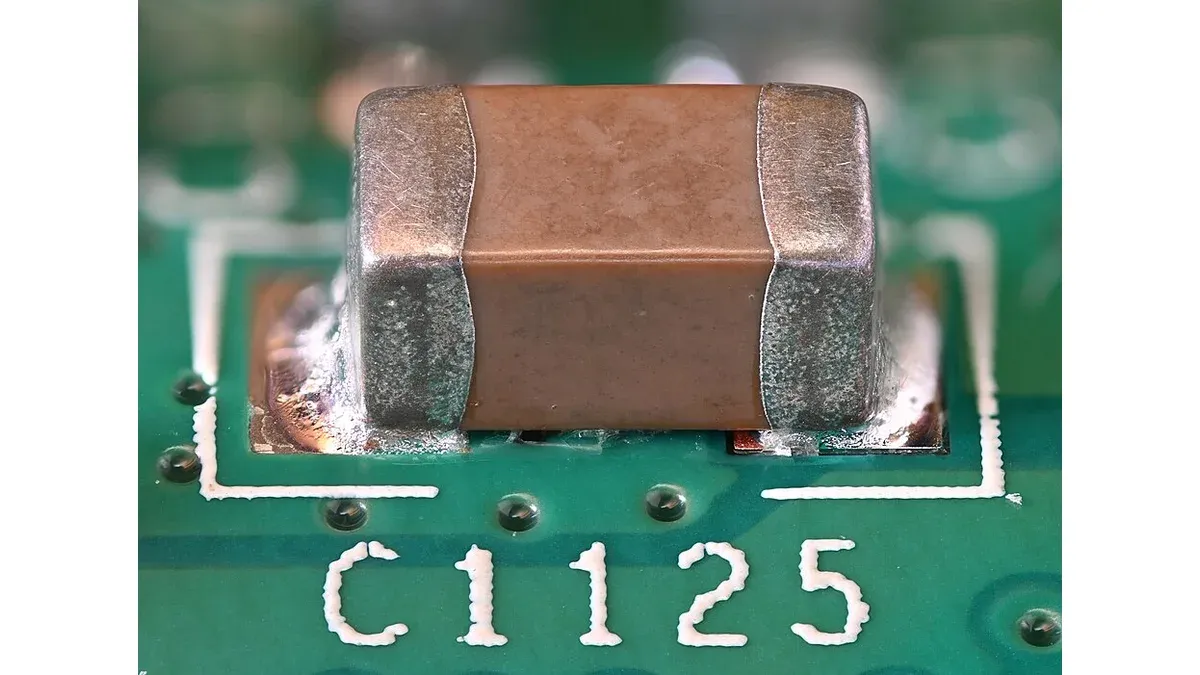
A soft-termination design adds a compliant conductive layer to the terminal structure so less board strain is transmitted into the brittle ceramic body. Its purpose is to reduce the risk of flex cracking under the conditions for which the component is specified.
TDK’s flex-crack countermeasure explanation distinguishes conductive-resin soft termination from open-mode electrodes, series designs and metal-frame structures. Those approaches should not be collapsed into a single “flexible capacitor” description on a purchase order.
In particular, resistance to crack formation and the electrical consequence of a crack are separate questions. A supplier’s soft-termination designation alone does not establish that the capacitor is crack-proof or guaranteed to fail open.
An alternate still needs its electrical comparison. Check effective capacitance under operating bias, tolerance, dielectric behavior, losses and temperature range using the MLCC DC-bias replacement method. Mechanical improvement is not a waiver of the circuit’s original requirements.
Why is a board-bend rating not an assembly qualification?
A bend-test result applies to a specified board, support span, mounting pattern and loading method. A deflection stated in millimeters cannot be transferred directly to every enclosure, PCB thickness or component location.
Murata identifies mechanical and thermal stresses as causes of ceramic-capacitor cracking and points to layout and manufacturing countermeasures. That makes the process around the capacitor part of the purchasing decision.
Consider two boards that deflect by the same distance: one bends gradually across a long span, while the other bends near a stiff connector and a mounting screw. The local strain at the capacitor can differ substantially. This is why a catalog deflection number should not become a universal assembly acceptance limit.
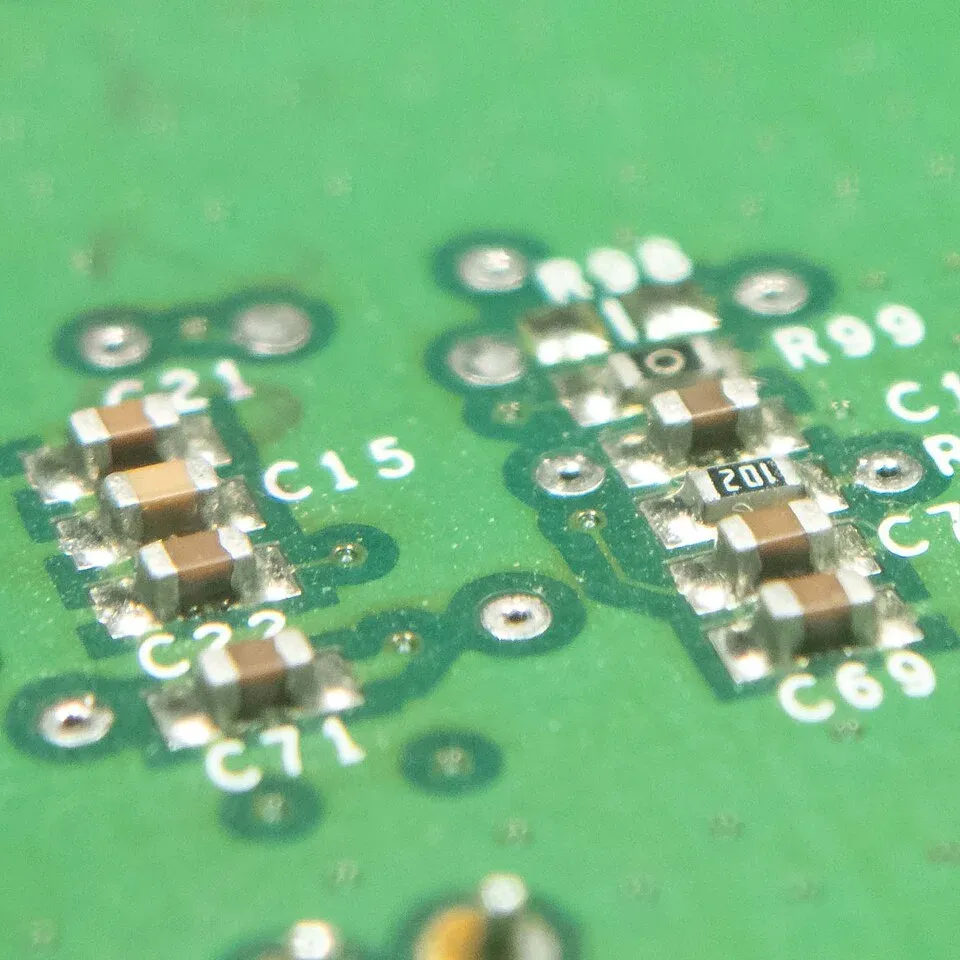
Identify where strain enters the product: panel separation, connector mating, press-fit operations, screw fastening, handling and service removal. Record component orientation and proximity to cutouts or board edges. If the investigation finds a process excursion, control that process as well as evaluating a new termination.
How should a replacement be tested for flex cracking?
Test the replacement in the representative assembly and against the identified stress mechanism, with electrical checks before and after the relevant operations. Define the sample plan and acceptance criteria according to the product’s risk and qualification requirements.
Compare the incumbent and proposed capacitor on the same board revision and assembly process. Take baseline electrical measurements, then repeat the specified checks after the suspected stress operations. Checking after depanelization, connector mating and enclosure fastening separately helps identify which stage changes the result; a single measurement at the end cannot locate it.
Use the datasheet’s measurement conditions for capacitance and insulation resistance, and the circuit’s approved limits for acceptance. An unexplained drift or failure should lead to containment and failure analysis before another substitution is approved.
The comparison record needs to answer four questions:
| Question | Record to retain | Decision it supports |
|---|---|---|
| Is the component construction correct? | Exact ordering code, termination option and supplier drawing | Confirms that the ordered variant is the one evaluated |
| Is the stress representative? | Board revision, support locations and process sequence | Connects the test to the real assembly |
| Does the circuit remain acceptable? | Capacitance and insulation-related checks under specified conditions | Detects electrical degradation relevant to the application |
| Is the suspected mechanism controlled? | Inspection or analysis appropriate to the failure investigation | Separates a passing sample from an understood corrective action |
The approved plan sets the stress sequence, sample count and limits for this assembly. Keep destructively analyzed samples out of usable production stock, and retain their findings with the electrical results.
Procurement should also resolve substitution control. A supplier delivering an ordinary termination under the same nominal capacitance and case size would remove the very feature the qualification was intended to establish. Include the full suffix and change-notification requirements in the approved-part record.
Where a supplier corrective action is involved, use the SCAR effectiveness review to connect the component change with evidence that the assembly failure mechanism has been controlled. The released purchase specification should preserve the evaluated termination suffix. If the corrective action also changes board support or fastening, those process controls must travel with the component approval.
Frequently Asked Questions (FAQ)
Can visual inspection alone rule out an MLCC flex crack?
No. A crack can be hidden beneath the termination or inside the ceramic body. The investigation method should match the suspected mechanism and may require electrical assessment or destructive analysis of selected samples.
Does soft termination mean the capacitor will fail open?
No. Soft termination addresses mechanical stress transfer. Open-mode and series-electrode designs address different failure consequences; check the exact construction and qualification evidence.
Should procurement accept the same case size as proof of compatibility?
No. Also compare termination construction, electrical characteristics, dimensions, land-pattern requirements and approved assembly conditions. The case-size code does not define the full replacement specification.