Table of Contents
A CXL card can appear in a server’s device inventory without its memory being available to the intended application. That is the first gap a purchasing trial must close. The second is whether using the added capacity improves the workload enough to justify the hardware and integration cost.
By October 13, 2026, supplier announcements provide useful evidence of progress. Procurement still needs a configuration-level trial before treating additional CXL capacity as usable production memory.
What must a server support before CXL memory is usable?
The server needs a compatible host interface, firmware configuration, device implementation and software path for the intended memory mode. Compute Express Link (CXL) support should be recorded as a tested combination, not a checkbox inferred from a PCIe connector.
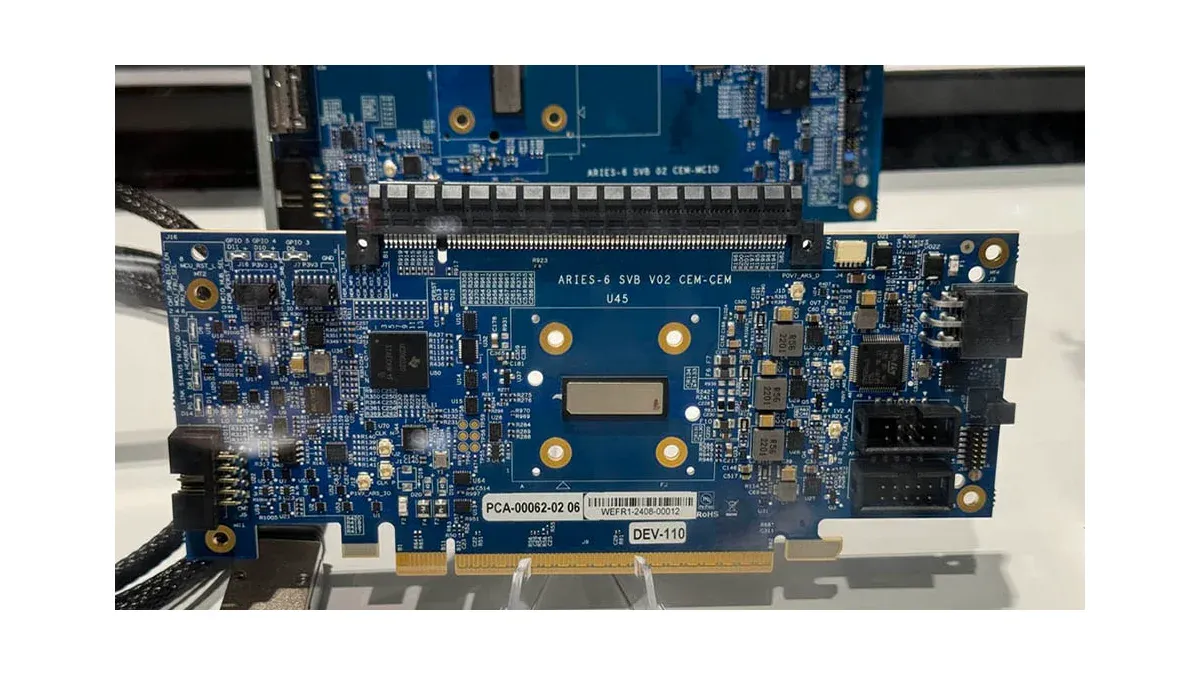
Montage announced trial production of a CXL 3.2 memory-expander controller on July 31, 2026. The company described a Type 3 controller supporting CXL.mem and CXL.io, together with development tools and initial partner validation. That establishes a vendor-reported controller milestone; it does not establish volume readiness for every module or host combination.
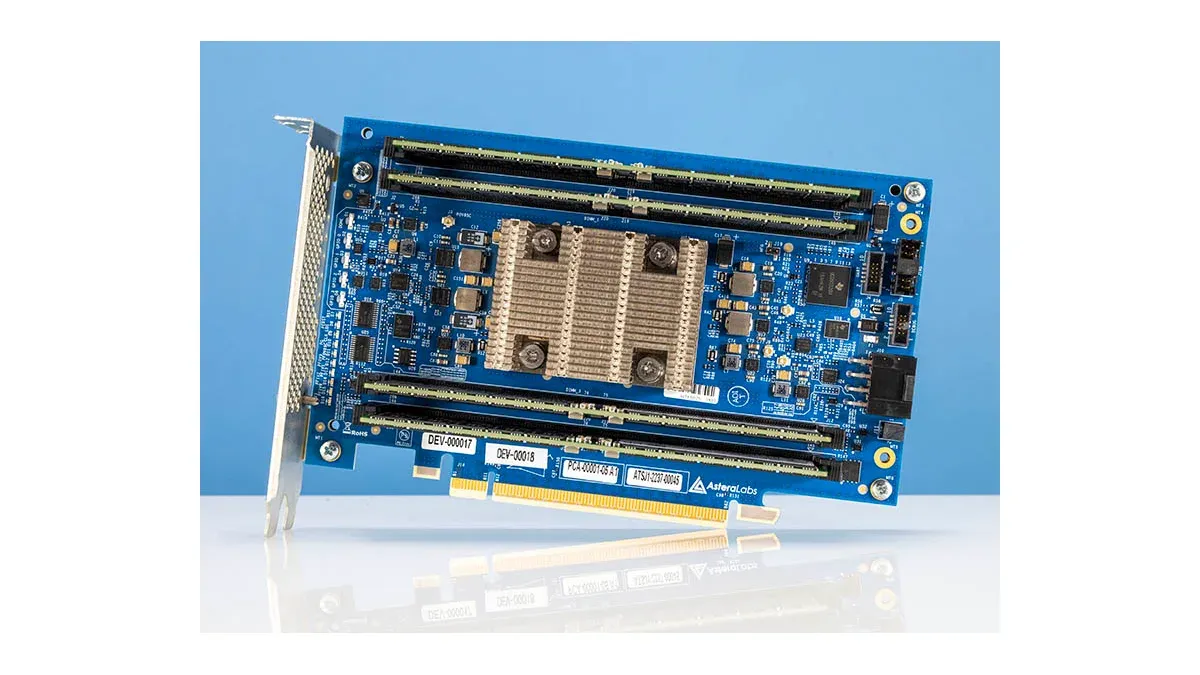
Astera Labs’ September 15, 2026 release adds a newer signal: its Leo 2 E- and P-Series address CPU-attached expansion and pooling with CXL 3.2 support. The release described sampling with hyperscaler customers. That sampling status should not be rewritten as broad production availability.
Earlier, Samsung’s June 25, 2024 announcement about Red Hat-certified CXL infrastructure described validation involving its CMM-D memory product and a specific software environment. That separate example shows why the software stack belongs in the qualification record. It is not a universal certification for all later CXL modules.
The Linux CXL memory-device documentation distinguishes PCI device enumeration from mapping device memory into the system’s physical address space. Host Managed Device Memory decoders and the supported topology participate in that mapping. Seeing the card in a device list is therefore only the first check.
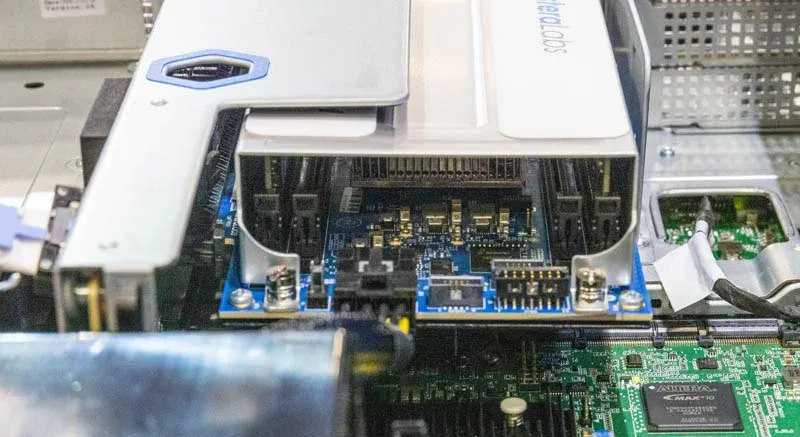
Before ordering a trial, identify the processor, supported port, firmware, operating-system build and device revision. Then have the trial demonstrate that the intended capacity is mapped, exposed in the selected software mode and accessible to the application. Retain that configuration across a restart. For the physical installation, confirm riser clearance, power and airflow as well as the connector.
How is memory expansion different from pooling?
Expansion adds memory capacity accessible to a host. Pooling introduces a managed resource that can be assigned across a supported topology. Buying an expander does not automatically provide switching, multi-host allocation or the management software needed for pooling.
The distinction changes what belongs in the purchase package. A single-host capacity trial needs a defined host-device configuration. A pooling project additionally needs a supported topology, allocation policy, management control and recovery behavior. Features advertised at the protocol level must be confirmed in the actual products and operating mode.
Keep these requirements explicit:
| Intended use | Main procurement question | Evidence beyond nominal capacity |
|---|---|---|
| Single-host expansion | Can this platform expose and use the added memory? | Supported configuration and successful memory access |
| Tiered memory | Can software place the right data in the right tier? | Placement policy and application measurements |
| Managed pooling | Can resources be assigned and recovered as required? | Validated topology, management interfaces and failure handling |
Do not describe an untested expander as a direct substitute for local DRAM. Its access path and performance characteristics are different, and the relevant comparison depends on whether the workload is capacity constrained, latency sensitive or bandwidth limited.
Designing a workload trial
Measure the application’s useful work with the intended memory-placement policy, together with latency, throughput and resource use. Peak interface speed and installed gigabytes are supporting specifications, not acceptance results.
Run three comparisons where the platform permits them: the current local-memory baseline, the same server with the expander under the default placement policy, and the expanded configuration with the intended placement policy. Keep local DIMMs, CPU settings, application version and input data fixed. This separates the effect of extra capacity from the effect of placement.
Specify the working-set size and record completed jobs or transactions, elapsed time, memory use and the service’s tail-latency measure. Include warm-up and steady state. If the baseline cannot complete the larger dataset, report that limitation rather than dividing throughput by an invented baseline result.
A hypothetical application that repeatedly spills data to storage may benefit from an added memory tier even if that tier is slower than local DRAM. A workload that already fits in local memory may show a different outcome. The trial should distinguish these cases by measuring the actual working set and storage spill, rather than treating every workload as capacity constrained.
The trial should also cover restart, error reporting, monitoring and the operational procedure for replacing a failed device. Specify which logs and counters remain accessible to the system owner and whether firmware changes require another acceptance run.
A component replacement plan should state the result required to proceed: the target dataset completes within the agreed service limits, the memory configuration survives the prescribed restarts, and operators can detect and handle faults. If the application misses its latency objective, added gigabytes alone do not justify acceptance. Trial quantities can remain separate from the production order while the placement or platform issue is resolved.
Frequently Asked Questions (FAQ)
Who should own support when the server and CXL expander come from different suppliers?
Assign an owner for reproducing and resolving host-device-software faults. Record each supplier’s supported configuration and escalation responsibilities before treating the deployment as supportable.
Can a validated CXL configuration be copied to another operating-system build?
Only after confirming support and assessing the changed software path. Keep the previous configuration as a baseline and repeat the affected workload and recovery checks before accepting the new build.
Should spare expanders be ordered before the production configuration is frozen?
Tie spare purchases to the validated hardware and firmware revisions, replacement procedure and support terms. Otherwise, a spare that matches nominal capacity may still require integration work when it is needed.