

Table of Contents
- Identify the Failed Replaceable Unit
- Compare Repair, Obsolete Stock, and Redesign
- Verify Legacy Identity and Compatibility
- Price Downtime, Not Just the Spare
- Qualify Obsolete Stock for an Industrial Repair
- Decide How Many Spares to Hold
- Trigger Redesign Before Support Disappears
- Keep Service Records Connected to the Asset
Industrial spare-parts sourcing should begin with a decision about the installed asset, not a marketplace search for a familiar model number. Verify the failed replaceable unit and its configuration, then compare three paths in parallel: repair the controlled unit, buy qualified obsolete stock, or redesign the function around a supported platform.
The correct choice depends on downtime, evidence, technical compatibility, validation capacity, installed-base size, and remaining service life. Unit price is secondary when an inexpensive but wrong revision cannot run the machine or an unverified spare creates a new failure.
Identify the Failed Replaceable Unit

Confirm the failure before buying. A stopped line blamed on a PLC card may actually involve power, backplane, I/O wiring, network, sensor, actuator, configuration, firmware, or a mechanical process condition. Preserve diagnostics and do not discard the only repairable unit during troubleshooting.
Record the hierarchy:
- plant, line, machine, and asset identifier;
- rack, slot, replaceable unit, and subassembly;
- manufacturer, full model, hardware revision, options, and serial number;
- firmware, application program, parameters, calibration, and licenses;
- connectors, I/O type, voltage, current, timing, network, and safety role;
- environmental rating, enclosure, mounting, and certifications;
- known-good comparison and failure symptoms.
A photo of the front label is rarely enough. Photograph connectors, side and rear labels, internal board numbers where authorized, and the installed rack. Export backups of software and parameters using the approved maintenance process before power cycling or substitution changes evidence.
Compare Repair, Obsolete Stock, and Redesign
| Decision factor | Repair controlled unit | Buy obsolete stock | Redesign/upgrade |
|---|---|---|---|
| Fastest possible path | If diagnosis, parts, and test are available | If exact qualified stock is real | Usually longest initially |
| Configuration risk | Existing unit can preserve identity | Revision/firmware may differ | Planned conversion required |
| Supply horizon | Limited by repair capability and donor parts | Limited by remaining market stock | Moves to supported platform |
| Quality evidence | Repair report and functional test | Source, lot, condition, inspection | Engineering validation and acceptance |
| Best fit | Repairable fault and serviceable hardware | Bounded bridge or installed-base demand | Long remaining life or shrinking support |
Use this as a screening table, not an automatic rule. Safety functions, regulated production, OEM warranties, validated processes, insurance, and local law may restrict who may repair or change equipment.
The industrial electronics sourcing solution frames component and lifecycle questions for long-service automation platforms.
Verify Legacy Identity and Compatibility
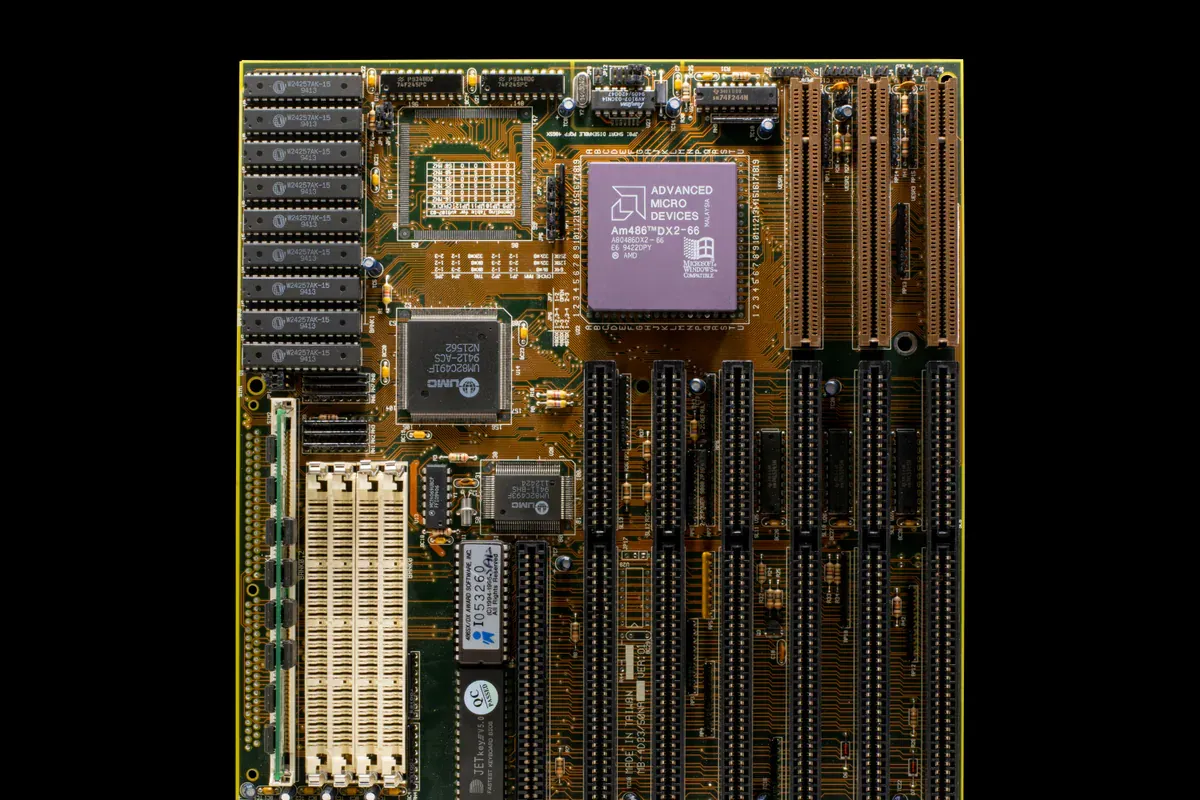
Industrial product families can retain the same marketing name while hardware, firmware, connectors, I/O isolation, communication, memory, or safety approvals change. Verify the full model, series, revision, option codes, and firmware compatibility with the installed rack and program.
For a board-level component repair, resolve the complete manufacturer part number and board revision. A replacement IC may need a particular temperature grade, package, speed, programmed content, analog behavior, or date-era compatibility. Do not infer a usable substitute from package and base number alone.
Separate three types of compatibility:
- physical: mounting, connector, keying, package, clearance;
- electrical/protocol: I/O levels, current, timing, bus behavior, fail states;
- system/configuration: firmware, application, diagnostics, safety, licenses, acceptance.
The component alternatives solution can help screen candidates. Plant engineering or the responsible machine owner must approve and validate the change.
Price Downtime, Not Just the Spare
The economic comparison should include the consequence and timing of restoration. Estimate affected production, labor, changeover, scrap, missed delivery, service, and safety exposure for each additional hour or day. Use the plant’s own approved values instead of a generic “cost per minute” claim.
Then compare total path cost:
- spare, repair, engineering, software, and license charges;
- diagnosis, inspection, testing, travel, freight, and customs;
- installation, commissioning, validation, and training;
- expected downtime and probability the path fails;
- retained inventory and excess exposure;
- recurring support and future failure risk.
A cheap obsolete module with uncertain configuration may have low invoice cost and high recovery risk. A redesign may cost more today but reduce repeated emergency purchases across a large installed base.
Qualify Obsolete Stock for an Industrial Repair

For finished units, confirm ownership, physical location, full model/revision, serial number, condition, prior use, storage, included accessories, firmware, reset or password state, and the seller’s ability to provide current images and functional test. “New old stock” needs a definition and evidence.
For electronic components, request the full MPN, manufacturer, quantity by lot, date codes, original packing condition, source records, current lot photographs, sample access, inspection plan, warranty, and remedies. The EOL component sourcing guide covers the broader last-time-buy and redesign strategy.
Use a risk-based receiving plan. Inspect identity and condition, reconcile documents, and run functional tests that represent the actual machine interfaces. A bench power-on is not necessarily proof that an I/O module will meet timing, isolation, communication, diagnostics, or load requirements.
When repair is chosen, require a fault report, replaced parts, board changes, firmware/configuration handling, cleaning, workmanship, functional test, burn-in where specified, warranty, and traceable unit identity. Keep the repaired serial number connected to the asset record.
Decide How Many Spares to Hold

Size the spare pool from the installed base and recovery model. Useful inputs include:
- number and criticality of installed units;
- failures and no-fault-found events by revision;
- repair yield and turnaround;
- replenishment lead-time range and source confidence;
- commonality across machines and sites;
- shelf-life, battery, capacitor, MSL, ESD, and storage needs;
- time to redesign, validate, and deploy;
- acceptable downtime probability.
The ISA Certified Automation Professional classification includes installed-base lifecycle/support assessment and the need to determine spare parts from installed base and failure probability. That principle is more defensible than applying one months-of-supply target to every controller.
Rotate and test stored spares when the equipment and manufacturer guidance require it. Preserve firmware, licenses, programs, removable memory, batteries, accessories, and test fixtures. Inventory that cannot be configured or validated is not a recovery resource.
Trigger Redesign Before Support Disappears
Create redesign triggers while repair and stock paths still work. Examples include a declining repair yield, discontinued test capability, unavailable firmware tools, repeated counterfeit-risk exposure, one remaining qualified source, battery or capacitor aging, no supported security updates, or an installed base whose remaining service horizon exceeds the spare pool.
The semiconductor PCN review workflow can capture component-level notices. Finished industrial equipment may require separate OEM lifecycle monitoring because internal component changes are not always visible to the plant.
Plan the redesign by function and interface. Preserve I/O lists, timing, network maps, safety requirements, recipes, calibration, alarms, operator behavior, service procedures, and rollback. Pilot on a representative machine before removing the only supported spare from inventory.
Keep Service Records Connected to the Asset
For every intervention, retain the asset, failed unit, installed replacement, serial and revision, source, incoming evidence, repair report, firmware/configuration, test results, approver, date, and disposition of the removed unit. This history improves diagnosis and prevents incompatible spares from returning to stock.
Use the industrial automation semiconductor sourcing guide for active-production component planning. Installed-base spares require a different view: each purchase must restore a known machine today without extending an unsupported architecture indefinitely.
Repair, obsolete stock, and redesign are not competing ideologies. They are time horizons. A repair can restore this shift, a qualified spare can bridge the next year, and a redesign can remove the recurring constraint. The sourcing plan is strongest when all three are compared before the emergency makes the choice.
Frequently Asked Questions (FAQ)
How do I source obsolete industrial electronic spare parts?
Start with the machine and replaceable-unit identity, then verify the manufacturer, full model and revision, firmware, options, connectors, I/O, safety role, and installed configuration. Search OEM and authorized support, qualified repair, approved obsolete stock, and redesign paths in parallel.
When is repair better than buying an industrial spare?
Repair is a strong candidate when the exact unit is identifiable, the fault can be diagnosed, critical components and test capability are available, configuration can be preserved, and the repair can be validated within the required downtime. Safety, warranty, and certification constraints may limit it.
How many obsolete PLC or control-board spares should a plant hold?
Base the quantity on installed population, failure and repair history, criticality, repair turnaround, replenishment uncertainty, commonality, shelf-life and storage controls, redesign lead time, and the acceptable probability of downtime. Avoid a universal months-of-stock rule.
Can a newer PLC module replace an obsolete one?
Only after validating electrical and mechanical interfaces, I/O behavior, timing, network protocol, firmware and program conversion, diagnostics, safety functions, environmental ratings, certifications, and the machine acceptance plan. A matching form factor is not enough.