
Table of Contents
- The Decision in One Table
- Define the Model at BOM-Line Level
- Compare Cash, Liability, Lead Time, and Visibility
- Keep Selected Components Under OEM Control
- Quote Terms Can Reverse the Apparent Price
- Define Ownership and Traceability at Receiving
- Build a Hybrid Sourcing Matrix
- Settle Operating Questions Before Contract Award
Turnkey and consigned component sourcing are not simply two prices for the same PCB assembly. They allocate buying authority, working capital, inventory exposure, traceability, shortage response, and material liability differently. A lower assembly quote can become expensive if the model creates excess stock, unclear ownership, or a missing part that neither party was assigned to manage.
Most production programs benefit from a line-by-line hybrid decision. Let the contract manufacturer source stable, replaceable items where its scale helps. Keep customer-controlled, allocated, programmed, or qualification-sensitive material under explicit OEM responsibility. Then define the transfer points so the model works at receiving and not only in the proposal.
The Decision in One Table
| Dimension | Full turnkey | Customer consigned | Hybrid |
|---|---|---|---|
| Purchasing owner | Contract manufacturer | OEM/customer | Assigned by BOM line |
| Working capital | Usually embedded in CM terms | OEM funds material | Shared by category |
| Supplier visibility | Depends on agreement | Direct for consigned lines | Must be integrated |
| Shortage action | CM leads | OEM leads | Named owner per line |
| Excess exposure | Contract dependent | Primarily OEM | Assigned before buy |
| Traceability handoff | CM-to-OEM | OEM-to-CM | Both directions |
| Best fit | Stable, available, standard material | Controlled or already-owned material | Mixed-risk production BOMs |
This table describes common operating models, not automatic legal outcomes. The quotation, manufacturing agreement, quality agreement, purchase orders, acknowledgments, and inventory records determine who owns material and who bears a specific loss.
Define the Model at BOM-Line Level
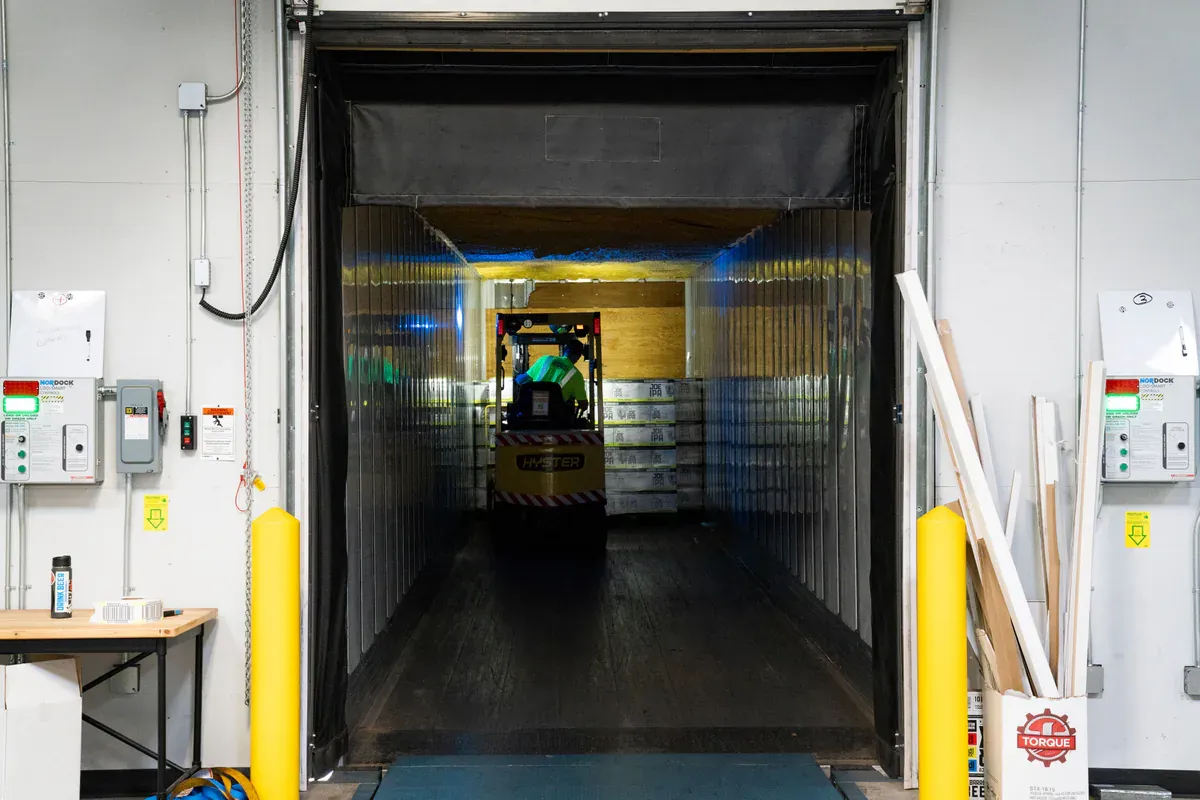
Under full turnkey, the contract manufacturer procures the released components, receives them, controls inventory, and consumes them in assembly. The customer pays through the assembly price or an agreed material schedule. The model can consolidate transactions and let the CM use negotiated supply relationships.
Under consignment, the OEM buys and delivers some or all components to the CM. The CM stores, verifies, issues, and reconciles customer-owned material. This preserves customer purchasing control but creates handoffs, freight, inventory reconciliation, and possible schedule gaps between material and production.
Hybrid or partial turnkey assigns responsibility by line. One PCB might use CM-procured passives and connectors, OEM-consigned processors and memory, and a separately controlled programmed security device. This is usually more precise than declaring the entire project “turnkey.”
A controlled BOM sourcing workflow needs an ownership field, buyer, approved source, replacement authority, replenishment trigger, and disposition rule for every line. If either party sees a blank, the shortage belongs to the program even if the contract later allocates blame.
Compare Cash, Liability, Lead Time, and Visibility
Turnkey moves much of the purchasing workload to the CM, but it does not make inventory free. Ask how material margin, minimum buys, order multiples, non-returnable commitments, attrition, safety stock, exchange rates, and financing are included. Determine when the OEM becomes responsible for inventory bought against a forecast or schedule.
Consignment gives the OEM direct visibility into its purchases, but it funds stock earlier and manages inbound coordination. It may pay freight twice, first to its warehouse and then to the CM, unless the supplier ships directly under a controlled customer-owned process. It also retains exposure when the design changes or demand falls.
Compare the models on one total-cost basis:
- purchasable rather than requested quantity;
- component, freight, duty, inspection, storage, and handling cost;
- cash timing and inventory carrying period;
- expected attrition, test samples, and permitted overage;
- cost and ownership of excess or obsolete material;
- staff time for sourcing, expediting, receiving, and reconciliation;
- downtime exposure when one assigned buyer misses a line.
The electronic component RFQ comparison guide explains how to normalize MOQ, MPQ, availability, and landed cost before comparing offers.
Keep Selected Components Under OEM Control
Some lines justify direct customer control even when the CM can source most of the BOM. Candidates include material already owned by the OEM, components under a direct supply agreement, allocation tied to the customer’s forecast, programmed or provisioned devices, high-value processors, long-lead custom parts, and approved legacy lots that cannot be replaced easily.
Medical and automotive programs may add strict configuration, documentation, and change controls. The medical-device sourcing solution and automotive sourcing solution describe the different review questions. The point is not that every regulated component must be consigned. It is that the sourcing owner must preserve the program’s approved configuration and evidence.
The CM may be better placed to buy widely available passives, hardware, standard connectors, and common protection devices, especially when it aggregates demand. Even then, the released AML, acceptable packaging, date-code rules, and notification expectations must be explicit.
Quote Terms Can Reverse the Apparent Price

A turnkey assembly price may assume the OEM accepts alternate manufacturers within a commodity class, reimburses all minimum buys, or purchases remaining stock when the forecast changes. A consigned price may exclude incoming inspection, repacking, storage, line-side handling, shortage administration, and excess return.
Settle these questions before award:
- Which BOM revision and AML control purchasing?
- Who may approve a manufacturer, suffix, package, or lifecycle change?
- When may the CM place non-cancelable orders?
- Who owns MOQ overage, attrition, scrap, and unused material?
- What happens when a customer forecast does not become a release?
- Who pays for inspection, testing, repacking, and dry handling?
- Which inventory reports will show owner, lot, location, and status?
- How are rejected, suspect, excess, and obsolete parts disposed?
The ECIA NCNR guideline recommends clear written communication and customer acknowledgment of NCNR status. In a turnkey program, the manufacturing agreement should also say when a supplier commitment becomes a customer liability.
Define Ownership and Traceability at Receiving
Consigned material needs a shipment record that identifies the OEM, CM site, program, BOM revision, PO or transfer reference, complete part number, quantity, packing, date/lot codes, and required documents. The CM should record discrepancies before merging the shipment with line-side stock.
Turnkey material needs the same identity discipline even if the CM owns it before consumption. The OEM’s access to source and lot information should match program risk and the quality agreement. “CM supplied” is not a useful traceability category when a field return or PCN review needs the actual manufacturer and lot.
Keep material status visible: awaiting inspection, accepted, quality hold, allocated to work order, issued, returned, scrapped, or excess. For moisture-sensitive parts, ownership must not break the link between the package, moisture-barrier condition, exposure history, and remaining floor life. The MSL receiving guide covers that handoff in detail.
Build a Hybrid Sourcing Matrix

Score each BOM line by supply availability, substitutability, value, lifecycle, lead time, programming, qualification, documentation, and forecast certainty. Then assign the model and owner.
| BOM condition | Likely starting model | Required control |
|---|---|---|
| Stable commodity with multiple approved sources | Turnkey | Released AML and change notice |
| Direct allocation under OEM agreement | Consigned | Forecast, transfer, and replenishment record |
| High-value or programmed device | Consigned or hybrid | Identity, custody, and attrition control |
| Long-lead custom part | Case-specific | NCNR and excess-liability approval |
| Available but lifecycle-sensitive IC | Hybrid | PCN/EOL monitor and alternate path |
| Open-market bridge lot | Customer-controlled exception | Lot evidence and risk-based inspection |
Run the matrix during NPI and again before volume release. A line can move from OEM control to turnkey after the CM qualifies a stable source, or move back when allocation, obsolescence, or a direct agreement changes the economics.
Settle Operating Questions Before Contract Award
The contract should define forecast cadence, firm and flexible zones, material authorization, inventory reports, shortage escalation, source-change authority, inspection, nonconformance, audit access, warranty, and end-of-program disposition. The quality agreement should define records and acceptance; it should not be left to a price appendix.
The ODM semiconductor sourcing guide addresses broader governance when design and sourcing responsibilities also sit with an external partner. The site’s electronic component sourcing solutions can support exact-part, BOM, shortage, and alternative searches within whichever commercial model the OEM has chosen.
The best model is the one every function can operate. If purchasing ownership, evidence, and liability are visible line by line, turnkey and consignment become tools. If they are left as sales labels, the missing component will expose the ambiguity at the worst possible time.
Frequently Asked Questions (FAQ)
What is the difference between turnkey and consigned PCB assembly?
In a turnkey model, the contract manufacturer normally buys specified components and manages them through assembly. In a consigned model, the customer supplies some or all components. A hybrid model assigns sourcing responsibility line by line. The contract and purchase records determine actual ownership, liability, and acceptance terms.
Is turnkey component sourcing always cheaper?
No. Turnkey can reduce transaction and handling work, but the quoted price may include material margin, financing, attrition, minimum buys, and risk. Compare total landed and lifecycle cost on the same demand, quality, traceability, and inventory assumptions.
Which electronic components should an OEM consign?
Consignment is often considered for customer-owned stock, allocated or long-lead parts, programmed devices, high-value items, approved legacy lots, and components tied to direct manufacturer agreements. The choice should follow program risk and contract terms rather than a fixed list.
Can one PCB assembly use both turnkey and consigned components?
Yes. A hybrid model can assign stable commodities to the contract manufacturer while the OEM controls constrained, customer-specific, high-value, or qualification-sensitive lines. Both parties need one controlled BOM and clear handoff records.