

Table of Contents
- Define the Procurement Model Before Comparing Quotes
- Make the AVL an Enforceable Change-Control Record
- Separate Semiconductor Risk by BOM Tier
- Contract for Allocation Visibility and Inventory Control
- Preserve Traceability Through Every Purchasing Route
- Assign Export-Compliance Tasks Without Oversimplifying Liability
- Establish a Shortage Escalation Path Before Production
A smart-hardware ODM can design the product, purchase semiconductors, build the units, and manage logistics, but that convenience does not require the brand to surrender control of the BOM. Control comes from a precise operating model: who selects each part, who buys it, who owns inventory, who may approve a substitute, and what evidence the brand receives.
The right model differs by program. A high-volume consumer device may benefit from ODM purchasing leverage, while a regulated, long-life, or IP-sensitive product may keep critical MCUs, memory, security ICs, or RF components under brand-controlled procurement. The goal is not to force every part into one channel; it is to make every decision visible and auditable.
Define the Procurement Model Before Comparing Quotes
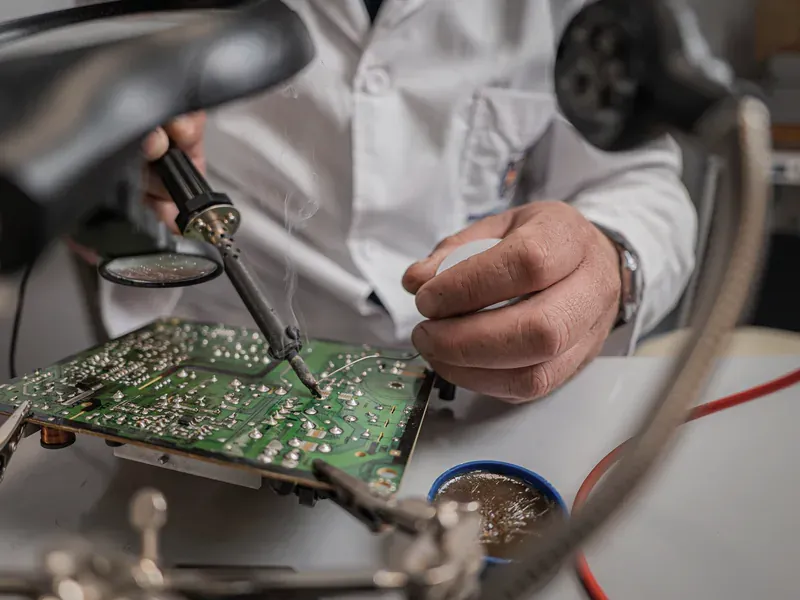
Terms such as IDH, ODM, turnkey, consignment, and EMS are used differently across suppliers. Replace the label with a responsibility matrix in the request for quotation and manufacturing agreement.
| Decision | Brand-controlled | ODM-controlled | Hybrid option |
|---|---|---|---|
| Architecture and part selection | Brand design authority approves every line | ODM selects within agreed performance and cost targets | Brand controls critical lines; ODM controls commodities |
| Purchase orders | Brand buys and consigns | ODM buys and resells in finished-goods price | Directed-buy or nominated supplier |
| Allocation and expedites | Brand manages manufacturer commitments | ODM allocates across customer programs | Joint forecast and named escalation process |
| Inventory ownership | Brand retains title | ODM owns until finished-goods transfer | Brand-owned strategic buffer at ODM or third-party hub |
| Change approval | Brand approves all changes | ODM approves within a defined envelope | Risk-tiered approval thresholds |
The quote should separate material, conversion, non-recurring engineering, tooling, test, logistics, and other charges. If component prices are embedded in a single finished-goods price, define the benchmark, currency, effective date, purchase-price-variance sharing, and audit method. Otherwise, neither party can distinguish a market price change from a margin change.
For the narrower decision about who buys each BOM line, use the turnkey, consigned, and hybrid component sourcing comparison to assign inventory, shortage, traceability, and excess responsibility before contract award.
Our BOM cost-risk framework can be used to rank the lines that warrant brand control.
Make the AVL an Enforceable Change-Control Record
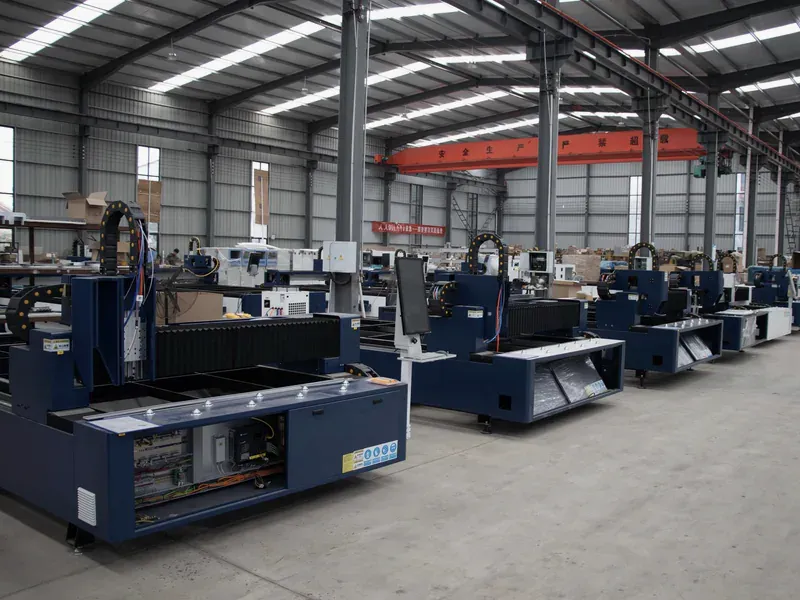
An approved vendor list (AVL) should identify the manufacturer and exact ordering code, not a generic description such as “32-bit MCU equivalent.” For configurable devices, it should also capture firmware, mask, memory size, temperature grade, package, packing method, and programmed configuration.
Use at least three statuses:
- Approved: qualified for normal production in the specified application.
- Conditionally approved: permitted only for a named site, region, build, date-code range, or temporary shortage.
- Not approved: requires engineering and quality disposition before purchase or use.
The substitution clause should require the ODM to submit the reason, manufacturer change notice where applicable, electrical and mechanical comparison, lifecycle status, samples, validation plan, cost impact, supply-path evidence, and proposed effective lot. Silence should not count as approval.
Set notification periods by change type rather than promising a universal 90-day window. A manufacturer-controlled product discontinuance has a different response window from an ODM-proposed commercial alternate. The agreement should state that no unapproved material may be loaded, reworked, relabeled, or shipped while disposition is pending.
Separate Semiconductor Risk by BOM Tier
For nonvolatile logging memory, require the ODM to document the write workload and power-loss recovery method. The FRAM versus EEPROM comparison shows why endurance, retention temperature, and metadata writes matter, and why example parts with different interfaces are not automatic alternates.

Not every component needs the same control. Classify lines by design lock-in, shortage impact, authenticity exposure, and requalification time.
| Tier | Typical components | Recommended control |
|---|---|---|
| A: architecture-critical | Application processor, MCU, FPGA, security IC, custom PMIC, memory tied to firmware | Brand-approved AVL, direct lifecycle monitoring, no substitution without validation |
| B: performance-critical | RF front end, sensors, connectivity, clocking, display and power devices | Pre-qualified alternates with application-specific limits |
| C: interface and support | Standard transceivers, regulators, amplifiers, protection devices | Parametric envelope plus sample validation where necessary |
| D: low-risk commodity | Selected passives and hardware | ODM-controlled within specification and quality requirements |
Tier C does not mean specification-free. An ODM proposing a mixed-voltage bus change should document pull-ups, capacitance, topology, and startup behavior using the I2C level-shifter selection guide. A regulator alternate should be screened with the LDO selection guide for dropout, output capacitor stability, PSRR at the relevant frequency, noise, and thermal margin.
Tiering also clarifies shortage actions. A broker quote for a Tier A device should trigger a formal risk review, while a qualified Tier D alternate may follow a faster approval path. The multi-channel sourcing playbook provides a channel framework for authorized, direct, and independent supply.
Corporate affiliation should be verified rather than inferred from old market reports. Wingtech obtained a controlling stake in Nexperia in 2020, not 2024. Nexperia’s February 2026 company update also describes Dutch court measures that suspended former leadership and placed certain Wingtech voting rights under independent administration. A procurement policy built around “the ODM owns this semiconductor company” can therefore become inaccurate quickly. Verify the current legal seller, manufacturer, warranty, and authorized channel for the exact part.
Contract for Allocation Visibility and Inventory Control
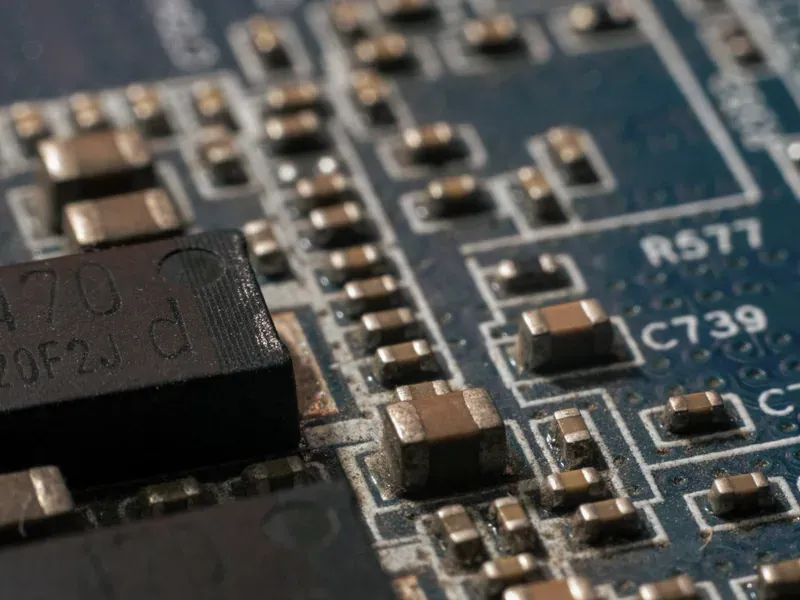
During allocation, the ODM sees commitments across its customer base while each brand sees only its own shortages. Close that information gap with regular evidence rather than an abstract promise of priority.
For Tier A and B lines, require a monthly or agreed-cadence report containing:
- Forecast, firm demand, purchase-order quantity, acknowledged quantity, and promised date.
- Manufacturer or authorized-distributor name and the ODM purchasing entity.
- On-hand, work in process, in transit, allocated, safety stock, and excess quantity.
- Date code, lot code, location, ownership, and quarantine status where material is lot-controlled.
- Open product changes, last-time-buy dates, expedite requests, and recovery actions.
If the brand funds strategic inventory, the contract should address title, physical segregation, identification, cycle counts, insurance, loss, aging, shelf life, authorized consumption, transfer between sites, and return at termination. “Bonded stock” is not enough unless the records show whose stock it is and who can release it.
Forecast rules should match the component channel. Define the firm, flexible, and planning horizons; cancellation liability; upside quantities; and how an ODM may place non-cancellable orders. Avoid inventing a universal 26-week or 13-week window because manufacturers and part families use different commercial terms.
Preserve Traceability Through Every Purchasing Route
When the ODM buys material, the brand still needs evidence sufficient for its quality system and end market. Specify the document chain before the first shortage.
For authorized purchases, the record can include the manufacturer, authorized distributor, ODM purchase order, packing label, receipt record, and production-lot consumption. For an independent purchase, add seller identity, ownership and chain-of-custody evidence, risk assessment, photos, inspection and test requirements, sample retention, and formal release authority.
Do not describe an AS6081-certified seller or an ISO/IEC 17025-accredited laboratory as proof that a lot is authentic. AS6081 concerns a distributor’s counterfeit-avoidance system. ISO/IEC 17025 accreditation applies to a laboratory and the tests within its accredited scope. The buyer must specify the methods and acceptance criteria needed for the application.
Audit rights should reach the records and subcontractors that matter. At minimum, cover receiving, quarantine, storage, programming, kitting, line loading, nonconforming material, return-to-vendor handling, scrap, and traceability between a finished serial number and component lot.
Our supplier qualification framework can be adapted to an ODM and its nominated distributors.
Assign Export-Compliance Tasks Without Oversimplifying Liability
Export controls do not apply only because an ODM is located in a particular country, and responsibility does not automatically “follow the brand.” Requirements depend on jurisdiction, classification, the roles of the parties, destination, end user, end use, technology access, and subsequent reexport or transfer.
The agreement should assign who will:
- Obtain and maintain the current classification for hardware, software, and technology.
- Screen purchaser, intermediate consignee, ultimate consignee, end user, addresses, owners, and other relevant parties.
- Determine licensing requirements and obtain the authorization assigned to that party.
- Collect end-use and end-user statements and resolve red flags.
- Control technical-data access by ODM employees and subcontractors.
- Approve freight routes, third-country transfers, returns, repairs, and reexports.
- Retain records and notify the other party of classification, ownership, routing, or end-use changes.
The BIS export-compliance toolkit emphasizes jurisdiction, classification, licensing, end-use and end-user due diligence, and screening throughout the authorization process. The Consolidated Screening List is useful, but a clear result does not eliminate item-based, end-use, destination, sanctions, or knowledge-based restrictions.
This section is an operating checklist, not a legal classification for a particular product or transaction. Export counsel or qualified compliance personnel should review controlled programs.
Establish a Shortage Escalation Path Before Production
A workable shortage process has named decision owners and evidence gates:
- The ODM reports the constrained part, affected build, on-hand coverage, current commitments, and source evidence.
- Procurement checks authorized-channel recovery, rescheduling, alternate packages, and demand changes.
- Engineering reviews already qualified alternates and estimates validation for any new candidate.
- Quality and compliance set channel, inspection, test, documentation, and release requirements.
- Commercial teams approve premiums, cancellation liability, and residual inventory ownership.
- The change board records the decision and the specific lots or builds covered.
An independent distributor can be one option in that sequence, particularly for obsolete or constrained original parts. It should not become an undisclosed sub-tier behind the ODM. The brand and ODM need to know the seller, supply path, lot identity, evidence package, and approval scope before the material reaches the line.
The strongest ODM program is therefore not the one with maximum brand control or maximum factory autonomy. It is the one where responsibility, evidence, and approval rights are proportional to BOM risk, and where both parties can reconstruct every critical sourcing decision after the fact.
Frequently Asked Questions (FAQ)
Who controls the semiconductor BOM in an ODM program?
The contract and operating model determine control. A turnkey ODM may buy material, but the brand can still retain design authority through an approved manufacturer list, written substitution approval, audit rights, and access to purchase and inventory evidence.
Can an ODM substitute an equivalent semiconductor during a shortage?
Only under the change process agreed with the brand. The contract should require an engineering comparison, samples, validation evidence, written approval, updated manufacturing records, and traceability before an alternate enters production.
Should the brand own buffer inventory held at the ODM?
Ownership depends on the commercial model, but the agreement should identify title, location, segregation, insurance, consumption rules, aging, excess liability, audit rights, and what happens if the ODM or program relationship ends.
Does using an ODM transfer export-compliance responsibility to the factory?
No blanket transfer should be assumed. Obligations depend on the item, jurisdiction, exporter and other transaction roles, destination, end user, end use, and reexport path. The parties should assign tasks contractually while each retains the legal responsibilities that apply to it.