Table of Contents
The October 2026 interconnect announcements give AI infrastructure teams more options for links that are becoming difficult to route in copper. They also create an easy purchasing mistake: comparing a sampled cable DSP with a future optical cable as though both were finished, interchangeable products.
For a 1.6T active cable program, define the host, routed length and connector power envelope before choosing an electrical or optical implementation. Keep development samples separate from the production cable list.
What changed in 1.6T active cables at OCP 2026?
Suppliers announced progress in both longer-reach active copper and a different optical cable architecture. The announced availability stages remain distinct.
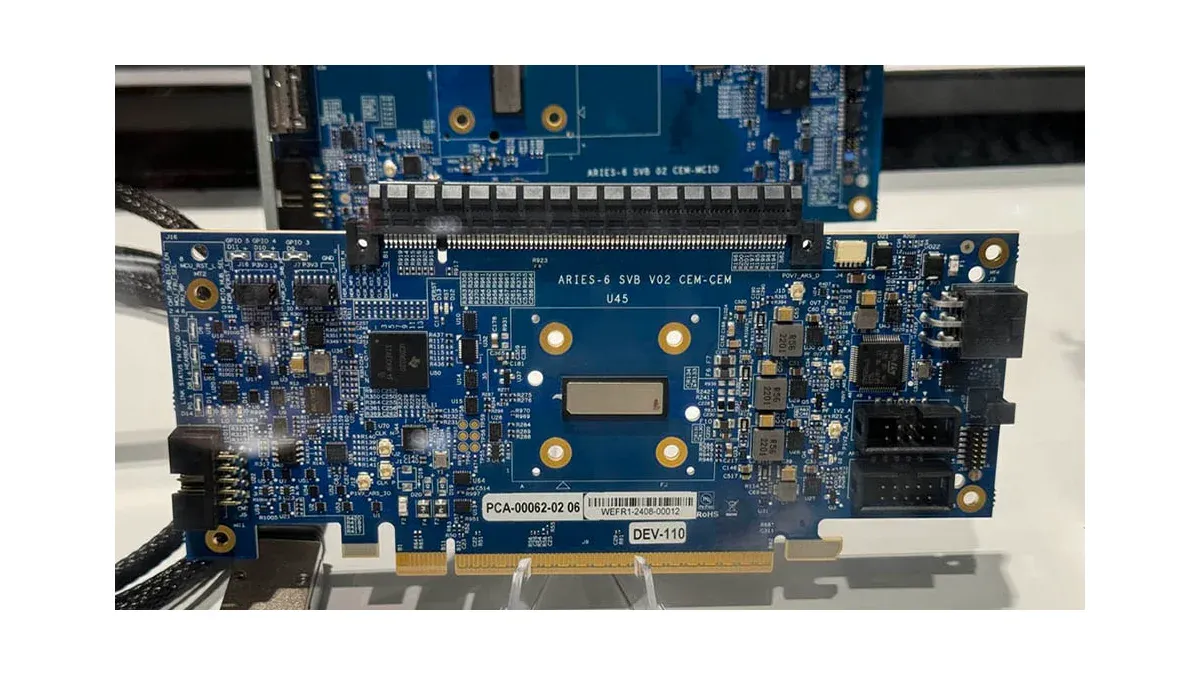
On October 13, 2026, Marvell announced its second-generation Alaska A 1.6T AEC DSP, with eight 224G PAM4 lanes and copper reach exceeding six meters. Marvell stated that the device was sampling to customers. Its announcement concerns silicon for cable implementations, not universal availability of every finished cable configuration.
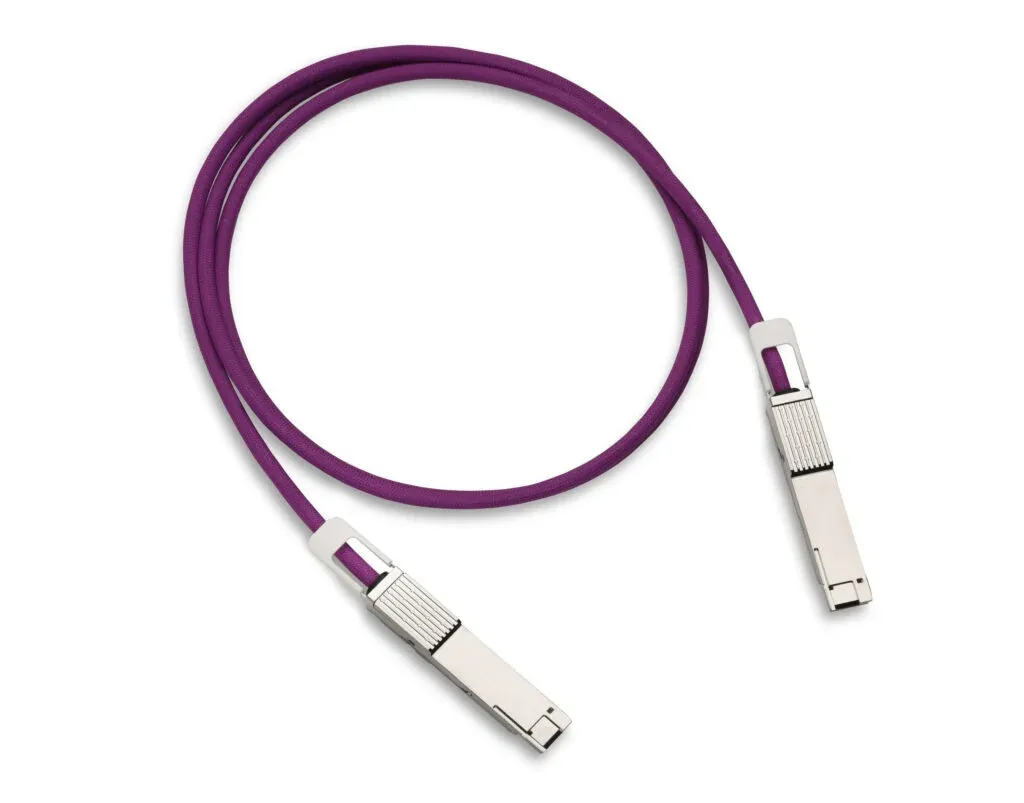
On October 12, 2026, Credo described its 1.6T ZeroFlap active light cable. Credo stated targets of up to 50 meters and 12 W per cable end, using parallel micro-emitter optical channels. The company said the solution would ship in 2027. These remain supplier plans and design targets pending shipment and system qualification.
The procurement implication is a wider evaluation set for 2027 rack and row layouts. It is too early to assign the same delivery readiness to these two announcements.
When should a buyer compare AEC, ALC and conventional optical links?
Compare them when the installed route, host support or thermal envelope puts the current cable choice near its limit. A longer route is not automatically an optical purchase; it is a reason to compare qualified assemblies against the same requirements.
An active electrical cable carries data over copper with active signal conditioning. An active optical cable uses an optical path between its electrical connector ends. Credo’s ALC is a particular parallel-optical implementation; the name does not establish compatibility with other optical cable assemblies. The complete link specification matters more than the acronym.
| Requirement | AEC review | ALC or other optical-cable review |
|---|---|---|
| Routed distance | Cable assembly’s tested reach, gauge and bend limits | Supported reach, bend radius and optical-path handling |
| Host compatibility | Electrical lanes, breakout mapping, firmware and management | The same host checks plus the complete optical architecture |
| Port power | Full connector-end consumption and thermal limits | Full connector-end consumption and thermal limits |
| Service operation | Removal access, cable weight and connector strain | Handling, identification and replacement procedure |
| Supply readiness | Orderable cable revision and qualified host list | Distinguish development roadmap from released assembly |
A 5.5-meter measured rack route plus a 0.7-meter service loop requires 6.2 meters of cable. That example already exceeds a nominal six-meter purchase assumption. Obtain a qualified assembly at the actual required length; do not treat an “exceeding six meters” silicon statement as approval of an arbitrary cable and host combination.
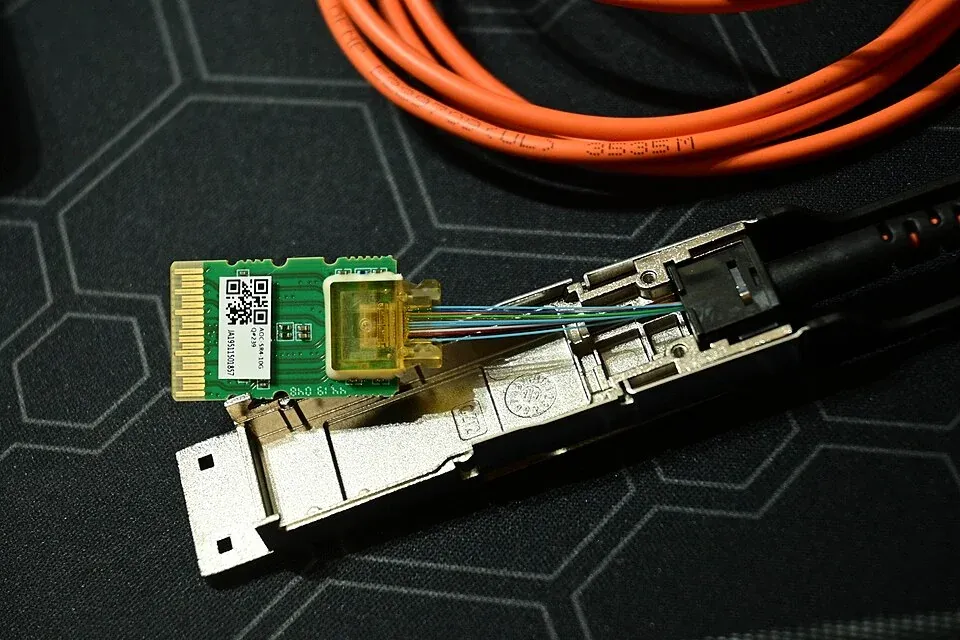
The physical route also affects maintenance. A cable that meets the electrical target but blocks module removal or strains a connector can increase service time across an entire rack.
How should cable power and reliability claims be compared?
Use identical boundaries and operating conditions. Compare complete cable ends, the same link mode and the same thermal conditions before calculating the rack-level impact.
Credo’s announced 12 W per-end target would imply 24 W for the two ends of one link, or 1.536 kW for 64 such links, if that target applies to the selected operating point. This arithmetic excludes switch ASICs, NICs and cooling overhead. It is a planning scenario, not a measured rack saving.
Marvell’s announcement gives a DSP power figure of 12.8 W. That component-level figure is not a complete cable-end figure and should not be subtracted from Credo’s target to declare a winner. Ask each cable vendor for the assembly power at the required traffic mode, temperature and firmware revision.
Similarly, a supplier MTBF target does not specify the number of link interruptions a deployment will experience. Agree on error counters, link resets, recovery time and acceptance under representative traffic. Record pre-FEC and post-FEC errors where the platform exposes them; a link that stays up can still have an unacceptable correction burden or intermittent recovery behavior.
Separate the evaluation order from the production commitment
An evaluation order should identify sample hardware, software dependencies, the host matrix and the measurements needed to proceed. A production commitment needs a controlled cable revision, released firmware, change notification and delivery terms.
Our forward-looking view is that parallel optical approaches could expand the options for routes beyond practical copper reach. That case weakens if promised assembly power, host support or shipment timing misses the deployment window. Maintain a qualified fallback until the chosen alternative passes the actual host and route tests.
For the architecture distinction, the co-packaged optics guide covers optics integrated around the switch rather than pluggable cable procurement. If the bottleneck is obtaining components for a cable design, bring the approved DSP or supporting-device BOM, sample phase and required date to SupplyICs component sourcing; a cable-level substitution still requires the cable and system owners’ qualification.
Frequently Asked Questions (FAQ)
Is an ALC interchangeable with any cable using the same connector shell?
No. Host electrical interfaces, lane mapping, management behavior, firmware support and the supported cable assembly must match. Mechanical fit is only one requirement.
Should DSP power be compared directly with cable-end power?
No. Confirm the measurement boundary. A DSP figure can exclude other electronics and losses included in a complete cable-end figure. Compare both ends under the same traffic and temperature conditions.
Does a semiconductor sampling announcement mean finished cables are in volume supply?
No. Sampling identifies a development milestone for that device. The cable manufacturer still needs an orderable assembly, qualified firmware, host compatibility and a delivery commitment.