

Table of Contents
- What a BOM Sourcing Service Should Produce
- Clean the Input Before Asking for Price
- Required Fields for Every BOM Line
- Separate Exact Match, Approved Alternate, and Engineering Review
- Normalize Quotes Into One Awardable View
- Handle Lifecycle, Shortage, and Quality Exceptions
- Use a BOM Sourcing Service Scorecard
- Retain the Decision After the Award
A useful BOM sourcing service turns a controlled bill of materials into an awardable purchasing plan. It should not return a spreadsheet full of prices that forces procurement to rediscover which suffix was quoted, whether stock is real, or which line silently changed manufacturers. The output must preserve exact component identity, surface exceptions, normalize commercial terms, and connect every award decision to evidence.
That result depends as much on the buyer’s input as the supplier’s search. A sourcing team cannot resolve an incomplete order code, undefined alternative policy, or missing target date by guessing. The strongest workflow therefore has two contracts: a clear input specification and a clear return specification.
What a BOM Sourcing Service Should Produce
A raw quote answers, “What did this supplier offer?” An award package answers, “What can the buyer order, under which assumptions, and who approved every exception?” The difference is operational. An award package can be handed to procurement, engineering, quality, receiving, and finance without each function building its own interpretation.
The package should include four linked views:
- a line-level quote normalized to the same currency, delivery point, and quantity basis;
- an exception queue for identity, lifecycle, availability, quality, and commercial issues;
- an award recommendation that shows why each line was selected or withheld;
- a purchase-order handoff with the accepted part, source, terms, records, and approvals.
Tools such as Octopart’s discussion of BOM sourcing at scale emphasize structured part data and inventory comparison. That is the starting point. A production buyer also needs revision control, approval boundaries, and a way to distinguish a searchable offer from a releasable order.
Clean the Input Before Asking for Price
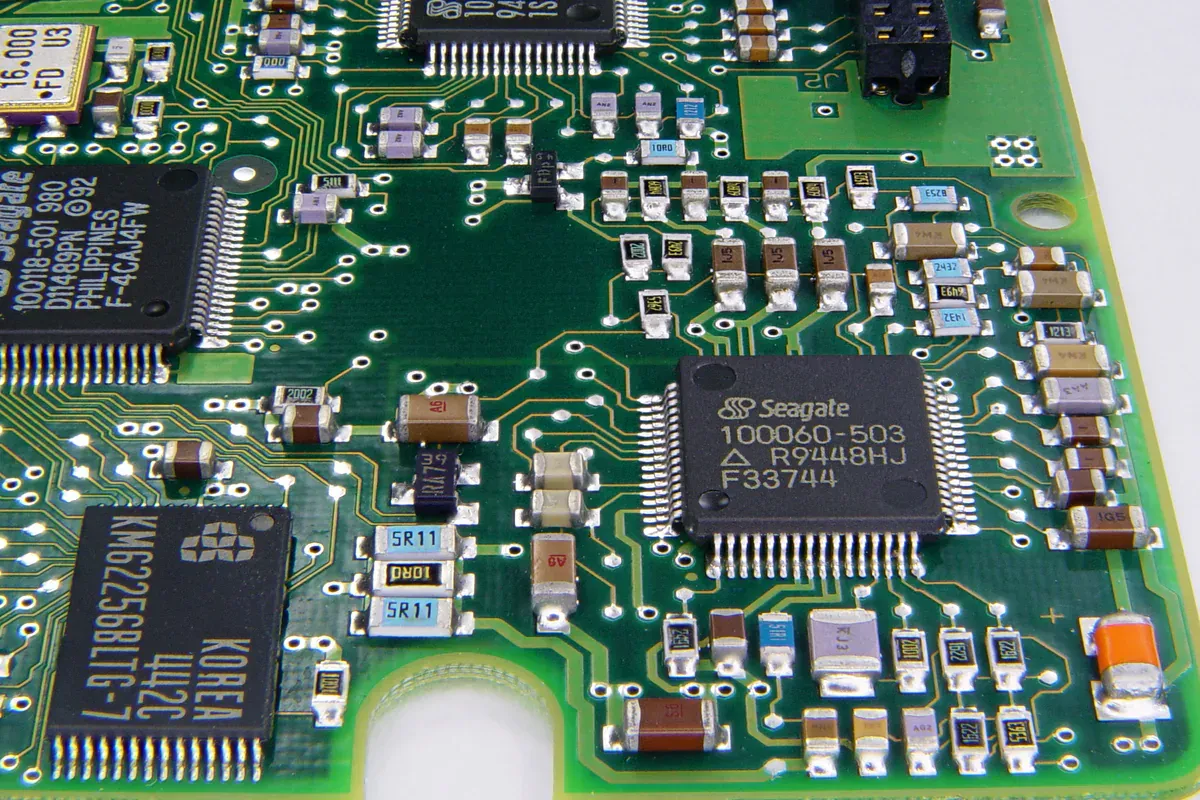
Start with one controlled BOM revision. Remove merged cells, hidden notes, color-only instructions, and formulas that obscure the requested quantity. Give every row a stable line identifier so clarifications and supplier responses do not move when the sheet is sorted.
One manufacturer part number belongs on one line unless the line explicitly represents an approved equivalence group. Separate manufacturer, base part, complete orderable part number, description, quantity, and unit of measure into different fields. A description such as “10 uF capacitor” or “STM32 MCU” cannot control an order.
Altium’s BOM management overview treats the BOM as a bridge between design and procurement. That bridge fails when the design reference and purchasable identity are mixed. Development-board names, distributor SKUs, internal nicknames, and truncated order codes should be resolved before the sourcing clock starts.
Also state the demand model. Is the quantity for one build, an annual forecast, a prototype followed by production, or a scheduled release? A price based on annual demand is not comparable with a price for an immediate one-time buy.
Required Fields for Every BOM Line

The minimum usable line contains more than MPN and quantity. It defines what makes the delivered material acceptable.
| Field | Why it controls the result | Owner when unclear |
|---|---|---|
| Original manufacturer | Prevents an unapproved brand change | Engineering / AVL owner |
| Complete MPN | Controls package, grade, finish, packing, and other suffix attributes | Engineering |
| Required quantity and dates | Separates immediate demand from forecast | Planning / procurement |
| Approved alternatives | Defines whether sourcing may search beyond the exact part | Engineering |
| Packaging and order multiple | Exposes reel, tray, tube, cut-tape, and overbuy effects | Manufacturing / procurement |
| Date/lot limits | Prevents an unstated receiving rejection | Quality |
| Traceability and certificates | Defines the required evidence package | Quality / compliance |
| Ship-to and trade basis | Makes freight, duty, and timing comparable | Procurement / logistics |
Add customer part number, reference designators, lifecycle criticality, moisture sensitivity, programming state, export classification inputs, and regulatory declarations where they matter. Do not require every field on every commodity; make the data proportionate to application and source risk.
A BOM upload should therefore be treated as a controlled data transfer, not a price-shopping shortcut. Include a contact for technical questions and a due date for exceptions, not only a due date for the finished quote.
Separate Exact Match, Approved Alternate, and Engineering Review
Every returned line should sit in one of three states:
- Exact match: the offered original manufacturer and complete order code equal the controlled requirement.
- Previously approved alternate: the offered part appears in the released AVL or AML for this BOM revision.
- Candidate requiring review: the supplier proposes a different order code, revision, manufacturer, grade, package, or function.
Do not let a spreadsheet formula convert “similar description” into “approved alternate.” The site’s component alternatives workflow can help identify candidates, but engineering still must validate pinout, electrical limits, timing, firmware, mechanical constraints, qualification, reliability, and regulatory impact.
The same discipline applies to same-family suffix changes. A tape-and-reel suffix may be commercially harmless for one program, while a temperature, qualification, lead-finish, wettable-flank, or programmed-content suffix can change whether the material is usable. The sourcing service should describe the deviation, not decide that it is minor.
Normalize Quotes Into One Awardable View

Suppliers use “stock,” “lead time,” MOQ, MPQ, SPQ, and traceability differently. Normalize the returned offers before ranking them. The related electronic component RFQ comparison guide explains these terms in depth; at BOM level, the objective is to make the assumptions visible across hundreds of lines.
For each offer, retain:
- offered manufacturer and full part number;
- requested, offered, and purchasable quantity;
- unit price, extended price, currency, and quote validity;
- MOQ, order multiple, standard pack, split fees, and allowed overage;
- inventory owner, physical location, stock status, or factory lead-time basis;
- promised ship date and whether partial delivery is allowed;
- source category, packaging, lot count, date codes, and traceability;
- inspection, test, warranty, NCNR, freight, tax, duty, and payment assumptions;
- every exception, with an owner and required decision date.
Do not fill an unknown field with an optimistic default. “Not provided” is an actionable exception; a blank that looks like “not applicable” is not.
Handle Lifecycle, Shortage, and Quality Exceptions
A service creates value by organizing exceptions, not hiding them to maximize quoted-line coverage. A useful exception queue separates at least five causes: ambiguous identity, no qualified supply, lifecycle change, commercial mismatch, and quality-evidence gap.
Lifecycle status should be checked against the original manufacturer’s current source and the exact orderable part. If a PCN or discontinuance notice applies, route it through a documented semiconductor PCN review workflow rather than replacing the part inside the quote.
For constrained or open-market material, distinguish seller-owned stock from a third-party indication. Ask for lot-specific evidence before award and scale the inspection plan to source, application, unit value, scarcity, and consequence of failure. A supplier-issued certificate does not replace chain-of-custody records or appropriate inspection.
Commercial exceptions also need an owner. The ECIA NCNR guideline describes NCNR as a written contract classification that restricts cancellation or return. A BOM service should flag which exact lines carry the commitment and when it becomes binding.
Use a BOM Sourcing Service Scorecard
Price matters after the offers describe the same requirement. Use a scorecard that measures execution quality as well as cost.
| Measure | Practical definition |
|---|---|
| Identity accuracy | Share of lines returned with a complete, matching order code |
| Award-ready coverage | Share that can become a PO without another clarification cycle |
| Exception quality | Issues are classified, evidenced, owned, and dated |
| Commercial comparability | Price, quantity, availability, delivery, and terms use a common basis |
| Source transparency | The offered route and available records are stated before award |
| Response control | Revisions, clarifications, and expired offers remain traceable |
| Lifecycle handling | PCN, EOL, NRND, and alternate paths are kept distinct |
Do not reward a sourcing service for quoting an unapproved replacement as coverage. Measure exact, approved, and candidate lines separately. A lower nominal unit price also should not compensate for forced overbuy, unusable packaging, missing documents, or an arrival date after the build.
Retain the Decision After the Award

The selected offer should become a controlled purchase-order record. Preserve the BOM revision, supplier quote revision, approvals, offered identity, quantity, delivery dates, source route, packaging, traceability, inspection plan, commercial terms, and open exceptions. Receiving should be able to compare the shipment with the same record procurement used to award it.
After delivery, capture actual on-time performance, documentation completeness, shortages, nonconformances, and price variance. Feed those results back into the supplier and line-level decision rather than treating the BOM project as finished when the PO is issued.
For programs spanning automotive, industrial, medical, aerospace, or connected devices, start with the relevant electronic component sourcing solution because qualification and evidence requirements differ by industry. A strong sourcing output is not the longest quote. It is the shortest defensible path from a controlled BOM to accepted material.
Frequently Asked Questions (FAQ)
What should I send to a BOM sourcing service?
Send a controlled BOM revision with the original manufacturer, complete manufacturer part number, quantity, unit of measure, approved alternatives, target dates, packaging, grade, documentation, and delivery requirements for every line. Also state which fields a supplier may clarify and which require engineering approval.
What should a BOM sourcing quote include?
The returned quote should show the exact offered part, manufacturer, source route, quantity, MOQ or order multiple, unit and extended price, availability basis, lead time, quote validity, packaging, lot or date-code information, traceability, quality scope, and every deviation from the request.
How do buyers compare BOM sourcing services?
Compare line coverage, identity accuracy, exception quality, quote comparability, evidence, response discipline, and the percentage of lines that can be awarded without another clarification cycle. Do not rank services by headline unit-price savings alone.
Can a BOM sourcing service approve alternative components?
A service can identify and document candidates, but customer engineering and quality teams must approve electrical, mechanical, software, qualification, safety, and regulatory differences before an alternative is released.