Table of Contents
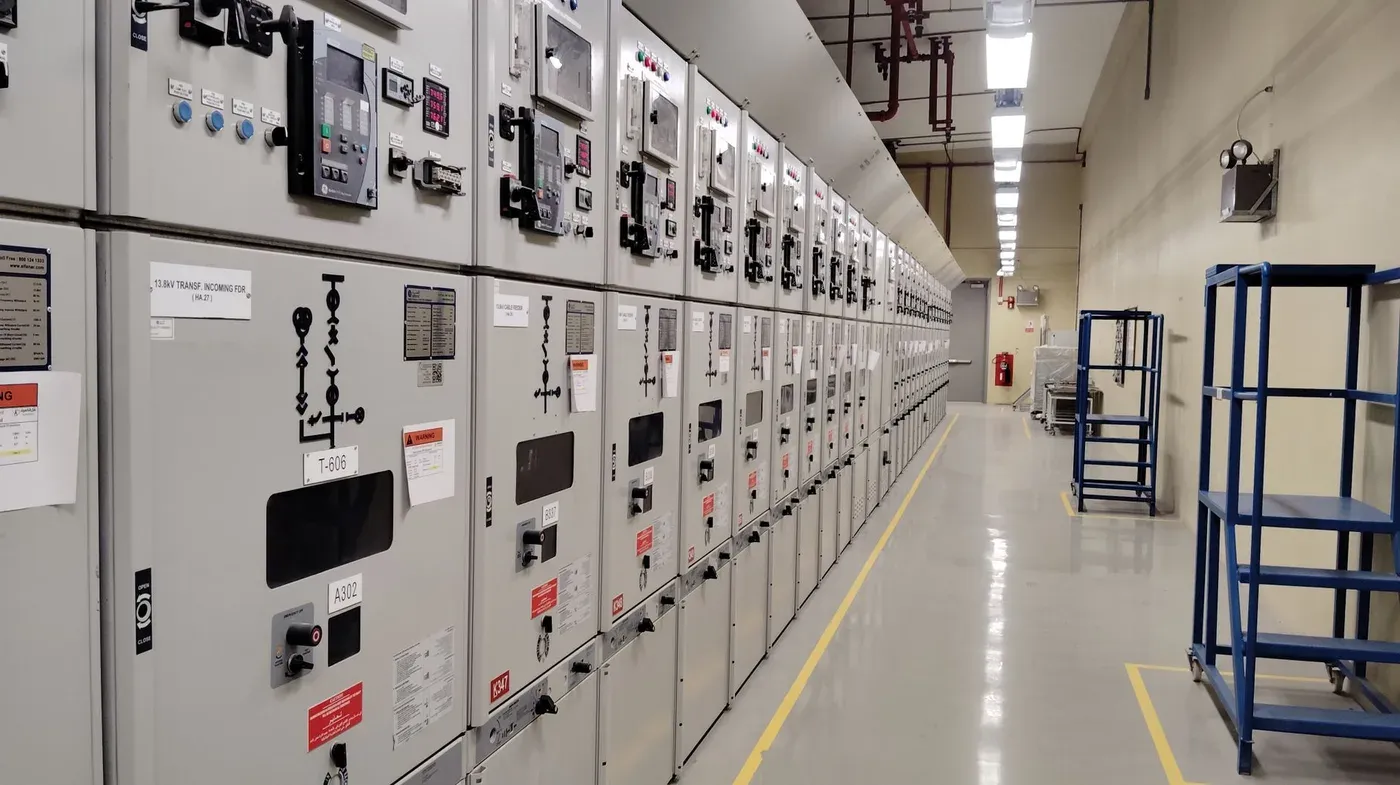
When an industrial -I grade FPGA goes on allocation, the first alternative a broker puts on the table is almost always the commercial -C grade—for example, offering XC7K325T-2FFG900C when the released BOM specifies XC7K325T-2FFG900I, or quoting 5CEFA7F31C7N in place of 5CEFA7F31I7N. On paper, the two devices share the same package, logic count, and pinout. Inside a sealed industrial cabinet operating in a 55 °C desert substation or factory floor, that single letter controls whether the FPGA stays within its silicon timing and reliability envelope.
What junction-temperature ranges do C, I, E, and A suffixes guarantee?
FPGA temperature suffixes specify junction temperature (TJ), not ambient room temperature (TA). Both AMD DS181/DS182 for 7 Series FPGAs and the Altera Cyclone V Device Datasheet (December 2025) define commercial (C) at 0 °C to +85 °C TJ and industrial (I) at −40 °C to +100 °C TJ, while extended (E) and automotive (A) grades raise the ceiling further under specific ordering rules.
| Grade suffix | AMD 7 Series TJ range (DS181/DS182) |
Altera Cyclone V / 10 LP TJ range |
Typical ordering examples |
|---|---|---|---|
C (Commercial) |
0 °C to +85 °C | 0 °C to +85 °C | XC7K325T-2FFG900C, 5CEFA5F23C6N, 10CL016YU256C6G |
I (Industrial) |
−40 °C to +100 °C | −40 °C to +100 °C | XC7A100T-2FGG484I, 5CEFA7F31I7N, 10CL025YU256I7G |
E (Extended) |
0 °C to +100 °C | Not used (see A grade) |
XC7A100T-3FGG484E, XC7A100T-2LFGG484E |
A (Automotive temp) |
Separate XA prefix family (−40 °C to +125 °C where offered) |
−40 °C to +125 °C | 5CEFA5U19A7N, 5CSXFC6C6U23A7N, 10CL016YU484A7G |
Notice a critical boundary that catches buyers off guard on AMD -3E parts such as XC7A100T-3FGG484E: AMD’s E (Extended) grade extends the upper junction limit to +100 °C, not the cold-start floor, which stays at 0 °C. Substituting an -E device onto an outdoor equipment board that must cold-start below 0 °C fails the low-temperature specification even though its upper temperature matches -I.
How do you calculate thermal margin from cabinet ambient to silicon junction?
Use the basic steady-state junction-temperature relationship to screen whether a commercial or industrial grade has credible headroom before requesting engineering sign-off:
TJ,max = TA,cabinet + (PD × θJA,eff)
Here TA,cabinet is the worst-case air temperature directly inside the enclosure near the board (not outdoor weather temperature alone), PD is the implemented FPGA total power dissipation in watts (static leakage plus dynamic switching at hot silicon temperature), and θJA,eff is the effective junction-to-ambient thermal resistance in °C/W accounting for PCB copper layers, heatsink, and airflow.
A fanless IP65 outdoor cabinet in Saudi Arabia or the UAE can reach 60 °C internal air during summer peak load. A 5CEFA7 or XC7K325T design dissipating 3.5 W with an effective θJA,eff of 9 °C/W then reaches:
TJ = 60 °C + (3.5 W × 9 °C/W) = 91.5 °C
At 91.5 °C, a commercial C-grade FPGA (85 °C maximum TJ) violates its rated junction limit by 6.5 °C—and because CMOS static leakage increases exponentially with silicon temperature, real junction temperature can climb further into thermal runaway. An industrial I-grade part (100 °C TJ) retains 8.5 °C of margin, while an A-grade Cyclone device such as 5CEFA7U19A7N (125 °C TJ) provides wider thermal headroom if the speed grade (A7) and BOM approval permit it.
The same relationship screens other board configurations before a full power-estimator run:
| Dissipation and thermal path | TJ at 60 °C cabinet air |
C (85 °C) |
I (100 °C) |
A (125 °C) |
|---|---|---|---|---|
| 2.0 W × 8 °C/W | 76 °C | 9 °C margin | 24 °C margin | 49 °C margin |
| 3.5 W × 9 °C/W | 91.5 °C | 6.5 °C over limit | 8.5 °C margin | 33.5 °C margin |
| 5.0 W × 12 °C/W | 120 °C | 35 °C over limit | 20 °C over limit | 5 °C margin |
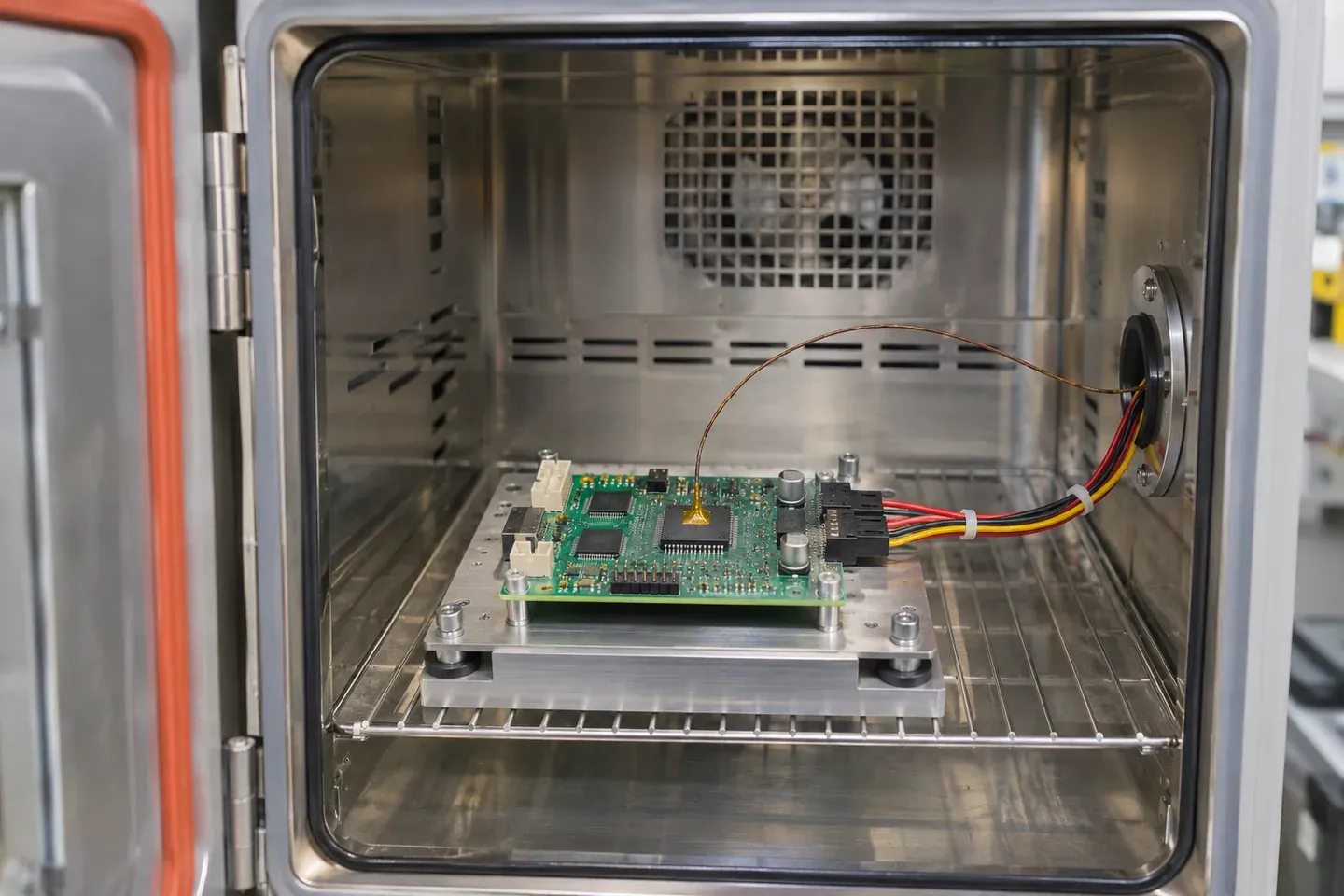
These are planning calculations, not measured junction temperatures; real release requires manufacturer power-estimator runs (XPE/Early Power Estimator) and thermocouple verification on the actual enclosure.
When can procurement substitute across temperature grades safely?
Substitutions only work upward in temperature coverage and only when speed grade, core voltage, and cost constraints align. Never downgrade an -I BOM line to -C without a signed thermal waiver, and never assume an -A grade carries identical speed options to -C.
C→Iupgrade (common shortage bridge): Often electrically feasible if the speed grade exists in both tiers. On Cyclone V E, note that-C6is the fastest commercial bin, while industrial parts ship in-I7(e.g., 5CEFA5F23C6N vs 5CEFA5F23I7N). Upgrading from-C6to-I7widens the temperature envelope but slows the speed grade, requiring full timing re-closure in Quartus.I→Aupgrade (high-ambient industrial headroom): Useful on Cyclone V and Cyclone 10 LP when-I7stock is tight and-A7stock (such as 10CL025YU256A7G) is available, provided pricing fits and engineering confirms identical-7timing and package compatibility.I→Eswap (AMD 7 Series trap): Check cold-start requirements carefully—Estops at 0 °C on the low end.I→Cdowngrade (high risk): Acceptable only for controlled indoor lab prototypes or climate-controlled racks backed by written thermal sign-off and a temporary deviation record.
Building temperature-grade rules into Middle East and industrial RFQs
For equipment operating across high-ambient industrial corridors—including oil-and-gas instrumentation, utility switchgear, and telecom shelters covered in our Saudi Arabia sourcing guide and UAE BOM sourcing guide—ambient derating is a primary procurement filter, not a minor footnote.
When issuing RFQs across the XC7A100T, XC7K325T, Cyclone V E, or Cyclone 10 LP series, add a dedicated Allowed Temp Upgrade column next to the complete ordering code. Explicitly stating “Exact -I7 preferred; -A7 acceptable with engineering confirmation; -C rejected” prevents brokers from quoting unusable commercial stock and speeds up quote comparison on industrial maintenance spares.
Frequently Asked Questions (FAQ)
Can an industrial (-I) FPGA substitute for a commercial (-C) FPGA of the same part number?
Often it is a viable engineering candidate because the industrial junction-temperature window (-40 °C to +100 °C) spans the commercial range (0 °C to +85 °C), but engineering still must check speed-grade timing, voltage limits, and any cost or AVL restrictions before approving.
Does an Altera -A temperature suffix automatically mean the FPGA is AEC-Q100 automotive qualified?
No. In Altera ordering nomenclature, A selects the automotive junction-temperature range (-40 °C to +125 °C). Full automotive qualification requires verifying part-specific AEC-Q100 and PPAP documentation from the manufacturer for that exact ordering code.
Why do FPGA datasheets specify junction temperature (TJ) instead of ambient temperature (TA)?
An FPGA's power dissipation varies dramatically with clock frequency, logic utilization, transceiver count, and airflow. Junction temperature is the silicon operating limit; ambient temperature depends on how effectively the board, heatsink, and cabinet remove that heat.
Is commercial 0 °C to +85 °C grade acceptable inside an air-conditioned Middle East control room?
Only if thermal analysis proves junction temperature stays below 85 °C under worst-case internal cabinet air temperature, HVAC outage scenarios, and maximum FPGA load. Unconditioned outdoor cabinets or industrial substations generally require industrial (-I) or higher grades.