Table of Contents
An industrial logger can write very little useful sensor data while generating far more storage traffic through metadata updates, temporary files and repeated database commits. Buying a card by capacity and temperature range alone leaves that workload unqualified.
The purchase specification should describe the host’s actual writes, the acceptable outcome after interrupted power and the hardware or firmware changes that trigger reapproval. These requirements are more useful than treating “industrial” as a single interchangeable grade.
How much write endurance does an industrial microSD card need?
Estimate host writes over the intended service interval, then compare that workload with the supplier’s endurance definition and test conditions. Do not convert a flash program/erase-cycle figure directly into a guaranteed number of field years.
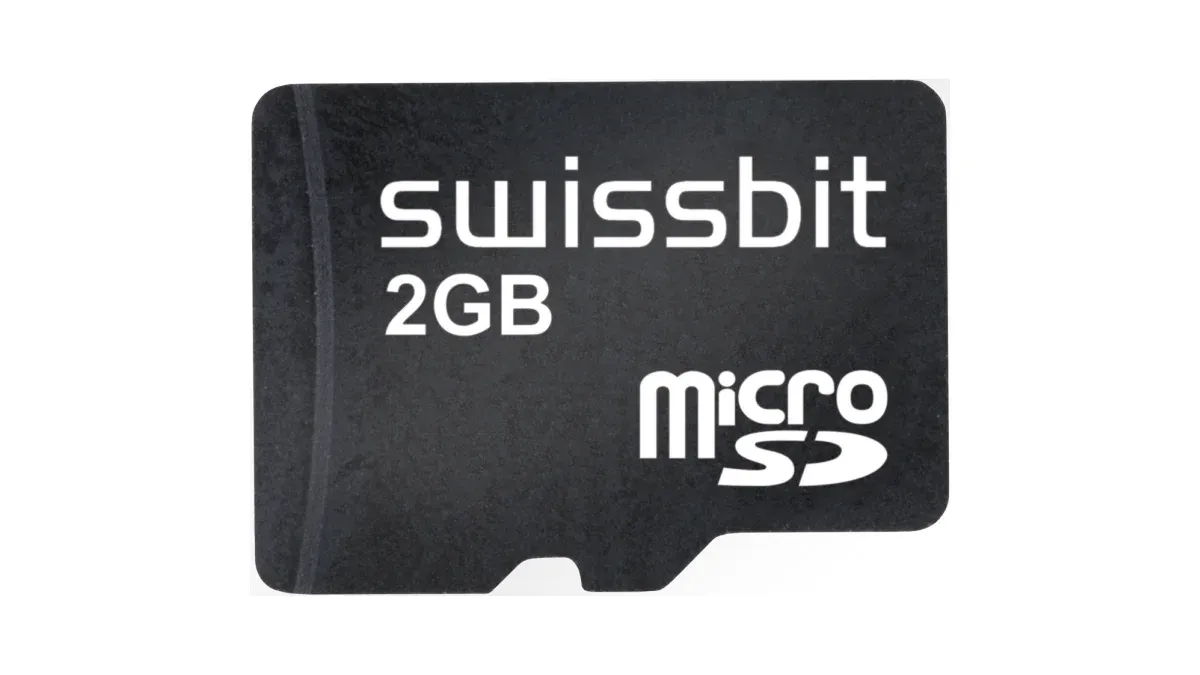
Swissbit’s industrial microSD comparison distinguishes flash technologies and workload-based endurance across card series. That distinction matters: a sustained sequential recorder and a small random-write database can place different demands on a controller even at the same daily byte count.
For a hypothetical logger, assume 2 GB of host writes per day for five years, using 365 days per year. The nominal traffic is:
2 × 365 × 5 = 3,650 GB, or 3.65 TB in decimal units.
If a measured host workload instead reaches 6 GB per day after including filesystem and application activity, the same interval becomes 10.95 TB. This is a host-write budget, not a prediction of internal NAND writes. The flash translation layer, wear leveling and garbage collection can amplify writes further.
Build the qualification workload from recorded host behavior: write sizes, sequential versus random access, flush frequency, idle time and typical fill level. Ask the supplier to identify the endurance metric, its workload and temperature assumptions, and the supported way to read remaining-life indicators. A large headline rating without those conditions cannot be compared fairly with a smaller rating from another test. Include retention after the planned write life at the specified storage temperature; an endurance target alone does not define how long an aged card must preserve unpowered data.
What does power-loss protection actually protect?
It protects only the failure modes covered by the card’s implementation and documented validation. Recovery of the card’s internal mapping is different from preserving every byte an application believed it had saved.
The Swissbit product guide identifies power-fail features by series. Procurement should obtain the exact product’s scope rather than assume that every industrial microSD card has capacitor-backed completion of all pending writes.
A useful acceptance plan separates three questions:
- Can the host still enumerate and access the card after interrupted power?
- Are previously committed files and filesystem structures intact?
- Does the application recover to its defined transaction boundary without accepting a partially written record as valid?
For a logger, one acceptance rule might require every transaction acknowledged as durably committed to survive, while allowing the interrupted, unacknowledged transaction to be discarded. Set that boundary with the application team before testing. An ordinary write-call return is not automatically the application’s durable-commit event.
Interrupt power at the stages around that boundary, restart through the normal recovery procedure and compare record identities and contents with the expected committed set. A card that reappears in the host but loses older committed records has failed this rule. A passing result also needs to cover the specified fill level, temperature and preconditioning, rather than just a fresh card at room temperature.
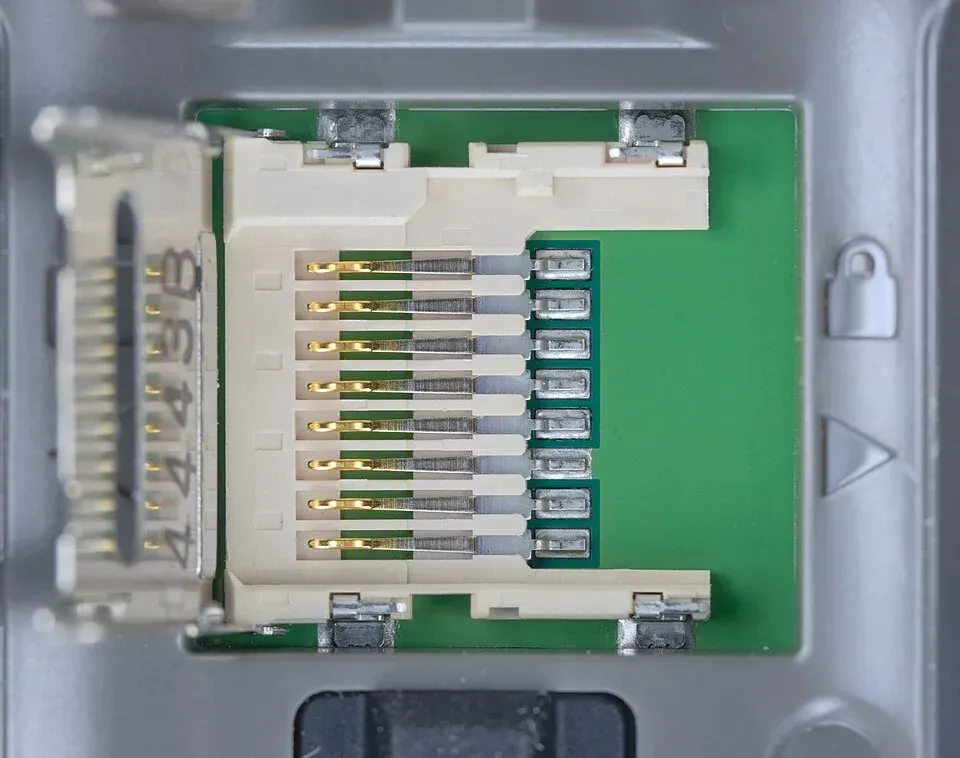
Socket retention, contact condition and access for field replacement also belong in the installed-system review. An electrically suitable card can still be unsuitable for a product whose vibration, enclosure or service procedure was never evaluated.
Which changes must a controlled card BOM disclose?
The change agreement should identify the controller, NAND configuration, firmware and externally observable behavior that procurement needs to keep under control. “Fixed BOM” is useful only when the supplier defines what is fixed and what changes require notification.
| Change or uncertainty | Evidence to request | Reason for reapproval |
|---|---|---|
| Controller or firmware revision | Revision identity and change notice | Command timing, recovery and health reporting may differ |
| NAND technology or organization | Applicable endurance and retention data | Similar capacity can hide different lifetime behavior |
| Reported capacity or formatting | Usable sectors, partitioning and host image requirements | A production image may not fit or boot identically |
| Packaging or temperature grade | Exact ordering code and specification | A family name does not identify the delivered variant |
Keep the approved card identity, supplier revision record and host software image together. Agree how purchasing can identify the controlled configuration in later deliveries; not every controller or NAND detail is exposed through a host-readable identifier. If storage is being redesigned rather than simply replenished, compare the host implications with the eMMC replacement and boot-partition review.
Decide the service response to a remaining-life warning before deployment: who reads it, which supplier-defined threshold triggers replacement, and how data is transferred. If the recovery test fails, a higher TBW rating does not resolve that failure. The candidate needs a corrected host/card configuration and a repeat of the affected tests.
Frequently Asked Questions (FAQ)
Does a larger microSD capacity guarantee a longer service life?
No. Larger capacity can spread writes across more flash, but controller behavior, NAND technology, spare area, workload and temperature also matter. Compare endurance specifications under compatible test conditions.
Is a card speed class an endurance specification?
No. A speed class describes a performance requirement under a defined test. It does not establish lifetime writes, power-interruption behavior or suitability for a particular industrial logging workload.
Should a replacement card be tested only when empty?
No. Include representative fill levels and an aged or preconditioned state where the validation plan requires it. A fresh empty card may not expose garbage-collection delays or recovery behavior seen later in service.