Table of Contents
A relay marked with a 10 A contact rating can be unsuitable for another 10 A application. Switching a resistive load, charging a capacitor and interrupting an inductive circuit impose different stresses on the contacts.
The replacement request should describe the load waveform and switching duty before the supplier selects an alternate. Keep the contact-side review separate from coil-drive compatibility; both must pass, but neither substitutes for the other.
Does a 10 A relay rating cover every 10 A load?
No. A contact rating applies to stated voltage, AC or DC operation, load type and other conditions. The buyer must compare the application’s making, carrying and breaking duties with the exact relay’s capabilities.
Making is the act of closing the contact, carrying is conducting while closed, and breaking is opening the circuit. A load can be modest during steady operation but severe when switched on or off. Comparing only the continuous current conceals those differences.
Omron’s general-purpose relay precautions distinguish load behavior and contact application conditions. They support a load-specific selection; they do not establish a universal conversion between AC and DC ratings.
For a hypothetical 2 A running load with a 20 A startup pulse, write both values into the inquiry, along with the pulse duration and repetition rate. The statement “only 2 A” omits the event that may dominate contact making. These illustrative values are not a recommended overload allowance for any relay.
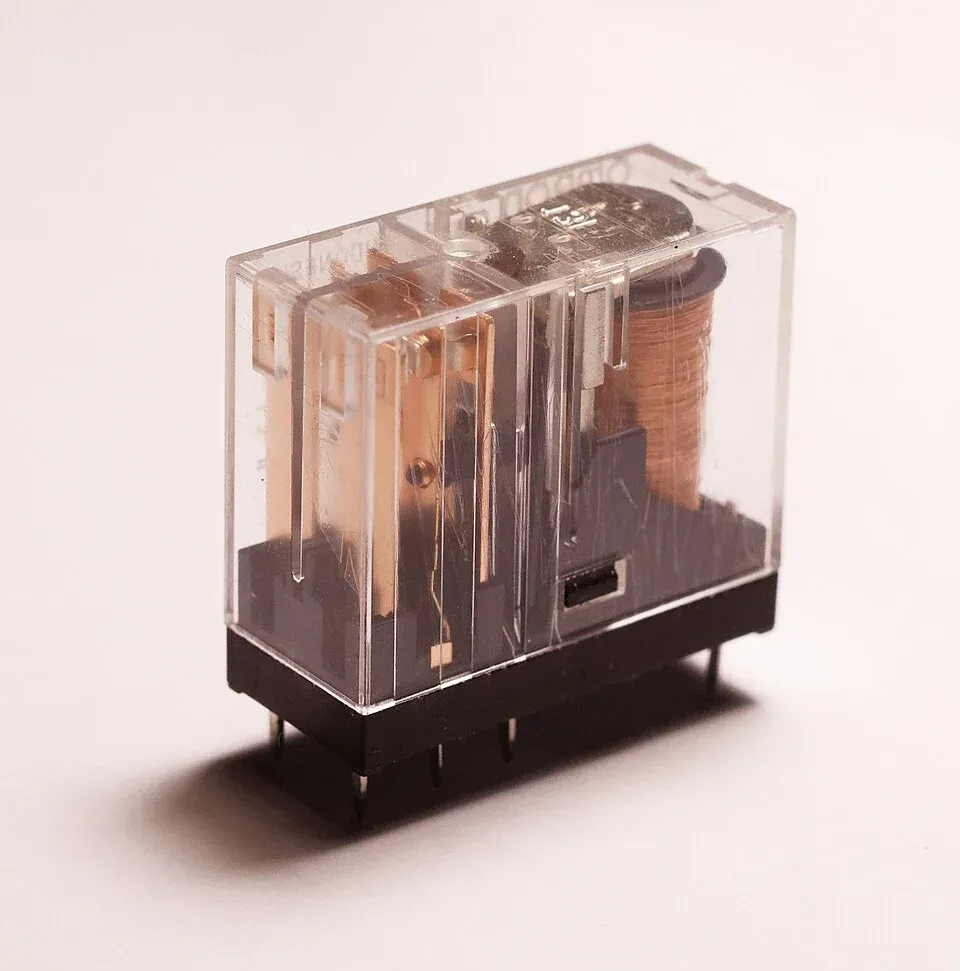
How should inrush and breaking duty enter a relay RFQ?
Specify the measured or otherwise justified load envelope at closing and opening, including voltage, current, duration, repetition and protective circuitry. Ask for a suitability assessment against those conditions, not a response to an unexplained peak number.
| Load characteristic | Information needed | What it changes in the review |
|---|---|---|
| Capacitive charging | Initial voltage, source impedance and current pulse | Contact making stress |
| Motor or similar load | Startup, running and abnormal operating conditions | Duty-specific switching requirement |
| Inductive interruption | Current at opening and suppression circuit | Arc and breaking conditions |
| Frequent cycling | Cycles per interval and required service duty | Electrical endurance comparison |
| Multiple contacts | Actual load on each pole and operating sequence | Whether the arrangement matches the circuit |
Avoid assuming that two contacts wired in parallel double the usable switching rating. Current sharing and timing can differ. Any such arrangement requires explicit manufacturer support and an application assessment.
Similarly, suppression is part of the load definition. A quote evaluated with a particular protective circuit does not automatically apply after that circuit changes. The relay flyback-clamp guide explains the separate coil-side relationship between current decay and release timing.
Why can a power relay be unreliable at very low current?
Contacts intended for power switching may not provide the required reliability for a very small signal under all environmental conditions. Contact material, surface condition and the manufacturer’s minimum-load guidance become relevant even when the load is far below the maximum rating.
Maximum switching capacity and low-level switching behavior answer different questions. A “larger” relay is not automatically a better signal relay. Consult the exact contact construction and application guidance, including any stated limitations on minimum-load data.
Omron’s relay technical guide provides context for contact reliability and load selection. Treat a reference minimum-load figure within its stated conditions; do not represent it as a universal guarantee that every contact operation will meet a particular resistance.
If the relay switches a diagnostic input rather than a power load, give the supplier the actual voltage, current, source impedance and acceptable contact behavior. This often leads to a different candidate set than a shortlist sorted by maximum amperes.
Release the alternate against the complete switching duty
The approval record should identify the exact contact arrangement and pinout, coil requirements, load conditions, operating rate and environmental range. Where testing is required, define what constitutes a failed operation and how contact condition is assessed.
Use representative load conditions and the intended suppression circuit. A no-load click test shows mechanical movement, not successful interruption or low-level signal integrity. Record which part of the duty the test covers and which limits still rely on manufacturer documentation.
Finally, keep the approved suffix and contact option on the purchase line. A family name can cover variations in contact material, sealing or terminals that matter to the application. Supplier substitutions within that family should return to the same comparison record rather than inherit approval from the shared name.
Frequently Asked Questions (FAQ)
Does a matching coil voltage prove relay interchangeability?
No. Coil current, pickup and release behavior, contact arrangement, terminal layout and load ratings also require comparison. A matching nominal coil voltage is one screening condition.
Is mechanical life the expected switching life at rated load?
No. Mechanical life and electrical endurance describe different conditions. Use the electrical endurance information for the relevant contact load and operating duty.
Can a suppression component change relay release behavior?
Yes. Suppression on the coil or load can change current decay and switching behavior. Validate the complete circuit, including release timing and the resulting contact conditions.