Table of Contents
- Classify the Cargo Before Writing the RFP
- Flow Device Requirements into Logistics Work Instructions
- Shortlist Current Providers Without Relying on Old Names
- Qualify the Lane and Every Subcontracted Handoff
- Make the SLA Produce Actionable Evidence
- Audit Security and Trade Compliance by Transaction
- Use Primary and Backup Providers as a Tested System
Selecting a semiconductor logistics provider is a lane-qualification exercise, not a ranking of global freight brands. A provider may perform well for factory-sealed reels between two distribution centers and be unsuitable for wafers, reticles, bare die, capital equipment, cryogenic material, or export-controlled cargo.
Define the cargo and evidence requirements first. Then qualify the exact origin station, destination station, carriers, warehouses, customs brokers, subcontractors, route, and recovery plan that will handle it. A corporate brochure cannot substitute for lane-level proof.
Classify the Cargo Before Writing the RFP

“Semiconductor shipment” can describe very different physical risks.
| Cargo | Primary risks | Provider capabilities to verify |
|---|---|---|
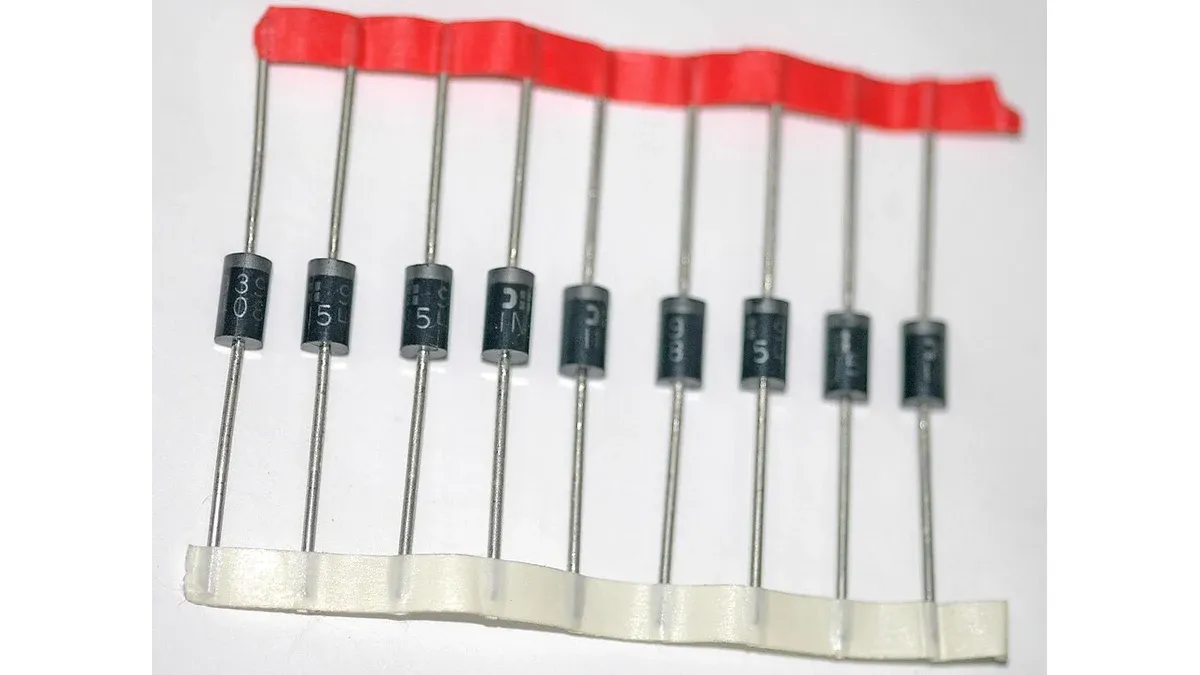
| Factory-sealed packaged ICs | Theft, crushing, seal damage, ESD, delay, customs opening | Secure handling, scan events, original-pack preservation, exception control |
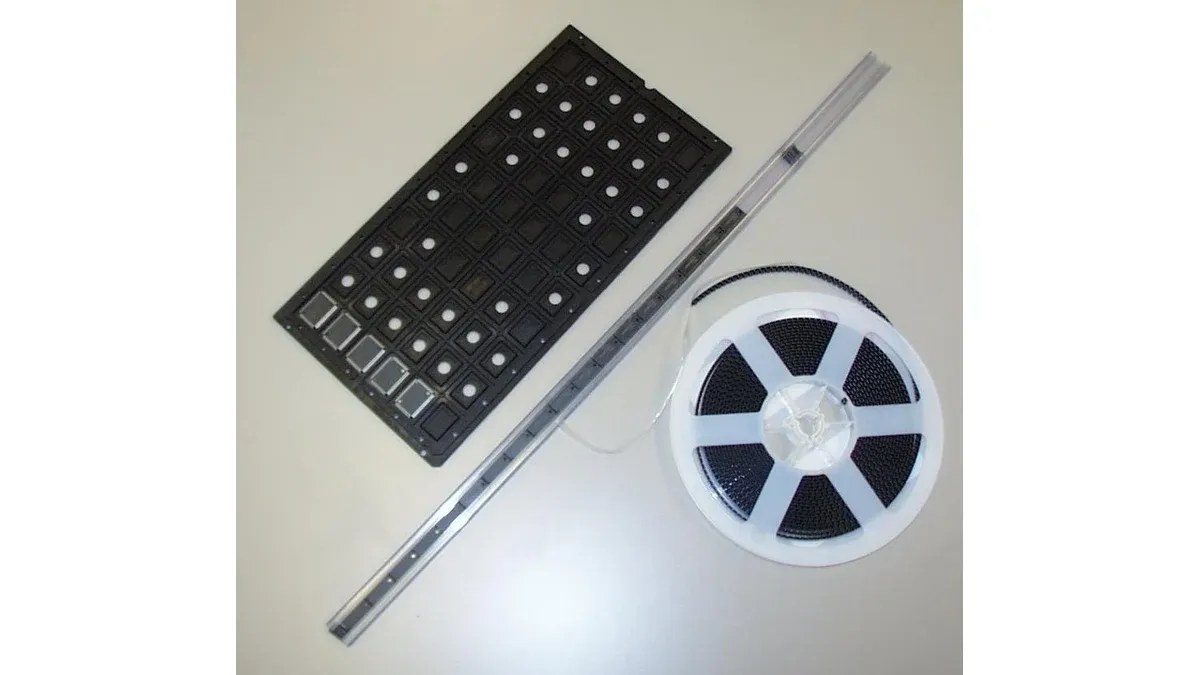
| Opened moisture-sensitive reels or trays | Floor-life loss, humidity exposure, mishandled bake or dry pack | Time tracking, controlled opening, J-STD-033D work instructions, trained repack operation |
| Bare die | ESD, contamination, die movement, damaged waffle packs or gel packs | Controlled environment, approved packaging, orientation and seal checks |
| Wafers | Particle contamination, shock, vibration, pod damage, tilt | Validated wafer container, shock/tilt controls, handling fixtures, clean transfer process |
| Photomasks and reticles | Contamination, vibration, high replacement impact | Dedicated packaging, monitored route, strict handoffs and recovery |
| Fab capital equipment | Shock, humidity, corrosion, oversized handling, installation sequence | Engineering survey, preservation, rigging, route clearance, storage and site-delivery plan |
| Chemicals and gases | Dangerous-goods, temperature, compatibility, regulatory controls | Product-specific dangerous-goods authorization and trained personnel |
The shipper or product owner should supply the approved packaging and handling specification. A forwarder should not decide that every IC is MSL 3, that every wafer needs the same shock threshold, or that all bare die require one cleanroom class.
For packing mechanics, use the applicable manufacturer instructions and our wafer and IC handling guide. This article stays at the provider and contract layer.
Flow Device Requirements into Logistics Work Instructions
As of August 2026, the published moisture-handling standard is IPC/JEDEC J-STD-033D. It covers handling, packing, shipping, and use of moisture/reflow and process-sensitive devices classified under J-STD-020 or J-STD-075. IPC lists J-STD-033E as a project in development, so it should not be cited as an issued revision.
Relevant documents solve different problems:
| Document | Role in the logistics specification |
|---|---|
| J-STD-020F | Classifies moisture/reflow sensitivity of nonhermetic surface-mount devices |
| J-STD-033D | Defines handling, packing, shipping, and use methods for classified devices |
| J-STD-075A | Addresses process-sensitive non-IC electronic components |
| JESD625 | Establishes requirements for handling electrostatic-discharge-sensitive devices |
| Manufacturer packaging specification | Defines device and supplier-specific packing, labels, floor life, and handling |
The logistics provider normally preserves compliant manufacturer packaging. If customs, inspection, kitting, consolidation, or damage requires a bag to be opened, the work instruction must identify who may authorize it, how exposure is recorded, whether dry packing or baking is allowed, how remaining floor life is calculated, and what evidence follows the shipment.
At the receiving-to-assembly handoff, use an MSL floor-life and receiving record to preserve cumulative exposure through split reels, kitting, and returns to storage. Resealing alone must not be treated as a fresh floor-life allowance.
Do not instruct a warehouse to bake devices unless the package, temperature, duration, carrier material, and manufacturer limitations have been reviewed. Incorrect baking can damage packaging, oxidation protection, tape-and-reel materials, labels, or solderability.
Shortlist Current Providers Without Relying on Old Names
Provider ownership and branding have changed materially. DSV and Schenker officially joined forces on April 30, 2025; DSV has continued country-by-country integration. CMA CGM completed its acquisition of Bollore Logistics in February 2024 and has integrated the business with CEVA Logistics. In a 2026 RFP, DB Schenker and Bollore Logistics should not appear as independent corporate alternatives.
Use current legal and operating information:
- Contracting legal entity and billing entity in each country.
- Origin and destination station names and addresses.
- Named airlines, trucking partners, ground handlers, warehouses, and customs brokers.
- Which party owns the operating procedure and exception record.
- Which systems produce tracking, condition, custody, and proof-of-delivery data.
- Whether acquired operations have migrated to new systems, insurance, SOPs, and account teams.
Provider programs can be useful starting points. For example, Kuehne+Nagel describes SemiconChain as a standardized semiconductor air-logistics network with trained staff, lane risk assessment, shock and temperature options, security measures, and tracking. Treat those as capabilities to validate at the stations and lane in the proposal, not as proof that every Kuehne+Nagel location provides every service.
Apply the same rule to DHL, DSV, CEVA, Expeditors, UPS, regional specialists, and any other candidate. Brand scale helps only when the contracted route and subcontractor chain meet the requirement.
Qualify the Lane and Every Subcontracted Handoff

A lane qualification should trace the physical shipment from pickup to final receipt. Map every consolidation, deconsolidation, X-ray or security screening, customs inspection, storage location, aircraft or vehicle change, and final-mile handoff.
Request evidence for:
- Packaging design qualification and pack-out instructions.
- Shock, vibration, tilt, temperature, or humidity limits and logger placement where monitoring is required.
- ESD-protected areas, grounding, equipment checks, training, and packaging controls where devices may be exposed.
- Access control, CCTV retention, cage storage, seal control, high-value declarations, and secure-parking rules.
- Customs procedures for packages that must not be opened or require controlled opening.
- Weekend and after-hours operations, missed-flight recovery, alternate airports, and emergency contacts.
- Data retention, time synchronization, scan-event definitions, and availability of raw logger files.
The prime provider must flow requirements to airlines, trucking firms, handlers, brokers, and warehouses. A 4PL or control tower may orchestrate several providers, but the management layer does not eliminate the need to audit execution. The contract should identify who approves subcontractors and how changes are communicated.
Run a pilot shipment or operational readiness review before production volume. Use a representative pack-out and monitoring plan, then reconcile planned and actual handoffs. A successful pilot does not qualify every lane, cargo type, or station indefinitely; define requalification triggers such as route, facility, subcontractor, packaging, or system changes.
Make the SLA Produce Actionable Evidence
An SLA should define what happened, who owns the response, and how loss is allocated. “Real-time visibility” is too vague.
Useful measures include:
| Measure | Required definition |
|---|---|
| Pickup and delivery performance | Event, time zone, grace period, exclusions, and source system |
| Chain of custody | Required scans, signatures, seal numbers, and missing-event escalation |
| Condition excursion | Sensor, sampling interval, calibrated accuracy, threshold, duration, and alarm path |
| Damage | Packaging and product inspection method, photo timing, and concealed-damage process |
| Exception response | Acknowledgement, containment, evidence delivery, root-cause, and corrective-action deadlines |
| Data completeness | Required fields, raw-data access, retention period, and system-outage procedure |
Define disposition authority. The provider should quarantine and preserve evidence after an excursion; it should not decide that semiconductor material is usable. The product owner, quality organization, or manufacturer determines whether the lot can be released, tested, returned, or scrapped.
Contract terms should address declared value, carrier limits, consequential-loss exclusions, cargo insurance, deductible, claims deadlines, salvage rights, and ownership of damaged material. A shipment worth far more than the carrier’s standard liability needs an explicit insurance decision before pickup.
Audit Security and Trade Compliance by Transaction

ISO 28001 provides security best practices and assessment guidance for supply chains; it is not a universal baseline certification that makes a shipment secure. ISO 28000 is the security-management-system standard commonly used for certification. TAPA Facility Security Requirements and Trucking Security Requirements, CTPAT participation, regulated-agent status, or local equivalents may also matter, depending on the lane.
Select controls from the cargo value and threat assessment:
- Verified driver and vehicle identity, sealed vehicles, geofencing, route deviation alerts, and approved parking.
- Two-person handling, cage storage, escort, or direct airside transfer where justified.
- Screening of facilities, subcontractors, and personnel with cargo access.
- Incident preservation including CCTV, access logs, seal evidence, sensor data, and communications.
- Procedures for tampering, theft, counterfeit substitution, and recovery of diverted freight.
Trade compliance remains transaction-specific. The exporter should provide classification, authorization, destination-control and filing instructions as applicable. The logistics provider and broker must execute those instructions, screen the parties required for their role, retain records, and stop when documentation or routing conflicts with the authorization. A forwarder cannot make an export-controlled part compliant merely by using a secure service.
Use Primary and Backup Providers as a Tested System
Redundancy is useful only when the backup can actually accept the cargo. Qualify a secondary lane with the same cargo specification, data requirements, insurance review, and subcontractor visibility. Give it enough test or recurring volume to keep operating contacts and system integrations current.
Define the switch trigger: capacity rejection, missed milestone, security event, weather closure, labor disruption, customs restriction, facility change, or loss of qualification. The recovery plan should state who can activate the alternate route, how inventory is redirected, and whether the alternate changes export authorization, packaging qualification, or transit risk.
The final provider decision should compare lane evidence, not marketing reach: current legal entity, station capability, subcontractors, validated packaging, standards-based handling, security, data, exception response, liability, and recovery. That keeps the article’s provider-selection layer distinct from the detailed ESD and wafer-packing guidance elsewhere on the site.
Frequently Asked Questions (FAQ)
What is the current J-STD-033 revision for moisture-sensitive devices?
As of August 2026, IPC/JEDEC J-STD-033D is the published revision. J-STD-033E is an approved standards-development project, not a published replacement. Contracts should reference the required revision and any customer-specific handling instructions.
Does every semiconductor shipment require moisture-barrier packaging?
No. Requirements depend on package construction, moisture-sensitivity classification, seal status, remaining floor life, intended assembly process, and manufacturer instructions. Preserve the manufacturer's compliant pack unless an authorized work instruction requires opening or repacking.
Can a general freight forwarder carry packaged integrated circuits?
Yes when the provider and lane can execute the shipment's actual packaging, ESD, security, environmental, customs, and evidence requirements. Specialized controls should be qualified from the cargo risk; they should not be assumed necessary or present from a company label alone.
Are DB Schenker and Bollore Logistics independent provider options in 2026?
No. DSV completed its acquisition of Schenker in April 2025 and continues integration under DSV. CMA CGM completed its acquisition of Bollore Logistics in 2024 and has been integrating it with CEVA Logistics. Confirm the current contracting legal entity and operating station.