Table of Contents
- Envelope Tracking Chip Market Size in 2026 — and Why Public Estimates Diverge by More Than 10x
- How the Market Is Measured: Discrete ETICs Versus the RF Front-End Scope
- What Is Driving Growth: 5G Handset Volume, Base Station Power, and 100 MHz Carriers
- Supplier Share: Qualcomm, Qorvo, Skyworks, and Analog Devices
- The Strategic Fork: Qualcomm’s Modem-Integrated ET Versus Qorvo’s Standalone ETIC
- Regional Demand: Where Envelope Tracking Volume Is Concentrating
- What the Growth Trajectory Means for Procurement and Lead-Time Risk
- Envelope Tracking Versus Average Power Tracking: Why the Definition Moves the Number
- Signals to Monitor: M&A, Patent Activity, and 100 MHz ETIC Ramps
Ask several research firms what the envelope tracking chip market is worth in 2026 and the answers land more than an order of magnitude apart. Research and Markets, in a January 2026 release, sizes the market at $2.43 billion in 2025, rising to $2.65 billion in 2026 and $3.81 billion by 2030. Global Market Insights, applying a broader RF front-end scope, reports $18.7 billion for 2024 on a path to $50.1 billion by 2035. Both figures are published, and both technically describe “the envelope tracking chip market.” The gap is not an error; it is a difference in what gets counted.
This briefing is for OEM, EMS, engineering, and procurement readers who need a defensible market read before committing to a design-in or a sourcing position. It reconciles the competing size figures, lays out supplier share across Qualcomm, Qorvo, Skyworks, and Analog Devices, explains the strategic fork between Qualcomm’s modem-integrated envelope tracking and Qorvo’s standalone ETIC, and closes with the signals that indicate when supply is tightening.
It is a market-status update, not a component-selection guide. ET-versus-APT selection, cross-supplier qualification, and current lead-time ranges belong to the companion technical analysis rather than to this piece.
Envelope Tracking Chip Market Size in 2026 — and Why Public Estimates Diverge by More Than 10x
The most defensible single number for 2026 is the Research and Markets figure of $2.65 billion, up 8.9 percent from $2.43 billion in 2025 and heading to $3.81 billion by 2030. That is the estimate most buyers should quote when someone asks “how big is the envelope tracking chip market,” because it counts the discrete component — the envelope tracking IC — rather than the RF front-end system it sits inside.
The same question produces wildly different answers elsewhere. IMARC puts 2025 at $2,575.4 million, close to Research and Markets, but extends to $4,981.7 million by 2034 at a 7.38 percent compound annual growth rate. Market Research Future reports $1.407 billion for 2024, reaching $5.099 billion by 2035 at 12.42 percent annually. At the wide end, Global Market Insights counts $18.7 billion for 2024 — roughly 13 times the MRFR figure for the same year.
None of these firms is wrong in an obvious way. They are counting different baskets, applying different base years, and extending different forecast horizons. The practical lesson is that a market-size number quoted without its scope is not evidence; it is a negotiating prop. Before you accept any growth rate in a supplier conversation, ask what is inside the basket.
How the Market Is Measured: Discrete ETICs Versus the RF Front-End Scope
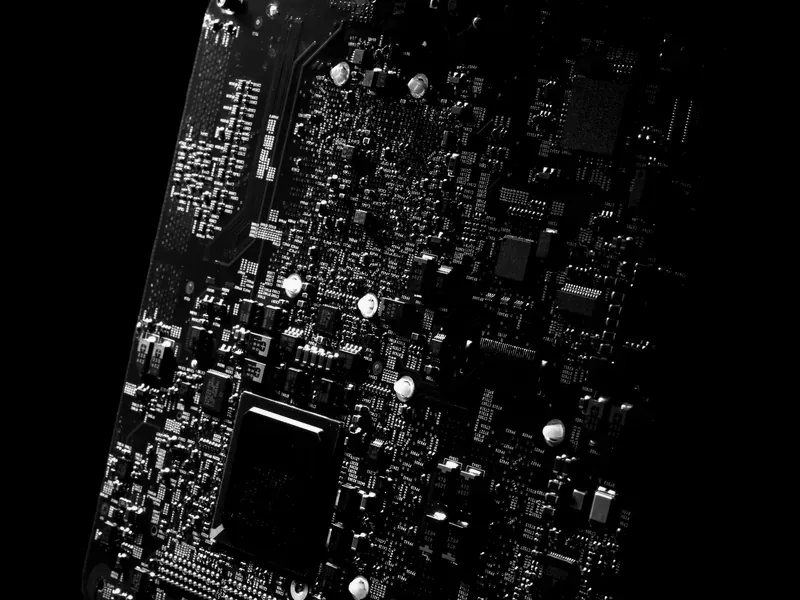
An envelope tracking IC, or ETIC, is a specific device: a high-bandwidth modulator that sits between the power-management chain and the RF power amplifier, swinging the PA supply voltage to follow the transmitted signal’s envelope in real time. That is the narrow product a component buyer can actually place on a purchase order.
The wide number counts everything the ETIC touches — power amplifiers, low-noise amplifiers, switches, and filters across the RF front-end module. This is the same counting-boundary problem that recurs in module-level markets, and it is why the multi-chip module market read arrives at figures that look incomparable to discrete-part numbers until you check what was folded in.
The distinction matters for sourcing in a concrete way. When a supplier says “the envelope tracking market is growing at 10 percent,” that growth can mean more ETICs sold, or it can mean more expensive RF front-end content shipped into richer 5G designs. The second claim does not tell you anything about ETIC unit availability, and it can mask flat or falling discrete-part volume underneath a rising dollar figure. Always reduce a quoted market number to units and to the specific part family before using it in a forecast.
What Is Driving Growth: 5G Handset Volume, Base Station Power, and 100 MHz Carriers

Three forces carry most of the published growth story. The first is handset volume: envelope tracking is effectively mandatory in modern 5G handsets because new-radio signals carry peak-to-average power ratios high enough that a fixed supply would waste most of the transmit power as heat. Every 5G flagship and a growing share of mid-range devices ship with an envelope tracker, tying ETIC unit growth directly to 5G smartphone shipments.
The second is base station power. On the infrastructure side, envelope tracking cuts PA power consumption and cooling load, which lowers the operating cost of dense 5G and 5G-Advanced deployments. This is a cost-of-ownership argument that holds even when unit counts are far smaller than in handsets, and it is where Analog Devices competes through infrastructure ET modulators alongside the handset-focused suppliers.
The third is the shift to wider carriers. As networks move toward 100 MHz and multi-carrier aggregation, the envelope modulation task gets harder and the IC becomes more valuable. Qualcomm’s seventh-generation QET7100 wideband envelope tracker is rated up to 1 GHz of channel bandwidth, a capability documented in the Qualcomm QET7100 datasheet. Wider carriers raise the technical bar on the ETIC and concentrate share among suppliers that can hit the bandwidth and switching-speed targets.
Supplier Share: Qualcomm, Qorvo, Skyworks, and Analog Devices
The supplier landscape is concentrated but split along channel lines. Global Market Insights groups the market’s top vendors as Qualcomm, Qorvo, Skyworks, Texas Instruments, and Analog Devices. The interesting detail is that these five do not compete for the same socket.
Qualcomm ships the largest handset volume because it bundles envelope tracking into its modem-RF platforms, so the ET function rides along with every Snapdragon design win. Qorvo, by contrast, sells standalone and module-integrated ETICs that any modem can adopt, and it reports shipping more than 365 million ETICs across its product timeline, backed by 190 envelope-tracking-related patents. Skyworks competes in the module space, where ET is one block inside an integrated front end. Texas Instruments and Analog Devices are stronger on the power-management and infrastructure side of the technology.
Because no research firm publishes a clean, audited share percentage, treat any specific “X holds 30 percent” claim with caution. The defensible statement is directional: Qualcomm owns the platform-integrated handset volume, Qorvo owns the leading standalone ETIC franchise, and the rest of the field splits module and infrastructure demand.
The Strategic Fork: Qualcomm’s Modem-Integrated ET Versus Qorvo’s Standalone ETIC
The most consequential divide in the market is strategic, not technical. Qualcomm integrates envelope tracking directly into its modem-RF systems. The company announced ET technology inside the Snapdragon X35 when it introduced the world’s first 5G NR-Light modem-RF system in February 2023, and the approach has scaled across its platform line since. Under this model, envelope tracking is a feature of the platform, not a part an OEM selects independently.
Qorvo runs the opposite play. It sells the ETIC as a standalone socket that an OEM or module maker can design in regardless of which modem is used. The 365 million ETICs shipped and 190 patents are evidence of a franchise built on socket-by-socket design wins rather than platform bundling.
For procurement, this fork decides when the ET sourcing decision actually happens. In a Qualcomm-platform design, the ET function is inherited with the modem choice and rarely re-litigated at the component level. In a design using a different modem or a more discretized RF chain, ET becomes a real second-sourcing question with Qorvo and Skyworks as the primary alternatives. Knowing which camp a program sits in tells you whether to treat ET as a settled platform feature or an active negotiation.
Regional Demand: Where Envelope Tracking Volume Is Concentrating
The brief-format regional split most research firms cite is between Asia-Pacific and North America, but the underlying mechanics are structural rather than a clean percentage. Handset ETIC volume concentrates wherever 5G smartphones are designed and manufactured, which means Asia-Pacific carries the bulk of unit demand through Korean and Chinese handset OEMs and the Asian EMS network that builds for Apple and others.
North America anchors a different part of the demand curve: RF design leadership, base station and defense-adjacent infrastructure, and the modem-RF intellectual property that Qualcomm and others export into the global handset supply chain. The region matters less for raw ETIC unit count and more for the design wins and supplier strategy that determine who gets the volume elsewhere.
Treat any single “APAC is X percent of the market” figure as a modeling artifact until you see the scope behind it. The useful, verifiable claim is directional: handset-driven ETIC unit volume is concentrated in Asia-Pacific, while the platform and infrastructure decisions that shape the market are anchored in North America.
What the Growth Trajectory Means for Procurement and Lead-Time Risk
A market growing at high single digits with a concentrated supplier base translates into a specific kind of procurement exposure: fewer fallback sockets and platform-level dependency. When the ET function rides inside a Qualcomm platform, there is no independent ETIC to second-source at all; the mitigation is a modem-RF architecture decision made long before component buying begins. When ET is sourced as a standalone part, the second-source list is short — Qorvo and Skyworks dominate, with infrastructure-specific options from Analog Devices and Texas Instruments.
The divergence in market sizing has a second procurement consequence. If you anchor an availability or price argument to the wide $18 billion figure, you will reason about a market that does not correspond to the discrete parts you actually buy. Anchor to the discrete ETIC scope instead, and treat supplier growth claims as platform growth until proven otherwise at the part-number level.
For current lead-time ranges and the mechanics of qualifying across ET suppliers, the companion envelope tracking 5G RF procurement analysis covers the component-level detail this market read deliberately leaves out.
Envelope Tracking Versus Average Power Tracking: Why the Definition Moves the Number
Part of the tenfold size gap is definitional, and the ET-versus-APT boundary is the clearest example. Average power tracking adjusts the PA supply based on average output power over a frame or slot; it is slower, simpler, and cheaper. Envelope tracking modulates the supply on a microsecond scale to follow the instantaneous envelope, which requires a much more demanding modulator IC.
When a research firm counts only the high-speed envelope tracking IC, it gets a smaller market. When it folds in the broader family of efficiency-management and supply-modulation parts — including the simpler APT regulators that sit in cheaper LTE and IoT designs — the market balloons. This is not a trivial bookkeeping choice: an APT regulator and a full ETIC are different parts with different prices, different suppliers, and different qualification requirements.
The sourcing implication is that “envelope tracking” as a category name is doing too much work. Before you compare two suppliers’ claimed share or two buyers’ price expectations, confirm whether they are talking about the fast modulator or the wider efficiency-management family. The category error is one of the fastest ways to misread both the market and the bill of materials.
Signals to Monitor: M&A, Patent Activity, and 100 MHz ETIC Ramps
Three leading indicators tell you more about near-term supply than any annual market forecast. The first is consolidation. The RF front-end and power-management supply chains have compressed steadily over the past decade, and further M&A would shift the second-source map overnight, so buyers should treat any announced acquisition among ET suppliers as a supply-planning event rather than a headline.
The second is patent and design-win activity. Qorvo’s 190 ET-related patents and Qualcomm’s successive tracker generations are public markers of where technical leadership sits, and a cluster of new design-win announcements from one supplier is an early sign that its capacity will be allocated to committed programs rather than spot buyers.
The third is the 100 MHz and wider carrier ramp. As wideband trackers like the QET7100 move from flagship design-ins into volume, the parts that can handle 100 MHz and beyond will tighten first, because the technical bar excludes lower-tier sources. Buyers holding wideband ETIC requirements should watch these three signals more closely than they watch the headline market size, since allocation follows design-win announcements, not annual reports.
Frequently Asked Questions (FAQ)
How consolidated is the envelope tracking chip market in 2026, and who actually holds the largest share?
The market is concentrated at the top, but there is no single authoritative share split because the scope varies by research firm. Global Market Insights groups the top vendors as Qualcomm, Qorvo, Skyworks, Texas Instruments, and Analog Devices. Qualcomm leads handset platform volume through modem-integrated envelope tracking, while Qorvo holds the leading standalone ETIC position with more than 365 million units shipped. Which supplier looks largest depends on whether you count bundled modem-RF platforms or discrete ET IC sockets.
Why do envelope tracking chip market size estimates range from roughly $1.4 billion to $18 billion for the same year?
The range reflects what each firm counts. The narrow figure tallies discrete envelope tracking ICs only; the wide figure folds in the entire RF front-end chain that envelope tracking touches. Research and Markets sizes 2025 at $2.43 billion, while Global Market Insights reports $18.7 billion for 2024 using the broader scope. For component sourcing, anchor to the discrete ETIC figure and confirm the counting boundary whenever a vendor quotes a growth rate.
Does Qualcomm's modem-integrated envelope tracking lock OEMs out of using Qorvo or Skyworks standalone ETICs?
No, but it changes when the decision is made. Qualcomm bundles envelope tracking into its modem-RF platforms, so a design already committed to a Snapdragon modem gets envelope tracking as part of that platform. Designs using another modem or a discretized RF chain can still source standalone ETICs from Qorvo or Skyworks. The parts are not interchangeable drop-ins; each is tied to the surrounding RF architecture and design-win.
What M&A, patent, or 100 MHz ETIC volume-ramp signals should buyers watch as early indicators of supply tightening?
Watch for RF front-end supplier consolidation, patent and design-win announcements from Qorvo and Qualcomm, and volume ramps of wideband trackers supporting 100 MHz and wider carriers. Qorvo's 190 ET-related patents and Qualcomm's QET7100 wideband tracker, rated up to 1 GHz channel bandwidth, are reference points. Rising design-win announcements that outpace capacity tend to precede allocation and lengthening lead times.
How should an EMS or OEM weigh discrete envelope tracking ICs against average power tracking when per-chip cost can differ?
Start from the signal requirement, not the unit price. Average power tracking is simpler and cheaper but slower, tracking average power over a frame; envelope tracking modulates supply on a microsecond scale and is required where peak-to-average power ratios are high, such as 5G NR in the n77/n78/n79 bands. Where a cheaper APT part cannot meet the efficiency or linearity requirement, the cost difference is irrelevant because the part is not a valid substitute.