Table of Contents
Engineering integrators and EMS buyers coordinating United Arab Emirates component and BOM sourcing rarely manage a simple point-to-point parcel. A single procurement project often involves an engineering team in Abu Dhabi or Dubai, a purchasing company registered in a free zone (JAFZA, DAFZ, Dubai South, or KEZAD), a freight forwarder consolidating shipments from Asia and Europe, and a final assembly or maintenance site either on the UAE mainland or across neighboring GCC states (Qatar, Oman, Kuwait, Bahrain, and Saudi Arabia).
Clarifying Mainland versus Free Zone consignee roles and deciding when to consolidate versus split multi-line BOM shipments prevents duplicate customs brokerage charges, unexpected free-zone-to-mainland transfer delays, and moisture-barrier mishandling on sensitive BGA silicon. U.S. export-control documentation is detailed separately in our UAE and Saudi export compliance RFQ guide, while pre-RFQ data hygiene belongs to our 6-step BOM scrubbing protocol.
How do UAE Mainland and Free Zone customs roles differ for semiconductor BOMs?
Per Dubai Customs Service ID 18 (Customs Declaration Service), baseline import documentation encompasses the commercial invoice, packing list, certificate of origin, transport document/delivery order, and any permit required by a restriction entity—while exact tariff treatment and declaration codes vary by emirate (Dubai, Abu Dhabi, Sharjah) and customs territory (Mainland vs Free Zone).
| Consignee / routing model | Typical UAE location | Customs declaration path | Best operational fit | Key pitfall to avoid |
|---|---|---|---|---|
| UAE Mainland LLC (Direct Import) | Dubai / Abu Dhabi / Sharjah industrial zones (Al Quoz, Mussafah, DIP) | Direct import-for-local-consumption bill of entry via UAE mainland Importer of Record (IOR) |
Domestic UAE EMS factories, plant maintenance teams, and local system integrators consuming parts inside the UAE | Assigning a free-zone trading entity as consignee when goods must enter a mainland workshop immediately |
UAE Free Zone Entity (JAFZA / DAFZ / KEZAD) |
Airport/seaport free zones (Dubai Airport Freezone, Jebel Ali, Abu Dhabi KEZAD) | Free-zone transit / intake declaration (Import to Free Zone); duty-suspended inside zone |
Multi-vendor BOM consolidation for re-export across GCC (Qatar, Oman, Kuwait, Bahrain, KSA) or bonded regional spares hubs | Assuming free-zone delivery automatically clears UAE mainland customs—moving goods across the gate into mainland requires a second mainland IOR clearance |
| Appointed Freight Forwarder Hub | Dubai South / Jebel Ali / Abu Dhabi logistics parks | Forwarder receives under master AWB and executes buyer-instructed customs transfer or re-export | Buyers combining orders from 4–8 separate component suppliers into one controlled delivery | Confusing the forwarder’s receiving dock with final end-user compliance; commercial invoices must still identify actual buyer, consignee, and end destination |
One practical boundary deserves explicit verification before shipping: Dubai Customs’ published service list is not a single universal rule across every emirate or free zone. Abu Dhabi Customs (covering Mussafah, ICAD, and KEZAD) and Sharjah Customs run their own electronic portals and broker registrations. Always have the appointed UAE customs broker confirm exact HS 8542/8541 declaration codes, certificate-of-origin attestation needs, and Importer Code status before booking air freight.
When should UAE buyers consolidate a multi-line BOM versus split shipments?
Multi-line industrial BOMs combining large BGAs—such as XC7A200T, XC7K410T, and Cyclone V SX—alongside precision analog and isolation devices such as ADuM1401 and LTC6811 create a real cost-versus-schedule trade-off at UAE customs:
- Cost of excessive splitting: Every individual air-waybill clearance into Dubai or Abu Dhabi incurs fixed customs declaration, delivery-order, and broker handling fees (often
$80–$200+per AWB regardless of parcel value). Shipping 12 separate distributor boxes for a 30-line BOM multiplies brokerage overhead and forces receiving teams to reconcile 12 staggered packing lists. - Cost of rigid full-BOM consolidation: Waiting for one 16-week passive reel or niche connector to arrive before releasing the shipment stalls PCB bring-up, delays incoming electrical screening on scarce FPGAs, and compresses the factory SMT build window.
Use a two-wave release rule when organizing a multi-line BOM upload for UAE and wider GCC hub deliveries:
- Wave 1 (Critical-path & long-lead silicon): Consolidate immediately available high-value FPGAs, SoCs, isolators, and BMS monitors (
XC7A200T,XC7K410T,Cyclone V SX,ADuM1401,LTC6811) into one clean origin consolidation box so engineering and QA can execute incoming visual, lot, and JTAG/electrical verification immediately upon arrival. - Wave 2 (Scheduled passives & secondary balance): Group remaining catalog reels, connectors, and replenishment spares into one consolidated dispatch timed
2–3 weeksahead of the SMT kitting lock date.
Protecting MSL 3 BGAs and mixed carriers during UAE hub consolidation
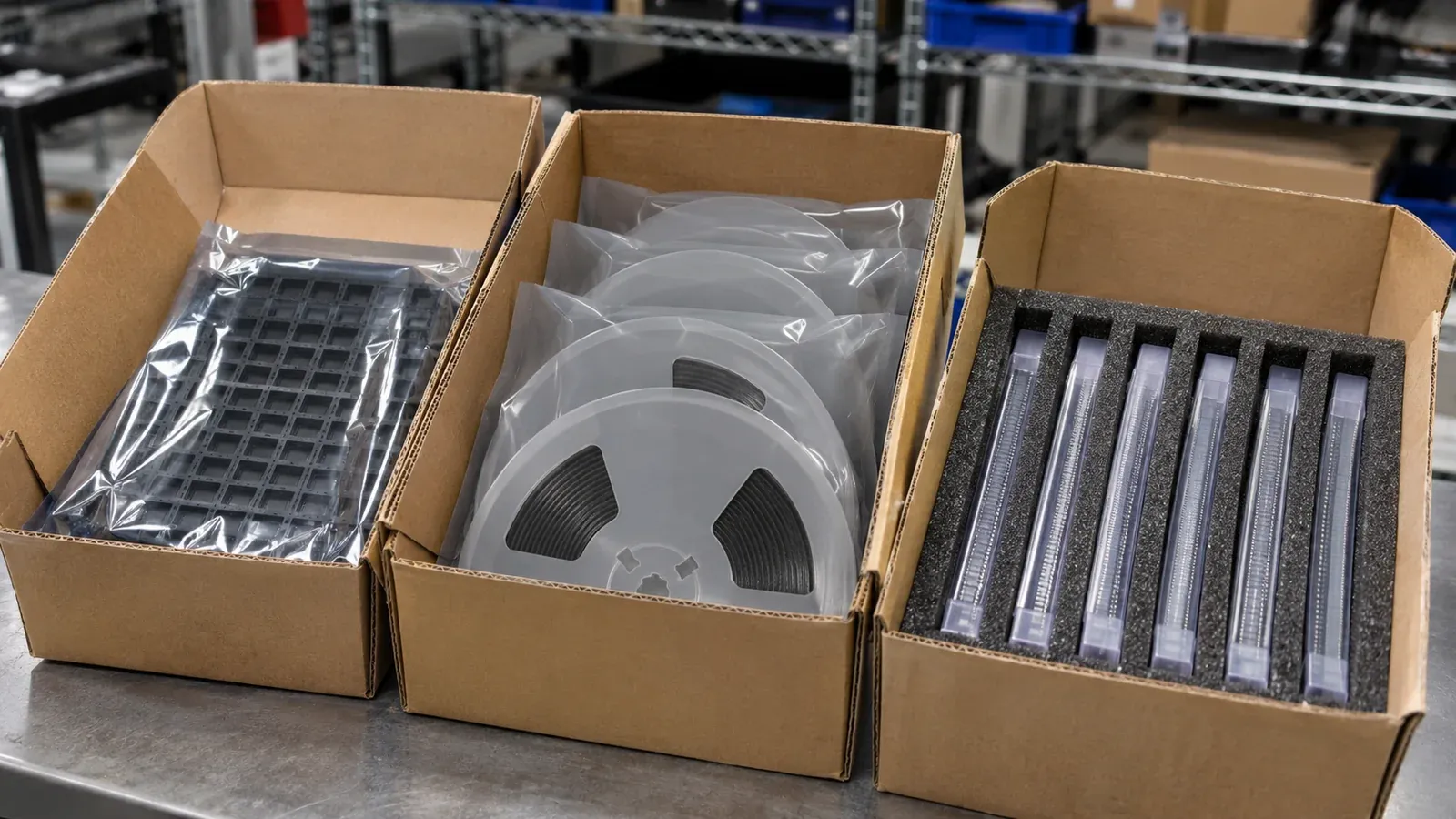
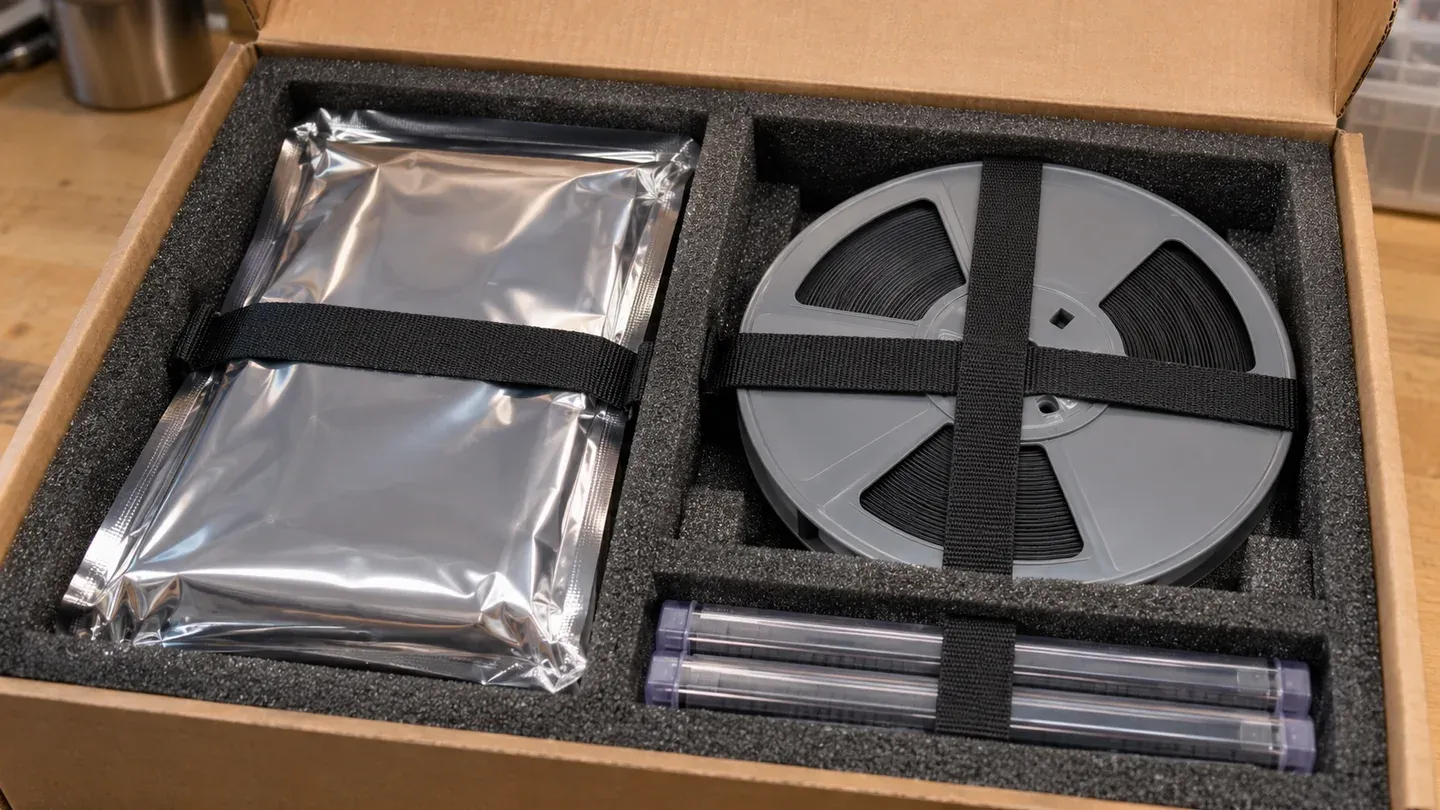
Consolidating mixed carriers (JEDEC FPGA trays, 7-inch and 13-inch SMD reels, and cut-tape strips) inside a UAE free-zone warehouse introduces two physical risks that buyers should specify directly in handling instructions:
- Never breach inner Moisture Barrier Bags (
MBBs) during hub repacking: Repacking cartons at a freight forwarder hub in Dubai or Jebel Ali must transfer intact factory-sealed or re-bakedMBBsouter-box to outer-box without cutting vacuum pouches—because exposing MSL 3FBGA/UBGAdevices (168 hfloor life at≤30 °C / 60% RH) inside a non-climate-controlled loading dock consumes floor life without triggering a visible defect until reflow popcorning occurs. - Keep cut-tape strips and partial reels strictly separated by full MPN and lot code: Attach barcoded inner-bag labels showing exact full MPN (including
#PBF,#TRPBF,-RL,I7N, orWtokens), lot/date code, quantity, and Country of Origin on every sub-pack so consolidated master packing lists reconcile cleanly at Dubai or Abu Dhabi customs inspection without cutting open ESD shielding bags.
Pre-dispatch alignment checklist for UAE BOM orders
Before releasing a UAE Mainland or Free Zone purchase order, verify four fields in writing across buyer, supplier, and forwarder: (1) distinct legal names and Importer Codes for Purchasing Entity, Consignee, Forwarder (if any), and Final End-Use Destination; (2) exact Emirate + Mainland vs Free Zone customs declaration type verified by the appointed UAE broker; (3) explicit Wave 1 / Wave 2 partial-shipment policy separating critical-path silicon from routine passives; and (4) complete line-level HS codes, Country of Origin, full MPNs, and dry-pack preservation instructions so customs clearance and EMS kitting stay aligned from origin to factory floor.
Frequently Asked Questions (FAQ)
What core documents does Dubai Customs list for a standard import declaration?
Per Dubai Customs Service ID 18, standard customs-declaration requirements include the commercial invoice, packing list, certificate of origin, delivery order or transport document (AWB/BL), and permits from restriction entities if applicable to the specific commodity. Your appointed UAE customs broker confirms exact rules for your emirate, free zone, and HS code.
Can a JAFZA or DAFZ free-zone entity import a semiconductor BOM and distribute directly into UAE mainland factories?
Goods entering a UAE free zone clear under a free-zone customs declaration without immediate mainland import duty. Moving those components out of the free zone into UAE mainland factories requires a mainland import-for-local-consumption declaration filed by a licensed UAE mainland Importer of Record or local agent, with applicable customs procedures and VAT treatment.
Why can consolidating a 40-line BOM into a single UAE shipment delay urgent production?
Consolidation holds every fast-moving IC at origin or at a hub until the slowest-lead-time item arrives, delaying critical SMT setup and kitting. Splitting critical-path FPGAs and long-lead analog ICs onto an initial release while consolidating standard passives balances freight savings against schedule risk.
Does UAE hub consolidation also serve industrial projects in Qatar, Oman, Kuwait, and Bahrain?
Yes. Many engineering contractors consolidate multi-manufacturer semiconductor BOMs inside UAE free zones (such as JAFZA, DAFZ, Dubai South, or Abu Dhabi zones) before re-exporting kitted assemblies or component lots into neighboring GCC industrial sites under transit or re-export declarations.