Table of Contents
Analog Devices (ADI) closed fiscal 2026 on a decisive upswing—reporting record Q4 FY26 revenue of $4.373 billion (+42% YoY) and full-year FY26 revenue of $15.2 billion (+38% YoY) on November 24, 2026, with Industrial surging +55% YoY to $2.194 billion (50% of total sales) and management noting on the November 24 earnings call that channel inventory weeks are expected to tighten further into FY27. With ADI’s September 13, 2026 pricing round already in force (including reported increases up to +30% on military-grade parts per Alantys’ November 2026 market alert), industrial buyers searching for an Analog Devices distributor or independent lot face higher stakes whenever an ordering suffix or channel requirement is misunderstood.
Across precision signal chains spanning Analog Devices and legacy Linear Technology lines, most quoting delays and incoming-inspection rejections stem from conflating two separate naming conventions—ADI’s AD/ADuM suffix grammar and Linear Technology’s LTC decimal-voltage and # suffix grammar. This guide decodes both systems and outlines practical channel and PCN verification rules.
How do ADI and legacy Linear Technology ordering suffixes differ?
Although Linear Technology has operated inside Analog Devices since 2017, ADI never rewrote legacy LTC ordering codes into AD syntax. ERP databases that normalize away #, decimal points, or trailing reel codes routinely merge incompatible grades, carriers, or qualification baselines.
| Ordering token | Brand family | Technical or commercial meaning | Substitution boundary |
|---|---|---|---|
Z (e.g., AD8620ARZ, ADUM1401BRWZ) |
ADI (AD / ADuM) |
RoHS-compliant Pb-free matte-tin / NiPdAu lead finish | Cannot swap freely with non-Z leaded (SnPb) variants on RoHS or SnPb-mandated military builds |
#PBF / #TRPBF |
Legacy LTC (LTC6655, LTC6811) |
#PBF = Pb-free in tubes/trays; #TRPBF = Pb-free in tape-and-reel |
Identical silicon inside same grade/package, but SMT feeders require #TRPBF reel orientation |
#3ZZ (e.g., LTC6811IG-1#3ZZPBF) |
Legacy LTC | Special-flow / automotive-controlled manufacturing suffix | Never substitute standard #PBF onto a #3ZZ qualified BOM without formal engineering approval |
Decimal voltage (-2.5, -4.096) |
Legacy LTC (LTC6655) |
Factory-trimmed output voltage (2.500 V vs 4.096 V) |
Non-interchangeable; stripping the decimal breaks SKU lookup and risks wrong reference voltage |
W prefix/token (AD8628WARZ, ADUM1401WTRWZ) |
ADI | AEC-Q100 automotive qualification & controlled PCN baseline | Standard industrial ARZ/BRWZ lacks W PPAP/AEC-Q100 documentation |
-EP (ADUM1200UR-EP-RL7) |
ADI Enhanced Product | -55 °C to +125 °C AQEC defense/aerospace controlled baseline (e.g., DSCC V62/12630) |
Never replace with commercial/industrial grades |
-RL7 / -R7 vs -REEL / -RL |
ADI | 7-inch partial/small reel vs 13-inch full production reel |
Check PCN/PDN—ADI periodically consolidates -RL into -R7 (same die, new reel SPQ) |
Two series-level rules illustrate why suffix precision saves weeks of rework: on LTC6655 precision references, B vs C accuracy grades (±0.025% vs ±0.05%), MS8 vs hermetic LS8 packages, and LN noise-reduction pinouts sit directly beside #PBF/#TRPBF (detailed in our LTC6655 grade B vs C ordering guide). On AD862x amplifiers, ADI’s packing transition from -RL to -R7 changes reel size without changing silicon—a process documented in our AD8628WARZ-RL to -R7 PCN/PDN packing guide.
What changed in late-2026 ADI demand and channel supply conditions?
In ADI’s November 24, 2026 Q4 FY26 earnings release and transcript, management reported an adjusted gross margin of 72.9% (+360 bps), Industrial revenue up +51% for full-year FY26 ($7.453B), and Communications up +81% YoY in Q4 ($706.8M) led by data center demand, while projecting Q1 FY27 channel inventory to remain flattish with weeks of inventory likely to fall.
For buyers planning 2027 orders across ADuM1200, ADuM1401, and LTC6811 battery monitors, three planning scenarios govern channel selection over the next two quarters:
- Base case (tightening weeks-of-stock on industrial grades): Broad industrial replenishment continues while distributors hold lean safety buffers; standard active suffixes remain orderable via franchised distributors on 12–20 week schedules, while niche
W,-EP,#3ZZ, andLS8ceramic variants quote longer factory lead times. - Upside tightness trigger: If Q1 FY27 book-to-bill stays above
1.1alongside reported January 2027 mature-node foundry/OSAT cost increases (+3–10%wafer and+10–30%packaging/test cited in Alantys’ November 2026 alert), low-volume legacyLTCand wide-body isolator suffixes could see spot-market premiums widen sharply. - Easing sensitivity: If industrial restocking slows in H1 2027 while consumer demand stays weak (ADI guided Q1 FY27 consumer down
10–15%), general-purposeSOICcommercial grades would stabilize first—meaning buyers should avoid over-committing NCNR blanket POs on high-runners while focusing safety stock on sole-source automotive/hermetic codes.
How should procurement verify ADI and LTC lots across channels?
Always separate authorized-channel compliance from independent-channel lot authentication:
- Check ADI’s official PCN/PDN portal first: Confirm whether a scarce code is genuinely obsolete (PDN issued) or simply undergoing a packing consolidation (
-RLto-R7), fab transfer, or lead-finish change. Never pay broker premiums on a part whose active successor differs only by reel diameter. - Verify authorized distributor directories when required: When ISO 13485, IATF 16949, or defense flow-downs mandate OCM warranty and direct factory traceability, confirm the seller on Analog Devices’ current authorized distributor list.
- Apply structured incoming inspection on independent lots: When factory backlog forces an independent sourcing purchase, specify full-code reel/bag label verification (matching ADI/LTC 2D barcode lot code, date code, country of assembly, and MSL level), external visual and marking permanence checks, and—for high-value ceramic
LS8,-EP, or multi-channelLTC6811lots—agreed X-ray or electrical verification per SupplyICs quality controls.
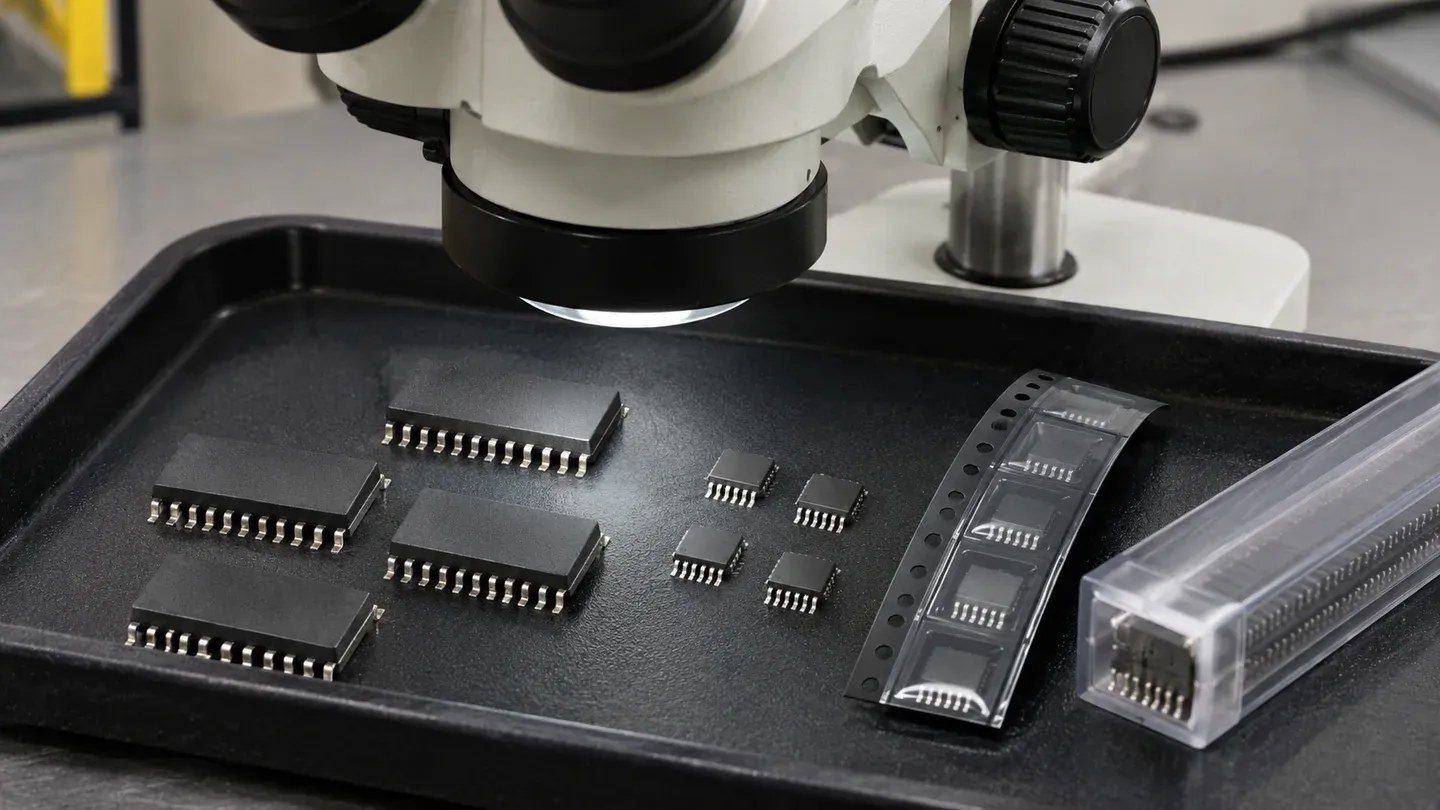
Building a clean ADI and LTC RFQ package
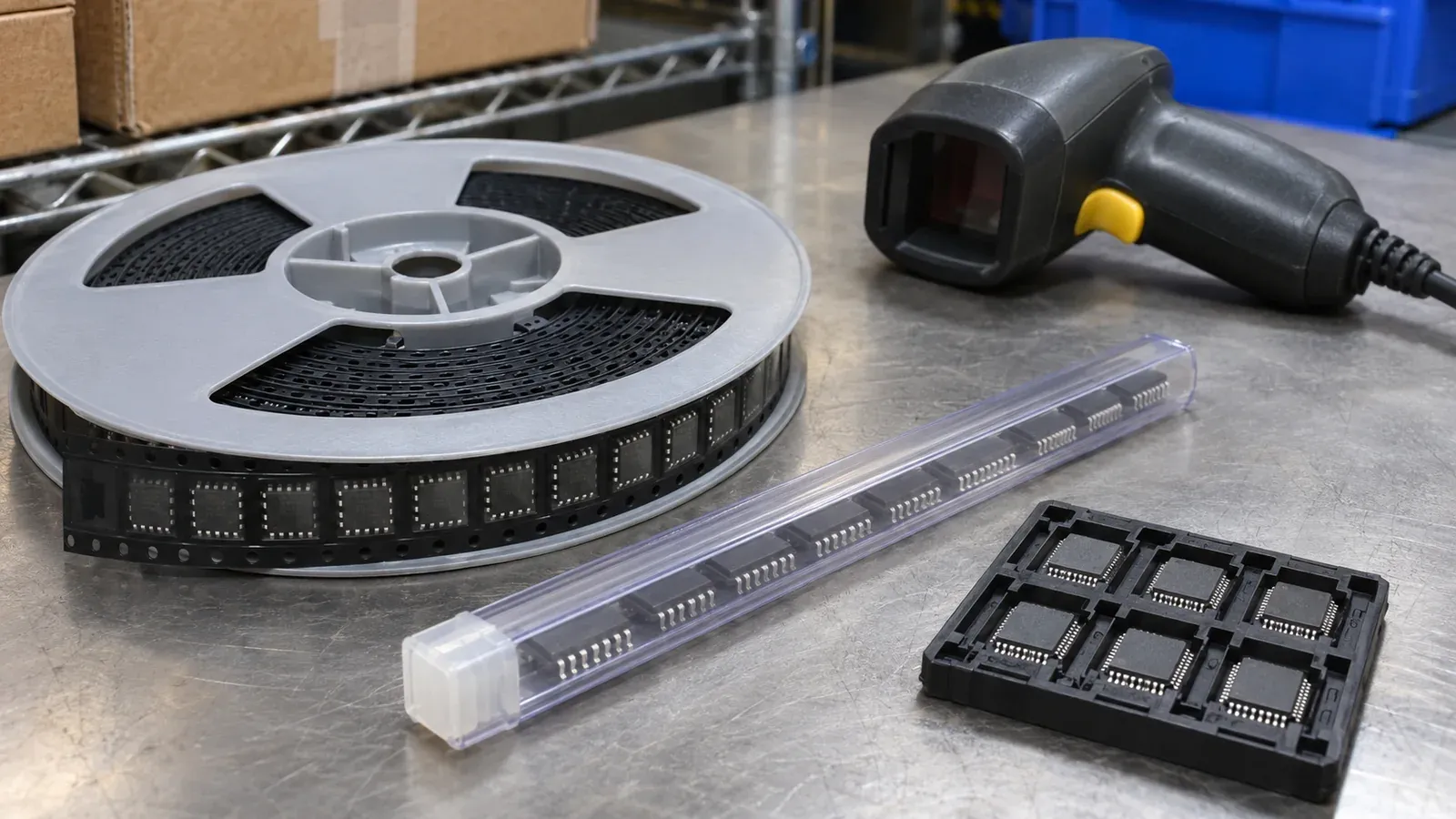
Before sending a multi-line inquiry through an RFQ submission, lock four fields on every line: the exact full manufacturer part number (retaining ., #, -EP, W, and reel suffix), required carrier (tube/tray, 7-inch reel, or cut tape), acceptable date-code window, and whether an active PCN packing equivalent (such as #PBF vs #TRPBF or -RL vs -R7) may be quoted on a separate alternate line. Keeping exact approved suffixes separated from alternates prevents clerical substitutions from halting SMT lines.
Frequently Asked Questions (FAQ)
Are legacy Linear Technology (LTC) part numbers discontinued because ADI owns the brand?
No. Analog Devices acquired Linear Technology in 2017 and retained the LTC prefix and original suffix syntax across active production lines such as LTC6655 and LTC6811. Discontinuation is governed per individual ordering part number via official ADI PCN/PDN notices, not by the LTC prefix.
Does stripping #PBF or #TRPBF from an LTC part number affect what a distributor quotes?
Yes. Dropping #PBF or #TRPBF obscures RoHS lead-free finish and carrier format (tube/tray versus tape-and-reel), and dropping #3ZZ strips a special customer or automotive flow code. Always preserve the exact # suffix string on both the RFQ and purchase order.
How do ADI -RL7, -R7, -REEL, and -RL suffixes differ in SMT production?
All four denote tape-and-reel packing rather than tubes or trays, but -RL7 and -R7 indicate smaller 7-inch reels while -REEL and -RL typically designate full 13-inch reels with higher standard pack quantities (SPQ). Confirm the exact reel diameter, pocket pitch, and quantity on the datasheet ordering table before release.
When should a buyer use an authorized ADI distributor versus an independent sourcing channel?
Use franchised ADI distributors whenever purchasing policy, warranty flow-down, or manufacturer direct technical support requires authorized provenance. Turn to an AS6081-aligned independent sourcing channel when a required grade, legacy LTC suffix, or factory lead time misses a line-down maintenance window—with explicit lot, label, and inspection terms agreed upfront.